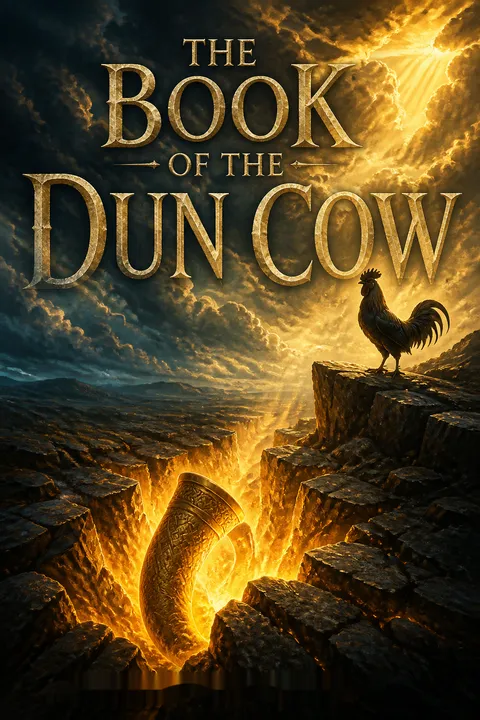

Plot Summary
Midnight Howling at the Coop
In the dead of night, Chauntecleer the proud Rooster is roused from his restless sleep by the relentless, self-pitying howls of a strange Dog outside his Coop. The Dog, Mundo Cani, laments his ugliness and loneliness, drawing the attention and sympathy of the Coop's inhabitants, though none dare move for fear of Chauntecleer's wrath. When the Rooster finally confronts the Dog, their encounter is both comic and poignant, ending with mutual tears and a strange bond. Mundo Cani, despite his sorrow, becomes a fixture at the Coop, his presence both a comfort and a source of irritation for Chauntecleer, who is both annoyed and oddly moved by the Dog's devotion. Thus begins a relationship that will prove vital in the trials to come.
The Rooster's Crow and Rule
Chauntecleer's crowing is more than noise—it is the heartbeat of the Coop, dividing time and bestowing order. His crows are both spontaneous and ritualistic, marking the canonical hours and providing comfort, direction, and meaning to his flock. The Rooster's authority is absolute, his pride immense, and his moods volatile. Yet, beneath his bluster lies a deep sense of responsibility for his charges. Unbeknownst to him, a third, more powerful kind of crow—one of war and destruction—sleeps within him, waiting for the day when an ancient evil will threaten all he holds dear. For now, Chauntecleer rules with a mixture of affection, irritation, and a longing for true companionship.
Treachery in the Nest
The peace of the Coop is shattered when Hens discover their eggs have been eaten, the shells left behind as cruel evidence. Suspicion falls on John Wesley Weasel, but under pressure, he reveals the true culprit: Ebenezer Rat, a silent, cunning predator. The Coop is thrown into turmoil, fear and grief mingling with anger. Chauntecleer, determined to protect his flock, devises a plan to confront the Rat. The episode exposes the fragility of trust and the ever-present threat lurking beneath the surface of their ordered world. The Rooster's leadership is tested, and the community's unity begins to fray as danger draws closer.
Wyrm Beneath the World
Beneath the earth, deeper than any creature can fathom, lies Wyrm—a primordial serpent, embodiment of chaos and hatred, imprisoned by God and kept at bay by the vigilance of the animals above. The animals, largely ignorant of their cosmic role, are the last line of defense against Wyrm's escape and the unraveling of creation. Wyrm's hatred festers, his power immense, and his desire for freedom unending. The animals' ignorance is both their weakness and their innocence, but the balance is delicate. The stage is set for a confrontation between the small, foolish keepers and the ancient evil that waits for a crack in their unity.
The Birth of Cockatrice
In a distant land, Senex, an aging Rooster, is seduced by dreams of renewed power and immortality, whispered by Wyrm. In his desperation, Senex lays a strange egg, which hatches into Cockatrice—a creature part Rooster, part serpent, all malice. Cockatrice quickly asserts dominance, killing Senex and enslaving the animals, forcing Hens to lay eggs that hatch into deadly Basilisks. The land falls into despair and death, the stench of decay spreading as Cockatrice's reign begins. Wyrm's influence grows, and the boundaries between order and chaos weaken. The birth of Cockatrice marks the beginning of a new, more immediate threat to all creation.
Rat in the Shadows
Determined to end the threat to his Coop, Chauntecleer enlists the help of Mundo Cani and the Black Ants to flush out Ebenezer Rat. In a tense, violent struggle, the Rooster wounds the Rat with barbed feathers, marking him forever and driving him from the Coop. The victory is hard-won, leaving Chauntecleer injured and the community shaken. Yet, the triumph is bittersweet—violence has entered their world, and the Rooster feels the weight of leadership more keenly than ever. The episode underscores the cost of vigilance and the loneliness of command, as well as the necessity of confronting evil, even at great personal risk.
Lordship's Lonely Burden
As rain and gloom settle over the land, Chauntecleer finds himself isolated by his role as Lord. The Hens' attempts at comfort only deepen his sense of separation, their respect a barrier to true intimacy. In a moment of frustration and vulnerability, he rails against God, questioning the purpose of his burdens and the loneliness of leadership. The arrival of the Wee Widow Mouse, seeking help for her lost children, interrupts his self-pity and calls him back to compassion and action. The chapter explores the emotional cost of authority and the longing for genuine connection.
The Wee Widow's Plea
The Wee Widow Mouse, exhausted and grieving, pleads for help to save her children swept away by the river. Chauntecleer, moved by her silent suffering, rallies Mundo Cani and Beryl to aid in the rescue. Braving the swollen river, the Rooster risks his life to save the tiny mice, demonstrating courage and tenderness. In the process, he discovers Pertelote, a beautiful, traumatized Hen, and brings her back to the Coop. The rescue binds the community together, infusing the Coop with new life and hope, even as the storm outside rages on.
Autumn's Healing and Hope
As the rains persist and autumn deepens, the Coop transforms into a place of healing and warmth. Chauntecleer, Pertelote, the Wee Widow Mouse, her children, and others recover from their wounds, both physical and emotional. The community draws closer, finding joy in small things and solace in each other's company. Pertelote's presence brings new beauty and mystery, while Mundo Cani's loyalty and John Wesley's antics provide both comfort and comic relief. The Coop stands as a beacon of hope amid the encroaching darkness, a fragile but resilient sanctuary.
Winter's Song and Union
Winter arrives, transforming the rain into gentle snow and the Coop into a place of muffled warmth and celebration. Chauntecleer and Pertelote are married in a joyful procession, their union symbolizing renewal and the promise of new life. The animals rejoice, drawing strength from their shared bonds and the rituals that give meaning to their days. Yet, beneath the surface, the threat of Cockatrice and Wyrm lingers, and the peace of winter is but a brief respite before the coming storm. The chapter captures the beauty of love and community in the face of looming danger.
Cockatrice's Reign of Terror
In the land east of the Coop, Cockatrice's rule brings horror and destruction. The animals are enslaved, forced to lay eggs that hatch into Basilisks—venomous serpents that kill indiscriminately. The land is poisoned, hope extinguished, and the bonds of community shattered. Cockatrice's power grows, and the stench of death spreads. The chapter serves as a grim warning of what awaits Chauntecleer's land if unity fails and evil is allowed to flourish. The contrast between the Coop's fragile peace and Cockatrice's tyranny heightens the sense of impending doom.
The Rains and the Flood
As Cockatrice's destruction weakens the fabric of creation, Wyrm's power grows. God cloaks the earth in rain and cloud, isolating it from the heavens and leaving the animals to face the coming trials alone. The river swells, threatening to engulf the land, and visions of severed heads and sorrow haunt Chauntecleer. The sense of cosmic significance deepens—the animals' struggle is not merely for their own survival, but for the fate of the world itself. The stage is set for a confrontation between the keepers and the forces of chaos.
Spring's Promise, River's Threat
Spring brings a brief return of hope and activity to the Coop. The animals clean, play, and celebrate new life, but Chauntecleer is troubled by the ever-rising river and ominous visions. The joy of the season is shadowed by anxiety, as the Rooster senses that something terrible approaches. His dreams grow darker, and the community's unity is tested by fear and uncertainty. The chapter captures the tension between renewal and impending disaster, as the animals prepare—knowingly or not—for the trials ahead.
Chauntecleer's Dream of Betrayal
Chauntecleer dreams of being stranded on an island, abandoned by those he loves and consumed by self-pity and hatred. The dream turns to horror as he wishes death upon his flock, only to see them pass by him, dead and unresponsive. Wracked by guilt, he awakens to Pertelote's comfort and confesses his fears and loneliness. The dream serves as both warning and catharsis, forcing the Rooster to confront his own capacity for bitterness and the importance of choosing love and faith over despair.
Sorrow Strikes the Coop
A rare day of sunshine brings disaster as the Coop's young—Chauntecleer's own sons and their nurse Beryl—are found dead, victims of a mysterious and violent attack. Grief overwhelms the community, and Chauntecleer's faith is shaken to its core. The loss is senseless and devastating, a stark reminder of the vulnerability of innocence in a world beset by evil. The Rooster's anguish is raw, his prayers bitter, and the unity of the Coop is tested as suspicion and sorrow threaten to unravel all they have built.
Grief, Prayer, and the Dun Cow
In the depths of his grief, Chauntecleer rails against God, demanding answers for his suffering and the loss of his children. His lament is met not with words, but with the silent, compassionate presence of the Dun Cow, who shares his sorrow and offers comfort without judgment. The encounter is transformative, allowing the Rooster to bear his pain and find the strength to continue. Meanwhile, the community mourns, and the need for unity and purpose becomes ever more urgent as the threat of Wyrm draws closer.
Gathering of the Keepers
At Chauntecleer's command, animals from across the land gather at the Coop for a great council. Foxes, Ants, Otters, Weasels, Rabbits, Deer, and more assemble, each bringing their strengths and fears. The Rooster addresses them, recounting the blessings and trials of their shared history, and warns of the enemy that threatens them all. The assembly is both a testament to the power of community and a reminder of their vulnerability. The Dun Cow's presence is felt, and the stage is set for the coming conflict.
Council and Chaos
As Chauntecleer rallies the animals, the river rises and the first Basilisks appear, killing the foolish Turkeys who wander too close. Panic threatens to overwhelm the camp, but the Rooster's powerful crow and the strategic use of rue—a plant that repels the serpents—restore order. The animals prepare for battle, their unity forged in the crucible of fear and necessity. The chapter highlights the fragility of courage and the importance of faith and leadership in the face of overwhelming odds.
Preparing for War
The animals fortify their camp, building walls and trenches under the direction of the Ants, while the Bees mask the stench of Wyrm with sweet-smelling paste. The Foxes serve as sentries, and the community braces for the coming assault. Mundo Cani struggles with guilt and sorrow, feeling responsible for the evil that has befallen them, but Chauntecleer reassures him of his worth. The night before battle is tense, filled with fear, doubt, and the ever-present threat of betrayal and collapse.
Night of Dread and Doubt
As night falls, fear and doubt spread through the camp. Whispers of desertion and despair threaten to unravel the fragile unity of the animals. Chauntecleer responds with a crowing of names, blessing each creature and restoring a measure of peace. Yet, he is haunted by the mocking laughter of Cockatrice and the weight of his own inadequacy. The Dun Cow appears, offering silent comfort and mysterious guidance, preparing the Rooster for the trials to come.
The First Battle: Blood and Valor
The Basilisks attack, and the animals meet them in a brutal, chaotic battle. The Red Ants sacrifice themselves, the Weasels fight with ferocity, and many fall to the serpents' venom. John Wesley Weasel distinguishes himself in battle, driven by rage and grief. Chauntecleer's powerful crow confuses the enemy, but the cost is high. The battle is won, but at great expense, and the threat of Cockatrice and Wyrm remains. The community is bloodied but unbroken, their courage tested and their losses keenly felt.
Cockatrice and Rooster Collide
Chauntecleer faces Cockatrice in a deadly aerial battle, armed with the spurs of his ancestors. The fight is fierce and exhausting, but the Rooster prevails, killing Cockatrice and casting his head into the river as a challenge to Wyrm. Yet, victory brings no peace—Wyrm's voice rises from the depths, mocking the Rooster and announcing his imminent escape. The triumph is hollow, hope is lost, and Chauntecleer collapses, broken in body and spirit.
Wyrm's Awakening
With Cockatrice defeated, Wyrm seizes his chance. The earth cracks open, forming a vast chasm as the river pours into the abyss. The animals are driven to the edge of despair, their sanctuary destroyed and their leader incapacitated by hopelessness. Wyrm's presence is overwhelming, his power seemingly unstoppable. The final confrontation looms, and the fate of the world hangs in the balance. Only a desperate act of sacrifice can hope to stem the tide of chaos.
The Dog's Sacrifice
In the darkest hour, Mundo Cani, the sorrowful Dog, takes up the horn of the Dun Cow and challenges Wyrm directly. Leaping into the chasm, he drives the horn into Wyrm's eye, blinding the beast and halting his ascent. The earth closes over the wound, the river recedes, and sunlight returns to the world. Mundo Cani's selfless act saves creation, but he is lost beneath the earth, his fate unknown. The animals mourn his sacrifice, and Chauntecleer is left to grapple with guilt, grief, and the meaning of true heroism.
The Scar and the Sun
With Wyrm defeated and the world restored, the animals begin the slow work of rebuilding. The land bears a scar where the chasm closed, a reminder of the battle fought and the price paid. Chauntecleer struggles with his feelings of failure and loss, haunted by Mundo Cani's sacrifice and his own moments of doubt and despair. Pertelote guides him toward forgiveness and healing, urging him to honor the past without being bound by it. The community endures, changed but resilient, and the sun shines once more on their fragile peace.
Forgiveness and New Beginnings
In the aftermath, Chauntecleer confronts his guilt and confesses his failings to Pertelote, who counsels him on the necessity of penance and forgiveness. The Weasel, too, is drawn out of his grief by the promise of new adventures and the enduring bonds of friendship. The community, though scarred, finds strength in honesty, compassion, and the willingness to begin again. The story ends with a sense of renewal, the memory of sacrifice honored, and the hope that, together, they can face whatever challenges the future may bring.
Analysis
Walter Wangerin Jr.'s The Book of the Dun Cow is a profound meditation on the nature of evil, leadership, and redemption, rendered through the lens of animal fable and cosmic myth. The story's anthropomorphic cast allows for a nuanced exploration of human psychology—pride, loneliness, guilt, and the longing for connection—while the looming threat of Wyrm and the rise of Cockatrice elevate the narrative to a battle for the soul of creation itself. At its heart, the novel is about the necessity of community and the courage required to face both external and internal darkness. Chauntecleer's journey from prideful isolation to humble confession mirrors the path of true leadership, while Mundo Cani's self-sacrifice embodies the paradoxical strength found in weakness. The Dun Cow's silent compassion and Pertelote's healing wisdom offer models of grace and endurance. The book's structure—alternating between moments of humor, tragedy, and epic confrontation—invites readers to consider the interplay of fate and free will, the cost of hope, and the enduring possibility of renewal. In a world beset by chaos, Wangerin suggests, it is only through honesty, forgiveness, and the willingness to bear one another's burdens that true victory is won.
Review Summary
Most readers adore The Book of the Dun Cow, praising its rich characters, emotional depth, and unique blend of medieval beast-fable, biblical allegory, and epic storytelling. Comparisons to Watership Down, Animal Farm, and Chaucer are common. Readers highlight Wangerin's masterful prose, the rooster Chauntecleer's compelling leadership journey, and the genuinely terrifying portrayal of evil through Wyrm. A few found the narration choppy or the story inaccessible. The Paul Michael audiobook receives particular praise. Many were unexpectedly moved to tears by this tale of talking animals battling cosmic evil.
People Also Read
Characters
Chauntecleer
Chauntecleer is the Rooster Lord of the Coop, a figure of pride, authority, and deep emotional complexity. His crow orders the world, providing structure and comfort to his flock, yet his leadership is marked by loneliness and self-doubt. He is quick to anger, fiercely protective, and often struggles to balance his need for respect with his longing for genuine connection. Throughout the story, Chauntecleer is tested by betrayal, grief, and the burden of cosmic responsibility. His journey is one of growth—from bluster and isolation to humility, vulnerability, and sacrificial love. His relationships with Mundo Cani and Pertelote reveal his capacity for both tenderness and failure, and his ultimate willingness to confess, forgive, and begin anew marks his true heroism.
Mundo Cani Dog
Mundo Cani is the embodiment of humility and self-doubt, a Dog whose mournful howls and self-deprecating humor mask a heart of immense loyalty and courage. He is both comic relief and tragic figure, often feeling unworthy and burdensome, yet his devotion to Chauntecleer and the Coop is unwavering. Mundo Cani's journey is one of quiet heroism—he endures ridicule, internalizes blame, and ultimately performs the story's greatest act of sacrifice by confronting Wyrm and saving the world. His relationship with Chauntecleer is complex, marked by misunderstanding, affection, and mutual need. Mundo Cani's final act transforms him from a figure of pity to one of profound nobility, his legacy etched in the scarred earth and the hearts of those he saved.
Pertelote
Pertelote enters the story as a traumatized survivor, fleeing the horrors of Cockatrice's land. Her beauty and mystery captivate Chauntecleer, but her true strength lies in her resilience, compassion, and insight. She is both healer and truth-teller, guiding the Coop through grief and helping Chauntecleer confront his own failings. Pertelote's journey is one of endurance and transformation—she moves from silence and fear to song and leadership, her faith and love anchoring the community in its darkest moments. Her relationship with Chauntecleer is a source of both challenge and redemption, and her wisdom is instrumental in the Coop's recovery and renewal.
John Wesley Weasel
John Wesley is a Weasel with a quick tongue, sharp wit, and a penchant for mischief. Initially suspected of treachery, he proves himself a courageous and invaluable ally in the battle against the Basilisks. His loyalty to the Coop is matched only by his capacity for rage and grief, particularly after the loss of the Wee Widow Mouse. John Wesley's journey is one of redemption—he moves from suspicion and self-interest to self-sacrifice and friendship. His relationship with Chauntecleer is marked by both friction and mutual respect, and his antics provide both comic relief and moments of unexpected heroism.
Ebenezer Rat
Ebenezer Rat is the shadowy threat within the Coop, a silent predator whose appetite for eggs brings fear and division. His cunning and stealth make him a formidable foe, but he is ultimately driven out and marked by Chauntecleer. In a surprising turn, Ebenezer dies fighting a Basilisk, revealing a capacity for courage and a connection to the larger battle against evil. His character embodies the ambiguity of villainy—capable of harm, yet not beyond redemption or sacrifice. His death serves as a reminder of the complexity of good and evil within the animal allegory world.
The Dun Cow
The Dun Cow is a figure of mythic significance, a messenger of God whose presence brings comfort, wisdom, and guidance. She appears at moments of greatest need, sharing in the suffering of the animals and offering silent, transformative compassion. Her role is both symbolic and practical—she represents the possibility of grace amid chaos, and her gift of the horn enables Mundo Cani's final sacrifice. The Dun Cow's relationship with Chauntecleer is one of deep empathy, her silent understanding providing the strength he needs to endure and lead.
Cockatrice
Born of Senex's despair and Wyrm's influence, Cockatrice is a hybrid of Rooster and serpent, a creature of malice and destruction. His reign is marked by tyranny, the enslavement of Hens, and the spawning of Basilisks. Cockatrice is both a personal and cosmic antagonist, his existence a perversion of natural order and a direct threat to the world's survival. His confrontation with Chauntecleer is both physical and symbolic—a battle between hope and despair, order and chaos. Cockatrice's defeat is necessary but not sufficient, as his death paves the way for Wyrm's final assault.
Wyrm
Wyrm is the primordial serpent beneath the earth, the source of all chaos, hatred, and destruction. His power is immense, his cunning subtle, and his desire for freedom unending. Wyrm's influence is felt in the corruption of Senex, the rise of Cockatrice, and the weakening of the animals' unity. He is both a literal and symbolic adversary, representing the darkness that lies beneath the surface of creation and within the hearts of all creatures. Wyrm's eventual defeat requires not just strength, but sacrifice, humility, and the willingness to confront the mystery of evil.
The Wee Widow Mouse
The Wee Widow Mouse is a symbol of vulnerability and resilience. Her desperate journey to save her children, her silent suffering, and her eventual death at the hands of the Basilisks highlight the cost of innocence in a world at war. Her presence brings out the best in Chauntecleer and the Coop, inspiring acts of compassion and bravery. Her loss is deeply felt, particularly by John Wesley, and serves as a catalyst for renewed determination and unity among the survivors.
Tick-tock the Black Ant
Tick-tock is the leader of the Black Ants, a figure of relentless order and efficiency. His devotion to duty, love of schedules, and literal-mindedness provide both humor and practical support to the Coop. Tick-tock's ants play a crucial role in the defense of the camp, their sacrifice emblematic of the power of collective action. His interactions with the other animals, particularly the irrepressible Turkeys, add levity and underscore the importance of every creature's contribution to the common good.
Plot Devices
Animal Allegory and Cosmic Battle
The novel employs animal allegory to explore profound themes of good and evil, leadership, sacrifice, and community. Each animal embodies distinct traits—pride, humility, cunning, loyalty—that reflect human virtues and vices. The Coop becomes a microcosm of the world, its struggles mirroring the cosmic battle between order and chaos, embodied by Wyrm. The narrative structure weaves together personal drama and mythic conflict, using foreshadowing (Chauntecleer's dreams, the rising river, the birth of Cockatrice) to build tension and highlight the interconnectedness of individual choices and cosmic consequences. The use of ritual (crowing, council, marriage) grounds the story in cycles of meaning, while the recurring motif of sacrifice—both mundane and heroic—underscores the cost of redemption. The story's blend of humor, pathos, and epic stakes invites readers to reflect on the nature of evil, the necessity of faith, and the power of community.
Download PDF
Download EPUB
.epub digital book format is ideal for reading ebooks on phones, tablets, and e-readers.








































