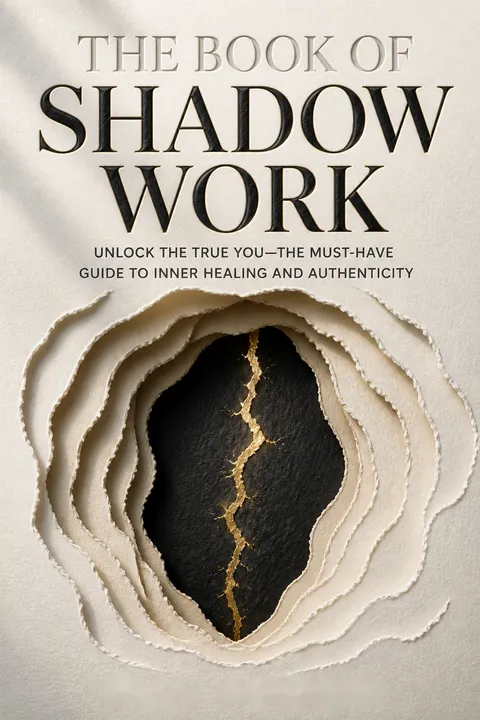

Key Takeaways
1. Embrace Your Shadow for Wholeness and Authentic Living
Everyone carries a shadow, and the less it is embodied in the individual’s conscious life, the blacker and denser it is.
Understanding the Shadow. The shadow, as defined by Carl Jung, is the unconscious aspect of our personality that we repress because we or society disapprove of it. It contains traits deemed unlovable, unacceptable, or even too brilliant, pushed away for self-preservation and survival. This hidden part, however, is not trash but "compost," holding potential for growth.
The Author's Journey. The author's personal journey into shadow work began during a depressive episode, feeling "dimmed" and stuck in a loop of repetition and disappointment, a state Jung called samskara. Traditional therapy failed, but anger became a "catalyst," driving her to self-inquiry through journaling. This led to the discovery of Jung's concept of the shadow and the realization that confronting it was key to reclaiming her spark and purpose.
Path to Wholeness. Shadow work is the act of confronting and embracing this shadow with openness, curiosity, and acceptance. It's not about taming or denying disliked parts, but achieving a fuller understanding of oneself, including hidden strengths and genius. This process transforms self-hate into self-acceptance, leading to a more cohesive, honest, and powerfully genuine whole.
2. Anger and Pain as Catalysts for Profound Self-Discovery
Pain is the breaker. Pain creates the friction needed for real change to happen.
Pain as a Catalyst. The author's journey highlights how profound pain and anger can serve as powerful forces for change. After a disappointing therapy experience, her sadness morphed into anger, which she recognized as an "exquisite catalyst" for transformation. This anger, born from feeling cast aside and unaccepting of herself, signaled a readiness for more and fueled her determination to find herself.
Breaking the Loop. Deeply ingrained patterns, or samskaras, can keep individuals stuck in cycles of disappointment and self-sabotage. Intervening in these loops requires forceful action, and pain often provides the necessary friction. It forces a confrontation with discomfort, pushing one to break free from old momentum and move in a new, healthier direction, rather than giving up.
Transformative Anger. While society often fears women's anger, the author asserts its transformative power. It can be the force that sets boundaries, turns passivity into action, and signals a readiness for personal evolution. This righteous anger, when channeled constructively, becomes a passion and fire, leading to self-discovery and a commitment to healing.
3. Embrace Emotions as Guides to Your Unconscious Self
Feeling is the greatest gift of our human and animal nature.
Emotions as Energy in Motion. Shadow work is deeply emotional, connecting fluidly to the unconscious where the shadow resides. Emotions are not merely to be controlled but to be fully felt and respected, acting as a "cosmic superpower" that provides honesty, strength, and access to creativity. Unlike the intellect, which can "gaslight," feelings offer an express route to one's truth and healing.
Body Awareness for Emotional Clarity. Trauma research, particularly from Peter Levine and Bessel van der Kolk, emphasizes the body's role in storing and releasing emotions. Physical responses like trembling or shaking are natural mechanisms to restore equilibrium after stress. Cultivating body awareness—knowing where emotions manifest physically—is a golden ticket to emotional maturity, helping to ground oneself and avoid moralizing experiences.
Strategies for Navigating Emotions. Learning to identify and trust feelings is a skill. Techniques include:
- Deep belly breathing, especially making exhales longer than inhales.
- Physical movement, like dancing or jumping, to release stress.
- Journaling to identify and process emotions, starting with "I feel..."
- Julianna Rees's exercise: describing emotions objectively (hot/cold, metallic, sound, color).
- Seeking professional help for prolonged distress or suicidal thoughts.
4. Shadow Work as a Path to Spiritual Growth and Connection
Only if we know that the thing which truly matters is the infinite can we avoid fixing our interests upon futilities, and upon all kinds of goals which are not of real importance.
Beyond Religion to Spirituality. Shadow work often leads to a sense of connection to something larger than oneself, a universal understanding of divine love. Jung believed that a person's unique process of individuation—facing their shadow—is a form of spiritual growth. Spirituality, in this context, transcends dogma, manifesting as a loving connection to nature, humanity, animals, and oneself.
Reclaiming the Sacred. Modern society's reliance on materialism, rationality, and alienation from nature has stripped out "spirit," leading to physical ailments and emotional struggles. Shadow work helps individuals reclaim their spiritual essence, whether through contemplation, meditation, tribal dance, or sacred ceremonies. Amila's story, where a suicidal moment led to journaling and spiritual coaching, exemplifies how heeding an inner call can transform suffering into purpose.
Rituals and Numinous Experiences. Rituals are crucial for creating a respectful setting for self-inquiry, sacralizing the journey into the unconscious. They can be simple, like lighting a candle before journaling, or complex, like shamanic ceremonies. Rituals invite "numinous" experiences—ineffable, divine encounters that defy rational explanation and foster a sense of belonging and unconditional love, as seen in plant medicine retreats.
5. Archetypes: Unconscious Blueprints for Life's Transformative Journeys
Until we have given birth to an authentic sense of self, the archetypes are likely to possess us in their shadow form.
Archetypes as Psychic Blueprints. Archetypes are universal stories, characters, and symbols originating from humanity's earliest beginnings, residing in the collective unconscious. They are "psychic blueprints" that define critical life episodes, living us as much as we live them. Recognizing them, like Cinderella or the Hero's Quest, provides insights into our struggles and aspirations.
Engaging with Archetypal Calls. When an archetype takes hold unconsciously, it often manifests as inner conflict, frustration, or agitation, signaling a need for growth. Proactively engaging with archetypes through shadow work brings clarity to these deep patterns and urges. This intentional engagement transforms unconscious possession into conscious channeling, empowering individuals to evolve into meaningful new roles.
Common Archetypes and Their Shadows:
- Innocent: Trusting, but can be gullible, passive, or paralyzed by fear.
- Orphan: Abandoned, but can become scrappy and find tribe; needs love for its wounds.
- Warrior: Disciplined protector, but can be sadistic, power-tripping, or violent.
- Caregiver: Nurturing, but can lead to martyrdom, resentment, or living through others.
- Explorer: Driven to find answers, but can be aimless, uncommitted, or distracted.
- Lover: Passionate, but can be codependent, addicted, or lack self-love.
- Creator: Translates inspiration, but can create negative prophecies or fail to finish projects.
- Destroyer: Brings calamity, but creates space for new; unhealthy is obsession with violence.
- Ruler: Wise leader, but can be a petty tyrant, control freak, or spendthrift.
- Magician: Changes consciousness, but can be abusive, manipulative, or engage in toxic positivity.
- Sage: Nonattached wisdom, but can be elitist, dogmatic, or cut off from life.
- Fool: Bumbles into wisdom, but can be ironic, iconoclastic, or prone to embarrassing mistakes.
6. Cultivate Self-Love and Awareness for Healthy Intimate Relationships
The Lovers card, while it’s so beautiful, is all about being a mirror.
Shadows in Romantic Longing. Intimate relationships are fertile ground for shadow work, as romantic longing often leads to projecting our unhealed wounds onto others. Cultural stereotypes like "soulmates" or "love conquers all" create unrealistic expectations, tempting us to ignore our inner work. The shadow often guides our attractions, drawing us to patterns that replicate past suffering, like an "unavailable parent."
Mirror Work for Self-Love. Mirror work is a foundational technique for preparing for love, fostering radical self-acceptance and softening self-criticism. Gazing into one's own eyes creates a "sacred moment," a communion with the self that reveals hidden vulnerabilities and scars. This practice builds a relationship with oneself rooted in kindness, becoming the blueprint for how one engages with a partner.
Building a "Third Body" in Partnership. Healthy relationships move beyond individual personas to create a "third body"—a shared, evolving space of true connection and mutual growth. Shadow work helps couples navigate inevitable conflicts, which are opportunities for growth, not just blame. By recognizing shared shadow dynamics (e.g., "Our control game") and taking personal accountability, partners can polish each other into "jewels" rather than grinding each other into "dust."
7. Confront the Social Shadow to Foster Collective Compassion
Projections change the world into a replica of one’s unknown face.
The Collective Shadow's Influence. Society has its own shadow, manifesting as greed, brutality, prejudice, and intolerance, which are impossible to avoid. This collective shadow impacts individuals from birth, shaping perceptions of identity, gender, race, and social standing. Understanding the world's shadow helps individuals find their place and approach global problems with greater love and compassion.
Healing Generational Trauma. Our bodies carry the experiences of our ancestors, including racial trauma, violence, and humiliation, through epigenetics. Shadow work offers a courageous way to address this inherited suffering without self-hate. Techniques like Alda Sainfort's family lineage healing, which involves visualizing ancestors and asking for forgiveness, help clear emotional chains and foster intergenerational healing.
Activism and Forgiveness. When individuals tend to their shadows, they become more effective change-makers. Political activism, while prone to ego and power struggles, can be a channel for positive change when rooted in self-awareness. Truth and Reconciliation Commissions exemplify how radical honesty and forgiveness, though challenging, can transform past conflicts and foster human bonds on a societal scale.
8. Navigate the Digital World with Mindfulness and Self-Awareness
Every technology carries its own negativity, which is invented at the same time as technical progress.
Technology's Shadow. The digital world, with its asymptotic growth, constantly distracts and externalizes our attention, harvesting it for profit. Social media, in particular, provides a new playground for our unacknowledged selves, where desires for recognition meet feelings of unworthiness. This constant stimulation disrupts our internal clocks and fosters online addiction, a "closed-loop response" to epistemic instability.
Digital Personas and Fragmentation. The internet offers endless opportunities to craft personas, leading to complex fragmentation. We create curated public faces (e.g., LinkedIn self) and anonymous accounts for darker urges (e.g., "inner shitposter"). This "unhinged anarchy" requires careful attention to how we navigate it. Examining these alter egos through journaling or active imagination reveals valuable information about our "inner algorithm" and helps integrate fragmented self-expressions.
Mindful Digital Engagement. To counteract the negative impacts of technology, mindfulness is crucial. Excessive social media use is linked to decreased psychological well-being, loneliness, and radicalization. Strategies for mindful engagement include:
- Setting intentions before scrolling.
- Observing emotional reactions to content without judgment.
- Performing random acts of kindness online.
- Reflecting on profile pictures to understand self-presentation.
- Using affirmations like "The world is vast, and I am safe" to ground oneself.
9. Integrate Your Shadow for Ongoing Evolution and Purpose
Integration is the process of evolution.
The Essence of Integration. Integration is the process of evolution, a continuous reshaping and refining of oneself, like a river carving its path. It's not a one-time event but an ongoing journey of growth, where insights from shadow work lead to new ease, connection, and healthier patterns. This process transforms initial knowledge into a conscious habit, allowing individuals to inhabit their evolving selves more fully.
Structured and Ongoing Integration. Integration can be structured, often following peak experiences in therapy or retreats, where techniques like letter-writing, breathwork, or bonding psychotherapy help rebuild self-esteem and harmony. It also occurs gradually and routinely, as individuals develop "shadow flow"—a dynamic momentum where they notice less self-judgment, increased self-acceptance, and a reduced need to overthink or personalize negative experiences.
Post-Traumatic Growth. Shadow integration can lead to post-traumatic growth (PTG), where trauma survivors experience positive changes like enhanced relationships, increased compassion, and a deeper appreciation for life. Key to PTG are:
- Education about one's experiences.
- Emotional regulation through mindfulness and exercise.
- Disclosure to trusted individuals or in a journal.
- Narrative development (rewriting one's story).
- Service, sending healing outward to the collective.
10. Rewrite Your Story Through Affirmations and Creative Expression
Ample evidence shows that shifting how you think about adversity and obstacles positively affects your coping with their impacts.
Creative Callings as Integration. A profound outcome of shadow work is the discovery or rediscovery of creative callings. Whether it's welding, digital art, music, or writing, creative expression allows the unconscious to emerge, giving shape and form to emotions and insights. This process fosters a sense of peace, confidence, and increased emotional tolerance, as seen in Johnny's spontaneous welding or Destiny's colorful digital art.
Affirmations for Transformation. Rewriting one's story is a powerful form of integration, often achieved through affirmations. These simple, powerful phrases, tailored to one's specific vulnerabilities and wounds identified in shadow work, act as vibrations that influence emotions and thoughts. They help build oneself back up, transforming past pain into a source of strength and resilience.
Practicing Affirmations and Narrative Shift. Affirmations can be mental, whispered, or spoken aloud, especially during mirror work, to reinforce self-love and acceptance. The author's personal example of transforming feelings of being "lost and confused" into affirmations of embracing the journey and trusting herself demonstrates this power. This practice, combined with rewriting journal entries to reflect growth, helps shift one's narrative from victimhood to empowerment and agency.
Download PDF
Download EPUB
.epub digital book format is ideal for reading ebooks on phones, tablets, and e-readers.








































