
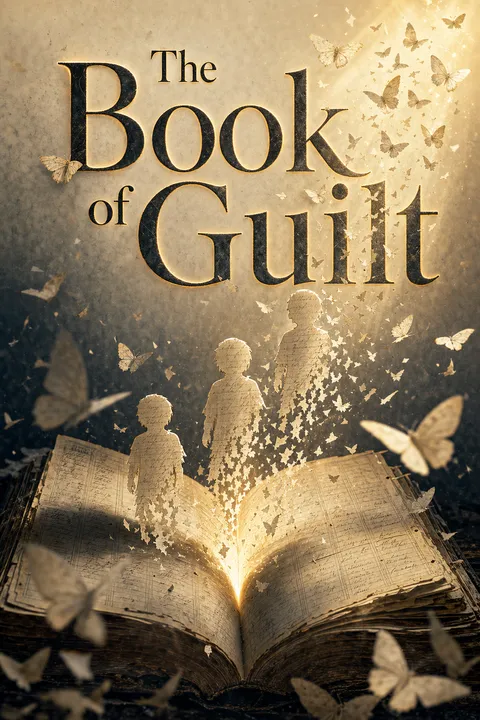


Plot Summary
Before They Knew Themselves
At Captain Scott, a boys' Home behind a glass-topped flint wall in the New Forest, identical triplets Vincent,1 Lawrence3 and William2 live cosseted lives, wearing color-coded shirts and reciting facts from an eight-volume encyclopedia. Three carers, called Mother Morning,5 Mother Afternoon6 and Mother Night,7 love them, dose them for a mysterious illness they nickname the Bug, and record every dream in a ledger.
In March 1979 Lawrence3 dreams of a skinny, dark-haired girl running naked through the woods, and Mother Morning5's voice sharpens with alarm. Soon all three brothers dream of her. Boys who beat the Bug are said to graduate to a seaside paradise called Margate. Vincent,1 weak and sleepless, cannot understand why their turn never comes.
Chidgey builds an uncanny nursery where tenderness and menace share a bloodstream. The color-coded shirts, saved milk teeth and dream-recording rituals present institutional control disguised as maternal devotion. The recurring girl signals something buried and inherited, a memory that predates the dreamer. By narrating from innocence, the adult Vincent's opening confession ('before I knew what I was') seeds dread: we register the wrongness the children cannot. The alternate-history texture (a survivable Bug, a mythic Margate) naturalizes atrocity through euphemism, the book's central strategy. Comfort itself becomes suspect. The reader learns to distrust kindness, to hear, beneath lullabies and lemon-juice ice cubes, the machinery of a scheme these boys have never questioned.
The Girl Behind Glass
In a parallel thread, a girl named Nancy4 lives sealed inside a pebble-dashed bungalow with elderly parents10 who pierce her ears with a needle, photograph her endlessly in a silvery-green dress, and forbid her from ever passing the garden hedge.
She watches life through television and her father's elaborate model village, learning the world secondhand. When a kind plumber calls her princess and mentions his daughters going to school, Nancy4 dares to ask questions, and her mother weeps, insisting the world is too dangerous.
Her parents mute the news whenever certain sad stories appear, hiding something Nancy4 cannot name. She rages, repents, obeys, and dreams of walking freely through the miniature streets her father builds, always stopping short of the painted forest.
Nancy's captivity mirrors the boys' confinement from the opposite pole: they are institutionalized, she is smothered by private grief. Both are managed through curated information and staged photographs, their identities authored by adults. The model village, a perfect controllable world where nobody leaves, doubles as her parents' psychology and the novel's thesis about how love can become a prison. The muted news and the pierced ears register a body groomed for a role it does not understand. Chidgey withholds the connection between threads, trusting dread to accumulate. Nancy's yearning to cross the hedge, and her instinct to avoid the forest, encode a trauma not yet hers, an inheritance waiting, like the boys' dreams, to surface.
The Dog Comes Back Different
Elderly Dr Roach,8 who has examined the boys and studied their dreams their whole lives, arrives with his fox terrier Cynthia, subtly younger and brighter than before. He admits he made a difficult decision when the old dog failed, and the boys slowly grasp that this is a replacement that lets him keep her still.
Soon the mothers gather grimly to announce a visit from the Minister of Loneliness, Sylvia Dalton,9 sent by a new government to close the Sycamore Homes and rehome the remaining children with ordinary families rather than send them to Margate.
Dr Roach,8 furious that his life's work is being dismantled, insists the boys are too valuable to release. The Minister,9 secretly carrying a vegetable knife, finds Vincent1 gentle and is unnerved by his soap-carved cameo.
Cynthia is the novel's Rosetta Stone, a replaceable, identical creature that teaches readers what the boys still cannot decode about themselves. Roach's sentimental cruelty (keeping a beloved by remaking her) previews the industrial logic underwriting the Homes. The Minister's arrival introduces bureaucratic conscience, a woman armed and afraid yet moved by a boy's tenderness, embodying the ordinary citizen who benefits from a system she will not fully examine. Her clash with Roach stages the book's political engine: cost-cutting reform colliding with a scientist's god-complex. Vincent's carved cameo, an act of unbidden artistry, marks him as more than tissue, complicating the very category the state depends on to justify everything done to him.
A Whisper While Dancing
To prepare the boys for the outside world, the Ministry arranges Socialisation Days with girls from the Edith Saunders Home. Three girls visit: bespectacled Diane,12 wax-pale Jane,11 and heavyset Karen.13 Awkward waltzing to Richard Clayderman gives way to a game of Sardines, and while hiding behind a fuchsia bush, Jane11 presses her mouth to Vincent1's ear and reveals the thing that upends his world: the medicine does not make them better, it makes them sick.
She hints there is something the boys have never figured out about what they are. Vincent,1 half in love and wholly rattled, cannot stop turning her words over. Every Home, the girls note, has its own Mother Morning,5 Afternoon6 and Night,7 a fact that leaves the brothers strangely unmoored.
The Socialisation Days parody normalcy, drilling children in manners for a freedom designed to erase them. Jane, sharper and more subversive than her keepers realize, functions as the truth-teller whose forbidden knowledge detonates Vincent's trust. Her whisper reframes every injection and pill as harm dressed as care, converting the loving mothers into agents of poisoning. The revelation that mother-titles are generic, interchangeable roles rather than persons, deepens the horror of counterfeit intimacy. Vincent's dawning attraction braids with dawning dread, so that desire and disillusionment arrive together. Chidgey uses adolescence, its whispers, crushes and rebellions, as the crowbar that pries open a totalitarian fiction the children were raised never to test.
Pills Under the Tongue
Testing Jane11's claim, Vincent1 hides his canary-yellow pills instead of swallowing them, and within a week feels transformed: strong, rested, able to shrug off both brothers in a wrestling match. William2 soon copies him.
Then Mother Morning5 discovers the hoarded pills in a drawer and, wounded and steely, force-feeds Vincent1 five at once. He collapses into days of hallucination. During his delirium the young Mother Night7 slips to his bedside and whispers a desperate warning: Margate is not Margate, he must never go there, he must get a family to take him and never put a foot wrong.
She presses something papery into his hand. When Vincent1 recovers, his brothers insist he dreamed it all, calling him bonkers, and the warning dissolves into uncertainty.
Vincent's vitality off the drugs proves the medicine's true function, converting suspicion into bodily evidence. His punishment, being drowned in the very pills that harm him, literalizes how the system pathologizes resistance. Mother Night's cryptic warning cracks the maternal facade from within; here is a carer risking herself to tell the truth, staking a moral claim the scheme forbids. That her words are dismissed as delirium shows how systems protect themselves by discrediting testimony, even the victim's own memory. The papery object, unread and lost, becomes a suspended promise. Chidgey renders enlightenment as sickness and clarity as madness, a chilling inversion in which knowing the truth is the most dangerous condition of all.
The Baker's Grateful Mistake
Sent alone to the village bakery, Vincent1 is thanked effusively by kind Mr Webb,14 whose dying grandson recovered thanks to an experimental drug. Webb14 blurts that Vincent1 and all the Sycamore children are heroes of the drug trials, then realizes he has said too much.
When Vincent1 returns days later to press him, a stranger claims no Mr Webb14 ever worked there. Meanwhile the brothers notice something impossible at bedtime: Mother Night7 looks older, subtly wrong, though she wears the same clothes and scent.
They privately name her Mother Not, sensing she has been replaced. Piecing Webb14's slip together with the encyclopedia's entry on drug testing, Vincent1 concludes there is no Bug at all. They are laboratory subjects, and the boys who died were killed by the medicine.
Webb's affectionate blunder pierces the information quarantine that keeps children ignorant and villagers complicit. His gratitude and the town's simultaneous revulsion expose the moral contortion of beneficiaries who need the sacrifice yet despise the sacrificed, echoing how societies consume what they refuse to look at. The overnight substitution of Mother Night dramatizes disposability at the level of the caregivers themselves, and gives the boys a chilling proof that people can be swapped like Cynthia. Vincent's deduction, that illness was manufactured and death was murder, completes his transition from innocence to knowledge. The villagers' erasure of Webb shows the machinery of denial closing ranks, rewriting reality faster than a child can testify to it.
What Happened in the Woods
During a picnic Socialisation Day, the group wanders into the woods and splits up. Karen,13 who has been flirting clumsily with William,2 screams; the others cannot find her. Vincent1 discovers her at the foot of a beech tree, clothing torn and pulled down, terrified of anyone with William2's face.
Understanding instantly what his brother2 has done, Vincent1 chooses protection over truth: he begs Karen13 to stay silent, warning that something very bad will happen to William,2 and to her, if she tells. Later, eavesdropping down the laundry chute, he hears Mother Morning5 report that Edith Saunders has accused William2 of copulation, the very word torn out of the boys' encyclopedia. Dr Roach,8 they agree, will quietly look after everything.
This is the novel's darkest pivot, where inherited violence surfaces and Vincent's defining flaw declares itself: he shields William reflexively, even against a victim. The excised encyclopedia entry becomes literal, knowledge deliberately amputated so children cannot name what is done to and by them. Vincent's coercion of Karen implicates him in the cover-up, corroding his innocence and prefiguring the guilt that will define him. The mothers' bloodless response, and Roach's promise to handle it, reveal that the scheme's real fear is not harm but reputational damage, a bureaucracy that logs sin in a Book of Guilt while erasing crimes it finds inconvenient. Complicity, Chidgey suggests, is love's most dangerous byproduct.
Meeting Their Living Father
The Minister9 tells the boys their father survived the heart attack they were told killed him, and arranges a coach trip to meet him in Manchester. The castle-like building is Strangeways prison; the man behind the glass15 has their exact eyes, jaw, cowlick and long fingers, aged fifty years.
He says he untangles Post Office string, warns them that families are cruel and that they must always protect young ladies, and grows agitated as a guard counts down the minutes to something happening the next morning.
On the drive home the boys confront the Minister;9 she admits the drug trials are real, that the dead boys were heroes, and that no more medicine awaits them once rehomed. Vincent1 has already glimpsed his own face on a torn newspaper scrap.
The prison visit collapses the myth of dead parents into something far worse, a living original whose face is a mirror of the boys' futures. Chidgey withholds the man's crimes here, letting menace gather around his warnings about protecting girls, an unbearable irony given what William has just done. The countdown to morning, the untangling of knots, the fatalism, all encode an execution the boys cannot parse. Their father's advice about family cruelty ironically forecasts the danger ahead. The Minister's partial confession, granting the drug trials while dressing death as heroism, shows conscience negotiating with cowardice. The newspaper scrap fuses the threads: identity here is not destiny chosen but destiny copied, printed and distributed.
Sold on Television
To attract adoptive families, the Ministry films the triplets in the garden with the Minister,9 who opens her arms maternally while William2 sneers and deliberately fumbles the staged apple-picking. The clip airs to a public largely uninterested in taking a Sycamore child. Then, at last, brochures for Margate appear on the boys' pillows, and they pack ecstatically, certain their turn has finally come.
But the Van that arrives is turned away at the gates. A childless couple in Exeter, the Fletchers,10 have telephoned wanting to meet the triplets with a view to adopting one. Margate is cancelled. The boys, crushed and confused, are told they will travel to Exeter instead, and that only one of them can be taken.
The televised adoption drive commodifies the children explicitly, a catalogue of humans marketed like the mail-order goods that clutter the era. The Minister's performed maternity, borrowed from the Prime Minister's photo-ops, exposes politics as image management over substance. William's sabotage signals a boy who intuits he is being sold and refuses to perform gratitude. The pillow brochures, that long-awaited golden ticket, arrive only to be revoked, tightening the noose of dread the reader already suspects Margate to be. The pivot from paradise to a private family swaps one euphemistic fate for another. That only one boy can be chosen introduces the cruel arithmetic that will force Vincent's most fateful decision.
Inside the Model Village
The Minister9 drives the triplets to the Fletchers10 'spotless Exeter bungalow, where Mr Fletcher10's astonishing hand-built model village enchants them: working trains, a cuckoo clock, a colour television, a white cat that curls into Lawrence3's lap. But cracks show.
At lunch Vincent1 glimpses pure loathing flash across Mrs Fletcher10's face when he trims gristle from his pork. A staged train crash the boys orchestrate ends in William2 throttling Lawrence3 on the carpet.
When Vincent1 returns alone to retrieve Lawrence3's lost Margate brochure, he sees Mrs Fletcher10 frantically scrubbing every trace of the boys from the sofa. As he leaves, a net curtain stirs and a pale girl with long black hair,4 the girl from his dreams, appears at the glass, terrified, and mouths a single word: run.
The model village crystallizes the Fletchers' psychology, a hobbyist's fantasy of a controlled world where trains loop forever and nobody leaves, mirroring their captivity of Nancy. The boys' compulsive staging of disasters within it betrays inherited violence and childish cruelty simultaneously. Mrs Fletcher's flash of loathing and obsessive scrubbing reveal that these hosts see the boys not as children but as contamination, or as something else entirely. The dream-girl made flesh delivers the novel's most electric collision of threads: Vincent's inherited nightmare and Nancy's captivity are the same wound viewed from two lives. Her warning, run, transfers agency across the glass, but Vincent's fatal choice about how to use that warning is still to come.
Two Suitcases in the Loft
Haunted by the Minister9 mentioning babies her parents could not keep, Nancy4 climbs into the forbidden loft and finds two suitcases. One holds photograph albums of a girl identical to her, in decades-old black-and-white, posed in places Nancy4 has never been, dated as far back as 1950.
The other holds newspaper cuttings about Arthur Powell,15 the Butcher of Birmingham, hanged for murdering eleven schoolgirls, including twelve-year-old Nancy Liddell, whose body was never found.
The murdered girl's photograph wears Nancy4's own clothes and pose. Nancy4 realizes she is a copy of her parents10 'murdered daughter, grown from baby teeth, dressed and renamed to replace her, and that the celebratory party her parents threw fell exactly on the morning Powell15 was executed.
Nancy's discovery reframes her entire existence as a grief-driven resurrection, a child manufactured to undo an unbearable loss. The mismatched photographs, her poses and clothes transplanted onto a dead girl, expose how thoroughly her parents authored her identity, erasing her selfhood beneath a ghost's. The Powell cuttings fuse the novel's threads with brutal economy: the triplets' donor-father is the man who murdered Nancy's original, making Nancy and the boys mirror-victims of the same monstrous source. The celebratory party timed to an execution reveals love curdled into vengeance. Chidgey interrogates the ethics of replacement, showing that to remake the dead is also to imprison the living inside another person's story, another person's murder.
The Brother He Chose
The Fletchers10 choose William,2 precisely because his violence at the visit marked him as the disturbed child they secretly want. Vincent,1 who has never forgotten the girl mouthing run and the scrubbed sofa, faces an unbearable calculation.
Rather than let William,2 the brother he has always loved best despite his cruelties, walk into danger, Vincent1 stays silent about his fears until the choice is made, then proposes the switch. Lawrence,3 gentlest of the three and eager to meet the dream-girl4 he imagines as lovely, agrees to dress in William2's clothes and go in his place.
They debate it, absurdly, in Ethical Hour. So the tenderest brother3 is quietly substituted for the one the Fletchers10 chose, and Vincent1 buries the dread that something terrible awaits.
Here Vincent commits the act that will define and haunt him, weaponizing his moral training to rationalize a sacrifice. The scheme's Ethical Hour, meant to teach right from wrong, becomes the instrument by which children calmly arrange one of their own for slaughter, a devastating indictment of moral education severed from truth. Vincent's preference for William, the abuser, over Lawrence, the kind one, exposes love's irrational cruelty and his own capacity for evil, the very thing the Homes were built to study. The Fletchers' desire for the damaged child reveals their intent was never adoption but retribution. Chidgey stages the banality of complicity: not a monster's choice, but a frightened boy protecting the one he cannot bear to lose.
The Missing Page
On delivery day, packing his rucksack, Vincent1 finds a hidden page slipped into the jigsaw box by the real Mother Night:7 encyclopedia page 504, the torn-out entry titled not Copulation but Copy.
It explains that Dr Roach8 grew human copies for medical trials, first from stillbirths, later from prisoners, and established the Sycamore Homes to house them cheaply. The brothers confront a drunken, collapsing Mother Morning,5 who confirms it all: they are clones of a criminal, monitored through the Books of Dreams and Guilt to predict inherited evil.
Worst of all, Margate is a lie. Children reported as dangerous were weaned onto placebos, told they had recovered, then gassed in the Van they boarded joyfully, their ashes tipped into rivers to reach the sea.
The revelation lands with double force because the reader has half-known it: euphemism finally strips to atrocity. That the torn word was Copy, not Copulation, reframes the boys' entire education as curated ignorance about their own nature. Mother Morning's confession converts nurturing ritual into surveillance apparatus, the dream-ledger a tool for forecasting which children to kill. Margate, the shimmering paradise, is unmasked as gas vans, an unmistakable Holocaust echo made more damning by the alternate history's compromise with Nazism. The children boarding willingly indicts a system so total that victims collaborate in their own extermination. Chidgey's horror is administrative and intimate at once: genocide run by loving mothers, funded by a state, ignored by a grateful public.
The Knife in Exeter
Delivered to the Fletchers,10 Lawrence3 (disguised as William2) is drugged with sedative-laced breakfast. Nancy,4 learning her parents10 mean to torture the boy the way Powell15 tortured her original, tries and fails to warn him, then flees the house and hitchhikes across the country to Captain Scott.
She finds Vincent1 in the garden and warns him William2 is in danger; Vincent1 knows it is truly Lawrence.3 He phones the former Minister9 using her private card. She races to confirm the Fletchers10 are the vanished Liddell parents and calls the police.
Officers raid the plastic-sheeted room in time to save Lawrence3's life, but not before the Fletchers10 have severed his tongue, leaving him mutilated and mute. He returns home refusing to look at Vincent,1 who knows exactly what he did.
The rescue arrives too late for wholeness, the novel refusing redemptive neatness. Nancy's cross-country flight, her first taste of the forbidden world, is both liberation and terror, driven by a moral clarity her captors lack. That she risks everything for a boy she has never met, while Vincent's love condemned his own brother, sharpens the book's meditation on courage versus complicity. The severed tongue is grimly overdetermined: Powell silenced his victims the same way, so the copy repeats the crime committed against the copy of his victim, a closed loop of inherited and re-enacted violence. Lawrence's muteness makes his accusation eternal and wordless. Vincent's salvation of a brother he doomed cements a guilt that no rescue can absolve.
Margate at Last
Years pass. Mother Morning5 vanishes; a religious carer, Miss Ream, takes over as surviving children from closed Homes gather. Lawrence,3 mute and estranged, runs away at fourteen and disappears forever, likely lost to the streets.
In 2019, Vincent,1 now a librarian married to Nancy,4 and William,2 who visits only to be cruel, learn the full history through a museum exhibition in Margate itself. Cabinets display the Books of Dreams and Guilt; placards confirm the gas-van cullings and credit the disgraced ex-Minister Sylvia Dalton9 with winning copies the right to vote, work and marry.
There Vincent1 finds Jane11's final Book of Guilt entry, sent to her death for a crime he first reported, and reunites with the real Mother Night,7 aged and imprisoned for ten years for trying to tell the truth.
The coda converts private guilt into historical record, staging how atrocity becomes heritage tourism, curated by a town eager to launder its stigma. Margate, once death disguised as paradise, is now a memorial, the euphemism at last named. Vincent's discovery that his own report doomed Jane extends his complicity beyond Lawrence, making guilt not an event but a condition, the meaning of his opening confession. Mother Night's imprisonment and the Minister's ruined career honor the few who chose truth without fear, the griffin's motto fulfilled. Rights won decades late cannot restore the dead. Chidgey closes on endurance rather than absolution: survivors carry the ledger of what was done, and what they did, into a world still averting its eyes.
Analysis
Chidgey builds a counterfactual Britain where an early truce with a de-Nazified Germany let atrocity migrate into peacetime science, and uses that premise to interrogate complicity rather than villainy. The horror here is administrative and affectionate: genocide staffed by loving mothers, funded by cost-conscious ministers, and ignored by a grateful public that consumes miracle cures the way it consumes sausages, refusing to look at the slaughter behind them. The recurring language of euphemism, Margate, the Bug, heroes, rehoming, dramatizes how societies make evil bearable by renaming it, and how children can be raised to board the death van joyfully. The novel's three ledgers, dreams, knowledge and guilt, expose institutions that pathologize resistance, control reality by controlling information, and log sin while erasing crimes that threaten reputation. At its center sits the nature-versus-nurture question Roach8 obsessively studies: are the copies doomed by inherited blood, or ruined by inhumane treatment, and the exhibition's late statistic, that copies committed fewer violent acts than ordinary people, quietly damns the whole premise. Yet Chidgey resists letting the system absorb all blame. Vincent1's confession reveals evil as intimate choice: he shields an abuser, coerces a victim's silence, and, out of love, sends the gentlest brother into danger. Love, the book insists, is not the opposite of cruelty but often its enabler, and the Fletchers10 prove grief can curdle into the same logic of replacement and revenge that drives the state. Nancy,4 manufactured to resurrect a murdered girl, and the triplets, copied from her killer, mirror one another as products of others' unhealed wounds. The 2019 coda, turning atrocity into heritage tourism and rights granted decades too late, refuses redemption. What endures is testimony and guilt, truth without fear, carried by survivors into a world still averting its eyes.
Review Summary
People Also Read


Characters
Vincent
Guilt-haunted narrator tripletThe yellow-shirted triplet who narrates most of the story, gentle, observant and drawn to making things with his hands, from a soap cameo to woodwork. Plagued by insomnia and a fluttery heart, he is the first to test the truth about the medicine and the first to grasp what the boys really are. His defining trait is a fierce, irrational love for his brother William2 that overrides fairness, kindness, even self-preservation. Curious and tender, he nonetheless carries a capacity for complicity, shielding William2's cruelties and coercing silence when it suits him. Vincent's psychological engine is the tension between conscience and devotion, between the boy who carves beauty and the boy who buries dread. His retrospective voice frames the entire novel as a confession of what love made him capable of doing.
William
Charismatic, cruel tripletThe red-shirted triplet, bold, funny and magnetic, who seems to fear nothing and feel little pain. William plays rough, stamps on the dog, torments Lawrence3, and manipulates situations with a smile that disarms adults. He is prone to violent nightmares he refuses to report and to sudden acts that reveal something darker beneath his charm. Yet he can also be unexpectedly generous, giving away his own drawings or comforting Vincent1 after a nightmare. Vincent1 loves him most despite everything, a devotion William both exploits and, in his way, returns. Psychologically he embodies the novel's nature-versus-nurture question: how much of him is upbringing, and how much is inherited from a source he never chose. He is at once victim, aggressor and enigma.
Lawrence
Tender animal-loving tripletThe green-shirted triplet, softhearted, rule-abiding and desperate to be liked, who dreams of becoming a vet and weeps over lost toy dogs and doomed queens. Lawrence suffers joint pain and headaches, hates needles, and clings to routine as safety. He is the peacemaker who tries to comfort crying carers and shield weaker children, the brother most easily wounded by William2's cruelty and most eager to please a father15 who barely notices him. His gentleness makes him vulnerable in a world that prizes usefulness and punishes softness. Lawrence carries the novel's most fragile hope, the belief that kindness might be rewarded, and his fate tests that belief to breaking. He is the moral heart the story cannot protect.
Nancy
Girl kept behind a hedgeA dark-haired girl imprisoned inside an Exeter bungalow by elderly parents10 who dress her in a dead girl's clothes and forbid her from crossing the garden gate. Nancy knows the world only through television, a model village and forbidden glimpses of muted news. Spirited and questioning beneath her obedience, she rages at her confinement, then repents when her mother cries, trapped in a cycle of love and control. She yearns for friends, for school, for the ordinary life she watches others live. Her instinct toward compassion and truth, and her buried, inherited dread of the forest, drive her toward a courage her captors never imagined. Nancy embodies the novel's questions about identity, replacement and whether a person authored by grief can author herself.
Mother Morning
Strict record-keeping carerThe auburn-haired carer whose dawn shift opens each day, recording the boys' dreams in her Book and their misdeeds in the Book of Guilt. Correct, watchful and quick with a dreaded raised eyebrow, she enforces manners, medicine and the greater good with unsettling devotion. Proud to serve the Scheme and hopeful of reward, she loves the boys genuinely even as she administers what harms them, a woman whose loyalty curdles into complicity. Her composure frays as the Homes close.
Mother Afternoon
Warm, cooking carerThe broad-handed, crinkly-haired carer of the midday shift, who juices lemons, arranges ikebana, enters Spot the Ball contests, and dreams aloud of a cottage full of eccentric pets. Cheerful, physically strong and openly affectionate, she is the boys' source of pastry-scented comfort. Beneath the warmth runs evasion and fear; she deflects hard questions with jokes and laughter, and her cheer collapses as the truth of the Scheme presses in.
Mother Night
Truth-telling night carerThe elegant, black-haired carer of the night shift, who knits, reads Ulysses aloud, and soothes sleepless children with stories of her own childhood. Different from the others in dress and spirit, she treats the boys as more than subjects and comes to risk everything by trying to tell them what they are. Her real name is Frances. Compassionate and quietly rebellious, she pays a heavy price for her conscience, embodying the few who chose truth over safety.
Dr Alastair Roach
Elderly scientist-creatorThe small-boned, silver-haired physician who has examined the triplets since birth, arriving in a red Jaguar with his fox terrier Cynthia and a bag of tooth-shaped sweets. Grandfatherly and gentle in manner, he is the architect of the Sycamore Scheme, a scientist who regards the children as valuable material and himself as a benefactor granting life. Roach's charm masks a god-complex fed by state funding and his own donations. Obsessed with the origins of evil and the reach of medical breakthrough, he embodies the moral catastrophe of research divorced from humanity. His replacement of his dying dog with an identical copy silently reveals the logic underpinning everything he has built.
Sylvia Dalton
Conscience-stricken government ministerThe Minister of Loneliness, a short, plain, ambitious politician tasked with closing the Homes and rehoming the children, who arrives at Captain Scott carrying a hidden knife and a lifetime of her mother's criticism. Initially treating the copies as a public-relations problem, she is disarmed by Vincent1's gentleness and a soap cameo he carves her. Torn between careerism and a growing, dangerous compassion, she wavers, rationalizes and glorifies, then slowly finds the courage her position demands. Sylvia embodies the ordinary beneficiary of atrocity awakening to complicity. Her arc traces the cost of conscience: what a person risks when she finally stops averting her eyes and begins to see the children as children.
The Fletchers
Nancy's secretive parentsKenneth and Marjorie Fletcher, an elderly, house-proud Exeter couple who keep Nancy4 sealed indoors and fill their bungalow with mail-order objects and a hand-built model village. Superficially kind, hospitable and ordinary, they harbor a grief and a purpose that curdle into something monstrous. Kenneth engraves for a living and builds miniature worlds; Marjorie sews and orders catalogues. Together they embody love warped by loss into vengeance, and the terrifying ordinariness of people capable of unspeakable acts.
Jane
Sharp-tongued truth-tellerA pale, mousy-plaited girl from the Edith Saunders Home, cleverer and more subversive than her keepers realize, who wears faux pearls and dreams of running away. Jane is the first to tell Vincent1 that the medicine sickens rather than cures, planting the seed of rebellion. Bold, wry and quietly desperate, she becomes Vincent1's confidante and first love, and her fate shadows the story's conscience.
Diane
Hopeful, bespectacled girlA Sycamore girl from Edith Saunders with big spectacled eyes and a rash, chatty and stubbornly optimistic, forever insisting a family will choose her and that her best friend Jane11 is happily off at Margate. Her cheerful denial makes her a poignant register of the Scheme's lies.
Karen
Vulnerable, dwindling girlA heavyset Sycamore girl who flirts awkwardly with William2 and suffers a terrible consequence in the woods, afterward shrinking in body and spirit, turning to Bible verses and a chair wedged against her door for safety. She is the story's silent wound of complicity.
Mr Webb
Kind, indiscreet bakerThe friendly Ashbridge baker who slips the boys extra cream buns and, out of gratitude for his grandson's recovery, accidentally reveals that the Sycamore children are subjects of drug trials, cracking open the truth before he is quietly made to disappear from the village.
Arthur Powell
Imprisoned man, their originA tall, white-bearded prisoner at Strangeways whose face is the triplets' face aged fifty years, and who is revealed to be the biological source from which they were copied. Once talented and clever, his life took a catastrophic wrong turn. Behind the visiting glass he offers unsettling advice and betrays a fatalism about the coming morning. He embodies the novel's nature-versus-nurture dread, the shadow future the boys carry in their blood.
Plot Devices
The Three Books
Surveillance disguised as careThe Book of Dreams, the Book of Knowledge and the Book of Guilt structure both the Home and the novel's three parts. Each morning the mothers record the boys' dreams; each misdeed is logged in the Book of Guilt; the outdated encyclopedia supplies all permitted knowledge of the world. Presented as loving ritual, the record-keeping is in fact a monitoring apparatus designed to predict inherited evil and flag children for disposal. The encyclopedia's confident authority, and its deliberate omissions and errors, mirror how the Scheme controls reality by controlling information. As the story turns, these instruments of comfort are exposed as instruments of judgment and death, transforming everyday nursery habits into the paperwork of atrocity.
Margate and the Brochure
Euphemism masking deathMargate is the seaside paradise the children are promised once they beat the Bug, complete with a glossy brochure of Dreamland rides, dolphins and the towering Big House, placed on a chosen child's pillow by an unseen hand. It functions as the novel's central euphemism, a shimmering reward that motivates obedience and gives grief a happy shape. The brochure recurs as an object of longing, clutched and reread by children who believe departed friends are riding the Sky Wheels. Its cheerful imagery makes the eventual revelation of its true meaning, and of what the arriving Van actually does, all the more devastating, exposing how atrocity hides inside the vocabulary of holidays and children's fun.
The Dream of the Running Girl
Inherited memory as clueAll three brothers dream of a skinny, dark-haired girl running through moonlit woods, a vision Mother Morning5 records with alarm. The dream recurs with variations, pleasant for Lawrence3, frightening for William2, uneasy for Vincent1, and the boys assume they simply invented her. In fact it is a genetic memory inherited from their donor, a fragment of a real crime surfacing across the generations of copies. The device links the two narrative threads invisibly, so that the girl of the dreams and a captive girl in Exeter4 prove to be the same wound seen from two lives. It embodies the novel's dread that identity, trauma and guilt can be copied and transmitted in the blood, resurfacing in sleep.
Cynthia the Dog
Foreshadowing replacementDr Roach8's fox terrier Cynthia appears one visit subtly younger and brighter, and the boys slowly realize she is a copy, an identical replacement made when the original failed, allowing Roach8 to keep his pet forever. Introduced early and casually, Cynthia is the reader's decoder ring, demonstrating the technology and the sentimental cruelty at the heart of the Scheme before the children can name what they themselves are. Her cheerful presence at examinations and picnics makes her a quiet emblem of disposability and duplication. The device seeds the novel's central revelation gently, so that when the truth about the copies lands, the reader recognizes its logic already established in a beloved, wagging, unremarkable dog.
The Missing Page 504
The withheld truth revealedThe boys' encyclopedia has one torn-out page, 504, its index entry blacked out, which they assume covered the word Copulation. Slipped secretly into a jigsaw box by the real Mother Night7, the true page finally reaches Vincent1 and reveals the entry was actually Copy, explaining Dr Roach8's creation of human copies for medical trials, first from stillbirths, then from prisoners. The device pays off a mystery planted at the very start, the damaged volume, and delivers the novel's core revelation as literal text, the knowledge deliberately amputated from the children's education. Its arrival, coupled with a drunken confession, converts every earlier scene into evidence and completes the reader's and Vincent1's passage from innocence to unbearable understanding.
Download PDF
Download EPUB
.epub digital book format is ideal for reading ebooks on phones, tablets, and e-readers.








































