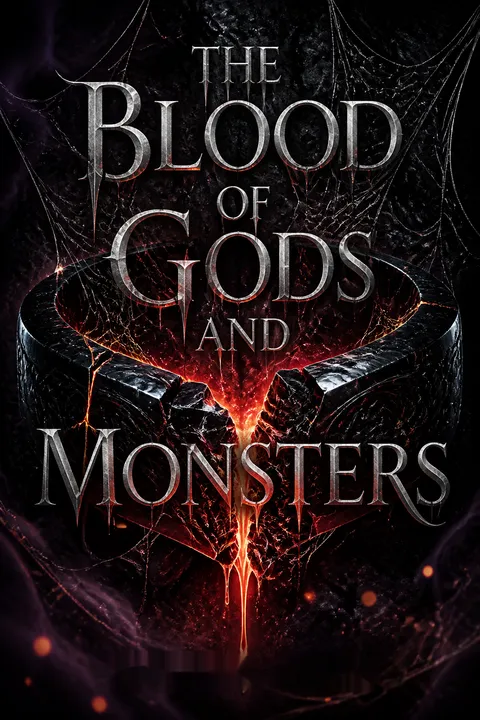

Plot Summary
Blood and Brimstone Bargain
Kiera's life is torn apart when her father is murdered and she is sold into the Underworld, a guild of assassins led by the cold, calculating Ophelia. Imprisoned and bound by a sliver of brimstone in her neck, Kiera is forced to make a deal: survive as an assassin, or die forgotten. The pain of loss and betrayal forges her into a weapon, her childhood innocence replaced by a burning need for freedom and vengeance. In the darkness of her cell, Kiera learns that trust is a luxury she cannot afford, and that the only way out is through blood and cunning. The world of gods and monsters is merciless, and Kiera's journey begins with a single, desperate choice.
Shadows of the Past
Years pass as Kiera is molded by Ophelia's brutal training, her memories of the Hinterlands and her father fading into the background of violence and survival. The Underworld becomes her home and prison, Regis her reluctant companion and rival. Each mission, each kill, is a step further from the girl she once was. Yet, the pain of the brimstone in her neck and the weight of her blood contract keep her tethered to Ophelia's will. Kiera's only solace is in the shadows, where she learns to move unseen, her heart hardening with every betrayal. The world outside is ruled by gods who are not what they seem, and Kiera's destiny is entwined with secrets she cannot yet fathom.
The Prophecy Unveiled
Kiera's latest mission brings her to the Mortal Gods Academy, where she is contracted by the enigmatic God of Prophecy, Caedmon. But the contract is a riddle: there is no target, only a test. Caedmon's true motives are shrouded in mystery, and his cryptic guidance leaves Kiera grasping for answers. The Academy is a nest of power and intrigue, ruled by gods who are worshipped but not understood. Kiera's presence is a threat to the order, her Divinity hidden by the brimstone in her neck. As she navigates the dangerous politics of the Academy, Kiera senses that she is a pawn in a much larger game—one that will force her to confront the truth of her own blood.
Webs of Deceit
Within the Academy, Kiera is drawn into the orbit of the Darkhaven brothers—Ruen, Theos, and Kalix—each dangerous in their own way, each drawn to her for reasons they cannot explain. Their relationships are fraught with suspicion, desire, and the ever-present threat of betrayal. Kiera's skills as an assassin make her both valuable and vulnerable, and her growing connection to the brothers blurs the line between ally and enemy. Meanwhile, Ophelia's hold on her remains unbroken, and the Underworld's secrets threaten to unravel. As Kiera's Divinity begins to surface, the web of lies tightens, and every choice becomes a test of loyalty and survival.
Mortal Gods, Immortal Lies
Caedmon reveals the truth: the gods are not divine, but refugees from another world, Atlanteans who seized power through magic and deception. Their immortality is a lie, maintained by consuming the Divinity of their own children. The Mortal Gods—descendants of these imposters—are both weapon and sacrifice. Kiera learns that her own bloodline is tied to the God King, Tryphone, and that she is the key to a prophecy that could save or doom them all. The revelation shatters her understanding of the world, and the line between god and monster blurs. The Academy is a gilded cage, and Kiera is both prisoner and potential liberator.
The Council's Game
Summoned before the God Council, Kiera is subjected to a ceremony meant to reveal her parentage. The ritual fails, and suspicion grows. The gods' interest in her intensifies, and the Darkhavens close ranks to protect her. The Academy becomes a battleground of hidden agendas, as students disappear and rumors of a forbidden taboo spread. Kiera's powers grow, her connection to shadows and spiders deepening. The Council's machinations threaten to consume her, and every move is watched. The prophecy looms over them all, and Kiera must decide whom to trust as the gods' patience wears thin.
Chains and Choices
With the help of the Darkhavens, Kiera confronts Ophelia and demands her freedom. The removal of the brimstone is both agony and liberation, unleashing her full Divinity and senses. The pain of the past lingers, but Kiera is no longer a pawn—she is a player. Her relationships with Ruen, Theos, and Kalix deepen, each fraught with passion and peril. The Underworld is breached, and Regis is left for dead, forcing Kiera to choose between vengeance and mercy. The cost of freedom is high, and Kiera must decide what kind of monster she is willing to become.
The Assassin's Awakening
Freed from Ophelia's control, Kiera's abilities surge. She commands shadows and spiders, her senses heightened to the point of pain. The Academy is no longer a place of hiding, but a stage for her true self. The Darkhavens become her unlikely allies and lovers, their own scars and secrets binding them together. As the God Council's scrutiny intensifies, Kiera's role in the prophecy becomes clear: she is the only one who can challenge Tryphone and end the cycle of consumption. But power comes at a price, and the line between savior and destroyer grows thin.
The Price of Power
The Underworld's collapse reveals the depth of the gods' corruption. Carcel, Ophelia's son, betrays the guild, and Regis barely survives. The gods' taboo is exposed: they are consuming their own children to maintain their immortality. The missing Mortal Gods are not transferred, but devoured. Kiera's book of prophecies, bound in Caedmon's own flesh, reveals the names of the lost. The truth is a poison that spreads through the Academy, and Kiera must decide whether to run or fight. The cost of power is blood, and the gods' hunger is insatiable.
The Underworld Breached
Regis' return brings both relief and dread. The Underworld is no longer safe, and Carcel's alliance with a god threatens everyone Kiera cares about. The dead walk in the service of the divine, and the line between life and death blurs. Kiera's friendship with Regis is tested, but forgiveness is found in shared pain. The Darkhavens rally around her, but the threat of the God Council grows ever closer. The world is changing, and there is no going back.
The Ceremony of Blood
The God Council's attempt to reveal Kiera's parentage through a blood ceremony ends in failure, deepening the mystery of her origins. The ritual, meant to bind her to the gods' will, instead unleashes a vision of death and decay. Kiera's connection to the prophecy is undeniable, and the gods' fear grows. The Spring Equinox approaches, and with it, the promise of a final reckoning. Kiera is no longer content to be a pawn—she is ready to become the blade.
The Taboo Revealed
Through a harrowing confrontation with Tryphone, Kiera uncovers the truth: the gods are not merely killing their children—they are consuming them, draining their Divinity to stave off death. The missing Mortal Gods are not lost, but sacrificed. Caedmon's death signals the end of hope, and the prophecy's burden falls squarely on Kiera's shoulders. The Academy is a slaughterhouse, and Kiera is both witness and potential executioner. The time for running is over; the time for war has come.
Consumed by the Divine
As the gods summon the Mortal Gods to Ortus Academy, Kiera and the Darkhavens realize the full extent of the threat. The prophecy is no longer a distant warning, but an imminent reality. The gods' hunger is endless, and the only way to break the cycle is through blood and rebellion. Kiera's powers are both gift and curse, her identity forged in the crucible of pain and loss. The final battle is on the horizon, and the fate of gods and monsters alike rests in her hands.
The Last Prophecy
With Caedmon dead and the gods' secret exposed, Kiera stands at the crossroads of destiny. The Mortal Gods are summoned to their doom, and the Academy becomes a battlefield. The Darkhavens stand with her, their love and loyalty tested by the horrors they face. Kiera must decide whether to fulfill the prophecy and kill Tryphone, or forge a new path. The cost of salvation is steep, and the line between hero and monster is razor-thin. In the end, Kiera learns that true power is not in blood or Divinity, but in the choices we make—and the courage to face the darkness within.
Analysis
The Blood of Gods and Monsters is a dark, emotionally charged exploration of power, trauma, and the cost of survival in a world built on lies. At its core, the novel interrogates the nature of divinity—what makes a god, and what makes a monster? Through Kiera's journey from captive to assassin to reluctant savior, the story examines the ways in which systems of power consume the vulnerable, and how cycles of abuse are perpetuated by those desperate to avoid their own mortality. The gods' taboo—consuming their own children to maintain their immortality—is a chilling metaphor for generational trauma and the hunger for control. Yet, the novel is also a testament to resilience: Kiera's refusal to be defined by her pain, her willingness to choose her own path, and her capacity for forgiveness and love. The relationships between the characters are complex, marked by longing, betrayal, and the desperate need for connection. The story's structure—prophecy, ritual, and rebellion—mirrors the psychological journey of breaking free from the chains of the past. In the end, The Blood of Gods and Monsters is a meditation on agency: the courage to face the darkness within, to choose compassion over vengeance, and to forge a new future from the ashes of the old. The lesson is clear: true power is not in blood or birthright, but in the choices we make—and the willingness to fight for a world where no one is consumed by the hunger of gods.
Review Summary
The Blood of Gods and Monsters is the third book in the Mortal Gods series, receiving mostly positive reviews. Readers praise the dark fantasy romance, complex characters, and intriguing plot twists. The story follows Kiera and the Darkhaven brothers as they uncover secrets about gods and monsters. Many reviewers appreciate the character development, spicy scenes, and the author's writing style. Some criticize pacing issues and predictability. The book ends on a cliffhanger, leaving readers eager for the final installment.
People Also Read
Characters
Kiera
Kiera is the heart of the story—a Mortal God born of both mortal and divine blood, orphaned by violence and shaped by the brutal training of the Underworld. Her journey is one of survival, transformation, and reluctant heroism. Haunted by the loss of her father and the betrayal of those she trusted, Kiera's psyche is a battleground of vulnerability and rage. The brimstone in her neck, a symbol of her bondage, is both a literal and metaphorical shackle. Her relationships with Ophelia, Regis, and the Darkhavens are fraught with longing, mistrust, and the desperate need for connection. As her Divinity awakens, Kiera is forced to confront the truth of her origins and the prophecy that binds her fate to the gods' downfall. Her arc is one of self-discovery, as she learns that true strength lies not in vengeance, but in the courage to choose her own path—even if it means becoming the monster she fears.
Ruen Darkhaven
Ruen is the eldest Darkhaven brother, a man marked by trauma and the burden of leadership. His relationship with his father, Azai, is defined by violence and betrayal, the scars on his body a testament to the gods' cruelty. Ruen's stoicism masks a deep well of pain and self-loathing, his self-harm a coping mechanism for a world that demands strength at all costs. His connection to Kiera is both protective and possessive, drawn to her darkness as much as her vulnerability. Ruen's arc is one of learning to trust, to let others in, and to find purpose beyond survival. His loyalty to his brothers and Kiera is unwavering, but his greatest battle is with himself.
Theos Darkhaven
Theos is the light to his brothers' shadows, a healer with a fierce protective streak. His Divinity is both a gift and a curse, his compassion often at odds with the violence of the world around him. Theos' longing for connection is palpable, his relationship with Kiera marked by tenderness and frustration. He is the first to forgive, the first to offer comfort, but his own wounds run deep. Theos' arc is one of self-acceptance, learning that love is not weakness, and that even the gentlest soul can wield great power when pushed to the brink.
Kalix Darkhaven
Kalix is the wild card of the Darkhavens, a man whose Divinity is entwined with serpents and shadows. His appetite for violence and pleasure is insatiable, his obsession with Kiera both thrilling and dangerous. Kalix's madness is a mask for his own pain, his need for control a response to a world that has always tried to cage him. His relationship with his brothers is complex—loyal, but often at odds. With Kiera, he finds a kindred spirit, someone who understands the darkness within. Kalix's arc is one of learning restraint, of finding meaning beyond destruction, and of choosing love over chaos.
Ophelia
Ophelia is both jailer and mother figure to Kiera, a woman hardened by her own suffering. Her motivations are pragmatic—survival, power, and the protection of the Underworld. Ophelia's relationship with Kiera is fraught with manipulation and genuine care, her methods brutal but effective. She sees in Kiera a reflection of herself, and her training is both a gift and a curse. Ophelia's arc is one of reckoning, as she is forced to confront the consequences of her choices and the legacy she leaves behind.
Regis
Regis is Kiera's companion in the Underworld, a fellow assassin shaped by loss and betrayal. Their relationship is a dance of rivalry and camaraderie, each pushing the other to survive. Regis' own traumas mirror Kiera's, and his eventual betrayal is a wound that cuts deep. Yet, forgiveness is found in shared pain, and Regis becomes a symbol of the possibility of redemption. His arc is one of growth, as he learns to trust and to fight for something beyond himself.
Caedmon
Caedmon is the God of Prophecy, a being trapped by his own visions and the limitations of his power. His guidance to Kiera is cryptic, his motives unclear. The book he gives her, bound in his own flesh, is both a gift and a curse—a record of prophecies and a map to the truth. Caedmon's arc is one of sacrifice, as he becomes both mentor and martyr, his death signaling the end of hope and the beginning of war.
Tryphone
Tryphone is the ruler of the gods, a being whose hunger for power knows no bounds. His immortality is a lie, maintained by the consumption of his own children. Tryphone's presence is oppressive, his will absolute. He is both the ultimate villain and a tragic figure, a king who has become a monster to avoid death. His arc is one of inevitable downfall, as the prophecy foretells his end at Kiera's hand.
Danai
Danai is the Queen of the Gods, a figure of both compassion and complicity. Her relationship with Kiera is ambiguous—part mentor, part adversary. Danai's own pain is hidden beneath a veneer of grace, her role in the gods' crimes unclear. She is a symbol of the cost of power, and her arc is one of reckoning with the consequences of silence.
Carcel
Carcel is Ophelia's son, a man consumed by jealousy and ambition. His betrayal of the Underworld sets in motion the collapse of sanctuary and the rise of new enemies. Carcel's alliance with the gods is a desperate bid for power, but his actions reveal the fragility of loyalty in a world built on lies. His arc is one of self-destruction, a warning of what happens when ambition eclipses humanity.
Plot Devices
Prophecy and Fate
The narrative is structured around a central prophecy—Kiera's destiny to kill Tryphone and end the gods' cycle of consumption. Caedmon's visions, the book of prophecies, and the cryptic guidance he offers serve as both map and maze, forcing the characters to question the nature of fate and free will. The prophecy is both a burden and a weapon, shaping choices and relationships. Foreshadowing is woven throughout, with dreams, visions, and rituals hinting at the coming storm. The tension between destiny and agency is a driving force, as Kiera and the Darkhavens struggle to seize control of their own stories.
Blood Contracts and Brimstone
The brimstone in Kiera's neck is a literal shackle, suppressing her Divinity and binding her to Ophelia's will. Blood contracts, ceremonies, and rituals are recurring motifs, representing the cost of power and the price of freedom. The removal of the brimstone is both a moment of agony and liberation, unleashing Kiera's true self. The gods' consumption of their children's blood is the ultimate taboo, a metaphor for the cycle of abuse and the hunger for immortality.
Webs, Shadows, and Familiars
Kiera's connection to shadows and spiders is both a source of strength and a symbol of her outsider status. Familiars—serpents, spiders, crows—are extensions of the characters' psyches, tools for both surveillance and intimacy. The web motif recurs throughout, representing the tangled loyalties and hidden connections that bind the characters. The ability to command the overlooked becomes a weapon against the powerful.
The Academy as Microcosm
The Mortal Gods Academy is both sanctuary and prison, a place where power is worshipped and consumed. The hierarchy of gods, Mortal Gods, and Terra mirrors the larger world, and the battles, ceremonies, and rituals are microcosms of the greater conflict. The Academy's shifting alliances, betrayals, and disappearances foreshadow the coming collapse. The journey from the Academy to Ortus is both literal and symbolic—a descent into the heart of darkness.
Psychological Trauma and Healing
The characters are shaped by trauma—loss, betrayal, abuse—and their journeys are as much about healing as about survival. Self-harm, nightmares, and the struggle for trust are recurring elements, explored with nuance and empathy. The relationships between Kiera and the Darkhavens are fraught with pain and longing, each character seeking solace in the other's darkness. The story is as much about the courage to be vulnerable as it is about the will to fight.
About the Author
Download PDF
Download EPUB
.epub digital book format is ideal for reading ebooks on phones, tablets, and e-readers.








































