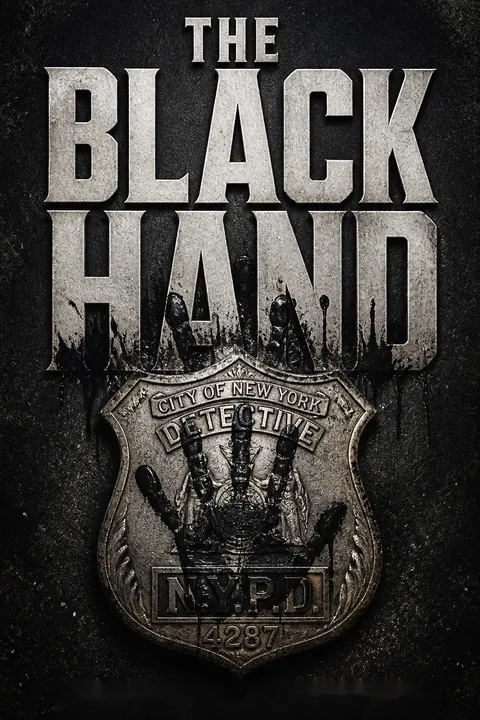

Key Takeaways
1. Joseph Petrosino: An Immigrant's Ascent Against Prejudice
“The Italian has a natural love of liberty,” he argued to the New York Times. “He has had to fight bitterly for enlightenment in his own country and what Italy is today has been attained by heroic struggling.”
Early struggles. Giuseppe Michael Pasquale Petrosino, born in Padula, Italy, in 1860, immigrated to New York City at age thirteen, facing immediate prejudice from Irish immigrants who dominated the city's working-class neighborhoods. Despite a sixth-grade education, he displayed remarkable ambition and strength, famously smashing his shoeshine box to declare, "Tony, I won't shine shoes anymore. I'm going to be somebody." This act symbolized his determination to rise above the humiliating poverty and societal expectations placed upon Italian newcomers.
Joining the force. Petrosino became one of the first Italian policemen in the NYPD in 1883, a significant achievement in an overwhelmingly Irish department. His early career was marked by constant insults and hostility from fellow officers who called him "dago" or "guinea," viewing him as a "straniero" for policing his own kind. Despite this, he proved incorruptible, brave, and exceptionally skilled, mastering multiple Italian dialects and possessing a photographic memory for criminal faces and details.
Rising through the ranks. His talent caught the eye of Theodore Roosevelt, then head of the New York Board of Police Commissioners, who championed Petrosino's promotion in 1895, making him the nation's first Italian detective sergeant. Petrosino excelled, using elaborate disguises to infiltrate criminal circles and solving numerous complex cases, including "resurrection insurance" rings and poison murders. His brilliance and integrity earned him the moniker "the Italian Sherlock Holmes" and made him a celebrated figure, even among the criminals he pursued.
2. The Black Hand's Reign of Terror Across America
“From the bottom of their hearts,” one reporter said of Italian immigrants, “they do fear them with a great and consuming terror.”
A new level of crime. The Black Hand, or La Mano Nera, emerged as an infamous crime organization engaging in extortion, assassination, child kidnapping, and bombings on a grand scale, becoming nationally famous in 1903. Its threatening notes, adorned with drawings of coffins, crosses, and daggers, instilled "a great and consuming terror" among Italian immigrants and soon spread panic across America. The organization's methods were brutal and often spectacular, creating a record of crime "unparalleled in the history of a civilized country in time of peace."
Widespread impact. The Black Hand's influence rapidly expanded beyond New York, materializing in cities like Chicago, Los Angeles, Detroit, and hundreds of smaller towns, mining camps, and quarries. Its activities included:
- Kidnapping children, often returning them traumatized or not at all.
- Dynamiting homes and businesses, causing widespread destruction and injury.
- Murdering those who defied them, sometimes with gruesome mutilations.
- Extorting "protection" money from small businesses and laborers.
The sheer scale of the terror led to a new class of "internal refugee" as victims fled from city to city, or even back to Italy, to escape its reach.
A modern invention. While often perceived as a throwback to old-world brigandage, the Black Hand was a thoroughly modern criminal enterprise, exploiting the anonymity and rapid growth of American cities. It compiled dossiers on prominent merchants, infiltrated banks, and even organized labor camps to collect tribute from workers. The Society's ability to adapt, using typewriters, mailboxes, and even hiring unwitting dupes, made it incredibly elusive and difficult for law enforcement to counter, feeding the public's fear that it was an unstoppable, occult force.
3. The Italian Squad: A Lone Force Against a Growing Scourge
“Give me twenty active and ambitious men of my own people to drill in the detective service,” he said, “and within a few months at most, I shall root out every vestige of the accursed guilds from this free country.”
A desperate plea. By 1904, with Black Hand crimes escalating, Petrosino implored NYPD Commissioner William McAdoo to create a specialized "Italian Squad" to combat the growing menace. He argued that Italian immigrants distrusted Irish cops and that only detectives who understood the language and culture could effectively infiltrate and dismantle the Society. Despite initial resistance and skepticism from McAdoo, who saw it as a "losing proposition" for Tammany Hall, a series of grisly bombings and kidnappings eventually forced his hand.
Formation and challenges. In September 1904, Petrosino was granted permission to form the Italian Squad, though with only five men instead of the twenty he requested, and no dedicated budget. The "mysterious six," as they were dubbed, faced intense hostility and sabotage from their Irish colleagues, operating out of Petrosino's apartment before securing a small, unmarked office. They were chronically under-resourced, yet confronted an ever-growing wave of Italian immigration, which brought with it thousands of new criminals.
Innovative tactics and early successes. Petrosino trained his men in innovative tactics, including:
- Mastering disguises to blend into immigrant communities.
- Memorizing thousands of criminal names and details.
- Learning to distinguish genuine Black Hand threats from hoaxes.
- Infiltrating criminal schemes, such as the extortion of construction workers.
The squad achieved remarkable early success, making 2,500 arrests and securing 850 convictions in its first two years, leading to a 50% drop in Black Hand crimes. This transformed them from "a homeless, drifting little band of outsiders" into a respected unit, earning Manhattan's admiration.
4. Systemic Indifference: Official Neglect and Anti-Italian Bias
“If Detective Prosini,” the official said, mispronouncing the detective’s name, “wishes to obtain the assistance of the Secret Service bureau in his fight against the Black Hand or Mafia, he can do so by paying our men the same as if they were members of a private detective agency.”
Apathy from above. Despite Petrosino's tireless efforts and the Italian Squad's successes, the NYPD's leadership, particularly Commissioner McAdoo, remained largely indifferent to Black Hand crime. They dismissed it as an "Italian problem" and resisted providing adequate resources, viewing Italians as an "incorrigible lot of violent men" unworthy of full protection. This systemic neglect meant that many Black Hand crimes went uninvestigated, and criminals often received light sentences or were released dueating to lack of evidence or political will.
Federal government's refusal. Petrosino's appeal to the federal government for assistance, particularly from the U.S. Secret Service, was met with a humiliating public rejection. Despite his past service to President McKinley and the agency's own files on Black Hand activity, a Treasury Department official stated that the Secret Service would only help if paid "as if they were members of a private detective agency." This revealed a stark double standard: the Secret Service was willing to protect wealthy Americans like Daniel B. Wesson or John D. Rockefeller from Black Hand threats, but not poor Italian immigrants.
Political obstruction. Tammany Hall, led by figures like Big Tim and Little Tim Sullivan, actively obstructed efforts to combat the Black Hand, fearing that a more robust police force would interfere with their illegal interests. They vetoed increased police budgets and Bingham's proposal for a secret service, even accusing Petrosino's squad of brutality. This political maneuvering, coupled with widespread anti-Italian prejudice, left Petrosino feeling "abandoned" and convinced that the city's rulers cared little if Italians lived or died.
5. A Personal Sacrifice: Petrosino's Unwavering Dedication and Love
“The police department is the only wife I have a right to have,” he once said. “There’s so much sudden death in this business. A man hasn’t the right to bring a woman into it.”
A life of dedication. Petrosino dedicated his life to fighting the Black Hand, believing it was essential for his people's acceptance in America. He worked tirelessly, often going without sleep or food, and faced constant death threats, once telling a reporter, "I thought it was my time, at last. Someday they will get me." His commitment was so profound that he initially believed he had no right to a personal life, given the constant danger of his profession.
A late-found love. Despite his earlier conviction, Petrosino fell deeply in love with Adelina Saulino, a waitress at his favorite Italian restaurant. Their courtship was long and challenging, as Adelina's father, Vincenzo, repeatedly refused Petrosino's marriage proposals, fearing his daughter would suffer the loss of another husband to the detective's perilous work. Petrosino's "pazienza" and persistence eventually paid off, and after Vincenzo's death, he and Adelina married in a quiet ceremony in 1908.
The joys of fatherhood. The birth of their daughter, Adelina Bianca Giuseppina, brought immense joy to Petrosino, transforming his routine. He began prioritizing family time, hurrying home to play with his baby and enjoying music with friends in his apartment. This newfound happiness, however, was tinged with the constant threat of his enemies. He fiercely protected his family, once furiously telling his niece not to recognize him on the street when she was with the baby, fearing that knowledge of his child would make her a target.
6. The Perilous Mission: A Secret Journey to Stem the Criminal Tide
“He had the key,” one writer said, “that could have closed the gates . . . to the immigration of Italian criminals virtually in his pocket.”
Bingham's secret service. Facing mounting pressure and public outcry over the Black Hand's escalating violence, Commissioner Theodore Bingham, after being denied funds by Tammany Hall, secured private funding for his own "secret service." He chose Petrosino to lead a highly ambitious and covert mission to Italy, aiming to "dam the noxious human stream" of criminals flowing into America. The mission's objectives were clear:
- Verify criminal records of Italian immigrants in the U.S. for deportation.
- Identify dangerous criminals in Italian jails to prevent their future entry.
- Establish a spy network in Italy to continuously monitor criminal emigration.
A compromised mission. Petrosino departed in February 1909 under the alias Simone Velletri, taking extraordinary precautions to maintain secrecy. However, his cover was disastrously blown by Commissioner Bingham himself, who, in a public interview, hinted at Petrosino's mission to Italy. This reckless disclosure exposed Petrosino to hundreds of enemies he had made over his career, many of whom had been deported back to Italy and harbored deep vendettas.
Foreboding and defiance. Despite the compromised secrecy and warnings from friends and even a priest, Petrosino pressed on, driven by a sense of duty. He confessed to his wife, Adelina, feeling "completely confused" and missing New York, but publicly maintained a defiant stance, declaring, "I'm not afraid of anybody!" His journey to Sicily, the heartland of the Mafia and the origin of many Black Hand criminals, was fraught with peril, as his name was whispered with vengeance across the island.
7. A Martyr's End: Assassination in Palermo and its Immediate Aftermath
PETROSINO KILLED REVOLVER CENTER CITY TONIGHT. KILLERS UNKNOWN. MARTYR’S DEATH.
The Palermo trap. On March 12, 1909, after days of investigating criminal records in Sicily and expressing growing misgivings about being watched, Petrosino was ambushed in Palermo's Piazza Marina. As he walked from dinner, two shots rang out, followed by four more. He was found lying on the pavement, his revolver and umbrella beside him, a black derby hat flung nearby. The gaslights in the piazza mysteriously flickered and went out, plunging the scene into darkness.
A collective crime. Despite the loud gunshots and numerous bystanders, witnesses quickly retracted their stories, and no one came forward to identify the killers. Vito Cascio Ferro, a powerful Mafia boss Petrosino had encountered years earlier and who harbored a deep animosity, was a leading suspect, along with others Petrosino had deported or humiliated. The assassination was not a singular act but a "truly collective crime," reflecting the widespread vendettas against Petrosino from the Italian underworld.
City in mourning and outrage. News of Petrosino's death sent shockwaves through New York. Former President Theodore Roosevelt expressed deep regret, calling Petrosino "a great man and a good man" who "did not know the name of fear." Mayor McClellan ordered flags at City Hall flown at half-mast, and Commissioner Bingham vowed vengeance. Adelina, Petrosino's widow, was inconsolable, while thousands of New Yorkers, including many non-Italians, mourned his passing, recognizing him as a hero who had given his life for the city.
8. The Unfinished Legacy: Cover-ups, Continued Terror, and Eventual Victory
“The certificates were suppressed at police headquarters,” charged New Outlook magazine, “under orders of Mayor McClellan.”
A mission betrayed. Petrosino's assassination sparked outrage and calls for justice, but his mission's crucial findings were tragically suppressed. Lieutenant Anthony Vachris, head of the Brooklyn Italian Squad, continued Petrosino's work in Italy, collecting hundreds of penal certificates of criminals living illegally in New York. However, upon his return, the new NYPD Commissioner, William F. Baker, under orders from Mayor McClellan, buried these files, effectively halting deportation efforts and rendering Petrosino's sacrifice in vain. This cover-up was seen as a "crime against civilization," shielding criminals for political reasons.
Continued terror and backlash. The suppression of Petrosino's work allowed the Black Hand to continue its reign of terror, with bombings and kidnappings persisting unabated. The lack of official action fueled anti-Italian sentiment, leading to widespread harassment and even "race wars" against Italian laborers in various states. The public's frustration mounted, with newspapers criticizing the NYPD's "helplessness" and even calling Petrosino's squad a "failure," despite their continued efforts.
Woods's "relentless warfare" and the Black Hand's decline. Years later, Commissioner Arthur Woods, a progressive reformer, adopted Petrosino's methods, launching a "relentless warfare" against the Black Hand. His "Strong Arm Squad" employed aggressive, often unconstitutional tactics—including targeted harassment and beatings—to drive hundreds of Black Handers out of New York. This decisive action, combined with factors like Prohibition, the Americanization of second-generation immigrants, and federal prosecutions, finally broke the Black Hand's power in New York, fulfilling Petrosino's vision, albeit years too late.
Review Summary
Reviews for The Black Hand are largely positive, praising Talty's vivid storytelling, thorough research, and ability to make history feel like a gripping thriller. Many readers were captivated by Petrosino's remarkable life and courage. Common criticisms include repetitiveness, an overly fact-driven narrative style, and insufficient depth on the Black Hand organization itself. Some readers DNF'd due to pacing issues. Highlights include the book's portrayal of Italian immigrant struggles and institutional racism, with several reviewers noting its relevance to modern issues surrounding immigration.
People Also Read

About the Author
Other books by Stephan Talty

Download PDF
Download EPUB
.epub digital book format is ideal for reading ebooks on phones, tablets, and e-readers.








































