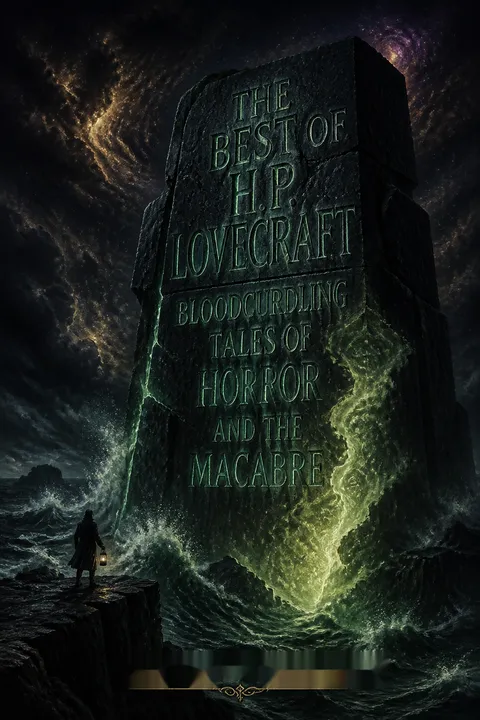

Summary Unavailable
This book is not suitable for a summary (it may be a textbook, workbook, cookbook, reference book, or collection). However, you can still explore the FAQs, about author, and other metadata below!
Plot Summary
The Whispering Ancestral Walls
In the haunted landscapes of New England, crumbling mansions and ancestral estates stand as silent witnesses to unspeakable histories. These walls, thick with the dust of centuries, are more than mere structures—they are vessels for the memories, curses, and obsessions of those who once dwelled within. The protagonists, often scholars or inheritors, are drawn back to these places by blood or fate, compelled to restore or investigate their family's legacy. Yet, as they settle in, the houses begin to whisper, their architecture revealing hidden passages and cryptic symbols. The past seeps into the present, and the line between memory and nightmare blurs, setting the stage for a confrontation with horrors that have always lurked just beneath the surface.
Forbidden Knowledge Unearthed
Driven by curiosity or scholarly ambition, characters in these tales uncover forbidden tomes, cryptic manuscripts, and bizarre relics—most notoriously, the Necronomicon. These objects are not mere curiosities; they are conduits to knowledge that humanity was never meant to possess. The act of reading or handling them is transformative, awakening dormant fears and inviting the attention of cosmic forces. The pursuit of understanding becomes a descent into obsession, as the boundaries of reality and sanity erode. The more the characters learn, the more they realize that ignorance was a fragile shield, and that some truths, once revealed, can never be forgotten or survived.
The Shadowed Mind's Descent
As the protagonists delve deeper into the mysteries surrounding them, their minds begin to unravel. Nightmares invade their sleep, and waking life becomes tinged with hallucination and dread. The stories explore the fragility of the human psyche when confronted with the incomprehensible—visions of alien geometries, monstrous beings, and impossible histories. The descent is gradual but inevitable, marked by paranoia, isolation, and a growing sense that the world is not as it seems. The characters' attempts to rationalize their experiences only hasten their collapse, as they come to suspect that madness may be the only sane response to the horrors they have uncovered.
Nightmares Beyond the Veil
Sleep offers no refuge in Lovecraft's universe. Instead, it becomes a portal to realms beyond human comprehension—places where the laws of physics and morality do not apply. Through dreams, characters encounter ancient beings, witness the rise and fall of alien civilizations, and glimpse the true insignificance of humanity. These visions are not mere figments; they bleed into reality, leaving physical and psychological scars. The dreamer's journey is both a metaphor for and a literal experience of crossing forbidden thresholds, and the knowledge gained in these nocturnal odysseys is as damning as anything found in the waking world.
The Call from the Deep
Beneath the earth, under the sea, and in the forgotten corners of the world, primordial entities slumber—waiting for the stars to align or for unwitting mortals to disturb their rest. The stories chronicle the awakening of these beings, from the monstrous Cthulhu rising from the ocean depths to the shoggoths lurking in subterranean ruins. Their influence is felt through cults, dreams, and inexplicable phenomena, and their return threatens not just individuals but the very fabric of reality. The protagonists, often powerless in the face of such vastness, are left to confront the terror of a universe indifferent to human existence.
The Unseen and Unnamed
Much of the horror in these tales is unseen—manifesting as whispers, shadows, or inexplicable events. The protagonists sense a presence just beyond perception, a force that manipulates events and minds alike. Whether it is the scurrying of rats behind the walls, the flicker of a light in a deserted church, or the feeling of being watched, the unseen becomes a character in its own right. The inability to name or fully comprehend the threat only heightens the terror, as the characters are left to imagine horrors greater than anything they could face directly.
The Madness of Discovery
The pursuit of knowledge, so often celebrated, becomes a curse in Lovecraft's world. Each discovery—whether of a hidden chamber, a lost civilization, or a cosmic truth—brings with it a profound sense of dread. The characters are forced to confront the limits of their understanding and the insignificance of humanity in the face of the infinite. The realization that the universe is vast, ancient, and uncaring is too much for many to bear, leading to madness, suicide, or worse. The stories suggest that some doors, once opened, can never be closed, and that the price of enlightenment may be the loss of one's very self.
The Towns that Time Forgot
From the decaying streets of Innsmouth to the blighted farms of Arkham's outskirts, Lovecraft's New England is dotted with towns that seem untouched by time—and for good reason. These communities are often the sites of ancient pacts, inbred cults, and unspeakable rituals. Outsiders who venture in are met with suspicion, hostility, or worse, and the landscape itself seems to conspire against escape. The towns are microcosms of the larger cosmic horror, their insularity and decay reflecting the stagnation and corruption at the heart of the universe. The stories serve as warnings about the dangers of isolation, tradition, and the refusal to confront the past.
The Price of Immortality
Throughout these tales, characters and communities seek power, knowledge, or survival by making bargains with forces beyond their understanding. Whether it is the Whateley family's pact with Yog-Sothoth or the townsfolk of Innsmouth's alliance with the Deep Ones, the price is always higher than anticipated. Immortality, prosperity, or forbidden wisdom come at the cost of humanity itself—physical transformation, madness, or the loss of one's soul. The stories explore the seductive nature of such bargains and the inevitable consequences of overreaching, suggesting that some gifts are best left unaccepted.
The Geometry of Terror
Lovecraft's horrors are often rooted in the very structure of reality. Impossible angles, shifting dimensions, and alien architectures abound, challenging the characters' perceptions and sanity. The Witch-House, the sunken city of R'lyeh, and the ancient ruins in the Australian desert are all places where the normal rules do not apply. These spaces are not merely settings but active agents of terror, warping time, space, and the minds of those who enter. The stories suggest that the universe is far stranger and more hostile than we can imagine, and that our understanding of it is at best provisional.
The Inheritance of Horror
Family and ancestry are recurring motifs, with characters discovering that their lineage ties them to ancient evils or cosmic destinies. The sins of the fathers—and mothers—are visited upon the children, who are often powerless to escape their fate. Whether it is the protagonist of "The Shadow Over Innsmouth" discovering his hybrid heritage or the Delapore family's descent into madness, the stories explore the inescapability of the past. The horror is not just external but internal, written into the very DNA of the characters, and the struggle to break free is as much psychological as it is supernatural.
The Unraveling of Reality
As the stories progress, the protagonists come to realize that reality itself is not as stable as it seems. Time slips, memories fade, and the boundaries between dream and waking life dissolve. The universe is revealed to be a thin veneer over chaos, and the characters' attempts to impose order or meaning are ultimately futile. The stories end not with resolution but with ambiguity, leaving both characters and readers to question what is real and what is imagined. The horror lies not just in what is discovered, but in the realization that nothing can ever be truly known or trusted.
The Cults of the Old Ones
Beneath the surface of society, hidden cults worship the Great Old Ones—Cthulhu, Yog-Sothoth, Nyarlathotep, and others. These cults are ancient, widespread, and insidious, their rituals and symbols woven into the fabric of history. The protagonists often stumble upon these societies by accident, only to find themselves targeted for destruction or assimilation. The cults serve as reminders that humanity is not alone, and that there are forces at work that care nothing for human values or survival. The stories suggest that civilization is a thin mask over barbarism, and that the true rulers of the world are not men, but monsters.
The Dreamer's Awakening
The boundary between dream and reality is porous, and the protagonists' journeys through nightmare landscapes often lead to profound revelations about themselves and the universe. These awakenings are rarely comforting; instead, they bring a deeper understanding of the horror that underlies existence. The dreamer returns to the waking world changed, burdened with knowledge that cannot be shared or forgotten. The stories use dreams as both a narrative device and a metaphor for the search for meaning, suggesting that the answers we seek may be more terrifying than the questions.
The Collapse of Sanity
Confronted with the enormity of what they have discovered, the characters often find that their only refuge is madness. The mind, unable to process the scale and horror of the truths revealed, retreats into delusion or oblivion. The stories end with characters institutionalized, dead, or vanished, their fates serving as warnings to those who would follow in their footsteps. The collapse of sanity is not a failure but a defense mechanism, a way of preserving what little humanity remains in the face of the inhuman.
The Return of the Ancient
Despite the efforts of the protagonists, the ancient beings and their cults are never truly defeated. The stories end with hints or outright declarations that the Old Ones are stirring, their influence growing, and their return inevitable. The horror is cyclical, and each generation must confront the same terrors anew. The sense of impending doom pervades the narratives, leaving both characters and readers with the uneasy feeling that the worst is yet to come.
The Final Threshold
The ultimate horror in Lovecraft's tales is not death, but transformation—crossing a threshold from which there is no return. Whether it is a physical journey into another dimension, a psychological break with reality, or a genetic inheritance that cannot be denied, the characters are forever changed by their experiences. The stories end with a sense of loss and inevitability, as the protagonists realize that they can never go back to the world they once knew. The unknown is not just out there—it is within, and once awakened, it can never be put to rest.
The Legacy of the Macabre
Even as the characters fall, the stories themselves become vessels for the horror, passing it on to new generations of readers. The legacy of the macabre is not just in the events described, but in the act of storytelling itself. The tales serve as warnings, confessions, and invitations, drawing readers into the same cycle of curiosity, discovery, and dread. The horror is not confined to the page; it lingers in the mind, whispering that the world is stranger and more terrifying than we can ever know.
Analysis
Lovecraft's "Bloodcurdling Tales of Horror and the Macabre" endures as a foundational text of modern horror because it redefines the genre's boundaries, shifting the locus of fear from the supernatural to the cosmic and existential. The collection's stories are united by a vision of the universe as vast, ancient, and fundamentally indifferent to human concerns—a vision that renders traditional notions of heroism, morality, and meaning obsolete. Lovecraft's protagonists, often rational and learned, are undone not by evil but by knowledge: the realization that humanity is a fleeting accident in a universe ruled by incomprehensible forces. The stories' power lies in their ability to evoke dread not through gore or violence, but through atmosphere, ambiguity, and the suggestion of horrors too great to be named. The use of unreliable narrators, nonlinear narratives, and dreamlike settings creates a sense of disorientation and inevitability, drawing the reader into the same cycle of curiosity, discovery, and madness that claims the characters. Ultimately, Lovecraft's legacy is not just in the monsters he created, but in the worldview he articulated—a worldview that continues to haunt readers with the possibility that the greatest horror is not what we do not know, but what we cannot bear to know.
Last updated:
Report IssueReview Summary
People Also Read
Characters
The Scholar-Protagonist
Lovecraft's central figures are often learned men—professors, antiquarians, or scientists—driven by an insatiable curiosity and a belief in the power of reason. Their quest for knowledge leads them into contact with forbidden texts, ancient artifacts, and hidden cults. Initially skeptical, they are gradually forced to confront the reality of the supernatural and the insignificance of humanity. Their psychological journey is one of disintegration, as the rational mind is overwhelmed by the irrational. The scholar's arc is tragic: the very qualities that make him admirable—intelligence, curiosity, courage—are the ones that lead to his undoing.
The Inherited Victim
Many protagonists are burdened by their ancestry, discovering that their family history is entwined with ancient evils. Whether through a cursed bloodline, a hidden hybrid nature, or the sins of their forebears, they are drawn inexorably toward a fate they cannot escape. The inherited victim is both a participant in and a victim of the horror, struggling to assert agency in the face of destiny. Their psychological struggle is one of identity, as they grapple with the realization that the horror is not just external, but internal—written into their very being.
The Outsider
Lovecraft's stories often feature characters who are outsiders—strangers in a new town, immigrants, or those who do not fit into the dominant culture. Their outsider status makes them both more perceptive and more vulnerable, as they notice things that others ignore but lack the social support to protect themselves. The outsider's journey is one of increasing isolation, as their warnings go unheeded and their sanity is questioned. Their fate serves as a critique of insularity and a reminder of the dangers of ignoring the unfamiliar.
The Cultist
The cultist is the human face of the cosmic horror, serving as a bridge between the mundane world and the realm of the Old Ones. Often depicted as degenerate, inbred, or otherwise marked by their devotion, cultists are both pitiable and terrifying. Their motivations range from fear to ambition to genuine religious fervor, but all are united by a willingness to sacrifice others—and themselves—for the sake of their masters. The cultist's presence serves to blur the line between human and monster, suggesting that the true horror lies not in the supernatural, but in the capacity for evil within humanity.
The Dreamer
Some characters are marked by their ability to dream—literally or metaphorically—of worlds beyond the ordinary. The dreamer is both blessed and cursed, able to perceive truths that others cannot but unable to escape the consequences of that knowledge. Their dreams are not mere fantasies, but windows into other realities, and the insights they gain are as dangerous as any physical threat. The dreamer's arc is one of awakening, but the knowledge they gain is a burden rather than a liberation.
The Madman
The madman is both a warning and a mirror for the protagonist, embodying the ultimate consequence of confronting the cosmic horror. Whether a former scholar, a cultist, or an innocent bystander, the madman has seen too much and paid the price. Their ravings are often dismissed, but contain kernels of truth that the protagonist ignores at their peril. The madman's presence serves to foreshadow the protagonist's own fate, and to question the value of sanity in a world that is fundamentally insane.
The Ancient One
The true antagonists of Lovecraft's tales are not villains in the traditional sense, but ancient beings whose motives and nature are beyond human understanding. Cthulhu, Yog-Sothoth, Nyarlathotep, and others are forces of nature, as indifferent to humanity as humanity is to ants. Their presence is felt through dreams, cults, and inexplicable phenomena, and their return signals the end of human dominance. The ancient one is a symbol of the universe's vastness and indifference, and the ultimate source of horror in the stories.
The Familiar
Creatures like Brown Jenkin, the rats in the walls, or the shoggoths serve as familiars—intermediaries between the human and the monstrous. They are both physical threats and symbols of the hidden forces at work, their animalistic nature highlighting the thin line between civilization and savagery. The familiar is often a harbinger of doom, its presence signaling that the boundaries between worlds are breaking down.
The Town Elder
Figures like Zadok Allen or the Whateley patriarch serve as repositories of local knowledge and tradition. They are both guides and obstacles for the protagonist, offering hints and warnings but rarely the full truth. Their complicity in the horror is ambiguous—they are both victims and enablers, trapped by the same forces that threaten the protagonist. The town elder embodies the weight of history and the dangers of unexamined tradition.
The Investigator
Whether a police inspector, a scientist, or an amateur sleuth, the investigator approaches the horror with skepticism and a belief in the power of reason. Their methodical approach uncovers clues and connections, but ultimately proves inadequate in the face of the supernatural. The investigator's journey is one of disillusionment, as they come to realize that some mysteries cannot be solved, and that the universe is not only stranger than they imagine, but stranger than they can imagine.
Plot Devices
Nonlinear Narrative and Fragmented Testimony
Lovecraft often employs a nonlinear structure, with stories told through found manuscripts, diary entries, or the recollections of unreliable narrators. This device creates a sense of distance and ambiguity, as the reader is never sure how much of the story is true and how much is the product of madness or deception. The fragmented narrative mirrors the characters' own fractured understanding, and the piecemeal revelation of information heightens the sense of dread and suspense.
Foreshadowing and Ominous Symbolism
From the first mention of a strange artifact or an odd family history, Lovecraft's stories are thick with foreshadowing. Symbols—such as the Necronomicon, the color out of space, or the recurring motif of non-Euclidean geometry—serve as harbingers of the horror to come. The repetition of certain images and phrases creates a sense of inevitability, as if the characters are caught in a web from which there is no escape.
The Unreliable Narrator
The narrators of these tales are often unreliable, their accounts colored by fear, madness, or incomplete knowledge. This device allows Lovecraft to maintain ambiguity and to suggest that the true horror may be even greater than what is described. The reader is left to piece together the truth from conflicting accounts, and the possibility that the narrator is delusional only adds to the sense of unease.
The Blurring of Dream and Reality
Lovecraft frequently collapses the boundary between dream and reality, using dreams as both a narrative device and a metaphor for the search for knowledge. The characters' experiences in the dream world have real-world consequences, and the insights gained are as dangerous as any physical threat. This device allows for the exploration of cosmic horror without the constraints of realism, and reinforces the theme that reality itself is fragile and uncertain.
Cosmic Indifference and the Insignificance of Humanity
At the heart of Lovecraft's horror is the idea that humanity is insignificant in the face of the cosmos. The ancient beings, the vast stretches of time, and the incomprehensible geometries all serve to remind the characters—and the reader—that the universe is not only stranger than we imagine, but stranger than we can imagine. This device undercuts traditional notions of heroism and agency, leaving the characters powerless in the face of forces beyond their understanding.
The Use of Setting as Character
The settings in Lovecraft's stories are more than mere backdrops; they are active participants in the horror. The decaying towns, haunted houses, and alien landscapes are imbued with a sense of history and malevolence, shaping the events and the fates of the characters. The use of setting as character reinforces the theme that the past is never truly dead, and that the environment itself can be a source of terror.
The Gradual Unveiling of Horror
Rather than relying on sudden shocks or explicit violence, Lovecraft's stories build horror gradually, through the accumulation of detail and the slow revelation of the truth. The characters—and the reader—are drawn deeper and deeper into the mystery, their sense of unease growing with each new discovery. The horror is often left unresolved, with the final revelation serving not as a climax but as an opening onto even greater terrors.
About the Author
Howard Phillips Lovecraft was an American author from Providence, Rhode Island, known for his works in horror, fantasy, and science fiction. He pioneered cosmic horror, emphasizing the insignificance of humanity in an alien universe. Lovecraft's Cthulhu Mythos and fictional Necronomicon gained him a cult following. His pessimistic and cynical writings challenged Enlightenment, Romantic, and Christian values. While his readership was limited during his lifetime, Lovecraft's reputation grew posthumously. He is now considered one of the most influential horror writers of the 20th century, often compared to Edgar Allan Poe. His protagonists typically face sanity-threatening glimpses of ultimate reality, achieving the opposite of traditional mystical enlightenment.
Download PDF
Download EPUB
.epub digital book format is ideal for reading ebooks on phones, tablets, and e-readers.








































