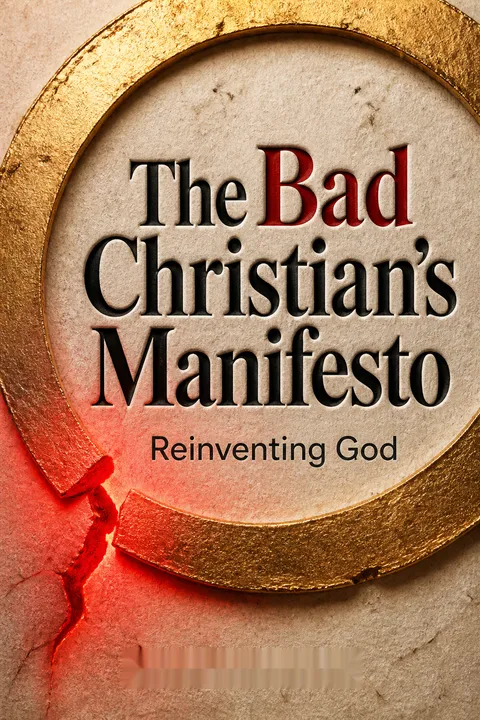

Key Takeaways
1. Reinventing God: Beyond the "Man Upstairs"
If God exists, she or he has to be better than this.
Challenging old images. Many traditional ideas of God—as an old white man, punitive, war-inciting, judgmental of gay people, or a cosmic "fat controller"—are outdated and cause immense human misery. The author, a vicar, found himself an atheist in the face of such a God after witnessing the suffering caused by religious dogma, like Jim, an HIV-positive man made to feel "unclean." These narrow, formal ideas of God and spirituality desperately need reinvention for the modern world.
God is everywhere. Instead of a distant, supernatural being, God is a pervasive presence, "as universal as breathing," experienced by everyone, religious or not. The word "God" itself has become so contaminated by negative perceptions that it often hinders understanding. We need to move beyond literalistic, theistic frameworks and recognize God as the "ground of being," the hidden depth within all visible things, a reality impossible to avoid.
Evolving our understanding. Our image of God naturally evolves with time and experience, much like Brenda, who reimagined God through the unconditional love of her grandma rather than her critical father. This process of reinvention allows us to shed harmful, internalized notions of God and discover a God of unconditional love who enables us to flourish. This "God brand" needs updating to resonate with the circumstances and sensibilities of the twenty-first century.
2. Spiritual Intelligence: A Universal Human Capacity
Your vision of God depends on where you are in your spiritual development.
Beyond IQ. Spiritual Intelligence (SQ) is a fundamental human capacity, distinct from intellectual or emotional intelligence, that enables us to find meaning, value, and connection in a wider context. It's the intelligence we use when asking "why" and pondering moral dilemmas, sensing awe, or feeling deep connectedness. SQ is intrinsic to the human brain, can be nurtured or neglected, and exists independently of religious belief, with many humanists and atheists exhibiting high SQ.
Qualities of high SQ. Developing SQ involves cultivating traits like self-awareness, empathy, humility, curiosity, and resilience. It prompts us to ask, "What sort of person do I wish to be?" and to align our daily choices with those aspirations, drawing inspiration from figures like Nelson Mandela or Anwar Sadat, who transcended ego and dogma for a greater good. Sadat's ability to change his mind and risk his life for peace exemplifies the profound impact of spiritual growth.
Authenticity over dogma. Spiritual progress often means letting go of naive or unsustainable notions of God, or opening up to new possibilities of faith. True faith isn't about believing "six impossible things before breakfast," but about living honestly and authentically, committed to what we believe is of ultimate concern. This commitment allows us to behave with wisdom and compassion, maintaining inner and outer peace, regardless of the situation, as seen in the author's approach to counseling those in deep grief.
3. Faith as Ultimate Concern: Action Over Dogma
If one thinks that Christianity consists solely in doctrinal precision, the Christian mystery becomes a pious fable.
Faith in action. Faith is not merely adherence to doctrines or creeds, but a state of being "ultimately concerned"—gripped and driven by something of fundamental importance that demands our wholehearted commitment. Jean Willson, a tireless advocate for people with disabilities, exemplifies this, declaring, "I'm not a woman of faith, Dave, but I am a woman of action." Her relentless pursuit of justice and compassion, transforming personal hardship into a triumph of grace, is faith in its truest sense.
Embraced by mystery. A genuine religious sense requires two basic truths: first, that our lives are embraced by mystery, a reality beyond words that we become aware of through mindful epiphanies—from gazing at a starry sky to getting lost in music. As Albert Einstein noted, "The most beautiful thing we can experience is the mysterious," which is the "center of true religiousness." This mystery is not something to be solved, but to be experienced and revered.
Gracious mystery. Second, this mystery is fundamentally gracious. While the universe can be "ambiguously friendly" with its suffering and hostility, the triumph of the human spirit, the persistence of love, and the rise of hope in desperate situations point to a trustworthy depth of existence. This "graciousness" is symbolized in Christianity by the self-emptying love of Christ, a "crucified God" immersed in the world's pain, always present and sustaining us, if we remain open and receptive.
4. Embracing Our Humanity: Paradise Outgrown, Not Lost
No, Bob, I’m saying you’ve already done plenty of things to regret. You just don’t know what they are.
Beyond pious perfection. The film "The Big Kahuna" illustrates the contrast between a naive, pious faith and a profound, self-aware humanity. Phil, the "sinner," reveals wisdom by telling the "born-again" Bob that he lacks character because he hasn't yet acknowledged his regrets. This echoes Jesus' preference for "sinners" over the self-righteous religious establishment, suggesting that acknowledging our flaws is a path to spiritual growth, not a barrier.
The myth of the Fall. The story of Adam and Eve in the Garden of Eden, often interpreted as a literal "fall" into sin and punishment, is better understood as a myth about humanity's evolution from innocent animal existence to moral responsibility. Eating from the Tree of Knowledge was an act of bravery and liberation, leading to challenges like childbirth pain and hard work, but also to imagination, creativity, and the profound satisfaction of earned achievement. It represents "paradise outgrown," not lost, marking the birth of conscience.
Sin as separation, salvation as wholeness. "Sin" is not about a single monumental mistake, but about separation—from our neighbor, our deeper self, and the Ground of our Being. It is fundamentally the absence of love, leading to disintegration. "Salvation," then, is not about a heavenly afterlife, but about here-and-now "wholeness" and "healing," as seen in Zacchaeus, who found redemption by taking responsibility for his actions and reconnecting with his community. Perfection is not required; honesty and self-acceptance are.
5. God in the Ordinary: A World Crammed with Sacraments
God is not difficult to find; God is impossible to avoid.
God is everywhere. We don't "find" God because God was never lost; God is "behind the sofa the whole time," in every atom, creature, and human experience. Whether it's the unconditional love of a friend, the grace of a dawning day, or compassion for another, we are constantly experiencing God. This omnipresent Spirit, like the wind or our own breath, is the very basis of our existence, making conscious breathing a sacred act and a form of prayer.
Sacraments of the everyday. The world is "crammed with heaven," and ordinary objects and experiences can become "sacraments"—channels for divine presence. A cigar shared in memory, a box of chocolates given with love, or water in a christening can convey meaning far beyond their intrinsic value. As Elizabeth Browning wrote, "every common bush afire with God; but only he who sees, takes off his shoes." Spirituality is simply the art of paying attention to this pervasive divinity.
Carnality of grace. Christianity, founded on the idea of the divine becoming enfleshed, should embrace "carnality and sensual delight." Yet, it often struggles with bodily desires, leading to guilt and alienation. The "carnality of grace" means encountering God within our fleshly experience—in sunshine, food, lovemaking, and nature. The "grace of carnality" recognizes the world as a sacrament, infused with divine Spirit, where meaning is found by touching the depth of things, not just skating on the surface.
6. Radical Inclusion: Jesus' Way, Not the Church's Rules
I like your Christ, I do not like your Christians. They are so unlike your Christ.
Jesus' inclusive spirit. Jesus was a figure of radical inclusion, welcoming women, children, Samaritans, and "sinners" like tax collectors and prostitutes, often to the dismay of the religious establishment. He was "crucified, literally, for eating with the wrong people." This spirit of acceptance, not judgment, is central to his message. Sir Elton John's controversial statement about Jesus being gay, while historically unprovable, highlights the crucial point that Jesus belongs to all people, including the marginalized.
Beyond exclusivism. The author rejects religious fundamentalism that claims exclusive truth or condemns those of other faiths. He also moves beyond inclusivism, which condescendingly suggests "our God" listens to others on "our" terms. Instead, he advocates for pluralism, seeing all faith traditions as "windows on a Reality" too great for any single perspective. This approach fosters "dialogue with steadfastness," allowing for mutual learning and respect while remaining rooted in one's own tradition.
The Kingdom of God: A companionship of empowerment. Jesus' central message was the "kingdom of God," a "Bright New World" of spiritual and social renewal, radical justice, and equality, "already spread out on the earth, but people aren't aware of it." This kingdom is not a heavenly destination but a present reality we "wake up to" through "repentance" (metanoia: going "beyond the mind" into a "large mind" of God's love). It's a "companionship of empowerment" where the disadvantaged are uplifted, and friendship conquers prejudice, as seen in the care home staff who became Robert's "beloved community."
7. Living Authentically: Finding Your Spiritual Mojo
Decide carefully, how you can now live the life you would love to look back on from your deathbed.
Death gives life passion. A near-death experience, like the author's heart attack or witnessing a man die in his daughter's arms, can be a profound catalyst for change. It highlights the urgency of living authentically and passionately. Death, often a taboo, is not merely an end but a force that "engenders" life's deepest aspirations. Engaging with mortality, as in "death cafes," helps us not just to deal with dying, but to "get to grips more effectively with the business of living."
Beyond reward and punishment. The notion of an afterlife based on reward and punishment is a "morally repugnant" distortion that fosters self-centeredness rather than genuine goodness. A "grown-up God for grown-up people" inspires us to live purposeful lives in the here and now, rather than controlling us with threats. The true goal is to live a "passion-filled life," embracing its fullness and eventually "yielding to the passion of death," without needing to know its precise meaning.
Let your life speak. Living a "well-lived" life means being authentic, discovering and expressing our true selves, rather than conforming to external expectations or "wearing other people's faces." This "vocation" is not for a chosen few, but for everyone, found by listening to the "inner light" or "true self" that resides within. It's about reclaiming our "birthright gifts" from childhood and aligning our "deep gladness" with the "world's deep need," finding our "spiritual mojo" and pursuing it with conviction.
8. The Alchemy of Community: Transforming Together
I also believe that it’s almost impossible for people to change alone.
Community as sacrament. Personal transformation, like Judi's journey from isolation to inspiration, is often catalyzed by the "alchemy of community." The church, ideally, functions as a "sacrament"—a flesh-and-blood communication of Christ's presence and divine love. Its mission is not just to fill pews, but to be an "effective expression of divine love and grace" in the world, fostering environments where individuals can flourish and contribute.
Four pillars of community. The author highlights four priorities for a transformative community:
- Inclusion: Emulating Jesus' radical welcome, offering unconditional acceptance to all, especially those marginalized by traditional religion. The Eucharist, for instance, should be a symbol of universal invitation, not exclusion.
- Truth: Fostering "deep conversations" about life's ultimate concerns, where debate and civil disagreement are embraced with mutual respect, rather than demanding adherence to rigid dogma.
- Ritual: Employing simple, symbolic actions that act as "alchemy," connecting people to God and each other in fresh ways, like "prayer stones" at a christening or shared moments of reflection during Holy Week.
- Empowerment: Shifting from top-down leadership to a model that releases and facilitates individual imagination, initiative, and responsibility, allowing members to actively shape the community's mission and impact the wider world.
Networks of transformation. While churches can embody these principles, the "alchemy of community" extends beyond religious institutions. It thrives wherever people gather for "deep conversations"—in pubs, living rooms, or "death cafes"—creating "networks of transformation." Sharing the spiritual journey with kindred spirits, whether "bad Christians" or "good atheists," is far more enriching than navigating it alone, fostering collective growth and a more compassionate world.
People Also Read





Download PDF
Download EPUB
.epub digital book format is ideal for reading ebooks on phones, tablets, and e-readers.








































