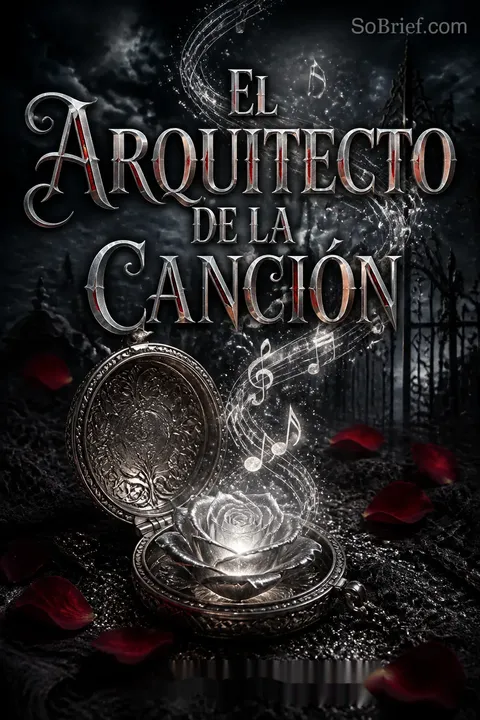

Plot Summary
Silent Songs and Shadows
Nineteen-year-old Juliet Emerline, deaf since childhood, buries her beloved mother and clings to the memories of a once musical world. Her father's death and her mother's recent passing leave her isolated in a Victorian England that prizes conformity. Juliet's only solace is her uncle Owen, her loyal maid Enya, and the home her parents built—a home now threatened by a persistent Viscount, Lord Thornton, who seeks to buy the estate. Juliet's deafness, a secret to most, sharpens her perception of the world's subtle cruelties and beauties, but also deepens her loneliness. The absence of song in her life is a wound that never heals, and her grief is compounded by the fear of losing her last connection to her family.
The Graveyard Encounter
After her mother's funeral, Juliet lingers in the graveyard, drawn to a grieving man at a locked grave marked only "Hawk." The stranger's violent display of emotion and the unusual flower blooming on the grave intrigue her. When she stumbles and he helps her, their brief, charged encounter leaves Juliet unsettled. She learns the man is Lord Thornton, the very Viscount seeking her home. The flower, silver and otherworldly, calls to her, and in a moment of impulsive longing, she steals it from the grave, unwittingly setting in motion a chain of supernatural events.
The Flower's Secret
Back at home, Juliet plants the grave flower, pricking her finger on its thorn. That night, as she tends it, she hears music for the first time in years—a haunting, masculine lullaby. A ghostly figure materializes: Hawk, a young man with no memory of his life or death, bound to the flower and visible only to Juliet. Their connection is immediate and intimate, transcending her deafness. Hawk's presence brings sound and companionship, but also questions: Who was he? Why is he tied to the flower and the grave? And what is his connection to Lord Thornton?
Ghost in the Greenhouse
Juliet and Hawk discover that physical contact with the flower allows them to communicate—her thoughts to his, his voice to her ears. Hawk is both playful and tormented, desperate to remember his past and escape the darkness of his purgatory. Juliet, for the first time since her illness, feels truly seen and heard. Their relationship deepens as they share secrets and vulnerabilities, but the mystery of Hawk's identity and the flower's power looms. Juliet's world, once silent and colorless, is now filled with the music and danger of the supernatural.
Unseen and Unheard
Juliet's life becomes a delicate dance of deception. She hides Hawk's existence from her uncle and Enya, even as she relies on him to interpret the world. Hawk's presence is both a comfort and a complication, especially as Lord Thornton's interest in her estate intensifies. Juliet's feelings for Hawk grow, blurring the line between the living and the dead. Meanwhile, the flower's petals begin to wither with each supernatural encounter, hinting at a limit to their time together. The threat of losing both her home and her ghostly companion becomes ever more real.
The Viscount's Obsession
Lord Thornton, persistent and enigmatic, visits Juliet, offering her a place at his new estate, the Manor of Diversions, and proposing marriage. His motives are unclear—does he want Juliet, her home, or something else? Juliet is torn between suspicion and fascination, especially as she notices his emotional volatility and his connection to Hawk's grave. The Viscount's world is one of color, architecture, and hidden pain, mirroring Juliet's own longing for beauty and belonging. Their interactions are charged with unspoken truths and growing attraction.
The Gypsy's Journal
Juliet and Hawk, seeking answers, break into a nearby gypsy camp and steal a journal written in a foreign tongue. With Hawk's help, Juliet deciphers the tragic story of Chaine, a boy abused by his father and forced to wear a crown of living rats. The journal's drawings and entries reveal a life of suffering, resilience, and a longing for escape. As they read, Hawk realizes he is Chaine, and the pieces of his lost identity begin to fall into place. The journal also hints at a connection between Hawk, Lord Thornton, and the mysterious "Rat King."
Haunted by the Past
The journal's revelations force Juliet and Hawk to confront the darkness of Hawk's childhood and the possibility that Lord Thornton is his twin brother. The Viscount's own secrets—his Romani heritage, his color blindness, and his obsession with the grave—come to light. Juliet's feelings for both men deepen, complicated by guilt, desire, and the supernatural bond she shares with Hawk. The flower's petals continue to fall, and the threat of losing Hawk forever becomes imminent. The past, it seems, is not so easily buried.
The Ghost and the Girl
Juliet and Hawk's relationship becomes increasingly intimate, both emotionally and physically, as they discover ways to touch and even heal through the flower's magic. Their connection transcends the boundaries of life and death, offering Juliet a sense of wholeness she has never known. But each kiss, each merging of spirit and flesh, costs a petal—bringing them closer to an inevitable goodbye. Meanwhile, Lord Thornton's pursuit grows more urgent, and the secrets of the grave, the flower, and the family's history threaten to unravel everything.
The Architect's Proposal
Lord Thornton invites Juliet and her uncle to his estate, offering them positions and proposing a marriage that would secure her home. Juliet, pressured by financial ruin and her uncle's wishes, reluctantly agrees to a trial engagement. At the Manor, she is drawn into a world of opulence, eccentricity, and hidden dangers. The Viscount's true motives remain unclear, and Juliet's heart is torn between the living man who offers her a future and the ghost who holds her soul. The stage is set for revelations, betrayals, and choices that will change everything.
Secrets Behind Locked Doors
Juliet uncovers a hidden attic where Lord Thornton's gypsy aunt, Bitti, lives in secret. The attic holds the key to Hawk's supernatural existence: a caul and a flower, used in Romani magic to bind a spirit to the earth. The discovery reveals that Bitti and Lord Thornton have been trying to summon Hawk's spirit for their own purposes. The lines between ally and enemy blur, and Juliet realizes she is a pawn in a much larger game. The truth about the family's past, the flower's magic, and the dangers lurking in the Manor's depths come to light.
The Twin's True Face
The truth shatters Juliet's world: Lord Thornton is not who he claims to be. He is Chaine—Hawk—living under his brother's name after a tragic accident in the mines. The real Nicolas is dead, his spirit bound to the flower, and Chaine has been masquerading as him to protect their father and secure the estate. The revelation forces Juliet to confront her feelings for both brothers, the nature of love and identity, and the cost of survival. The past and present collide, and the consequences of deception threaten to destroy everything she holds dear.
The Dungeon's Deceptions
Chaine's plan to silence Lord Larson, the investor who knows his secret, involves a staged haunting in the Manor's dungeon. With the help of Bitti's magic and Hawk's spirit, they hope to frighten Larson into silence. But the scheme unravels when Larson pushes Juliet into the mines, nearly killing her. In the darkness, Juliet discovers the truth about the brothers' past, the real circumstances of Nicolas's death, and the depths of Chaine's guilt and love. The supernatural and the mortal intertwine in a desperate bid for justice and redemption.
The Dance of Doubt
Rescued from the mines, Juliet is torn between her love for Chaine and her bond with Hawk. The last petal of the flower remains, a final chance to save one life at the cost of another. Chaine, wounded in a duel defending Juliet's honor, hovers near death. Hawk, realizing his unfinished business is to bring his brother and Juliet together, makes the ultimate sacrifice. In a moment of heartbreak and hope, Juliet chooses life, love, and the future—letting go of the ghost who taught her to hear again.
The Mine's Dark Memory
As Chaine recovers, the secrets of the past are laid to rest. The ledgers that could have destroyed the family are burned, and the ghosts of trauma and guilt are exorcised. Juliet and Chaine, united by love and loss, find healing in each other. The flower, once barren, begins to bud again, symbolizing renewal and the possibility of happiness after suffering. The dead are honored, the living are forgiven, and the future is reclaimed from the shadows of the past.
The Duel and the Dead
The final confrontation with Lord Larson ends in violence and near tragedy. Chaine, shot and dying, is saved by Hawk's spirit and the last petal of the flower. The supernatural and the mortal merge in an act of love and sacrifice, granting Chaine a second chance at life and color. Hawk's spirit, having fulfilled his purpose, departs with a promise: his music will live on in Juliet's heart. The cycle of loss and redemption is complete, and the family's wounds begin to heal.
Sacrifice and Salvation
Juliet and Chaine, now truly united, marry in a Romani ceremony beneath the stars. The Manor becomes a place of healing, family, and joy. Uncle Owen and Enya find love, and the ghosts of the past are honored but no longer haunt the living. The flower, replanted on Hawk's grave, blooms again, promising new life and hope. Juliet, once deaf and alone, now hears music in her soul—a legacy of love, sacrifice, and the enduring power of the human spirit.
Analysis
A.G. Howard's The Architect of Song is a lush, gothic reimagining of the classic gothic romance, blending supernatural intrigue with psychological depth and a nuanced exploration of trauma, identity, and healing. At its heart, the novel is about the power of love to transcend boundaries—between life and death, silence and song, past and future. Juliet's journey from isolation to belonging, from silence to music, is both literal and metaphorical, reflecting the universal longing for connection and acceptance. The twin brothers, separated by fate and reunited through sacrifice, embody the dualities that define human experience: light and darkness, victim and survivor, self and other. The novel's use of supernatural devices—the ghost flower, the merging of spirits, the haunted manor—serves not only to create suspense but to externalize the characters' internal struggles. Ultimately, the story is a meditation on the costs and rewards of vulnerability, the necessity of facing one's past, and the redemptive power of forgiveness. In a modern context, The Architect of Song resonates as a tale of resilience, the reclamation of voice and agency, and the enduring hope that even the most broken hearts can find harmony.
Review Summary
People Also Read
Characters
Juliet Emerline
Juliet is a young woman silenced by childhood illness, orphaned by loss, and isolated by Victorian society's expectations. Her deafness, hidden from most, sharpens her perception and empathy, allowing her to read the world's subtleties and lies. Juliet's journey is one of self-discovery, as she learns to embrace her differences, trust her instincts, and open her heart to love—both mortal and supernatural. Her relationships with Hawk and Chaine force her to confront the boundaries of life and death, the meaning of sacrifice, and the courage required to choose happiness after trauma.
Hawk / Chaine Kaldera / Lord Nicolas Thornton
Hawk is a spirit bound to a flower, a victim of childhood abuse, and a man searching for identity and redemption. As Chaine, he survives a life of torment, escapes his father's cruelty, and assumes his twin's identity after a tragic accident. His journey is one of healing, forgiveness, and transformation—from ghost to lover, from victim to architect of his own fate. Hawk's love for Juliet is both a lifeline and a curse, forcing him to choose between his own peace and her happiness. His ultimate sacrifice is an act of profound love and selflessness.
Lord Nicolas Thornton (the real Nicolas)
Nicolas is the true Viscount, Hawk's twin brother, and the original owner of the estate. His death in the mines sets the story in motion, binding his spirit to the flower and haunting both Juliet and Chaine. Nicolas's legacy is one of longing, loyalty, and the desire for connection. His presence is felt in every secret, every act of love and vengeance, and his spirit's final gift is the restoration of music and color to those he leaves behind.
Uncle Owen
Owen is Juliet's uncle, her protector and confidant after her parents' deaths. His love is quiet but unwavering, and his own unrequited feelings for Juliet's mother add depth to his character. Owen's journey is one of letting go—of grief, of control, and of the past. His eventual romance with Enya offers him a second chance at happiness and underscores the novel's themes of healing and renewal.
Enya
Enya is more than a servant; she is Juliet's friend, confidante, and, eventually, family. Her own love for Uncle Owen is a subplot of longing and hope, mirroring Juliet's journey. Enya's practicality and warmth ground the story, and her willingness to believe in the supernatural reflects the novel's embrace of the extraordinary within the ordinary.
Aunt Bitti
Bitti is the Romani aunt who both enables and complicates the supernatural events. Her knowledge of magic, her guilt over the family's past, and her fierce loyalty to her nephews make her a complex figure. Bitti's actions—binding Hawk's spirit, aiding in the haunting, and protecting the family—are driven by love, regret, and a desire for redemption.
Lord Larson
Larson is the antagonist whose actions—blackmail, manipulation, and violence—threaten the family's future. His partnership with Chaine's abusive father and his role in the mines' tragedies make him a symbol of the corrupting power of wealth and secrecy. Larson's eventual downfall is both justice and a warning.
Merril Thornton
Merril is the twins' father, a clockmaker whose life is marked by love, betrayal, and madness. His inability to recognize both sons, his longing for the family he lost, and his gentle wisdom add emotional depth to the story. Merril's presence is a reminder of the enduring bonds of family and the costs of secrets left unspoken.
Naldi
Naldi, the black wolf, is both protector and threat, embodying the wildness and loyalty of the Romani heritage. Her presence in key moments—guarding graves, defending Bitti, and witnessing supernatural events—adds a layer of myth and animal wisdom to the narrative.
Aria
Aria, Juliet's pet bird, is a symbol of captivity, resilience, and the longing for song. Her recovery from injury and her eventual freedom mirror Juliet's own journey from silence and isolation to love and self-acceptance.
Plot Devices
Duality and Identity
The novel's central device is the duality of the twins—Hawk/Chaine and Nicolas—whose lives, deaths, and identities are intertwined. The use of mistaken identity, masquerade, and the supernatural blurs the line between self and other, living and dead. Juliet's own dual existence—deaf yet perceptive, orphaned yet loved—mirrors the twins' struggles. The motif of masks and hidden truths drives the plot, forcing characters to confront who they are beneath the roles they play.
The Supernatural Flower
The grave flower is both symbol and mechanism—a magical object that binds Hawk's spirit to the earth, enables communication across the veil, and measures the cost of supernatural intervention (each petal lost with every merging of spirit and flesh). The flower's withering petals create narrative urgency and foreshadow the story's climax, while its eventual rebirth signals hope and renewal.
The Journal and Art
Chaine's journal, filled with drawings and confessions, is a plot device that reveals the hidden past, connects characters, and allows for psychological exploration. Art—whether in hats, architecture, or sketches—is a means of survival, communication, and transformation. The act of creation is both a coping mechanism and a path to truth.
Locked Rooms and Secret Passages
The Manor's hidden attic, dungeon, and secret stairways are literal manifestations of the secrets and traumas the characters carry. These spaces allow for clandestine meetings, revelations, and confrontations, and their discovery marks turning points in the narrative. The motif of locked doors and hidden keys underscores the themes of trust, vulnerability, and the courage required to face the past.
Foreshadowing and Symbolism
The recurring imagery of flowers (especially the China rose), birds (the nightingale), and color (or its absence) serves as foreshadowing and thematic reinforcement. The withering and blooming of the flower mirrors the waxing and waning of hope, love, and life. The restoration of color at the novel's end symbolizes healing and the return of joy.
Narrative Structure
The story unfolds through Juliet's present-day experiences, flashbacks, journal entries, and supernatural encounters. The gradual revelation of the past, the shifting understanding of identity, and the interplay between memory and reality create suspense and emotional depth. The use of letters, drawings, and songs as narrative devices enriches the storytelling and allows for multiple layers of meaning.
Download PDF
Download EPUB
.epub digital book format is ideal for reading ebooks on phones, tablets, and e-readers.








































