
Key Takeaways
1. Establishing Legitimacy: Washington's Unifying Role
The problem, in short, was not simply that of acceptance, but the more fundamental one of legitimacy.
Founding the nation. The transition from the Articles of Confederation to the U.S. Constitution was a delicate act, achieved without bloodshed but facing significant resistance. The new government needed to establish its authority and earn the respect of a diverse populace, many of whom harbored deep suspicions about centralized power. George Washington's unanimous election as the first President was pivotal, lending an indispensable aura of legitimacy.
Washington's unique authority. Washington's long career, from military commander to constitutional convention president, had cultivated an image of disinterested public service and unwavering commitment to republican principles. His authority was not merely formal but moral, built on voluntary consent and a consistent deference to legislative power. This made him the ideal figure to preside over a nascent republic, assuaging fears of tyranny and uniting disparate factions.
Symbolic acts. Every early action of the new government, from the debates over presidential titles to the establishment of executive departments, carried immense symbolic weight. Washington's personal conduct, embodying Roman simplicity and dignity, reinforced the republican character of the presidency. His willingness to surrender power in 1783 and his careful approach to appointments, prioritizing "first Characters" respected by their communities, further solidified the government's foundation.
2. Hamilton's Vision: A Mercantile Utopia for National Strength
The true relation is closer still: ideas are simply there; they inhabit the same field of force in which any action occurs, and in reality are never absent from it.
Economic blueprint. Alexander Hamilton, as the first Secretary of the Treasury, envisioned a powerful, commercially vibrant America, drawing heavily on the British model of public finance. His comprehensive plan included a funded national debt, a national bank, and government support for manufacturing, all designed to mobilize capital and stimulate economic growth. This vision was not merely economic but deeply ideological, aiming to shape the nation's character.
Humean influence. Hamilton's economic philosophy was profoundly influenced by David Hume, who argued that a prosperous commercial and industrial society, rather than a purely agricultural one, fostered a humane, sociable, and virtuous populace. Hamilton believed that a well-managed public debt could serve as vital capital in a capital-poor country, driving enterprise and increasing national wealth. He saw the merchant class as the dynamic force to achieve this.
Concentration of capital. Hamilton's plan aimed to concentrate financial resources in the hands of enterprising individuals who would invest in ships, factories, and businesses. He opposed discrimination between original and current debt holders, arguing that it would undermine the liquidity of public securities and discourage investment. His goal was to create a stable, circulating currency and readily accessible credit to realize America's vast economic potential.
3. Madison's Ideological Shift: From Nationalist to Strict Constructionist
James Madison was the last man to deny that the public debt was a sacred obligation. Quite the contrary; the government's solvency and credit were among his most intense concerns throughout the period of the Confederation.
Shifting allegiances. James Madison, initially a fervent nationalist and co-author of The Federalist, underwent a profound ideological shift, becoming a leading opponent of Hamilton's financial system. This transformation was driven by his deep-seated Anglophobia and a growing suspicion that Hamilton's policies threatened the republican character of the new nation. Madison saw the rise of speculators and a "moneyed interest" as corrupting forces.
Virginia's influence. Madison's worldview was heavily shaped by his Virginian background, where debt to British merchants was a pervasive and often resented fact of life. This experience fostered a deep distrust of mercantile affairs and a belief that dependence on Great Britain would debase the "national character." He viewed Hamilton's system as a sinister copy of British mercantilism, designed to enrich a few at the expense of the many.
Strict constructionism. To counter Hamilton's expansive interpretation of federal power, Madison championed strict construction of the Constitution. He argued that Congress's powers were "particular powers only," not a general grant, and that the "necessary and proper" clause did not permit the creation of institutions like a national bank. This constitutional argument became a cornerstone of the emerging Republican opposition.
4. The Capital City: A Republican Vision of Rural Virtue
The mobs of great cities add just so much to the support of pure government, as sores do to the strength of the human body.
Anti-urban ideal. Thomas Jefferson, a key figure in the decision to locate the national capital on the Potomac, harbored a profound distrust of large cities, viewing them as sources of moral corruption and threats to republican virtue. His ideal was a yeoman republic, where virtuous farmers labored the earth, free from the vices of commerce and industry. This anti-urban sentiment profoundly influenced the planning of the Federal City.
L'Enfant's baroque vision. Jefferson, despite his anti-urban bias, enthusiastically supported Pierre Charles L'Enfant's grand, baroque plan for Washington D.C., which featured broad avenues, monumental buildings, and extensive parks. However, this vision, reminiscent of Versailles, was ill-suited for a nascent republic and lacked a natural economic or social base. The city was conceived as a symbolic expression of republican aspirations, detached from the organic growth of commerce and community.
Failure of execution. The Federal City project was plagued by chronic lack of funds, reliance on speculative land sales that failed, and a lack of cohesive authority. L'Enfant's dismissal, the slow pace of construction, and the eventual reliance on slave labor highlighted the disconnect between the grand vision and practical realities. Washington D.C. remained a "slatternly miserable village" for decades, a testament to the challenges of creating a capital ex nihilo without a vibrant urban culture.
5. The French Revolution: Fueling American Partisan Passions
The liberty of the whole earth was depending on the issue of the contest, and was ever such a prize won with so little innocent blood?
Ideological mirror. The French Revolution profoundly impacted American politics, serving as a powerful ideological mirror for domestic divisions. Initial American enthusiasm for France's republican aspirations was widespread, seen as a vindication of their own revolution. However, as the French Revolution grew more radical, culminating in regicide and war, it became a potent symbol for partisan conflict in America.
Jefferson's fervent support. Thomas Jefferson, deeply Anglophobic, viewed the French Revolution as essential to securing republicanism in America against perceived monarchical and aristocratic threats. He downplayed its excesses, famously stating he would rather see "half the earth desolated" than the cause of liberty fail. This unwavering support for France became a defining characteristic of the Republican party.
Genet's disastrous mission. Citizen Edmond Charles Genet, the French minister, arrived in 1793 to a rapturous welcome, misinterpreting popular sentiment as a mandate for American intervention. His aggressive actions—commissioning privateers, attempting to raise expeditions against Spanish territories, and appealing directly to the American people—violated U.S. neutrality and deeply embarrassed the Washington administration, ultimately leading to his recall.
6. Defining Neutrality: Washington's Steadfast Foreign Policy
My earnest wish, and my fondest hope therefore is, that instead of wounding suspicions and irritable charges, there may be liberal allowances -- mutual forbearances -- and temporising yieldings on all sides.
Imperative of peace. With Europe engulfed in war, President Washington recognized the absolute necessity of American neutrality. Despite strong pro-French and anti-British sentiments among the populace and within his cabinet, Washington's Neutrality Proclamation of 1793 established a policy of impartiality, crucial for the young nation's survival and economic stability.
Cabinet divisions. The cabinet was deeply divided on how to implement neutrality. Hamilton advocated a strict, immediate declaration to protect American commerce and credit, which relied heavily on trade with Britain. Jefferson, while acknowledging the need for neutrality, sought to delay a formal declaration, hoping to leverage it for concessions from Britain and to avoid alienating France. Washington, navigating these conflicting views, ultimately sided with Hamilton's pragmatic approach.
Establishing precedents. The Genet affair forced the administration to systematically define the rules of American neutrality, including prohibitions on arming foreign privateers in U.S. ports and recruiting American citizens for foreign service. These principles, later codified in the Neutrality Act of 1794, proved remarkably durable, guiding U.S. foreign policy for over a century and earning praise even from British statesmen like George Canning.
7. The Jay Treaty: A Crisis of National Identity and Economic Pragmatism
If they accepted Jay's work, they sacrificed a measure of their own national self-esteem; if they rejected it, they sacrificed their own material prosperity.
Avoiding war. The Jay Treaty of 1794, negotiated with Great Britain, aimed to resolve lingering post-Revolutionary disputes and avert war. While it secured crucial concessions like the evacuation of Northwest posts and compensation for maritime seizures, it failed to address impressment and maintained British restrictions on American trade with the West Indies. This sparked a furious public outcry, seen as a betrayal of republican ideals and an affront to national honor.
Hamilton's pragmatic vision. Alexander Hamilton, a key architect of Jay's instructions, viewed the treaty as a necessary step towards stabilizing Anglo-American commercial relations, which were vital for his financial system. He prioritized peace and economic growth over ideological purity, believing that a strong commercial understanding with Britain would ultimately benefit America. His strategy was to project a future of mutual advantage, even if it required short-term concessions.
Republican outrage. Republicans, led by Madison and Jefferson, vehemently denounced the treaty as a capitulation to Britain and a betrayal of the French alliance. They saw it as undermining American independence and fostering a "British faction" within the government. Despite their initial success in mobilizing public opinion against the treaty, the economic realities of burgeoning trade and the threat of war ultimately compelled its ratification, highlighting the tension between national pride and material prosperity.
8. The Whiskey Insurrection: Testing Federal Authority and Popular Sovereignty
The whiskey excise was the most visible and audible complaint; it may also have been the simplest. But it was most certainly not the only one.
Frontier discontent. The federal excise tax on whiskey, enacted in 1791, sparked widespread and violent resistance in western Pennsylvania. Farmers, who distilled surplus grain into whiskey due to high transportation costs, viewed the tax as an unjust burden favoring eastern commercial interests. This discontent, fueled by broader grievances over Indian policy, British occupation of western posts, and Spanish control of the Mississippi, escalated into open rebellion by 1794.
Hamilton's firm response. Alexander Hamilton, seeing the rebellion as a direct challenge to federal authority and a threat to the government's legitimacy, advocated a decisive military response. He argued that the tax was fair and that the opposition was orchestrated by "designing leaders" aiming to subvert the government. Washington, after exhausting conciliatory efforts, mobilized a large militia force, personally leading it to suppress the uprising.
Popular sovereignty affirmed. The swift and overwhelming public support for Washington's response, even from many who disliked the tax, demonstrated the strength of federal authority and the people's commitment to the rule of law. The rebellion's collapse, without bloodshed, affirmed the principle that popular sovereignty, once expressed through constitutional means, demanded obedience. This outcome, however, also highlighted the Federalists' insensitivity to popular grievances and their tendency to equate dissent with subversion.
9. The Rise of Parties: From "Faction" to Organized Opposition
In every political society, parties are unavoidable.
Challenging anti-party dogma. The 1790s witnessed the reluctant but inevitable emergence of political parties in America, despite a deeply ingrained anti-party ideology inherited from the 18th century. James Madison, initially a proponent of a "constitution against parties," shifted his theoretical stance to acknowledge the inevitability of parties, redefining them as necessary checks on power rather than inherently evil factions.
Republican organization. Jefferson and Madison, frustrated by Hamilton's dominance and perceived monarchical tendencies, actively worked to organize the Republican opposition. This involved establishing a partisan newspaper (Freneau's National Gazette), cultivating regional alliances, and mobilizing public sentiment. Their efforts, though initially clandestine due to the stigma of "faction," laid the groundwork for a national party system.
Federalist resistance. Federalists, viewing themselves as the "friends of government" and custodians of national unity, struggled to adapt to partisan politics. They condemned Republican organizing as "subversive" and "self-created societies" as threats to the republic. Their inability to embrace the legitimacy of organized opposition, coupled with their own internal divisions and reliance on Washington's unifying presence, ultimately contributed to their decline.
10. Adams's Independent Presidency: Navigating the Quasi-War
I will never send another minister to France, without assurances that he will be received, respected, and honored as the representative of a great, free, powerful, and independent nation.
Inherited crisis. John Adams inherited a deepening crisis with France, marked by French depredations on American shipping and the insulting refusal to receive U.S. Minister Charles Cotesworth Pinckney. Adams, committed to peace but equally to national honor, sought to resolve the conflict through a new diplomatic mission, defying calls for war from within his own Federalist party.
Cabinet insubordination. Adams's cabinet, largely inherited from Washington and loyal to Alexander Hamilton, actively resisted his peace initiatives. They opposed sending a new mission, especially one including Republicans, and sought to undermine his authority. Adams, valuing his independence above party loyalty, made key decisions unilaterally, often to the dismay of his advisors.
The XYZ Affair. The French government, through Foreign Minister Talleyrand, demanded bribes and a loan before formally receiving the American envoys (Pinckney, Marshall, and Gerry). This outrageous demand, revealed in the published "XYZ dispatches," ignited a wave of patriotic fervor in America and temporarily united the nation behind Adams, bolstering his resolve for a firm but peaceful resolution.
11. Federalist Overreach: The Alien and Sedition Acts and the Army
This man is stark mad or I am. He knows nothing of the character the principles the feelings the opinions & prejudices of this nation.
Suppression of dissent. In the patriotic fervor following the XYZ Affair, Federalists enacted the Alien and Sedition Acts, ostensibly to protect national security but effectively targeting Republican opposition. These laws, which restricted immigration and criminalized criticism of the government, were a profound miscalculation, alienating large segments of the populace and fueling Republican accusations of tyranny.
Hamilton's army. Federalists also pushed for a vastly expanded military, far exceeding Adams's desires or perceived needs. Alexander Hamilton, appointed second-in-command, envisioned this army for potential foreign adventures (e.g., seizing Louisiana) and as a tool to suppress domestic dissent, particularly in Virginia. Adams, deeply suspicious of Hamilton's ambitions and the army's cost, viewed it as a dangerous and unnecessary burden.
Political backlash. The Alien and Sedition Acts, coupled with the unpopular taxes to fund the oversized army, provoked widespread public outrage. The Virginia and Kentucky Resolutions, drafted by Jefferson and Madison, denounced these laws as unconstitutional, galvanizing Republican opposition. The Federalist attempt to suppress dissent and build a powerful military ultimately backfired, eroding their popular support and contributing to their electoral defeat.
12. The Revolution of 1800: Federalism's Demise and Republican Ascendancy
We are all republicans -- we are all federalists.
A pivotal election. The election of 1800 marked a fundamental shift in American politics, often termed the "Revolution of 1800." It saw the peaceful transfer of power from the Federalist to the Republican party, a testament to the strength of the young republic's constitutional framework despite intense partisan animosity. The outcome was incredibly close, with Jefferson and Aaron Burr tied in electoral votes, throwing the decision to the House of Representatives.
Federalist self-destruction. Federalist infighting and miscalculations played a crucial role in their defeat. John Adams's independent pursuit of peace with France alienated the High Federalists, who, led by Alexander Hamilton, actively sought to undermine his re-election in favor of Charles Cotesworth Pinckney. Hamilton's public denunciation of Adams, intended to sway electors, instead exposed the party's deep divisions and damaged its credibility.
Republican triumph. Republicans, unified behind Jefferson and Burr, capitalized on public discontent over Federalist policies, particularly the Alien and Sedition Acts and the expensive military buildup. Their effective party organization, especially in key states like New York and Pennsylvania, mobilized voters and secured a decisive victory. Jefferson's conciliatory inaugural address, proclaiming "We are all republicans -- we are all federalists," sought to heal divisions while subtly affirming the triumph of republican principles.
Review Summary
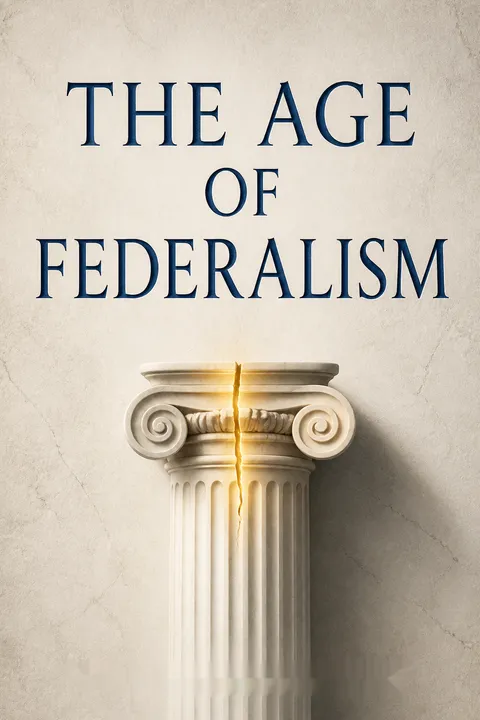
The Age of Federalism receives strong praise (4.17/5 stars) as a comprehensive, scholarly history of America's first twelve years under the Constitution. Reviewers highlight its meticulous detail, excellent analysis of political party formation, and penetrating portraits of founding figures like Washington, Hamilton, Jefferson, and Madison. The dense 750+ page work examines domestic politics, foreign relations, and the Federalist-Republican divide. While praised for clarity and engaging writing, many note it's challenging—small print, academic style, and requires commitment. Not light reading, but rewarding for serious history enthusiasts seeking deep understanding of this formative era.
People Also Read







Download PDF
Download EPUB
.epub digital book format is ideal for reading ebooks on phones, tablets, and e-readers.








































