
Key Takeaways
1. Early Diagnosis Isn't Always a Blessing: The "Right Not to Know" Can Preserve Hope
If you don’t test, you can hope you don’t have it and you cling to that.
The burden of knowing. For incurable conditions like Huntington's disease (HD), an early predictive diagnosis can be a profound burden rather than a gift. Valentina, at 28, faced a 50% chance of inheriting HD, an incurable neurodegenerative disease. She chose not to test for two decades, clinging to hope and living a "free life" unencumbered by a definitive, grim future. This "blissful ignorance" allowed her to pursue ambitions and raise her children without undue worry.
Psychological toll. The knowledge of an impending, untreatable disease can cast a long shadow, leading to chronic anxiety, depression, and even suicidal ideation. Valentina experienced panic attacks and attributed normal bodily sensations to the onset of HD, demonstrating how the fear of illness can manifest as real symptoms. Conversely, her negative test result immediately alleviated many of these perceived symptoms, highlighting the immense psychological impact of diagnostic certainty.
Ethical considerations. The HD community, with decades of experience, often chooses not to test, recognizing that knowledge cannot be unlearned. Genetic counselors play a crucial role in helping individuals weigh the pros and cons, including potential impacts on:
- Insurance and employment
- Family dynamics and the "right not to know" for relatives
- The risk of living many healthy years consumed by fear
2. Diagnostic Tests Are Not Objective Truths: Clinical Context is Paramount
Tests are not as accurate as we think. They may even pretend to offer accuracy while actually contributing to error.
Subjectivity in diagnosis. Despite technological advancements, most diagnoses, even for infectious diseases like Lyme, remain a clinical art heavily reliant on a doctor's interpretation of a patient's story and examination. Tests like ELISA and Western blot for Lyme disease are not definitive; they only indicate exposure and must be interpreted within the context of a patient's symptoms and exposure history. Without this clinical context, results can be misleading.
Test limitations. Medical investigations are confounded by numerous variables, including ethnicity, diet, medication, and lab-specific processes, leading to ambiguous or even contradictory results. For instance, a significant percentage of forestry workers in Lyme-endemic areas test positive for Borrelia burgdorferi antibodies without ever developing symptoms, indicating exposure rather than active disease. This highlights that a positive test doesn't always equate to illness.
Misdiagnosis epidemic. The "Lyme wars" illustrate how over-reliance on tests without clinical acumen, coupled with the subjective nature of symptoms like fatigue and pain, can lead to widespread misdiagnosis. Studies show a high misdiagnosis rate for Lyme disease, with many patients receiving treatment for an infection they don't have. This underscores the critical need for experienced diagnosticians who can synthesize all available information, rather than blindly trusting isolated test results.
3. The Nocebo Effect: Labels Can Unconsciously Make Us Sicker
Labels have the power to actually make us sick, through a mechanism called the ‘nocebo’ effect, which we will soon explore.
Belief shapes reality. The nocebo effect, the inverse of the placebo effect, demonstrates how a person's negative expectations or beliefs about their health can trigger real physical symptoms. Valentina, fearing Huntington's disease, experienced dizziness, clumsiness, and mood swings that largely dissipated after her negative genetic test, illustrating how the anticipation of illness can manifest physically.
Predictive coding. Our brains constantly use past experiences to predict and interpret sensory signals, both external and internal. When a person is given a medical label or fears a specific illness, their brain's predictive coding can become hyper-focused on bodily sensations, interpreting normal "white noise" (like a rising heart rate when standing) as alarming symptoms. This heightened attention disrupts normal filtering processes, creating or exacerbating perceived illness.
The classification effect. Philosopher Ian Hacking's "making up people" theory suggests that when a person is given a label, they unconsciously conform to its characteristics. This means that a diagnosis can inadvertently instruct individuals on what symptoms to look for, leading them to register bodily changes they might have previously dismissed. This phenomenon contributes to the expansion of disease descriptions and the creation of new patient populations.
4. Diagnosis Creep: Expanding Criteria Pathologizes Normal Variations
It could be that borderline medical problems are becoming ironclad diagnoses and that normal differences are being pathologised.
Shifting boundaries. "Diagnosis creep" occurs when the dividing line between normal and abnormal slowly shifts, drawing more people into disease categories. The Diagnostic and Statistical Manual of Mental Disorders (DSM) has expanded from 106 diagnoses in its first edition to nearly 300 in its latest, reflecting this trend. For instance, the definition of pre-diabetes was adjusted, potentially reclassifying nearly 50% of the adult Chinese population as pre-diabetic, leading to widespread monitoring without clear evidence of improved outcomes.
Autism's evolution. Autism, initially described by Leo Kanner in 1943 as "extreme autistic aloneness" in severely impaired children, has undergone significant diagnosis creep. The DSM-5 broadened the criteria, abolishing subcategories like Asperger's and allowing for "masking" of symptoms, leading to a dramatic rise in diagnoses, particularly in adults and females with milder presentations. This expansion has led to a disconnect between the original severe phenotype and the current diverse autistic population.
ADHD's expansion. Similarly, ADHD, once "hyperkinetic reaction in children" that disappeared in adolescence, is now diagnosable at any age, with a significant rise in adult diagnoses. The vague criteria, relying on subjective terms like "often loses things" or "often fidgets," make it susceptible to broad interpretation. This expansion means that normal variations in attention, energy, and social interaction are increasingly being labeled as neurodevelopmental disorders.
5. The Peril of Predictive Genetics: Interventions Carry Significant Burdens
For every life saved by cancer screening in a wealthy community, up to ten people underwent cancer treatment they didn’t really need.
Unnecessary interventions. Predictive genetic tests for cancer, like BRCA variants, offer the chance for preventative surgeries, but these interventions carry substantial physical and psychological burdens. Roisin's story of prophylactic mastectomies and oophorectomies, while preventing cancer, led to body image issues, relationship strain, and surgical menopause. Crucially, a significant percentage of women undergoing these surgeries would never have developed cancer, meaning they endured trauma unnecessarily.
Screening's double-edged sword. Cancer screening programs, while saving some lives, also lead to overdiagnosis and overtreatment. For example, a Cochrane review estimated that for every 2,000 women screened for breast cancer, one life is saved, but ten women receive unnecessary cancer treatment. This includes invasive procedures like mastectomies, radiotherapy, and chemotherapy, which have severe side effects and financial costs, without always improving overall mortality.
Uncertainty in risk. The predictive value of genetic variants is not absolute. Factors beyond the gene itself, such as other genetic variants and environmental influences, play a significant role. For instance, many healthy individuals in the UK Biobank carry pathological BRCA variants without developing cancer. This highlights that a positive genetic test, especially without a strong family history, doesn't guarantee disease and can lead to fear-driven decisions for interventions that may not be truly life-saving.
6. Commercialization's Blind Spots: Profit Over Comprehensive Care
There is something faintly ludicrous about my concern that genetic testing is being rolled out too quickly within the health sector when genetic tests for medical conditions are already available in the commercial sector, with none of the requirements of formal in-person consent or counselling.
Direct-to-consumer risks. Direct-to-consumer testing (DCT) for genetic health risks, often marketed as casual gifts, bypasses essential medical counseling and oversight. Judith's experience with a commercial BRCA test, which she received via email without preparation, caused immense anxiety and led to major surgery. These tests often have high false-positive rates (up to 96%) and only screen for a limited range of variants, providing misleading reassurance or unnecessary alarm.
Misleading information. DCT companies often present complex genetic information without adequate context, leading to misinterpretation. Former UK Health Secretary Matt Hancock, for example, publicly misconstrued his slightly elevated prostate cancer risk from a DCT, advocating for widespread testing based on a misunderstanding. This highlights how the "new tech sheen" of commercial tests can obscure their limitations and the need for expert interpretation.
Ethical and privacy concerns. DCT raises significant ethical questions regarding informed consent, data privacy, and the "right not to know." Individuals may unwittingly expose family members to genetic information they prefer not to have, and anonymized data can be used by third parties without full understanding. The lack of regulation in this sector means that profit motives can overshadow patient well-being, pushing for tests that offer little clinical utility but generate significant anxiety.
7. Childhood's Burden: Genetic Screening Risks Ambiguity and Stigma
Early life is an important time for bonding. Pre-symptomatic diagnosis will medicalise that time for some healthy children, requiring hospital visits and investigations.
Variants of uncertain significance. Genetic testing in children, while offering hope for rare diseases, frequently yields "variants of uncertain significance" (VUS). Henry's VUS, a novel genetic variant linked to developmental delay, left his mother Jenna in anxious limbo, constantly questioning his health without a clear diagnosis or prognosis. Reporting such ambiguous results to families can create decades of worry for a child who may ultimately be perfectly healthy.
Newborn screening dilemmas. Programs like the UK's Newborn Genomes Programme aim to screen healthy babies for hundreds of childhood-onset genetic conditions. While well-intentioned to enable early treatment, this turns diagnostic tests into screening tools, potentially medicalizing healthy children. The ethical challenge lies in balancing the chance of early intervention for a few against the inevitable overdiagnosis, unnecessary monitoring, and parental anxiety for many.
Prenatal screening's impact. Non-invasive prenatal testing (NIPT), a simple blood test, has made screening for conditions like Down syndrome easier and more widespread. However, its reported 99% accuracy is often misleading; the positive predictive value can be as low as 50% in low-risk pregnancies. This can lead to false positives and, given the high termination rates for Down syndrome, raises concerns about screening out genetic differences and stigmatizing disability, especially when parents feel pressured to test.
8. The Medicalization Trap: Distress Amplified by Multiple Uncertain Diagnoses
The more I talked to Darcie, the clearer it was that more than just her seizures were psychosomatic.
Clustering of uncertain diagnoses. Individuals like Darcie, a 20-year-old with a long list of diagnoses including migraine, hEDS, PoTS, autism, ADHD, depression, and anxiety, often fall into a "medicalization trap." These conditions, particularly their milder forms, frequently cluster together, not due to shared pathology, but because people who embody psychological distress tend to manifest multiple physical symptoms and worry about all aspects of their health.
The snowball effect. Once a person enters the medical system with one diagnosis, they are often subjected to more tests and specialist referrals, which can inadvertently lead to further labels. Small physiological differences or vague symptoms are picked up and pathologized, creating a snowball effect of diagnoses. Darcie's psychosomatic seizures, for instance, were initially attributed to severe faints from PoTS, demonstrating how one uncertain diagnosis can feed into another.
Specialist silos. The highly specialized nature of modern medicine contributes to this trap. Each specialist focuses narrowly on their "lane," diagnosing and treating their specific condition without a holistic view of the patient. This prevents a generalist from stepping back to question the entire diagnostic trajectory or to consider whether the patient's distress is being amplified by the very act of medicalization and the accumulation of labels.
9. Beyond Biology: Psychosocial Factors Often Matter More Than Genes
The innate biology which creates vulnerability to mental health problems cannot always be changed, but the social and environmental factors can be.
Oversimplifying distress. The trend to "biologize" mental health problems, framing them as purely neurochemical imbalances (e.g., depression as serotonin deficiency, ADHD as dopamine deficit), oversimplifies complex human suffering. While biology plays a role, this focus often overshadows crucial psychosocial factors like childhood abuse, neglect, poverty, bullying, and social isolation, which are significant risk factors for conditions like ADHD and depression.
Neglecting social change. By attributing distress solely to faulty brain wiring or genetic predispositions, medicine risks making individuals passive victims of their conditions and diverting attention from societal issues that are amenable to change. For example, the DSM-5 notes that ADHD symptoms may be absent with consistent external stimulation and rewards, suggesting that supportive environments can mitigate "neurodevelopmental problems" more effectively than medication.
The limits of medication. While stimulant drugs for ADHD and antidepressants for depression can offer short-term relief, their long-term efficacy, especially for milder cases, is often unproven or no better than placebo. The pharmaceutical industry heavily influences this narrative, promoting chemical solutions for problems that may be better addressed through psychological interventions, social support, or addressing underlying life circumstances.
10. The Imperative of "Slow Medicine": Prioritizing Holistic, Thoughtful Care
It is in ordering tests the folie à deux is seen very plainly, because medical professionals will provide the tests their patients want even if they know they’re unnecessary and might potentially cause confusion.
Rethinking medical practice. The "age of diagnosis" calls for a shift towards "slow medicine," emphasizing thoughtful, holistic evaluation over rapid, technology-driven diagnoses. This means valuing the expertise of generalist doctors who can see the whole patient, question the accumulation of diagnoses, and de-escalate health anxiety, rather than specialists who may inadvertently contribute to overmedicalization within their narrow focus.
Patient and doctor responsibility. Both medical professionals and the public contribute to the overdiagnosis epidemic. Doctors, driven by fear of litigation or lack of time, often order unnecessary tests. Patients, seeking certainty and solutions in a "wellness culture" that expects perfection, demand diagnoses for normal variations or understandable sadness. This "folie à deux" perpetuates a cycle where more tests and labels are given, even when they offer little benefit.
Beyond technology. True progress in healthcare may lie not in more advanced machines or genetic sequencing, but in investing in human resources: more doctors, nurses, psychologists, and therapists who can provide quality consultations, listen deeply, and offer emotional support. This approach, focused on understanding the patient's story and fostering resilience, can free up resources from low-value care and help individuals live unencumbered lives, accepting imperfections and finding strengths beyond medical labels.
Review Summary
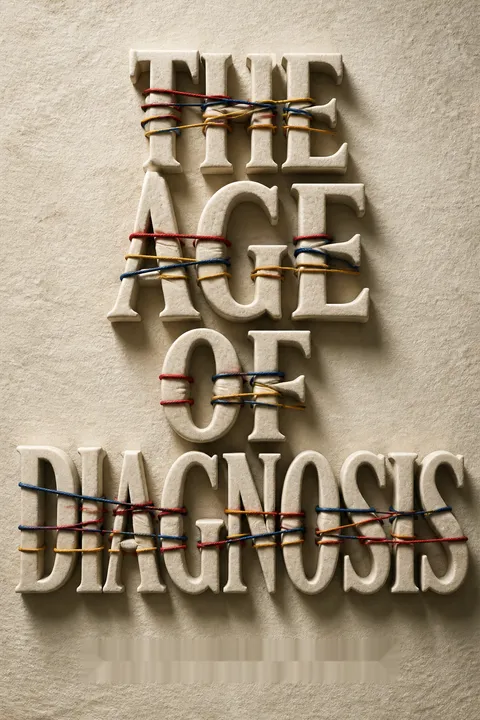
The Age of Diagnosis by Suzanne O'Sullivan explores whether modern medicine's increasing tendency to diagnose conditions benefits patients or causes harm. The book examines various conditions including autism, ADHD, depression, Huntington's disease, cancer genes, and long Covid. O'Sullivan questions diagnostic expansion, predictive medicine, and the medicalization of normal human variation. Reviews are polarized: supporters praise her compassionate questioning of overdiagnosis and its effects on identity and resource allocation, while critics argue she dismisses real suffering, misunderstands conditions like POTS, and lacks empathy for neurodivergent communities. Most agree the book provokes important discussions about diagnosis, though many disagree with her conclusions.
People Also Read



Download PDF
Download EPUB
.epub digital book format is ideal for reading ebooks on phones, tablets, and e-readers.








































