
Key Takeaways
1. The Inventor's Dual Nature: Ideal and Illusion
As we shall see, Tesla’s story, as we shall see, was a struggle between ideal and illusion.
A unique approach. Nikola Tesla's inventive style was a constant tension between pursuing perfect "ideals"—fundamental scientific principles—and crafting compelling "illusions" to sell his creations to the public. Rooted in his Serbian Orthodox background, he believed in uncovering the underlying "logos" or divine principle in nature, much like a philosopher seeking universal truths. This meant he often prioritized theoretical elegance over immediate practicalities.
Mental engineering. Tesla's method involved building and perfecting inventions entirely within his mind before ever touching a workbench. He would visualize every detail, run the device mentally, and make improvements until he saw no fault. This "idealist" approach, contrasting sharply with Edison's trial-and-error empiricism, allowed him to conceive of complex systems like the rotating magnetic field.
The art of persuasion. Recognizing that the public and investors often failed to grasp the profound ideals behind his work, Tesla skillfully employed dramatic demonstrations and captivating narratives—his "illusions"—to convey the revolutionary potential of his inventions. These spectacles, like the "egg of Columbus" or wireless lighting, were not deceptions but rather powerful acts of showmanship designed to capture imagination and secure vital resources.
2. Revolutionizing Power: The AC Motor Breakthrough
My method is different. I do not rush into constructive work. When I get an idea, I start right away to build it up in my mind.
A spark of insight. Tesla's journey to the AC motor began in 1878 at the Joanneum Polytechnic School, where he observed a DC motor's commutator sparking. His professor declared a commutator-less motor impossible, but Tesla's "instinct was aroused." He envisioned a motor that would eliminate these problematic components by using alternating current (AC).
The rotating magnetic field. His breakthrough came during a walk in a Budapest park in 1882, where he conceived the idea of a rotating magnetic field. Instead of feeding current to the rotor, he realized that multiple alternating currents, out of phase with each other, could create a magnetic field in the stator that would induce eddy currents in the rotor, causing it to turn without physical contact or a commutator. This was a radical departure from conventional DC motor design.
From concept to prototype. While his initial mental designs were incomplete, the Strasbourg motor in 1883 provided crucial practical lessons, revealing the importance of material choices like iron cores. By 1887, in his New York lab, he perfected polyphase motors using two out-of-phase currents, demonstrating their efficiency and instantaneous reversibility. This innovation laid the groundwork for modern electrical power systems.
3. Strategic Promotion: Selling the Vision to Industry
I believe that this motor—Mr. Tesla can correct me if I am not right—is the first good alternating current motor that has been put before the public anywhere—is that not so, Mr. Tesla?
The patent-promote-sell strategy. With his AC motor perfected, Tesla and his backers, Charles Peck and Alfred Brown, adopted a clear business strategy: secure strong patents, vigorously promote the inventions, and then sell or license them. This approach aimed to capitalize on Tesla's genius without the immense capital and operational risks of manufacturing.
Building credibility. To overcome Tesla's obscurity, Peck and Brown sought endorsement from Professor William Anthony, a respected electrical expert. Anthony's favorable evaluation, confirming the motor's efficiency, was crucial. This was followed by strategic leaks to the technical press and a pivotal lecture at the American Institute of Electrical Engineers (AIEE) in May 1888, where Tesla's dramatic demonstrations captivated the engineering community.
The Westinghouse deal. The promotional efforts culminated in a lucrative deal with George Westinghouse in July 1888. Westinghouse, already committed to AC lighting, recognized the strategic value of Tesla's patents for an AC motor, especially after his own engineers, like Oliver Shallenberger, independently discovered the rotating magnetic field. The agreement, worth $25,000 cash, $50,000 in notes, and a $2.50 per horsepower royalty, secured Tesla's financial future and positioned his technology for widespread adoption.
4. The Wireless Dream: Harnessing Earth and Ether
My conviction has grown so strong, that I no longer look upon this plan of energy or intelligence transmission as a mere theoretical possibility, but as a serious problem in electrical engineering, which must be carried out some day.
Beyond AC motors. After his success with AC motors, Tesla turned his attention to high-frequency phenomena, inspired by Heinrich Hertz's discovery of electromagnetic waves. He aimed to develop a new system for transmitting both messages and power without wires, believing this would be his next great contribution to humanity.
The Tesla Coil. His investigations led to the invention of the oscillating transformer, now known as the Tesla coil. By carefully adjusting capacitors and induction coils to achieve resonance, he could generate currents with unprecedented voltages and frequencies. This device became fundamental to his wireless experiments and allowed him to demonstrate spectacular effects, including lighting lamps without wires.
Grounding the circuit. Tesla's unique vision for wireless transmission diverged from his contemporaries. While others focused on electromagnetic waves propagating through the air, Tesla became convinced that the Earth itself could serve as a conductor for electrical currents. He experimented with grounding his transmitter and receiver, believing that power could be sent through the earth's crust, with the atmosphere potentially serving as a return circuit.
5. Colorado Springs: Revelations of Stationary Waves
The earth was … literally, alive with electrical vibrations, and soon I was deeply absorbed in the interesting investigation.
A mountain laboratory. To test his ambitious wireless theories, Tesla relocated to Colorado Springs in 1899, building a large experimental station. Here, he aimed to:
- Ascertain the laws of current propagation through Earth and atmosphere.
- Develop a powerful transmitter.
- Perfect tuning for "secrecy, immunity, and selectivity."
Discovery of stationary waves. Observing distant lightning storms, Tesla detected periodic signals that led him to hypothesize the existence of stationary electromagnetic waves in the earth's crust. He reasoned that lightning strikes created waves that reflected back on themselves, causing periodic fluctuations in signal strength. This discovery convinced him that the Earth behaved like a "conductor of limited dimensions," capable of resonating and transmitting power globally.
Interplanetary signals? During his experiments, Tesla also detected unusual, regular "beep" signals, which he later speculated were intelligent communications from another planet, possibly Mars. While modern analysis suggests these might have been signals from Jupiter's moon Io, Tesla's interpretation fueled his vision of global communication and further solidified his belief in the Earth's electrical responsiveness.
6. Wardenclyffe: A Grand Vision Undermined
My enemies have been successful in representing me as a poet and visionary.
The World Telegraphy System. Returning from Colorado, Tesla secured $150,000 from J. P. Morgan to build Wardenclyffe, a massive wireless transmission facility on Long Island. His vision was a "World Telegraphy System" that would:
- Transmit messages across oceans.
- Broadcast news globally, potentially replacing newspapers.
- Enable personal, portable receivers (like modern cell phones).
- Eventually, transmit power in industrial quantities.
The towering ambition. Designed by Stanford White, the Wardenclyffe tower, 187 feet tall and topped with a 55-ton hemispherical terminal, was intended to store immense electrical charge. Beneath it, a 120-foot well and radiating pipes aimed to create a strong ground connection, allowing the magnifying transmitter to "get a grip of the earth" and set up global stationary waves.
Financial and competitive pressures. Despite Tesla's grand plans, Morgan withdrew support in 1903, partly due to the speculative "wireless bubble" and Tesla's inability to articulate a clear profit model for free power. Marconi's successful transatlantic transmission in 1901, using a system similar to Tesla's, further undermined confidence. Wardenclyffe, a symbol of Tesla's ultimate ideal, became a "dark tower," unfinished and eventually dismantled, leaving Tesla financially ruined.
7. The Price of Genius: Personal Battles and Public Scrutiny
I do not think there is any thrill that can go through the human heart like that felt by the inventor as he sees some creation of the brain unfolding to success.… Such emotions make a man forget food, sleep, friends, love, everything.
Childhood trauma and internal disorder. Tesla's intense creative drive was deeply intertwined with his personal struggles. The early death of his brother, Dane, and his own terrifying childhood visions led him to develop immense willpower and a need to impose order on the world. This internal "disorder" fueled his desire to reorder the external world through invention.
Celibacy and solitude. Tesla famously never married, believing that an inventor's "intense nature" and "wild, passionate quality" would be diluted by romantic attachments. He sought solitude to cultivate his imagination and analytical faculties, viewing it as essential for discerning ideals. While he formed deep emotional bonds with men like Anthony Szigeti and Richmond Hobson, these relationships often ended in disappointment or were overshadowed by his work.
From wizard to eccentric. As his financial woes mounted and his grander visions remained unfulfilled, Tesla's public image shifted. Once hailed as a "veritable magician," he was increasingly seen as an eccentric visionary. His later claims—like a particle beam weapon or communicating with Martians—were met with skepticism by the scientific community, who prioritized empirical evidence over speculative pronouncements.
8. The Maverick's Mind: Imagination Meets Rigorous Analysis
I can conceive of no [other] technical advance which would tend to unite the various elements of humanity more effectively than this one.… It would be the best means of increasing the force accelerating the human mass.…
The cognitive dance. Tesla's inventive process was a dynamic interplay between an expansive imagination and rigorous analytical thought. He would allow his mind to "roam around" during an "incubation period," conjuring entire machines and societal transformations. This "wild" side of his nature was crucial for generating disruptive ideas.
Refining the ideal. This imaginative exploration was then subjected to intense scrutiny. Tesla would "carefully choose the possible solutions" and "center his mind on a narrowed field of investigation," using mathematics and scientific principles to refine his mental models. He believed that if an idea withstood this critical examination, it was a "truth" for him, ready for physical manifestation.
Confirmation bias. In Colorado Springs, this cognitive style led to a "confirmatory bias." Convinced of his wireless power theories, he sought evidence that supported his ideas rather than actively trying to disprove them. This meant he often relied on calculations and limited observations, rather than extensive, witnessed distance tests, which ultimately hampered his ability to convince others of his system's viability.
9. The Critical Role of Patrons: Fueling Disruptive Innovation
Had there been only faint-hearted and close-fisted people in the world, nothing great would ever have been done.
The necessity of backing. Tesla's career vividly illustrates that disruptive innovation rarely happens in isolation; it requires significant financial and strategic backing. His early success with the AC motor was largely due to the shrewd business acumen and financial support of Charles Peck and Alfred Brown, who understood how to patent, promote, and sell his inventions.
A changing landscape of support. After Peck's death, Tesla lacked a mentor who could effectively bridge his visionary ideals with commercial realities. While figures like Edward Dean Adams (Niagara) and J. P. Morgan (Wardenclyffe) provided substantial funds, they were primarily financiers, not hands-on partners in shaping his inventions or navigating the complex patent landscape. Morgan, in particular, saw his investment as a "simple sale" of patents, not a partnership in a grand vision.
The consequences of misaligned expectations. Tesla's inability to secure sustained, strategic patronage for Wardenclyffe proved fatal. Morgan's withdrawal, influenced by the speculative wireless market and Tesla's lack of a clear profit model, left the project underfunded. This highlights the critical need for inventors to align their vision with their patrons' expectations, especially when dealing with capital-intensive, disruptive technologies.
10. Enduring Legacy: Beyond the History Books
The world, I think, will wait a long time for Nikola Tesla’s equal in achievement and imagination.
The father of AC. Tesla's most undeniable legacy is his foundational work on alternating current. His AC motor and polyphase power systems were disruptive innovations that enabled the efficient generation, transmission, and distribution of electricity, shaping the modern electrical grid. Today, AC motors power everything from household appliances to industrial machinery.
Pioneering radio and remote control. While Guglielmo Marconi is often credited with inventing radio, Tesla's contributions were pivotal. His work on grounding transmitters and receivers, tuning circuits, and the Tesla coil were fundamental to radio's evolution. His radio-controlled boat also pioneered the field of "telautomatics," foreshadowing modern robotics and drones.
A cultural icon. Despite being overlooked in mainstream history for decades, Tesla has become a hero of counterculture and New Age movements. His visionary claims, outsider status, and perceived battles with corporate giants resonate with those seeking alternatives to conventional narratives of technological progress. His name now graces electric cars, and his story continues to inspire artists, writers, and scientists alike.
Review Summary
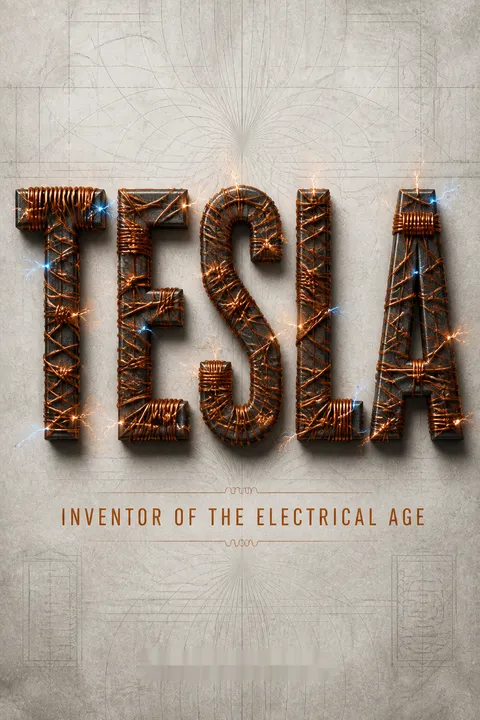
Tesla: Inventor of the Electrical Age receives mixed reviews averaging 3.87/5 stars. Readers praise Carlson's thorough research, neutral approach, and detailed technical explanations of Tesla's inventions, particularly his AC motor work. The biography effectively demystifies Tesla, showing him as a brilliant but flawed engineer who lacked business acumen. However, many readers find the book excessively dense and technical, with extensive engineering details that overwhelm the personal narrative. Non-technical readers struggled with the scientific jargon, while those with engineering backgrounds appreciated the comprehensive treatment. Most agree it's the definitive Tesla biography for serious scholars, though lacking accessibility for general audiences.
People Also Read


Download PDF
Download EPUB
.epub digital book format is ideal for reading ebooks on phones, tablets, and e-readers.








































