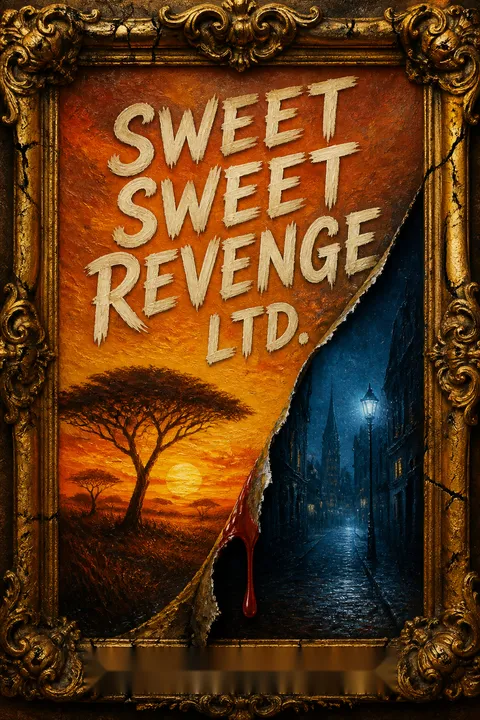

Plot Summary
Inheritance of Names and Discontent
The story opens in the Maasai savanna of Kenya, with the inheritance of names, roles, and grievances across generations of medicine men and chiefs. Ole Mbatian the Younger flourishes as a respected medicine man but secretly wrestles with dissatisfaction, especially his failure to have a son, a source of unresolved sorrow and generational tension. Meanwhile, Chief Olemeeli the Well-Travelled clings to idiosyncratic traditions which stifle progress, eschews modernity, and manages his own peculiar brand of power and indecision. These parallel lines of inheritance touch not just names but destinies, as future generations struggle against the burdens and quirks of those before them. From the Kenyan plains to Stockholm's cold streets, this theme of legacy and yearning for transformation sets the stage for individuals fated to cross paths in the pursuit of justice, revenge, and self-discovery.
A Swedish Son Abandoned
Victor Alderheim, an icy, ambitious art dealer in Stockholm, has built his life on calculated relationships and long-term schemes. His encounter with Kevin—a son he's largely unaware of, born from a one-time arrangement with a woman of color—becomes a source of shame and danger. As Kevin's mother succumbs to illness, Victor begrudgingly becomes his guardian, hiding the boy in a suburban flat on meager rations. Victor grows paranoid that Kevin, once of age, could become a lifelong financial nuisance or expose his carefully orchestrated life. The heartless solution: relocate Kevin to Africa under the guise of a vacation, then abandon him on the harsh savanna. Victor's betrayal is cold and final, the mechanism by which one life is cast aside so another can ascend. In this transactional world, feelings are liabilities, and legacies are built atop acts of erasure.
Plotting Repatriation
Now eighteen and facing imminent adulthood, Kevin finds the walls closing in. Victor, seeing only risk in maintaining any connection, secretly arranges a repatriation trip to Kenya—a one-way ticket, business class for Victor, economy for Kevin. For Kevin, the prospects are disorienting yet hopeful: perhaps the boss will finally reveal some paternal warmth. For Victor, the trip is an anxious march toward ending a liability disguised as fatherly benevolence. Subtly and meticulously, Victor ensures that Kevin is as far as possible from civilization, then abandons him on the savanna, offering only a feeble justification ("it's in your blood"). The chilling aftermath reveals Victor's methodical cruelty, shattering any last illusions Kevin clings to regarding parental care. Victor returns, unburdened and celebratory, ready to grasp Jenny Alderheim's inheritance and cement his gains.
Betrayal on the Savanna
Alone in the Kenyan wilderness, Kevin endures terror and despair but invokes every lesson learned from his fractured childhood. Surviving lions by climbing into an acacia tree, he is discovered nearly dead by Ole Mbatian the Younger, whose traditions and remedies offer Kevin not just protection but a sense of belonging. Meanwhile, back in Stockholm, Victor weaves a new form of betrayal: manipulating Jenny, his meek gallery partner, into marriage, stripping her of wealth and assets through calculated paperwork, and, once her utility is exhausted, casting her out with nothing. Both Kevin and Jenny are victims of Victor's single-mindedness, their lives upended by a man for whom people are pieces on a chessboard. As one finds unexpected refuge, and the other faces oblivion, the seeds of eventual convergence are sown.
The Art of Survival
Deep in Maasai country, Kevin is adopted by Ole as his son, learning the ways of survival, language, and the intricacies of the savanna. For nearly five years, he grows skilled in every local craft but recoils when faced with the ultimate rite of passage: circumcision. Drawing his own boundaries, Kevin chooses exile over ceremonial mutilation, packing his few belongings (including priceless paintings Ole gives him as travel tokens) and fleeing back toward Sweden. Jenny, dispossessed and emotionally threadbare, contemplates suicide but is turned aside by the smallest kindness of a stranger. She clings to life, finds herself in the studio apartment Victor once housed Kevin in, and, through happenstance, is present when Kevin returns to claim the same room. Refugees of Victor, they find connection in their mutual victimhood and shared appreciation for art.
The Fate of Jenny
Jenny, once resigned and passive, discovers in Kevin a confidant and partner in adversity. Their conversations unveil hidden strengths and humor, and mutual warmth blossoms. Bit by bit, Jenny emerges from her emotional paralysis, realizing both the scope of Victor's cruelty and the possibility for agency. Lamenting their impoverished circumstances, the two unite with a common purpose: to survive, and then to punish Victor for the harm he's inflicted. Revenge is no longer idle fantasy but a plan. Guided by the mantra "Fucking Victor," they resolve to take action, seeking both employment and retribution—and happen upon Sweet Sweet Revenge Ltd., a quirky agency that turns grievance into lucrative service. The encounter is not merely fate but a reframing: adversity as raw material for transformation.
Rebirth, Reunion, Revenge
Crossing the threshold of Hugo Hamlin's Sweet Sweet Revenge Ltd., Kevin and Jenny find both employment and an outlet for their anger. Hugo, a disillusioned adman with a genius for creative mischief, is reluctant but intrigued by their pitch to take down Victor. Their offer of an "Irma Stern" painting, actually an authentic work by Ole's hand (mistaken for a masterpiece by Jenny's expert eye), signals the blend of luck, coincidence, and artfulness that defines their quest. Hugo waffles between skepticism and ambition, reluctantly accepting the duo as staff due to their dogged persistence and willingness to work for almost nothing. Together, they begin plotting an elaborate revenge: not just personal justice, but a flamboyant sting involving forged art, manufactured evidence, and the manipulation of social and legal systems.
Sweet Sweet Revenge Ltd
Sweet Sweet Revenge Ltd capitalizes on the growing social appetite for retribution, taking on cases ranging from neighborly feuds to mailroom vendettas, each more outlandish and comedic than the last. Hugo masterminds intricate (but technically legal) schemes: unleashing llamas on a German neighbor, overloading a shop with packaging, humiliating a bullheaded football coach. Amidst this, Jenny and Kevin sharpen their skills as assistants, enacting low-key sabotage and plotting Victor's downfall. The firm's operations offer a satirical mirror to modern obsession with grievance and payback, but as more resources are poured into their main target, the lines blur between legal, ethical, and hilarious, culminating in a plan to frame Victor as a forger, pervert, and criminal in one fell swoop.
Irma's Brushstrokes
Behind the comedic machinations runs a serious art-historical thread: the paintings by "Ole Mbatian" are in fact genuine works by South African expressionist Irma Stern, left in Kenya in gratitude after Ole saved her life. The paintings' provenance, bolstered by local photographs and letters, gives them immense value, but only if their ownership and authenticity can be established. Hugo and Jenny's attempts to pass the forgeries off as Sterns bring them up against the complexities of art authentication, leading to muddled successes and many mishaps. Ultimately, it is the true, overlooked story—the friendship between the Maasai and Stern, the rescue and reciprocity—that reveals how the art world's obsession with pedigree can ignore the very humanity and history it claims to cherish.
Llamas, Packages, and Pain
The revenge business surges, highlighted by cases where inventive cruelty meets comic excess. A llama imported from Sweden savages a German shepherd, settling a decades-old teacher-student score. Packing peanuts from across the globe paralyze a shopkeeper's mailroom. A customized "football" break's a coach's ankle. Each escapade demonstrates Hugo's gift for imaginative escalation, but also the futility of proportional revenge—a theme mirrored in the art-world schemes against Victor. These interventional farces both lampoon and critique a society where slights, real or perceived, demand ever-more elaborate acts of retaliation, and where justice is less about restoration than theatrical one-upmanship.
A Newfound Alliance
Amidst their plotting, Jenny and Kevin find growth—not only as lovers and partners in conspiracies, but as people reclaiming a sense of home and worth. Hugo, too, is changed: his cynicism is tempered by genuine camaraderie, and he discovers in the trio not just utility but kinship. Ole Mbatian, appearing in Sweden to track down his son Kevin, is soon entangled with the group, welcomed for his wisdom and humanity. Even Malte, Hugo's brother and an eye doctor in crisis, is swept into the fold. The group's evolving bonds, built atop shared grievance and absurdity, illustrate that revenge—when employed with wit and in service of mutual support—can become transformative, a vehicle for renewal and belonging.
Forged Art, Real Consequences
The plot to destroy Victor reaches its climax: Jenny and Kevin, using the keys Jenny smuggled from her former home, plant paintings, sex toys, and supposed evidence of forgery and vice in Victor's gallery cellar. The plan triggers a comical but devastating police raid. Victor is arrested and publically disgraced, his reputation tanked amidst sex, drugs, and goat rumors. However, the scheme's success is double-edged. The authenticity of the Stern paintings—now proven with the help of an American expert who demands proper documentation—means Victor, by hook or crook, ends up the legal owner of two paintings worth millions. The group's zeal for poetic justice inadvertently hands their nemesis a fortune, muddling the boundaries of success and failure in the quest for revenge.
The Goat, the Gallery, and the Sting
Victor's newfound windfall is threatened as Jenny, Kevin, Hugo, and Ole concoct a desperate plan to break into his gallery and reclaim the paintings and documents. Chaos ensues: a thrown club meant to "mildly" incapacitate Victor accidentally becomes fatal when it triggers a brain bleed, the tool of death a jar of Swedish lingonberries. As police descend upon the scene, the group scrambles to erase digital evidence and fabricate alibis. Investigations by Inspector Carlander (himself on the cusp of retirement and more than a little cynical) weave through a labyrinth of red herrings, social media hate, and near-misses, but for all his competence, he can't untangle the web of causality that makes the case so elusive.
Lions, Lingonberries, and Loss
Aldherheim's death is labeled as murder or manslaughter, but evidence is scant: no clear motive, no fingerprints, and an unlikely combination of tools and suspects. The true culprit—Ole's thrown club and the lingonberries—remains hidden behind a series of comic and administrative blunders, red herrings, and near-misses, as Carlander's dogged investigation eventually fizzles with his retirement. Meanwhile, the sweet taste of revenge has turned sour: the group is nearly brought down by the consequences of their righteous plotting, narrowly escaping conviction through luck, wits, and an overburdened bureaucracy. The absurdity of justice—subject to randomness, social trends, and institutional inertia—comes into sharp relief.
Inheritance, Identity, and Healings
Kevin inherits Victor's estate, including the now-authenticated Stern masterpieces, transforming his and Jenny's prospects. Ole, self-effacingly delighted, returns home with his family, an inheritance beyond livestock: legacy, modernity, and respect. Hugo, his taste for vengeance dulled, invents a new business—Sweet Sweet Health Ltd—blending local medicine and Western innovation in Kenya, with Malte as chief practitioner. The value of names, inheritances, and belonging is redefined, not through adherence to custom, but the forging of new, chosen bonds: romantic, professional, and familial. The group's various "healings"—physical, emotional, communal—become the triumphant last act in a story propelled by brokenness and appetite for justice.
Modern Maasai, Modern Scams
Ole Mbatian, now chief, welcomes electricity, escalators, and Netflix to his village, elevating his status as a modernizer and consolidating Jenny and Kevin's positions as the new medicine woman and man. Hugo leverages his marketing expertise to create a hybrid enterprise—medicine, tourism, and art exhibition—using Maasai heritage and contemporary African art to attract the world's attention (and money). Modernity, once shunned, is now the currency of progress, even as old conflicts foment: neighboring medicine men and traditionalists protest, rumors swirl, and cultural authenticity remains a wary commodity. The juniper-hedge of resistance, watered daily by rivals, fails to thrive against the onrush of the present.
Escalators and Exhibits
The village becomes a vibrant symbol of adaptation and entrepreneurship. Escalators for no reason become the centerpiece of viral art, and Jenny, as artistic director, curates a living museum of African creativity and resistance, blending local color and global influences. Tourists, Wi-Fi, and wealth transform lives while also attracting the envy and backlash of old-guard medicine men. Malte, liberated by love and new purpose, becomes essential to the cooperative, while Hugo's inventive touch ensures commercial success. Yet, as ever, the cycles of progress face the persistent undertow of nostalgia and sabotage—hints that the past does not surrender so easily.
The Full Circle of Revenge
In a sequence of epilogues, the village fully modernizes, women gain voting rights, Jenny and Kevin's child—a future "medicine woman"—is expected and fêted, and international connections flourish, from Kenya to Stockholm and beyond. The old guard cedes to the next generation; societal rules bend. Justice, imperfect and comic, has been served, but its sweetness lies as much in its unintended consequences as in its original target. The revenge that began as personal grievance evolves into communal renewal, cross-cultural exchange, and a legacy that—true to the premise—belongs as much to art and love as it does to score-settling.
Analysis
Sweet Sweet Revenge Ltd. is a satirical, exuberant meditation on the cycle of harm, justice, and renewal in a globalized, bureaucratic, and sometimes farcical world. By marrying the lives of Maasai healers and Stockholm art dealers, Jonas Jonasson explores the intertwined destinies wrought through family, tradition, and ambition. The central motif—revenge, both petty and profound—serves as a mirror for society's endless appetite for retribution and meaning. Jonasson lampoons bureaucracy, the art world's obsession with provenance, the commodification of culture, and the perverse effects of modern legal and digital systems. The novel suggests that justice, left to its own, is rarely satisfying: it is unstable, occasionally tragic, but always subject to luck, cleverness, and resilience. Ultimately, Jonasson proposes a form of grace found in adaptation: characters flourish only when they let go of rigid inheritance, rewrite traditions, and ally themselves with "fellow exiles" to build a new, if imperfect, community. In a world where revenge can be sweet—or calamitous—perhaps the most subversive act is not to get even, but to create, to heal, and to laugh, together.
Review Summary
Reviews for Sweet Sweet Revenge Ltd. are mixed, averaging 3.79/5. Fans praise its quirky characters, absurdist humor, and cultural clashes, particularly enjoying the Maasai medicine man Ole Mbatian and the inclusion of artist Irma Stern. Critics find the pacing slow, characters underdeveloped, and the formula repetitive compared to Jonasson's earlier works. Several reviewers flagged concerns about racial stereotyping. Most agree the second half improves significantly, though many felt the book was overlong.
People Also Read
Characters
Ole Mbatian the Younger
Ole embodies the paradox of the modern Maasai: skilled, respected, conservative in craft, but open to evolution. His longing for a male heir propels much of the narrative, manifesting as both strength (when he adopts Kevin and equips him for survival) and vulnerability (his sorrow and at times comic rigidity). As father, chief, healer, and accidental modernizer, he navigates changes with wisdom—albeit occasionally ham-fisted. His development is marked by growth from stubborn tradition to open, if bemused, embrace of escalators, electricity, and new familial configurations. Keenly observant yet idiosyncratic, Ole's psychological complexity is seen in his deep need to nurture, to be remembered, and to do "the right thing"—however freshly defined. His relationships are deeply affectionate with Kevin and comically antagonistic with his wives and rivals.
Kevin Beck / Mbatian
Kevin's role is that of the outsider—abandoned son, accidental Maasai, art courier, and natural connector. His psyche is shaped by early neglect, dispossession, and longing for acceptance, but he transforms through adaptation: first surviving Victor's treachery, then thriving among the Maasai, and ultimately reconciling his origins as a Swedish-African. Kevin is reflective, sensitive, and quietly competent; his journey is both literal (across continents) and existential (towards self-worth and a new identity as medicine man and inheritor). His arc is intertwined with Jenny, with whom he finds love, purpose, and a sense of home, and with Ole, whose approval and tradition he alternately seeks and subverts.
Jenny Alderheim
Initially muted and oppressed, Jenny's personality blossoms through adversity. Psychologically, she is marked by learned helplessness but also introspection, artistic passion, and capacity for loyalty. Her transformation—from Victor's scapegoat to confident partner in revenge and business—mirrors her increasing self-esteem and agency. Jenny's relationship with Kevin is emotionally restorative, and her rediscovery of art (and herself) becomes a key psychological anchor. As an archivist, creative, and eventual co-leader, she exemplifies resilience and the subtle power of those underestimated by a patriarchal world.
Victor Alderheim
Victor is a cynic with a hollow core, driven by insecurity, chauvinism, and a pathological need for control. His psychological makeup is revealed as brittle, prejudiced, and opportunistic; he navigates power through cruelty, abjection, and exploitation of bureaucracy and relationships. His incapacity for genuine connection spells his own demise, as his manipulations backfire. Victor's role as both villain and victim of circumstance is heightened by the comic absurdity of his downfall—a man destroyed not by rivals but by his own overreaching hand and blindness.
Hugo Hamlin
Hugo's character is a blend of enterprising mischief and existential ennui. Once an ad-world star, he reinvents himself as a revenge entrepreneur, wielding ideas with gleeful ingenuity but also a degree of detachment from consequence. Hugo is psychologically restless, never quite home in tradition or rebellion, and fundamentally ambivalent: seeking success, redemption, companionship, and meaning, but wary of deep commitment. His relationships—with his brother Malte, Jenny, and Kevin—evolve from clinical to authentic, subtly redrawing his sense of belonging and ethics.
Malte Hamlin
Malte is a figure of decency, reliability, and emotional transparency, often forced to play straight man to Hugo's antics. His journey from professional burnout and romantic upheaval to reinvention in Kenya mirrors broader themes of healing and adaptation. Malte's instincts for care—in medicine, relationships, and friendship—underpin much of the group's success. Psychologically, his ability to grieve, forgive, and embrace the new becomes a quiet force that grounds the story's multiple zany trajectories.
Sweet Sweet Revenge Ltd (as Organization)
Not exactly a character, but functioning as a central psychological and narrative hub, the agency channels individual grievances into collective action. As an entity, it embodies satire, hope, and the dark humor of contemporary life where justice is transactional and engineered. Through Kevin, Jenny, and Hugo, the company becomes a laboratory for catharsis, transformation, and, ultimately, the possibility of authentic reconciliation—accompanied by absurdity and loss.
Chief Olemeeli the Well-Travelled / Toothless
Ole's lifelong rival and sometimes collaborator, the chief exemplifies the inertia and quirks of institutional power. Psychologically indecisive, mostly insecure, and frequently the butt of the joke, he inadvertently catalyzes change by his very inflexibility—his death, more than his rule, paves the way for the village's modernization and Ole's leadership.
Art and the Ghosts of Irma Stern
Irma Stern herself appears in memory and art; her works (two priceless paintings) become the contested objects around which the narrative's conflicts (legal, moral, financial, and emotional) revolve. Her symbolic presence—intersection of Africa and Europe, modernity and authenticity—serves as both treasure and trap for the living, challenging the limits of ownership and the legitimacy of history.
Inspector Christian Carlander
Carlander is the investigator whose exhaustion mirrors the story's tonal blend of farce and fatalism. Wry, skeptical, and deeply humane beneath layers of resignation, he is at once bumbling and effective, prone to distraction and ultimately a vehicle for the story's critique of modern justice: random, capricious, and always a bit late to the crime scene.
Plot Devices
Parallel Storylines and Intersecting Fates
Jonasson constructs the story from parallel plotlines: a story of tradition, legacy, and yearning in Kenya; a tale of ambition, dispossession, and vengeance in Sweden. These lines are stitched together via motifs of inheritance (names, roles, art, grievances), and their intersections—at first tragic, eventually comic—set in motion the cycle of revenge and renewal. The cross-pollination of social issues (race, class, colonial legacy) is underscored by repeated, comic-satirical mirroring: what happens in a Nairobi hut is echoed in a Stockholm art gallery and vice versa.
Art as Symbol and Catalyst
The paintings by Irma Stern occupy a symbolic center, functioning as literal and metaphorical bridges between people, nations, and histories. Their disputed provenance, misattribution, and ultimate auction encapsulate the absurdity of value and the search for legitimacy—blurring real and fake, authentic and counterfeit. The artworks reanimate buried stories, crystalize ambitions, and catalyze both conflict and closure.
Satirical Revenge-for-Hire Framework
Sweet Sweet Revenge Ltd provides a structural spine for narrative episodes of constructed revenge. Through exaggerated (but plausible) schemes—be it unleashing exotic animals, orchestrating bureaucratic disasters, or faking evidence—the story explores the modern appetite for payback, the limitations of legality, and the comedy at the heart of "proportional" restitution.
Comic Irony and Coincidence
The action is propelled by comic irony: plans boomerang, perpetrators become victims, losers inherit fortunes, and justice is dispensed by means as unpredictable as the random throw of a club. Coincidence—timed arrivals, misplaced documents, missed appointments, "miraculous" deaths—serves to blur the line between fate and farce, forcing characters (and readers) to question what's earned and what's arbitrary.
Social Satire
Bureaucratic rigidity, modern legal mechanics, the swing of social media backlash, and the pieties of cultural progress all come in for lampooning. The plot's reliance on official forms, password protocols, and the slow grind of institutional change points to the impotence (and danger) of relying on "systems" for real justice. Meanwhile, the villagers' adoption of Wi-Fi and Netflix becomes an emblem of the globalizing, commodifying creep of 21st-century life.
Structural Repetition and "Cyclical" Resolution
The book embraces cyclical narratives: inheritance, succession, revenge, forgiveness, and erasure recur in ever-altered forms. Ritual, tradition, and modernization—each upend, then reinforce, the other. Minor and major events (from arranged marriages to random stabbings and jars of lingonberry) repeat across generations, their ultimate meanings revised as characters adapt, evolve, and reconcile.
About the Author
Other books by Jonas Jonasson

Download PDF
Download EPUB
.epub digital book format is ideal for reading ebooks on phones, tablets, and e-readers.








































