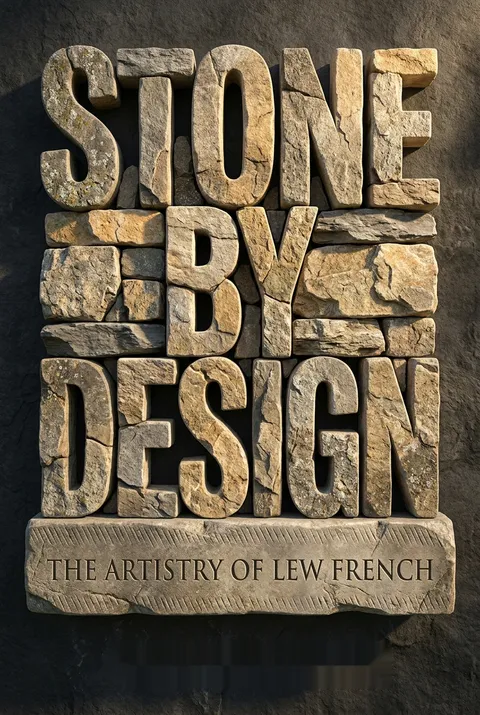

Key Takeaways
1. The Awakening to Stone's Hypnotic Power
For the first time I knew what I wanted to do: I wanted to work with stone.
A profound realization. At nineteen, Lew French experienced an awakening while building a black limestone chimney, feeling the full force of stone's power and energy. This intense, almost hypnotic connection to the material solidified his life's purpose, transforming physical labor into a means to create visually impactful stonework. The experience was so profound that he found himself unable to sleep, eagerly awaiting daybreak to continue working.
Shared connection. French later realized he wasn't alone in this unique connection when the homeowner, too, confessed to being drawn to stare at the finished chimney. This shared, inexplicable pull to the stonework confirmed for French the universal presence and energy that stone possesses, transcending mere aesthetics to evoke deep emotional responses in people. It underscored that stone's impact is not just visual, but deeply felt.
Beyond utility. From ancient structures like the Egyptian pyramids and Roman roads to Japanese gardens and pre-Christian stone circles, stone has always held a dual purpose: utilitarian and deeply spiritual. French recognized that stone, in its natural or sculpted form, carries a lasting legacy, a universal bond that connects past and present cultures through its inherent drama and power. This understanding became the foundation of his artistic philosophy.
2. Respecting Stone's Natural Form and Character
My preferred technique in laying stone is to not alter the shape or redefine it.
Honoring inherent beauty. Lew French's core philosophy revolves around respecting the natural state of stone, allowing its inherent shape and character to speak for itself. He believes his role is to discern the stone's strengths and how it harmonizes with adjacent pieces, rather than imposing an artificial form upon it. This approach creates a cohesive and visually compelling pattern that feels organic and timeless.
The dry-stack aesthetic. Much of French's work employs the "dry-stack look," a traditional New England method where stones bear directly on one another without mortar, relying on gravity and precise fitting for stability. This technique, which he finds visually hypnotic, emphasizes the solidity and natural interplay of each stone's form. The ultimate test for a dry-stacked stone is simple: if it looks at rest, it is at rest.
Timeless integration. The highest compliment French receives is when his work appears as if it "has always been there." This signifies a successful integration of his stonework into the landscape or home, making it feel like an undisturbed part of the natural world. By highlighting the stone's nature and the careful combination of pieces, his work aims to gently draw in the viewer, accentuating the latent energy within the stone.
3. Design Emerges from Quiet Observation and Intuition
Clearing my mind is a challenge, but I have found that this is when my best works and ideas transpire—when my mind is calm and clear.
Mindful creation. French emphasizes the importance of quieting the mind and allowing natural impressions to enter when observing stone in nature. This meditative approach enables him to interpret thoughts and formulate design ideas that resonate with the stone's environment. It's a process of deep listening and sensing, rather than imposing preconceived notions.
Adaptive process. His design process is fluid, beginning with an outline of main elements rather than rigid details. He remains open to adapting the design as the work progresses, trusting his instincts to guide the unfolding creation. This flexibility ensures that the final piece is a natural evolution, responding to the stone and its surroundings, rather than a forced outcome.
Staying ahead. Regardless of the medium—stone, driftwood, wood, or plants—the key to his design is to stay at least one step ahead of the building procedure. This foresight allows him to recognize available options and make informed decisions about the work's direction. He trusts his gut feeling, believing that if it feels right, it is the correct path for the design.
4. Transforming Spaces with Light, Texture, and Scale
The small mosaic scale of the stone combined with the rock’s newfound light color went a long way in making the room appear and feel larger than it is.
Solving design challenges. In transforming a dark, dank springhouse into a writing studio, French tackled critical problems of light and size. By grinding the exposed faces of small, flat fieldstones for the floor, he lightened their color, creating a mosaic that visually expanded the room. This strategic use of material and scale was crucial for illuminating the space.
Layering for depth. To counter the claustrophobic feel of the original large, dark interior stone walls, French introduced layers of lighter materials. He built small stone and driftwood inlays into existing niches and covered remaining surfaces with three coats of creamy white portland-based stucco. This layering technique added depth and warmth, making the room more appealing and spacious.
Harmonious integration. The stucco served as a solid, light backdrop, highlighting the colors and textures of the driftwood and stone. By bringing the exposed stone to scale with the building's size and incorporating lighter tones, French achieved an overall effect of space, harmony, and light. This project demonstrated his ability to manipulate materials to create a pleasant, inviting environment, even inspiring further outdoor designs like a fire pit and privacy wall.
5. Integrating Hardscape as the Landscape's Enduring Bones
The stonework in my designs is the framing element, so it becomes the dominant feature of the hardscaping, which eventually becomes the bones, or skeleton, of the entire landscape.
Foundational elements. For French, hardscape—everything in the landscape that isn't a plant—forms the essential "bones" or "skeleton" of a design. In the extensive Quitsa Pond project, he spent two years establishing stone foundations, retaining walls, boundary walls, patios, and sculptural elements. These stone features were the framing elements, dictating the flow and harmony of the entire landscape.
Complementing nature. A key to harmonious design is ensuring the hardscape complements existing natural features like hills, valleys, water, and buildings. French's approach involved creating distinct areas of interest while maintaining unifying threads of material and concept. This ensured the man-made elements enhanced, rather than detracted from, the undisturbed natural setting of sky, land, and water.
Strategic material use. On the Quitsa Pond hillside, French used large, weather-aged glacial boulders alongside smaller fieldstones to build retaining walls. This combination of sizes and textures, with larger stones protruding, created an intriguing, sculptural profile that mimicked the natural rhythm of marsh vegetation. The careful selection of weathered stones made the new work appear ancient and grounded, seamlessly blending with the environment.
6. Embracing Problems as Opportunities for Design Innovation
Over the years I have found that a perceived problem can often turn out to be a blessing in disguise.
Catalyst for creativity. French views setbacks or problems not as obstacles, but as catalysts that force him to develop alternate concepts and expand his design choices. This adaptive mindset allows him to transform what initially seems like a limitation into a unique and interesting design feature, enriching the overall project. It's a testament to his belief in finding solutions within constraints.
The immovable boulder. In the Quitsa Pond project, an unexpectedly massive glacial erratic blocked the planned sidewalk to the main entrance. Instead of attempting the impossible task of moving it, French encircled the boulder with sidewalk stones, creating a planting bed around it. This "problem" transformed the boulder into a grounded focal point, adding a distinctive vertical presence to the flat plane of the walkway.
Learning from mistakes. The incident with the walled garden door, where an arched door couldn't open in a thick stone archway, was a moment of profound realization for French. Instead of despair, the metalworker's simple solution of an off-center hinge taught him that most mistakes are fixable. This experience reinforced the value of collaboration and the importance of remaining open to practical solutions, even when design principles seem to fail.
7. Craftsmanship: A Universal Bond Through Time and Technique
This, I believe, is the lasting legacy of stone—a universal bond from past to present.
Ancient techniques, modern tools. French connects deeply with ancient stoneworkers, appreciating their monumental achievements without modern machinery. While he uses diamond-tipped saws for efficiency, he still employs the traditional "feathers and wedges" method to split larger stones. This technique, which involves drilling holes and driving metal wedges to create controlled breaks, links his craft to centuries of stone shaping.
Reading the stone. Like wood, most stone has a grain, and understanding this pattern is crucial for successful splitting. French strives to work with the stone's natural grain, though he acknowledges that unseen cracks can lead to unexpected breaks, requiring him to start over. This respect for the material's inherent properties is central to his craftsmanship.
Blending old and new. French often combines the altered shapes of split stone with the totally natural forms of other stones. This dynamic interplay creates a pleasing blend of differences, adding depth and interest to his work. He finds inspiration in abandoned quarries and antique split stones, often saving special pieces for years until the perfect design emerges, further cementing the timeless aspect of his craft.
8. The Fireplace as the Home's Anchoring Focal Point
No other architectural feature makes as dynamic a visual statement as stonework.
Heart of the home. French considers a stone fireplace the ultimate focal point, making a dynamic visual statement that anchors a room. Its design must be harmonious with the room's scale, proportion, texture, and other features, blending seamlessly rather than standing out brashly. He aims for a "feminine quality"—solid and grounded, yet rhythmic and light.
Personalized design. Each fireplace begins with a deep discussion with the client to understand their needs and tastes. French takes clients to see completed works, allowing them to draw their own conclusions about what resonates with them. This collaborative approach ensures the final piece is an individual creation, relating to and holding special meaning for the homeowners.
Storytelling through stone. The Hollinshead fireplace exemplifies this personal connection. Discovering a shared Minnesota heritage with his clients, French proposed using hand-hewn tamarack beams from their ancestral farm for the mantel. This deeply personal touch, shaped by the client's great-grandfather, transformed the fireplace into a tangible link to family history, making it a unique and cherished centerpiece.
9. The Walled Garden: A Sanctuary of Combined Elements
I didn’t want to fall into the trap of one of my client’s favorite sayings: when you try to combine too many things, you just make mud.
Complex harmony. The walled garden project presented a significant challenge: combining diverse elements—large and small stones, locust trees, hand-split cedar shingles, cypress boards, and viburnum sticks—while maintaining a clean, cohesive design. French's goal was to avoid "making mud," ensuring each material contributed to a unified aesthetic without overwhelming the space.
Functional artistry. The massive locust wood door, weighing 200 pounds, was the crowning achievement, visually held by the surrounding stone patterns. Despite an initial design flaw where the arched door couldn't open, a clever off-center hinge solution by a metalworker saved the project. This experience underscored that even significant mistakes are often fixable, reinforcing the door's purpose as both art and functional access.
Creating sanctuary. The twelve-foot-high stone and wood wall created an enclosed garden space, protecting plants from deer and intense winds. Within this sanctuary, elements like a waterfall, pond, and strategically placed windows offered vistas to the ocean and interior garden. The project demonstrated French's ability to craft a beautiful, functional, and secluded environment that felt both grand and intimate.
10. Continuous Learning and Honest Self-Critique
At the end of a project, I need to be my own worst critic.
Lifelong student. French considers his 28 years with stone a continuous learning experience, constantly amazed by how much he still doesn't understand. He is self-taught, but guided by mentors like Leonard Lundgren, and inspired by architects Frank Lloyd Wright and Antoni Gaudi, and artist Richard Iammarino. He actively seeks out information, critiques existing stonework, and explores new approaches.
Inspiration from diverse sources. Wright's monumental, grounded use of stone and Gaudi's abstract, organic, and freeform designs profoundly influenced French's thinking about stone's possibilities. His friendship with artist Richard Iammarino further deepened his understanding of art and design, helping him analyze his work and develop ideas on a more complete level. Travel also broadens his perspective, allowing him to absorb new natural environments.
Motivation through challenge. French finds motivation in the challenging nature of his work, viewing it as an ongoing process rather than a series of isolated projects. He embraces the freedom to continually evolve his designs, ensuring each piece remains interesting. Post-completion, he rigorously analyzes his work, identifying strengths and weaknesses to foster continuous improvement, believing that honest self-evaluation is crucial for growth.
Download PDF
Download EPUB
.epub digital book format is ideal for reading ebooks on phones, tablets, and e-readers.








































