
Plot Summary
The Fall Into Friendship
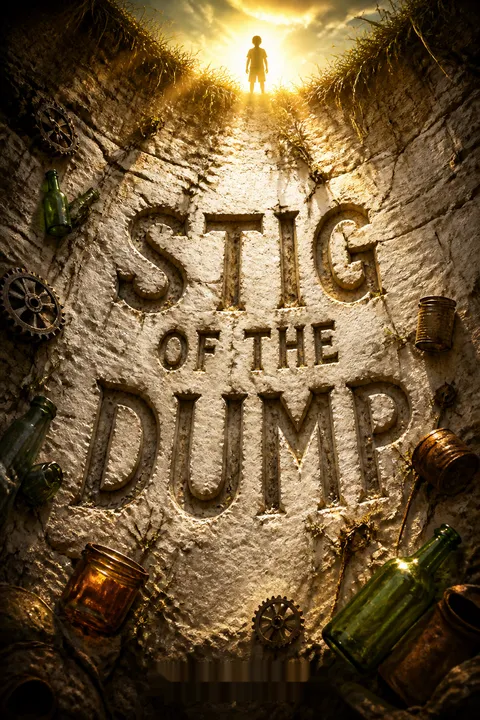
On a dull day, Barney, a curious and restless boy, ignores warnings and ventures too close to the edge of a chalk pit. The ground gives way, and he tumbles into a world both strange and familiar. At the bottom, he discovers a den and, within it, Stig—a wild, enigmatic boy clothed in animal skins. Their first meeting is awkward but electric, as Barney realizes Stig is not a figment of his imagination but a living, breathing companion. The two boys, separated by time and language, forge an immediate, unspoken bond. Barney's sense of isolation dissolves, replaced by the thrill of discovery and the promise of friendship that transcends the ordinary boundaries of his world.
Den of Wonders
Barney's fascination with Stig's den grows as he returns, bringing gifts and curiosity. The den is a marvel of invention, cobbled together from discarded treasures—jam jars, tin cans, bicycle parts, and more. Stig's ingenuity is on full display, transforming rubbish into tools and comforts. Barney, eager to help, joins in the den's improvement, learning to see value in the overlooked and the broken. Their teamwork is wordless but effective, and Barney feels a sense of belonging and accomplishment. The den becomes a symbol of their friendship—a place where imagination and practicality meet, and where the rules of the outside world no longer apply.
Chimneys and Windows
As winter approaches, Barney and Stig confront the den's shortcomings: smoke fills the air, and darkness lingers. Together, they devise solutions—constructing a chimney from tin cans and a window from jam jars and clay. The process is messy and filled with trial and error, but their persistence pays off. The den is transformed, becoming warmer, brighter, and more inviting. These improvements are more than practical; they are acts of care and creativity, deepening the boys' connection. Barney learns the joy of making do, of turning problems into opportunities, and of sharing triumphs with a friend who sees the world differently.
Winter Fires and Drawings
The harshness of winter tests both boys. Stig, nearly frozen, is revived by Barney's determination to help—cutting wood, lighting fires, and sharing warmth. The struggle against the cold becomes a lesson in resilience and cooperation. Around the fire, Stig reveals another side of himself, drawing vivid hunting scenes on the cave wall. These drawings bridge the gap between their worlds, offering Barney a glimpse into Stig's ancient life and dreams. The cave becomes a place of stories, where past and present mingle, and where friendship is kindled anew with every shared hardship and creative act.
The Hunt Reimagined
When Lou goes foxhunting, Barney and Stig embark on their own hunt, blending the rituals of modern sport with the primal instincts of survival. Stig's approach is practical—he hunts for food, not sport—and his actions challenge Barney's assumptions about what it means to hunt. The adventure is chaotic and comic, with Stig biting a hound and nearly hunting a horse, but it also reveals the boys' differences and mutual respect. The episode underscores the contrast between the civilized and the wild, the rules of society and the laws of nature, and the ways in which friendship can bridge even the widest divides.
Snargets and Alliances
Barney's secret world is threatened by the arrival of the Snarget brothers, local troublemakers. What begins as a rivalry—clod-throwing and threats—escalates into a chase through the pit. When the Snargets encounter Stig, their bravado crumbles, replaced by awe and fear. Yet, through a series of comic misunderstandings and shared treats, the boys form an unlikely alliance. Stig's presence transforms the dynamic, turning potential enemies into friends. The den becomes a place of truce and camaraderie, where differences are set aside and new bonds are forged in the spirit of adventure and acceptance.
Thieves, Tricks, and Treasure
When Barney witnesses suspicious men entering his grandmother's house, he enlists Stig's help to confront what turns out to be real thieves. Their pursuit is both thrilling and chaotic, culminating in the thieves' car tumbling into the pit and being "buried" under rubbish. Stig's instinct to salvage and repurpose is both comic and practical, as he begins to "skin" the car for useful materials. The episode blurs the line between play and reality, as Barney's imaginative world collides with genuine peril. In the end, the treasure is recovered, the police are baffled, and Barney's faith in Stig—and in the power of friendship and resourcefulness—is reaffirmed.
Party of Beasts
Invited to a fancy-dress party, Barney and Lou turn to Stig for help with their costumes. Stig's den yields treasures: animal skins, a stone axe, and even a leopard skin. The preparations are playful but meaningful, as the children adopt new identities and explore the boundaries between human and animal, past and present. The party itself is a microcosm of society, with its rules, rituals, and hierarchies. Yet, when a real leopard escapes from a circus and chaos ensues, the children's imaginative play becomes a test of courage and quick thinking. Stig's intervention blurs the line between fantasy and reality, reminding everyone that the wild is never far away.
Night of the Leopard
The party's games spill into the night, culminating in a dramatic encounter with the escaped leopard. Lou, dressed as a leopard, and Barney, as a cave man, find themselves face-to-face with the real beast. The moment is surreal and terrifying, as the children's play becomes a matter of survival. Stig's sudden appearance, spear in hand, tips the balance, and together they manage to trap the leopard. The episode is a testament to the power of imagination, the thinness of the veil between worlds, and the courage that can be summoned when play turns real. The children emerge changed, their bond with Stig—and with each other—deepened by shared danger and triumph.
Midsummer's Dream
On the shortest night of the year, Barney and Lou slip out into the moonlit world, drawn by a sense of adventure and possibility. The familiar landscape is transformed, and they find themselves swept into a dreamlike journey that blurs the boundaries of time. They encounter a stag, ride their pony through ancient woods, and stumble upon a tribe of people who seem to belong to another era. The night is filled with wonder and strangeness, as the children become both observers and participants in rituals that feel both ancient and immediate. The experience is both exhilarating and unsettling, leaving them questioning what is real and what is dream.
The Ancient Tribe
Barney and Lou are welcomed—warily—into the tribe's midsummer festivities. The camp is alive with music, dance, and storytelling, all centered around the rhythms of nature and community. The children are both outsiders and honored guests, their presence a curiosity and a bridge between worlds. Stig, now fully at home among his people, acts as their guide and protector. The night is filled with rituals—speeches, feasting, and the sharing of food and drink—that bind the tribe together and connect the children to a deeper sense of belonging. The experience is transformative, offering a glimpse into a world where community, tradition, and the land are inseparable.
Stones Across Time
The climax of the midsummer celebration is the raising of a massive stone, a communal effort that requires strength, coordination, and trust. Barney and Stig join the tribe in hauling the stone up the hill, their actions echoing those of countless generations before. The task is both monumental and joyful, a dance of cooperation and purpose. The stone is finally set atop others, forming a structure that will endure for millennia. In this moment, the children feel the weight of history and the continuity of human endeavor. The boundaries between past and present dissolve, and they become part of something larger than themselves.
Waking to Wonder
As dawn breaks, the children find themselves alone on the hillside, the tribe and the camp vanished as if they were never there. Only the ancient stones remain, silent witnesses to the night's events. Barney and Lou struggle to make sense of what has happened—was it a dream, a vision, or something more? The experience lingers, leaving them changed and filled with wonder. They return home, carrying with them the memory of a night when the ordinary world gave way to magic, and when friendship, courage, and imagination opened doors to the impossible.
Stig's Enduring Presence
Life returns to normal, but the memory of Stig and the adventures in the dump never fades. For Barney, Stig is both a friend and a symbol—a reminder that the world is full of hidden wonders, that the past is never truly gone, and that imagination can transform even the most ordinary places. The dump fills up, and rumors spread of Stig's presence elsewhere, fixing things and making do. For those who believe, Stig is always near, a guardian of forgotten places and a champion of resourcefulness and friendship. The story ends, but the sense of possibility endures, inviting readers to look for Stig in their own lives.
Analysis
A celebration of imagination, resourcefulness, and friendship
"Stig of the Dump" endures as a classic because it speaks to the universal longing for adventure, belonging, and the freedom to create one's own world. Through the unlikely friendship between Barney and Stig, Clive King explores the power of imagination to bridge divides—between past and present, child and adult, civilization and wilderness. The story champions resourcefulness, showing how even the most ordinary or discarded things can be transformed into sources of wonder and utility. It also gently critiques the constraints of modern life, offering an alternative vision rooted in play, cooperation, and respect for the land. The ambiguous blending of reality and fantasy invites readers to question what is possible, to look for magic in the mundane, and to value the connections that make us human. In a world that often feels fragmented and hurried, "Stig of the Dump" reminds us that adventure, creativity, and friendship are always within reach—if only we are willing to see with new eyes.
Review Summary
Stig of the Dump is widely regarded as a beloved British children's classic, earning an overall rating of 3.91/5. Many reviewers recall it fondly from childhood, praising its authentic portrayal of a child's perspective, social commentary, and themes of friendship, creativity, and ingenuity. Adults rereading it are often surprised by its depth and humour. Some note its episodic, slow-paced nature and dated language as minor drawbacks. Teachers highlight its strong cross-curricular potential, while the magical ending and Ardizzone's illustrations receive particular appreciation.
Characters
Barney
Barney is the protagonist whose curiosity leads him into the chalk pit and into friendship with Stig. He is adventurous, inventive, and sometimes impulsive, but his greatest strength is his openness—to new experiences, to people who are different, and to the wonders hidden in the everyday. Barney's relationship with Stig is transformative, teaching him resilience, empathy, and the value of resourcefulness. Through his eyes, the reader experiences the magic of discovery and the power of friendship that transcends time and language. Barney's journey is one of growth, as he learns to navigate both the real and the imagined, the modern and the ancient.
Stig
Stig is an enigma—a boy out of time, living in a den made from the detritus of the modern world. He is inventive, practical, and deeply connected to nature. Though he speaks little, his actions reveal intelligence, kindness, and a playful spirit. Stig's relationship with Barney is central to the story, offering both boys a chance to learn from each other. Stig embodies the spirit of making do, of finding value in the discarded, and of living in harmony with the land. He is both a real presence and a symbol of the enduring power of imagination and friendship.
Lou
Lou is Barney's older sister, practical and sometimes dismissive of Barney's wild stories. Yet, she is also imaginative and brave, willing to join in adventures when it matters most. Her skepticism is balanced by a deep loyalty to her brother and a willingness to be surprised by the world. Lou's journey mirrors Barney's, as she moves from doubt to belief, from outsider to participant in the magical world of Stig. Her presence grounds the story, offering both challenge and support, and her eventual acceptance of Stig is a testament to the power of experience over skepticism.
Grandmother
Grandmother provides a safe and stable home for Barney and Lou, setting boundaries but allowing space for adventure. She is wise, patient, and understanding, often indulging the children's imaginative play while gently steering them toward responsibility. Her presence is a touchstone of normalcy, a reminder of the comforts and constraints of the adult world. Grandmother's acceptance of Barney's stories—whether she believes them or not—reflects a deep love and respect for her grandchildren's inner lives.
The Snargets
The Snarget boys are local troublemakers, initially antagonists to Barney but eventually allies. Their roughness masks a longing for acceptance and adventure, and their encounter with Stig transforms them from bullies to friends. The Snargets represent the challenges and rewards of navigating social hierarchies, the potential for change, and the importance of empathy and inclusion. Their journey from rivalry to camaraderie mirrors the broader themes of the story—overcoming differences, finding common ground, and building community.
The Thieves
The thieves are outsiders who threaten the safety and order of Barney's world. Their presence introduces real danger, testing Barney's courage and resourcefulness. The confrontation with the thieves blurs the line between play and reality, forcing Barney and Stig to act decisively. The thieves' defeat is both a triumph of ingenuity and a reaffirmation of the power of friendship and cooperation. They serve as a foil to the story's heroes, highlighting the values of honesty, loyalty, and resilience.
Mrs. Fawkham-Greene
Mrs. Fawkham-Greene is the organizer of the fancy-dress party, embodying the rituals and expectations of polite society. She is gracious, if somewhat oblivious to the chaos that ensues. Her presence highlights the contrast between the structured world of adults and the wild, imaginative world of children. Mrs. Fawkham-Greene's party becomes a stage for the children's transformation, a place where boundaries are tested and new identities are explored.
Dinah
Dinah, the family dog, is a constant presence in the children's adventures. Her instincts often alert the children to danger or opportunity, and her loyalty provides comfort and courage. Dinah's reactions to Stig and the otherworldly events serve as a barometer of the story's reality, grounding the magical in the familiar. She is both a participant in and a witness to the children's journey, embodying the unconditional love and trust that underpin the story's emotional core.
The Tribe
The tribe encountered during the midsummer night represents the deep past, a world of ritual, cooperation, and connection to the land. They are both real and archetypal, embodying the values of community, tradition, and shared purpose. Their interactions with Barney and Lou offer a glimpse into a different way of being, one that is both alien and deeply resonant. The tribe's presence underscores the story's themes of time, memory, and the enduring power of human connection.
The Chief
The chief of the tribe is a figure of dignity and power, presiding over the midsummer celebration and the raising of the standing stones. He embodies leadership, tradition, and the weight of history. His acceptance of Barney and Lou signals a recognition of the continuity between past and present, and his actions anchor the story's exploration of ritual, belonging, and the passage of time.
Plot Devices
Time-Slip and Blurred Realities
The narrative's most powerful device is the seamless blending of time periods—Barney's modern world and Stig's ancient one coexist, sometimes overlapping in ways that defy explanation. This time-slip is never fully rationalized, allowing the story to operate on both literal and metaphorical levels. The ambiguity invites readers to question the boundaries between reality and imagination, history and myth, and to embrace the possibility that magic can be found in the everyday. The device is reinforced by recurring motifs—falling, dreaming, and waking—that signal transitions between worlds and states of being.
Symbolic Objects and Transformation
The story is rich with objects—flints, jam jars, tin cans, animal skins—that are transformed through ingenuity and imagination. These objects serve as bridges between worlds, connecting the past to the present and the mundane to the magical. The act of repurposing rubbish into tools and treasures is both practical and symbolic, reflecting themes of resourcefulness, creativity, and the hidden value in what is overlooked or discarded. The transformation of objects mirrors the transformation of characters, as they learn to see the world—and themselves—differently.
Friendship Across Difference
At its heart, the story is about the power of friendship to bridge divides—of time, culture, and experience. The relationship between Barney and Stig is built on mutual respect, curiosity, and a willingness to learn from each other. Their bond is tested and strengthened by adversity, and it becomes a model for other relationships in the story—between siblings, rivals, and communities. The device of friendship across difference is both a narrative engine and a thematic core, driving the plot and illuminating the story's deepest truths.
Ritual, Play, and the Power of Imagination
The story is structured around rituals—both formal (the midsummer celebration, the raising of the stones) and informal (games, parties, and play). These rituals are sites of transformation, where characters assume new roles, test boundaries, and create meaning. The power of imagination is celebrated throughout, as play becomes a way of understanding the world, confronting fears, and forging connections. The line between play and reality is deliberately blurred, inviting readers to see the magic in the everyday and to recognize the creative potential in all acts of imagination.
Download PDF
Download EPUB
.epub digital book format is ideal for reading ebooks on phones, tablets, and e-readers.








































