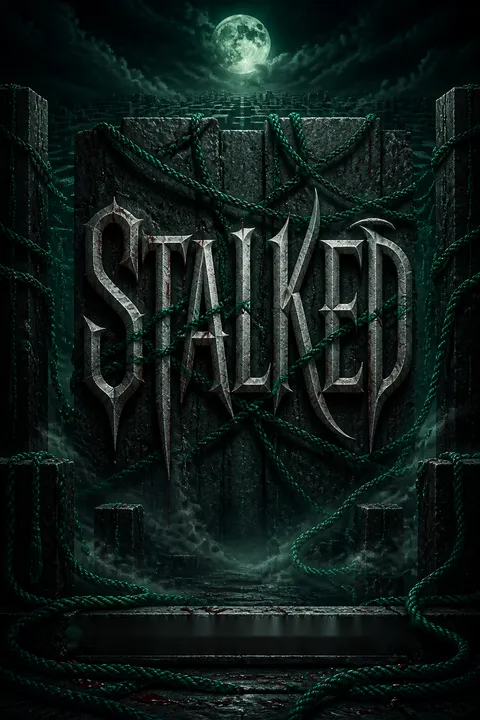

Plot Summary
Chemistry Lab Sparks Fly
Lia Morgan and Vane Blackwood's story begins in a high school chemistry lab, where academic rivalry masks a deeper, electric tension. Lia, the perfectionist, is paired with Vane, the late, cocky genius. Their banter is sharp, but beneath the surface, both sense a pull they refuse to name. Vane's home life is chaotic—he's responsible for his younger brothers after their parents' deaths, a burden he hides behind arrogance. Lia glimpses this vulnerability, complicating her feelings. Their hands brush, sparking more than just chemical reactions. Friends tease Lia about her "hatred" for Vane, but she can't deny her fascination. The stage is set for a relationship defined by competition, mutual provocation, and a simmering attraction neither can fully suppress.
Prom Night Collision
At prom, the rivalry between Lia and Vane combusts into something physical. Vane's bravado masks his longing, and Lia's resistance is tested when he pulls her into a private moment. Their first kiss is a battle of wills—intense, confusing, and charged with years of pent-up desire. The encounter is both thrilling and frightening, leaving Lia shaken. She flees, unable to process the depth of her feelings or the darkness she senses in Vane. For Vane, the night cements his obsession; for Lia, it marks the beginning of a pattern—running from what she wants most. The emotional fallout lingers, shaping their future interactions and setting the tone for a relationship built on push and pull, dominance and defiance.
Obsession Revealed
Vane's infatuation with Lia grows into a full-blown obsession. He stalks her social media, orchestrates encounters, and even manipulates her life from afar. Lia, meanwhile, tries to move on—excelling academically, building a life in New York, and exploring her sexuality in the city's BDSM scene. Yet, she can't escape the memory of Vane's touch or the way he made her feel. Vane's need for control intensifies; he tracks her relationships, sabotages rivals, and ensures she never truly escapes his orbit. The years apart only fuel his possessiveness. When Lia returns to Ravenwood for a prestigious gallery job—unbeknownst to her, arranged by Vane—their paths are set to collide once more, with higher stakes and darker desires.
The Hunt Invitation
Back in Ravenwood, Lia is drawn into the town's secret underworld. Vane, now a powerful figure, owns the exclusive club Purgatory and orchestrates an annual event: The Hollow's Hunt. Lia receives a black envelope—an invitation to be prey in a high-stakes, erotic game where hunters pursue women through a maze, claiming them for pleasure and dominance. The contract is explicit: surrender control, accept the risk, and submit to the winner's will for up to a year. Lia's curiosity and longing for surrender war with her fear of Vane's darkness. Ultimately, she signs, unable to resist the lure of being wanted so completely. The stage is set for a primal contest where desire, danger, and obsession intertwine.
Maze of Temptation
The Hunt begins. Lia, dressed in Vane's signature green, enters the maze with other women, each pursued by masked hunters. The maze is a playground of kink—rooms for rope, fire, sensory deprivation, and more. Lia's experience at New York's Red Room gives her confidence, but the knowledge that Vane is hunting her adds a layer of fear and excitement. She explores, mapping the maze, but can't shake the sense of being watched. The other women scatter, some terrified, others aroused by the chase. Lia's internal struggle intensifies: she wants to be caught, but on her terms. The maze becomes a metaphor for her own conflicted desires—control versus surrender, fear versus longing.
Caught and Claimed
Vane finds Lia in the maze, their encounter explosive. He binds her with emerald ropes, suspends her, and claims her body with a mix of tenderness and brutality. The scene is raw—pain, pleasure, and humiliation blend as Vane pushes Lia to her limits. He marks her with his cum, his teeth, and his words, making it clear she belongs to him. Lia's submission is both a choice and a compulsion; she craves the loss of control, the certainty of being wanted. Yet, the intensity of Vane's possessiveness frightens her. The line between love and obsession blurs as they enact fantasies neither dared voice before. The Hunt's rules fade; only their dynamic matters.
Ropes, Blood, and Surrender
Vane introduces Lia to knife play and blood, pushing her into new territory. The pain is sharp, the pleasure overwhelming. Lia's trust in Vane is absolute in these moments—she surrenders, letting him carve his mark into her skin and psyche. The experience is transformative, breaking down her last defenses. Vane's need to possess is matched by Lia's need to be possessed. Their connection is forged in pain, pleasure, and mutual vulnerability. Yet, beneath the ecstasy, Lia senses the danger of Vane's darkness—his willingness to hurt, to control, to destroy for her. The experience leaves her both fulfilled and unsettled, questioning how much of herself she's willing to give.
Feast of Possession
After the Hunt, the winners and their prey gather for a ritual feast. Lia, still marked and sore, sits on Vane's cock as he feeds her, a public display of ownership. The room is filled with sex, laughter, and the casual cruelty of the powerful. Other women are claimed, some willingly, others less so. The Blackwood brothers and their circle celebrate their dominance, their wealth, their control over Ravenwood. Lia is both aroused and disturbed by the spectacle. The feast cements her status as Vane's possession, but also exposes her to the reality of his world—a world where violence and pleasure are inseparable, and where love is indistinguishable from obsession.
Aftermath and Doubt
In the days after the Hunt, Lia is haunted by what she's experienced. The marks on her body are reminders of both ecstasy and danger. She tries to return to normal—work at the gallery, coffee with friends—but nothing feels the same. Vane's control extends beyond the bedroom; he tracks her movements, orchestrates her life, and expects her obedience. Lia's friends notice her distraction, her withdrawal. She begins to question whether she can live with the darkness that comes with loving Vane. The thrill of surrender is replaced by anxiety—about her safety, her autonomy, and the future she's chosen.
Secrets, Violence, and Flight
Lia stumbles upon the true extent of Vane's criminal activities. She witnesses him torturing a rival, his pleasure in violence undeniable. The reality of his world—drugs, power, blood—shatters her illusions. Horrified, she flees, driving through the night toward her parents' home, desperate for distance and clarity. Vane tracks her, using every resource at his disposal. Their confrontation is raw—Lia accuses him of monstrosity, Vane insists on his love and the necessity of his actions. The contract she signed becomes a cage. Lia is forced to confront the cost of loving a man who is both protector and predator, savior and destroyer.
Running, Chasing, Choosing
Lia's flight triggers a primal response in Vane. He chases her, physically and emotionally, refusing to let her go. Their dynamic reverts to its core: she runs, he hunts, she is caught, and the cycle repeats. In the woods, they enact their most primal scene—Lia is taken, claimed, and filled, her body marked as his. The violence is both terrifying and exhilarating. Yet, in the aftermath, Vane shows vulnerability, confessing his fear of losing her, his inability to exist without her. Lia realizes that running is futile; she is as bound to him as he is to her. The choice is no longer about escape, but about how to live with the darkness they share.
No More Running
Back in Ravenwood, Lia seeks solace at the inn, confiding in new friends who understand the world she's entered. She reflects on her own desires—the thrill of being hunted, the satisfaction of surrender, the comfort of Vane's possessiveness. She acknowledges her complicity in the dynamic, her attraction to the very things that frighten her. Vane, meanwhile, waits outside her window, a silent guardian and jailer. Their relationship is no longer about one chasing and the other fleeing, but about negotiating the terms of their mutual obsession. Lia decides to stop running—not because she's trapped, but because she chooses to stay.
Darkness and Devotion
Lia and Vane reunite at Purgatory, the club where their journey began anew. This time, Lia comes to him, choosing the darkness with open eyes. They confess their love, not despite the violence and obsession, but because of it. Their sex is a ritual of devotion—brutal, tender, and honest. Lia accepts that Vane's darkness is part of who he is, and that loving him means embracing the shadow as well as the light. Vane, in turn, learns to trust Lia's agency, giving her space without letting her go. Their relationship becomes a partnership of equals, forged in fire and blood, bound by choice and need.
Full Circle: The Hunt Returns
A year later, Lia and Vane return to the Hunt, now as a couple. The orgy room is a celebration of their world—friends, lovers, and rivals all entwined in pleasure and power. Lia is pregnant, a secret she shares with Vane in the midst of the chaos. Their love has survived violence, betrayal, and fear, evolving into something enduring. Vane proposes, and Lia accepts, their union witnessed by the very community that once threatened to consume them. The cycle of running and chasing is over; they are bound for life, their darkness and devotion no longer at odds but in harmony.
Epilogue: Bound for Life
Lia and Vane's story ends not with escape or defeat, but with acceptance. They have built a life together—messy, passionate, and unapologetically theirs. The darkness that once threatened to destroy them is now a source of strength, a testament to the power of love that refuses to be tamed. Surrounded by friends who understand their world, expecting a child, and finally at peace with their choices, Lia and Vane are proof that even the most dangerous love can find its place. Their story is a celebration of surrender, survival, and the kind of devotion that burns brighter for having survived the shadows.
Analysis
Selena Winters' Stalked is a dark romance that interrogates the boundaries between love, obsession, and violence. At its core, the novel is a meditation on the human need for both control and surrender, and the ways trauma shapes desire. Lia and Vane's relationship is both a fantasy and a cautionary tale—an exploration of what happens when two people's darknesses fit together so perfectly that they become inseparable. The story refuses to sanitize its characters: Vane's possessiveness is both thrilling and terrifying; Lia's willingness to be claimed is both empowering and fraught. The Hunt, with its explicit contracts and public rituals, externalizes the private negotiations of power that define all relationships, but especially those rooted in kink and trauma. The novel's refusal to offer easy answers—its embrace of moral ambiguity, its celebration of flawed love—makes it both compelling and unsettling. Ultimately, Stalked suggests that true intimacy requires seeing and accepting the darkness in ourselves and others, and that love, at its most honest, is as much about survival as it is about surrender. The lesson is not that obsession is safe or desirable, but that the only way out of the maze is through—by facing our fears, our desires, and the people who hold up a mirror to our souls.
People Also Read
Characters
Lia Morgan
Lia is the heart of the story—a woman driven by ambition, haunted by desire, and shaped by trauma. Her rivalry with Vane masks a deep longing for surrender, a need to be seen and claimed. Lia's journey is one of self-discovery: from academic overachiever to New York gallery curator, from independent woman to willing prey. Her psychological complexity lies in her simultaneous craving for control and her willingness to relinquish it to someone she trusts. Lia's relationships—with friends, family, and Vane—are marked by both vulnerability and strength. Her development is a gradual acceptance of her own darkness, her complicity in the dynamic she shares with Vane, and her ultimate choice to embrace love on her own terms.
Vane Blackwood
Vane is both hero and antihero—a man forged by loss, responsibility, and a need for control. His obsession with Lia is the axis around which his life turns. Vane's psychological profile is defined by his inability to let go, his willingness to manipulate and even harm to keep what he loves. He is both tender and brutal, capable of great violence and great devotion. His relationships with his brothers are marked by loyalty and rivalry, while his connection to Lia is primal and all-consuming. Vane's development is a struggle between his darker impulses and his desire to be worthy of Lia's love. Ultimately, he learns to trust her agency, finding peace in mutual surrender.
Xavier Blackwood
Xavier is the eldest Blackwood brother, the architect of the family's empire. He is calm, calculating, and ruthless when necessary. Xavier's role is to maintain order—within the family, the business, and the town. He is both mentor and enforcer, guiding his brothers while demanding loyalty. His relationship with Lia is distant but respectful; he recognizes her importance to Vane and, by extension, to the family's stability. Xavier's psychological complexity lies in his ability to compartmentalize—balancing affection, violence, and ambition without losing sight of the bigger picture.
Knox Blackwood
Knox is the wild card of the Blackwood family—impulsive, charming, and often the source of levity. His loyalty to his brothers is absolute, but his methods are unpredictable. Knox's relationship with Bianca, another Hunt participant, reveals a softer side beneath his bravado. He is fiercely protective, especially when those he loves are threatened. Knox's psychological profile is shaped by a need for belonging and validation, often masking insecurity with humor and bravado. His development is a journey toward responsibility and self-acceptance.
Landon Blackwood
Landon is the most dangerous of the Blackwood brothers—a man whose calm exterior hides a capacity for violence that rivals Vane's. He is methodical, observant, and often the one who handles the family's darkest business. Landon's relationship with Sadie, his claimed prey, is marked by dominance and a surprising tenderness. His psychological complexity lies in his ability to detach emotionally, using violence as a tool rather than an expression of passion. Landon's development is subtle, revealing layers of vulnerability beneath his cold exterior.
Bianca Hayes
Bianca is a talented painter drawn into the Hunt and claimed by Knox. Her journey is one of survival—navigating trauma, reclaiming agency, and finding love in unexpected places. Bianca's relationship with Knox is both healing and challenging, forcing her to confront her own fears and desires. Her psychological profile is marked by resilience, creativity, and a need for safety. Bianca's development is a testament to the power of vulnerability and the possibility of finding light in darkness.
Mira
Mira is an investigative journalist who becomes entangled with Xavier. Her curiosity and intelligence make her both a threat and an asset to the Blackwoods. Mira's relationship with Xavier is a battle of wits—she challenges his authority, forcing him to confront uncomfortable truths. Her psychological complexity lies in her refusal to be intimidated, her commitment to uncovering secrets, and her willingness to risk everything for love. Mira's development is a journey from outsider to insider, from skeptic to believer.
Keira Valentino
Keira is a choreographer with a traumatic past, claimed by the Dexter twins during the Hunt. Her story is one of healing through submission, finding balance between two very different men. Keira's psychological profile is shaped by a need for structure and safety, which she finds in the twins' contrasting dominance. Her development is a journey toward self-acceptance, learning to trust and be vulnerable in the face of overwhelming desire.
Elliot Chambers
Elliot is the sophisticated art dealer who lures Lia back to Ravenwood, acting as Vane's proxy. His motivations are complex—part ambition, part loyalty, part self-interest. Elliot's own participation in the Hunt, as prey to Julian, reveals hidden depths and vulnerabilities. His psychological profile is marked by a need for control, a fear of exposure, and a longing for connection. Elliot's development is a gradual unmasking, revealing the man beneath the polished exterior.
Orlov
Orlov is the external threat that forces the Blackwoods to reveal their true nature. A rival with his own criminal empire, Orlov's actions—kidnapping, violence, manipulation—bring the family's darkness to the surface. His psychological profile is defined by ambition, cruelty, and a willingness to use anyone as leverage. Orlov's presence catalyzes the story's climax, forcing Lia and Vane to confront the reality of their world and the choices they must make to survive.
Plot Devices
Dual Narration and Time Jumps
The novel employs a dual narrative structure, alternating between Lia and Vane's points of view. This device allows readers to experience both the vulnerability of surrender and the intensity of obsession. Time jumps—between past and present, high school and adulthood—create a sense of inevitability, showing how the characters' choices echo across years. The structure builds suspense, reveals secrets gradually, and heightens the emotional impact of key scenes.
The Hunt as Metaphor
The Hollow's Hunt is both a plot engine and a metaphor for the characters' dynamic. The maze, the chase, the capture—all mirror the psychological game between Lia and Vane. The Hunt's rules (and their breaking) reflect the negotiation of consent, control, and desire. The public rituals—claiming, feasting, orgy—externalize the private drama of possession and surrender. The Hunt's cyclical nature (returning in the epilogue) underscores the story's themes of repetition, inevitability, and the possibility of transformation.
Foreshadowing and Symbolism
Recurring symbols—emerald green (Vane's color), rope marks, blood, and mirrors—foreshadow key developments and reveal character psychology. Ropes represent both bondage and connection; blood signals both violence and intimacy; mirrors force characters to confront their true selves. The use of contracts, surveillance, and tracking devices literalizes the theme of control, while the breaking of rules signals growth and the renegotiation of power.
Psychological Realism and Moral Ambiguity
The novel's plot devices are rooted in psychological realism—characters act out of trauma, longing, and fear as much as love. The story refuses easy moral judgments: Vane's violence is both horrifying and eroticized; Lia's submission is both empowering and dangerous. The use of explicit contracts, safe words, and negotiated boundaries grounds the kink in consent, even as the story explores the limits of that consent. The ambiguity is deliberate, forcing readers to question their own boundaries and desires.
Download PDF
Download EPUB
.epub digital book format is ideal for reading ebooks on phones, tablets, and e-readers.








































