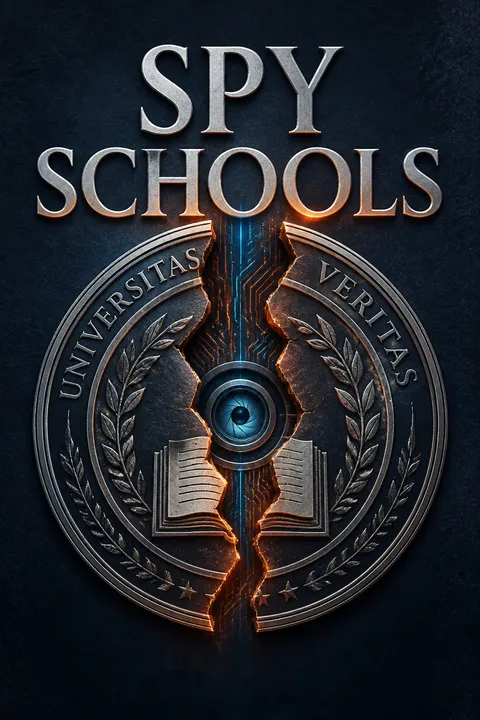

Key Takeaways
1. Academia: A Covert Battleground for Global Espionage
"Intelligence," which in academia used to refer to brainpower, increasingly means "information and knowledge about an adversary."
A new front line. Universities, traditionally seen as enclaves of open learning, have become a critical front line for espionage. Intelligence services from countries like China, Russia, and Cuba actively seek insights into U.S. policy, recruit informants, and access sensitive military and civilian research. This shift transforms the very meaning of "intelligence" within academic circles.
Dual exploitation. Both foreign and American intelligence agencies exploit the open, global nature of higher education. Professors, graduate students, and even undergraduates are coveted as informants due to their connections to government, business, and technology, as well as their technical expertise. This creates a complex web where academic ideals of transparency clash with the covert culture of espionage.
Easy access. Open campuses provide easy entry for intelligence gathering. Spies, often without academic affiliation, can blend into lectures, seminars, and cafeterias to befriend individuals with access to valuable information. This accessibility makes universities "ripe pickings for anybody who’s interested in accessing intellectual property," as noted by a UCLA professor.
2. China's Aggressive Pursuit of U.S. Academic Secrets
"Don’t come home empty-handed."
Systematic exploitation. China has elevated academic espionage to a new level, systematically targeting U.S. universities to acquire technology and influence. The case of Ruopeng Liu at Duke University exemplifies this: he funneled Pentagon-funded metamaterials research to China, then launched a billionaire venture backed by the Chinese government. This highlights how China's "brain gain" programs, like Project 111 and Thousand Talents, incentivize scientists to bring back American intellectual property.
Vulnerable research. Academic research, especially in cutting-edge fields, is a valuable and vulnerable target. University labs, unlike corporate counterparts, often lack robust intellectual property safeguards, making them easy targets for foreign raiders.
- The Defense Security Service reported that academic solicitation tripled from 8% of foreign efforts in 2010 to 24% in 2014.
- Chinese students dominate U.S. graduate programs in engineering (56.9% of doctorates) and computer sciences (52.5%), forming the backbone of research but also presenting a significant counterintelligence challenge.
Beyond human intelligence. China complements human intelligence with cyber-spying, targeting university networks for scientific research and faculty emails. The Penn State and University of Virginia hacks in 2015, traced to China, demonstrate this. The U.S.-China cyber pact, which excludes academic research not yet licensed commercially, may inadvertently increase universities' risk.
3. Ideological Recruitment by Hostile Nations
"These are two people who took very serious risks for their beliefs."
Ideology as a weapon. Cuba, with one of the world's most effective intelligence services, has historically leveraged ideological sympathy to recruit agents within American academia. Marta Rita Velázquez and Ana Belén Montes, both students at Johns Hopkins SAIS, were recruited to spy for Cuba, driven by their opposition to U.S. policy in Latin America. Montes became one of the most damaging moles in U.S. history, shaping Pentagon assessments of Cuba.
Academic infiltration. The presence of three Cuban agents—Velázquez, Montes, and SAIS professor Kendall Myers—within a top feeder program to U.S. diplomatic and intelligence services demonstrates the depth of Cuba's penetration. These agents used their positions to gather information and influence policy, often without payment, driven by their convictions.
- Velázquez, a Princeton graduate and USAID lawyer, recruited Montes.
- Montes rose to be the premier Cuba analyst at the Defense Intelligence Agency.
- Myers, a State Department analyst, passed sensitive information to Cuba for decades.
Damaged credibility. The exposure of Cuban agents like Carlos Alvarez, a Florida International University professor, tarnished academia's credibility and fueled suspicion within the Cuban-American community. Such cases highlight how ideological recruitment can compromise academic integrity and foster distrust between universities and their constituents.
4. U.S. Intelligence's Covert Campus Operations
"The most important thing you can have is a group of highly intelligent people who are extremely well educated, who understand the cultures, who speak the languages, who can go into those countries and be advocates for the United States, run our programs, collect intelligence, do all the things we need to do for national security."
Strategic talent acquisition. U.S. intelligence agencies, particularly the CIA and FBI, actively recruit students and professors for national security roles. The Boren Awards, funded by defense and intelligence budgets, offer scholarships for language study abroad in exchange for a commitment to work in national security. This program aims to build a "strategic reserve of human talent" for intelligence and diplomatic service.
Leveraging vulnerability. The CIA and FBI target international students and scholars, assessing them as potential threats or "assets." They exploit financial vulnerability, ideological leanings, or personal connections to recruit informants. For example, the CIA has arranged for children of foreign agents to attend U.S. universities, paying their tuition through front organizations.
Covert operations abroad. U.S. intelligence also uses academic settings overseas for covert operations. The FBI proposed that the University of South Florida open a branch campus in China to serve as a cover for spying. Such actions risk exposing universities to foreign intelligence scrutiny and compromising their academic mission.
5. Universities' Complicity and Lack of Vigilance
"A state university is going to be immensely deferential to the FBI."
Ignoring the threat. Despite the clear and present danger of espionage, many university administrators often avert their gaze, making few complaints and taking minimal precautions. This complicity stems from a mix of financial dependence on foreign students, a desire for global prestige, and a reluctance to appear unpatriotic or alienate research funders by pushing back against U.S. intelligence.
Softening discipline. The University of South Florida's handling of Professor Dajin Peng's case illustrates this deference. Despite evidence of fraud and visa transgressions, USF softened Peng's punishment under pressure from the FBI, which sought to use him as an informant. This intervention highlights how external intelligence agendas can override internal academic disciplinary processes.
Blind spots. Universities often fail to protect their intellectual property, neglecting to educate science students on IP law or implement robust agreements with foreign collaborators. They also rarely warn students about foreign intelligence threats during study-abroad orientations, as seen in the widespread rejection of the FBI's "Game of Pawns" film. This lack of vigilance leaves them vulnerable to exploitation.
6. The Blurring Lines of Academic Freedom and National Security
"There’s a real tension between what the FBI and CIA want to do and our valid and necessary international openness."
Post-9/11 rapprochement. The relationship between U.S. intelligence and academia has come full circle, from animosity during the Vietnam War to renewed cooperation after 9/11. This shift has led to universities routinely offering degrees in homeland security, vying for federal designations as "Intelligence Community Centers for Academic Excellence," and conducting classified government research.
Compromised ideals. This rapprochement, however, often comes at the cost of academic values. The CIA's practice of placing undercover officers in programs like Harvard's Kennedy School, without informing faculty or classmates, undermines the candor and trust essential for education. While universities gain funding and prestige, they risk becoming tools for intelligence agendas.
Ethical dilemmas. The tension between national security and academic freedom creates ethical dilemmas for professors. Some, like MIT's Theodore Postol, carefully balance their loyalties by briefing intelligence agencies without becoming agents. Others, like Barbara Walter at UC San Diego, see it as a public service to educate the CIA, even if it means navigating the discomfort of older, more skeptical colleagues.
7. Academic Conferences: Prime Hunting Grounds for Spies
"Every intelligence service in the world works conferences, sponsors conferences, and looks for ways to get people to conferences."
Ubiquitous targets. Academic conferences, popularized by globalization, are ideal venues for espionage. They attract a jet-setting crowd of experts, making them efficient hunting grounds for intelligence officers seeking to identify, assess, and recruit targets. A single conference on a sensitive topic can offer dozens of potential informants.
Covert staging. The CIA has secretly spent millions staging scientific conferences worldwide to lure Iranian nuclear scientists out of their homeland. These "sham conferences," often funded through business fronts or "cutouts" like Centra Technology and RAND Corporation, aimed to create opportunities for one-on-one recruitment and defection pitches, demonstrating a "mass deception on the institutions that hosted the conferences and the professors who attended and spoke at them."
Information gathering. Beyond recruitment, conferences provide valuable unclassified information and networking opportunities. Intelligence officers, both foreign and domestic, attend to clarify misconceptions, pursue new leads, and build contacts. The FBI warns academics about the risk of hosts secretly downloading data from their laptops during presentations.
8. Undercover Agents in Elite University Programs
"The existence on the Harvard campus of unidentified individuals who may be probing the views of others and obtaining information for the possible use of the CIA is inconsistent with the idea of a free and independent university."
Infiltrating the classroom. Intelligence services, both U.S. and foreign, have deeply penetrated the core of academic life by placing undercover agents in elite university programs. Harvard's Kennedy School of Government, a conduit to global leadership, has long accepted CIA clandestine officers, often posing as State Department diplomats, with the school's knowledge but not that of faculty or classmates.
Undermining trust. This practice, though often justified by national security, undercuts the Kennedy School's educational goals of fostering candid discussions among future leaders. A student living a lie cannot be completely frank, and the presence of hidden agents inhibits free discourse and distorts relationships within the academic community.
- Kenneth Moskow, a CIA legend, attended the Kennedy School undercover as a State Department diplomat.
- Eric and Gayle von Eckartsberg, a CIA couple, also attended the mid-career program under diplomatic cover.
- Andrey Bezrukov, a Russian "illegal" known as "Donald Heathfield," graduated from the Kennedy School, using his network for espionage.
Ethical compromises. While Harvard cautions undercover officers against recruiting classmates, the potential for grooming assets remains. The CIA's "Director's Fellows" program, funded by a billionaire, aimed to send clandestine officers to top schools for "intellectual capital," further blurring ethical lines.
9. The FBI's Evolving Tactics and Missteps in Recruitment
"I am keeping you out of jail as well, and it’s difficult to put a price on freedom."
A new FBI. The modern FBI has transformed from traditional law enforcement to a hybrid intelligence service, with a post-9/11 focus on counterterrorism and counterintelligence. This shift has led to increased engagement with academia, often employing diverse tactics to recruit informants and gather intelligence.
Leverage and coercion. The FBI's recruitment of Professor Dajin Peng at the University of South Florida exemplifies its aggressive tactics. Agent Dianne Mercurio used Peng's legal troubles—stemming from an audit accusing him of fraud and visa transgressions—as leverage, explicitly telling him, "I am keeping you out of jail." This direct interference in university discipline highlights the bureau's willingness to exert pressure.
Misjudgments and backlash. Despite its evolving mission, the FBI sometimes misjudges academic targets. Peng, wary of intelligence agencies from childhood, feigned cooperation while secretly resisting. The FBI's attempt to suppress emails about the Peng case and its "Game of Pawns" movie, which fictionalized Glenn Shriver's recruitment, met resistance from universities, reviving academic mistrust of intelligence intrusions.
10. The "Brain Drain" Dilemma and Foreign Espionage
"China and other countries have little choice but to spy on American universities; they need to compensate for losing so much talent."
Global talent magnet. U.S. higher education remains a global leader, attracting a massive influx of international students who fill academic coffers and provide cheap labor for research. After earning doctorates in science and engineering, about two-thirds of these foreign students, particularly from China, choose to stay in the U.S., contributing to American innovation rather than returning home.
Incentive for espionage. This "brain drain" creates a powerful incentive for countries like China to engage in academic espionage. If their brightest minds remain in the U.S., these nations must resort to covert means to acquire the knowledge and technology developed in American universities. This dynamic underscores a fundamental tension: the openness that attracts talent also facilitates its theft.
Targeting students abroad. The Boren Awards program, designed to cultivate U.S. intelligence assets through foreign language study abroad, inadvertently highlights this dilemma. Russian intelligence, for instance, aggressively questioned Boren fellows in Russia, suspecting them of espionage due to the program's service requirement, leading to its withdrawal from the country.
11. The Urgent Need for "No-Spy Zones" in Academia
"Ultimately, unless they become more vigilant, spy scandals could undermine their values, tarnish their reputations, and spur greater scrutiny of their governance, admissions, and hiring."
Eroding academic integrity. The pervasive exploitation of universities by both foreign and domestic intelligence services, through deception and intimidation, is eroding the core values of academic freedom, transparency, and trust. From professors funneling research to foreign governments to undercover agents in classrooms, these covert activities compromise the integrity of scholarly pursuits.
Call for vigilance. Universities must recognize these dangers and actively curb espionage. This includes adopting strict prohibitions against students and faculty spying or covertly recruiting for any intelligence service, backed by severe penalties. Raising campus awareness of deceptive recruitment and research theft is crucial.
Reclaiming sacred ground. Universities should declare themselves "no-spy zones," where learning and open discourse can flourish without the shadow of hidden agendas. While complete eradication of espionage may be challenging, a concerted effort can make intelligence services "think twice before infiltrating them," safeguarding academic reputations and ensuring that institutions remain true to their educational mission.
People Also Read



Download PDF
Download EPUB
.epub digital book format is ideal for reading ebooks on phones, tablets, and e-readers.








































