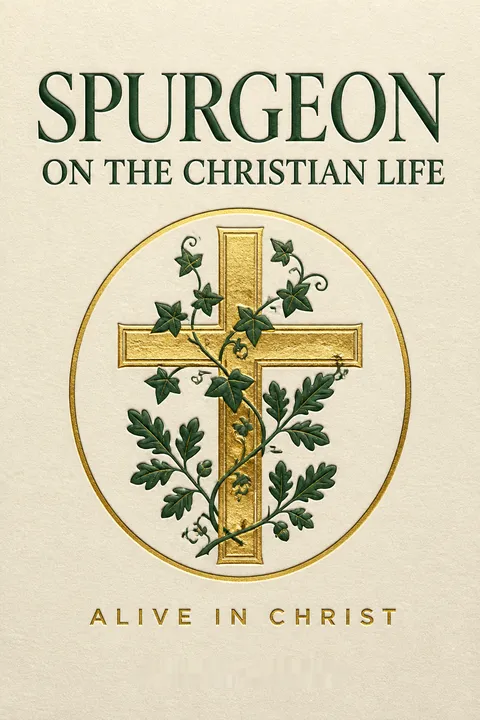

Key Takeaways
1. Spurgeon's Vibrant Life: A Testament to Christ-Centered Living
“Be full of life at all times, and let that life be seen in your ordinary conversation.”
Embodied theology. Charles Spurgeon, known as "The Prince of Preachers," was not just a powerful orator but a man who embodied his Christ-centered theology in every aspect of his life. His vibrant personality, marked by deep affections, humor, and an unyielding zeal, was a conscious expression of his belief that life in Christ means being more fully human and alive. He encouraged others to live with similar vitality, seeing it as a natural outflow of spiritual life.
Large-hearted and joyful. Spurgeon was a man of immense heart, capable of profound emotion, whether weeping over the crucifixion or bursting with mirth. He saw joy not as a superficial emotion but as an essential component of the Christian life, stemming from peace with the "happy God." His humor, often impish and sharp, served to prick grandiosity and religiosity, demonstrating a vivacious willingness to enjoy God's creation and Christian liberty.
Child of the Creator. His deep faith in an omnipotent, loving Father who reigns sovereign over all things gave him a boldness that transcended his natural timidity. He found delight in God's creation, from the smallest flower to the grandest storm, viewing all as testimony to the Creator. This perspective fostered an intellectual curiosity that embraced all fields of knowledge, believing that Christ, as the logic and light of the world, illuminates every science.
2. Christ as the Core of Scripture and All Doctrine
“Take thou this Book, and distil it into one word, and that one word will be Jesus.”
Bible's divine authority. Spurgeon held an exceptionally high view of the Bible, considering it the "writing of the living God," with every word dictated by the Holy Spirit. He believed in its absolute infallibility and supremacy, asserting that no human authority, whether church or scholar, could sit above it. For him, the Bible was self-attesting, its divine authority evident in its transformative power.
Inseparable from Christ. His reverence for Scripture was intrinsically linked to his reverence for Christ, viewing the Bible as "the word of Christ" and the revelation of the eternal Word. To him, the Bible was not an abstract object but the living and active revelation of a living and active Christ. This meant that any theological system or "Jesus" that deviated from the Christ revealed in Scripture was, in his view, a betrayal.
Sun among doctrines. Spurgeon believed that all doctrines find their proper place and meaning only in their orbit around Christ. Just as the solar system makes sense with the sun at its center, so theology is coherent only when Christ is central. Every blessing—election, adoption, justification, preservation—is found "in him," making Christ the sum and substance of the gospel and the light that illumines all truth.
3. The New Birth: A Radical Transformation by Grace Alone
“We would do a great deal to make a Paedo-baptist brother into a Baptist, but, at the same time, our grand object is not the revision of opinions, but the regeneration of natures.”
Necessity of new birth. Spurgeon's own dramatic conversion experience, looking to Christ alone for salvation, deeply shaped his conviction that new birth is an absolute necessity. He saw unbelievers as spiritually dead, actively hostile to God, and trapped by a congenital perversion of heart that makes them unwilling and unable to trust God. This profound view of sin underscored the radical solution required: a complete spiritual regeneration.
God's sovereign grace. He became a staunch Calvinist, not by intellectual assent first, but through his personal experience of God's saving grace. He realized he would never have sought God if God had not first drawn him, leading him to embrace doctrines like election and irresistible grace. For Spurgeon, salvation was entirely "of the Lord," a work of pure divine grace that triumphs over human inability and unworthiness.
Heart's transformation. Regeneration, for Spurgeon, was more than a spiritual awakening; it was the creation of a "wholly new nature"—a spirit infused by God, elevating humanity to a state higher than Eden. This new heart radically transforms affections and desires, turning them from sin to God. While he opposed infant baptism for potentially blinding people to this need for a new birth, he emphasized that the true goal was always the regeneration of the heart, not mere ritual.
4. The Cross: The Heart of Salvation and Sanctification
“The cross is the mighty battering-ram wherewith to break in pieces the brazen gates of human prejudices and the iron bars of obstinacy.”
Pinnacle of Christ's work. For Spurgeon, the cross was the absolute center of his Christian life, ministry, and theology. It was the "axle" around which everything revolved, the pinnacle of Christ's work, and the clearest window into his identity. He insisted that preaching Christ without his crucifixion was to "betray Him with a kiss," as the life of the gospel is found in the blood of Jesus, offering both pardon and purification.
Mortifies and vivifies. The cross is God's means of both mortifying proud sinners and bringing them to new life. The Spirit uses the cross to humble us, exposing our wretchedness and making us feel "a very deep and poignant sorrow on account of sin." This painful "withering" drives us out of self-reliance and onto Christ. Simultaneously, the cross vivifies, acting as the "only magnet" that draws people to Christ, touching and overturning hearts at the deepest level.
Glory of God revealed. The unique power of the cross lies in its supreme revelation of God's glory. In Christ crucified, all of God's perfections—wisdom, power, holiness, goodness, love, and sovereignty—are displayed in surprising beauty, without one attribute clashing with another. This "chief splendour of his Majesty" in his infinite benevolence, especially his love and grace, is what ultimately turns and transforms the hearts of sinners, making them love God in return.
5. Preaching Christ: The Purpose and Power of Ministry
“A sermon without Christ in it is like a loaf of bread without any flour in it.”
Wooing for Christ. Spurgeon believed the preacher's primary purpose was to "lay open Christ" and "woo for Christ," making him known in all his goodness, beauty, and truth. His sermons aimed not merely to inform but to transform hearts, divorcing them from sin and wedding them to Christ. He vehemently opposed aimless sermons, comparing them to Chinese knife throwers who deliberately miss their target, and insisted on "fire-balling" the enemy's ranks with the gospel.
Christ-centered message. He relentlessly urged every preacher to preach Christ, meaning not just his example but his atoning blood, his satisfaction for sin, and the doctrine of "believe and live." For Spurgeon, Christ was the "whole gospel," the "sum and substance" of all truth. He famously stated that from every text in Scripture, "there is a road to the metropolis of the Scriptures, that is Christ," and if he couldn't find one, he would "make one."
Christly manner. Preaching Christ faithfully also required a "Christly manner." This meant preaching clearly and beautifully, avoiding flowery pretentiousness and speaking in plain, down-to-earth language that could penetrate hearts. Preachers must stand "in Christ's stead," loving sinners, pleading tenderly, and sharing Christ's passion and compassion. Ultimately, the preacher must embody the new life Christ offers, letting their very presence be a sermon.
6. The Spirit's Work: Cultivating Christlikeness and Joy
“The Holy Spirit can produce within your heart all those emotions you are seeking for, all those desires you fain would feel, all the meltings, and the movings, and the yearnings, and the rejoicings, which are significant of the grace of God.”
Communion with Christ. Spurgeon emphasized that the Holy Spirit, who imparts life, continues to work in believers, preserving and increasing that life. As the Spirit of Christ, he unites us with Christ, making sanctification a Christ-centered process of turning to him and growing in his likeness. This communion extends to sharing Christ's thoughts, emotions, actions, sorrows, and joys, fostering a deep oneness with him and his people.
Sanctification by blood. The Spirit sanctifies primarily through the "living truth" of Christ's blood, which offers a "double cure" of pardon and purification. Just as the blood atones for guilt, the water washes away the love of offending. This means there is no growth in the Christian life apart from the cross, where pride is mortified, self-deifying efforts are damned, and the beauty of Christ's humility and holiness transforms us.
Lively and joyful people. The Spirit makes believers spiritually active and energetic, not passive. This "holy vivacity" is a sign of strong spiritual life, driving Christians to battle sin and pursue holiness. Spurgeon championed joy as an essential part of Christian vitality, flowing from the gospel's revelation of a "happy God" who delights to share his happiness. This joy in God strengthens against temptation, cures grumbling, and promotes peace, making Christians "commence our heaven here below."
7. Prayer: The Breath of New Life and Dependence on God
“Prayer is the natural outgushing of a soul in communion with Jesus.”
Evidence of new life. For Spurgeon, prayer was not merely an activity but the very "breath of heavenly life," a sure token of regeneration and adoption. It signifies a heart reconciled to God, dependent on Him, and filled with love and peace. While Christians remain sinners, prayer flows spontaneously from those abiding in Jesus, serving as a "grand cement" for church unity as believers pray for one another.
Faith in action. Prayer is the battleground where faith confronts natural unbelief, recognizing our finite creatureliness and God's infinite ability and grace. It's not about eloquent words but the heartfelt outpouring of a sincere soul, a "groaning before God too deep for words." This makes prayer accessible to every child of God, regardless of their articulation, as God looks on the heart.
Trinitarian approach. Spurgeon's prayer life was deeply Trinitarian. The Holy Spirit enables our prayers, assuring us they will be heard. We address our prayers to God as our loving Father, approaching him with boldness and joyful familiarity. And we do so united to his perfect Son, Jesus Christ, who serves as our Mediator, perfecting our imperfect prayers. This Trinitarian framework provides both comfort and guidance, directing our requests towards Christ's glory.
8. The Christian Life: A Pilgrim's Journey and Holy War
“Every Christian is mystically a pilgrim. His rest is not here. He is not a citizen of earth.”
Pilgrimage to glory. Spurgeon deeply embraced the imagery of the Christian life as a pilgrimage, much like John Bunyan's Pilgrim's Progress. He saw believers as journeying through the "wilderness of the world" towards the Celestial City, with no abiding rest on earth. This perspective instilled a sense of purpose and detachment from worldly comforts, emphasizing that our true citizenship and ultimate destination lie in heaven.
Soldiers in Christ's army. Alongside the pilgrim motif, Spurgeon frequently depicted Christians as soldiers engaged in a "Holy War." The new life in Christ is not one of ease but of keen resolution to follow Christ in his victorious war against darkness, making "distinct inroads upon the territory of the archenemy." This martial language underscored the need for courage, vigilance, and unwavering commitment in the spiritual battle against sin, self, and Satan.
Heartfelt activism. This dual identity as pilgrims and soldiers fueled Spurgeon's belief in eager activism as an essential ingredient of new life. A living faith, quickened by Christ, must be abundant in good works, reflecting Christ's own tireless zeal. He saw Christian activism as a manifestation of reordered affections, a "heartfelt love for God" that drives fruitfulness. While advocating diligence, he cautioned against self-reliant overwork, emphasizing that true fruitfulness flows from abiding in Christ.
9. Suffering and Depression: A Path to Deeper Compassion and Trust
“Depression of spirit is no index of declining grace; the very loss of joy and the absence of assurance may be accompanied by the greatest advancement in the spiritual life.”
God's refining purpose. Spurgeon, despite his vibrant public persona, suffered profoundly from physical ailments and debilitating depression throughout his life. He viewed these trials not as divine judgment but as "covenant marks" of God's Fatherly love, designed to refine believers like gold in a furnace. Suffering, he believed, was essential for conformity to Christ, strengthening faith, and revealing hidden sins that needed to be fought.
Pastoral formation. His personal struggles were invaluable in shaping him into a more compassionate pastor. He learned that those who have experienced deep depression can better sympathize with and console others in similar pain. He argued that God often leads ministers through trials, "not so much for their own benefit as for the sake of those to whom they may afterwards minister," enabling them to prove the comfort found in God.
Coping with grace. Spurgeon advocated a holistic approach to coping with suffering and depression, including physical remedies like fresh air, rest, and even cigars for soothing a weary brain. More importantly, he urged turning to God: holding fast to His promises, trusting in His sovereignty, and pleading His Fatherly care in prayer. He found immense comfort in Christ as the "Man of Sorrows," whose pain-racked humility and tender sympathy made Him uniquely approachable in times of distress.
10. Final Glory: A Christ-Centered Hope Beyond This World
“Christ is heaven and heaven is Christ. You shall change the words and make no difference in the sense.”
Waiting for Christ. The Christian life, for Spurgeon, was fundamentally a hopeful life, characterized by an eager anticipation of Christ's return. This hope was not for an abstract event but for the undiluted presence of Christ himself. He taught that this hope is sure and certain, guaranteed by Scripture and by God's unwavering preservation of those united to Christ, promising an end to all wickedness, tears, and grief, and a reunion with loved ones.
Christ is heaven. At the heart of this hope was the person of Christ. For Spurgeon, heaven was heavenly precisely because it is the place of communion with Christ, where his glory is fully enjoyed. He warned against allowing the wonders of the new creation to eclipse Christ in our affections, asserting that "there will be little else we shall want of heaven beside Jesus Christ." Hell, conversely, was defined by the absence of Christ.
Active, not speculative. While acknowledging various eschatological systems, Spurgeon discouraged excessive speculation about the details of Christ's return or the millennium. His concern was that such debates could distract from the central person of Christ and lead to inactive theorizing. Instead, he urged Christians to live in active hope, working diligently in the power of the Holy Ghost, knowing that Christ's return is a reason for service, not mere stargazing.
Review Summary
Reviewers overwhelmingly praise Spurgeon on the Christian Life, highlighting Reeves' ability to let Spurgeon speak through extensive quotes while providing helpful theological context. Readers appreciate the book's Christ-centered focus, covering topics like regeneration, sanctification, preaching, and joy amid suffering. Many note it serves as an excellent introduction to Spurgeon's theology rather than a traditional biography. Reviewers across multiple languages consistently recommend it, with several expressing a newfound or deepened appreciation for Spurgeon and a desire to read more of his works.
People Also Read







About the Author



Download PDF
Download EPUB
.epub digital book format is ideal for reading ebooks on phones, tablets, and e-readers.








































