
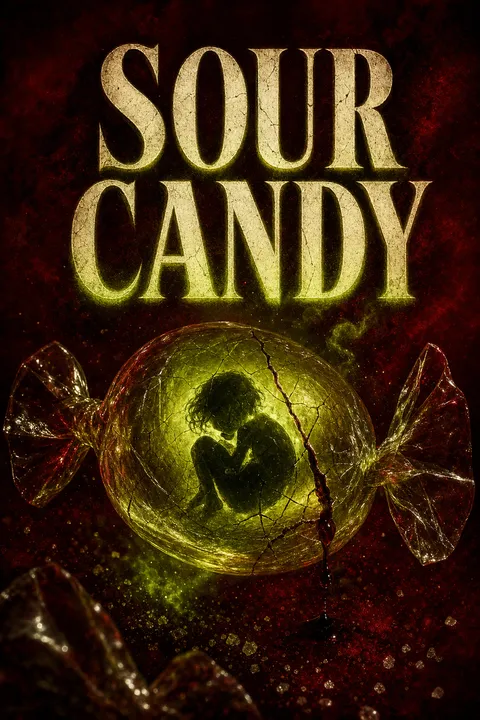


Plot Summary
Prologue
Four months after Phil Pendleton1 first crossed paths with a strange boy2 in a Walmart candy aisle, the last of his teeth rattles loose and vanishes down the bathroom drain. He feels nothing. This single sentence opens the book like a wound already scarred over, promising ruin before we know the man it belongs to.
It tells us the encounter mattered, that it cost him his body piece by piece, and that whatever began among the Gummi Bears and Cola Bottles ended with a hollowed-out husk staring into a mirror. The story then rewinds to the ordinary Saturday that broke him.
The book weaponizes its opening as a spoiler that spoils nothing. By announcing bodily decay first, Burke frames the entire narrative as an autopsy of cause. The image of teeth, symbols of health, aging, and childhood loss, immediately links the horror to the body and to time measured in months. Readers understand that a child will unmake a man, but not how or why. This inversion of suspense (we know the ending state, not the mechanism) mirrors the novella's core dread: helplessness in the face of an outcome already sealed. The clinical, affectless tone (he feels nothing) previews Phil's eventual erosion of self, hinting that the worst violence here is done to identity, not just flesh.
The Screaming Child at Walmart
On a lazy Saturday, Phil Pendleton1 loads his arms with chocolate for a cozy afternoon with his girlfriend Lori,3 who teases him over the phone. A towheaded boy2 in old-fashioned, almost Amish clothes screams down the candy aisle while his pallid, checked-out mother6 stares at the bags as if hunting an answer. A manager fails to intervene.
The mother6 tears open a bag of sour candy, crams fistfuls into her mouth, then fixes empty eyes on Phil.1 The boy,2 hands full of colorful sweets, turns and offers some to Phil.1 Unnerved but polite, Phil1 accepts a piece. It tastes terrible, and he leaves for another store, shaken but convinced he has merely witnessed one of retail's grotesque curiosities.
The scene stages horror in the most mundane cathedral of American life, a superstore aisle, where consumption and appetite are already ritualized. The child's scream functions as social violence, weaponizing shame against a mother stripped of agency. Phil's revulsion is laced with his lifelong aversion to children (his marriage died over it), so his voyeuristic pity is also self-congratulation. The offered candy reframes politeness as complicity: courtesy becomes the mechanism of doom. Burke seeds every later revelation here, the mother's zombielike surrender, the boy's uncanny attentiveness, the anachronistic dress, so the reader retroactively recognizes a transaction disguised as a toddler's tantrum. Kindness, the novella suggests, is how the trap springs.
Yours Now
Driving home, still flirting with Lori3 by phone, Phil1 is slammed from behind at an intersection, his ribs cracking against the wheel. The offending driver is the woman from the store.6 Bloodied and broken, moving with machine purpose, she ignores every helper and advances on Phil1 where he sits stunned on the curb.
She drops something into his lap, telling him through a split lip that it is now his. He braces for a tooth, a weapon, anything. Then she walks deliberately into the intersection, where a taxi kills her. When Phil1 finally examines the bloody object in his lap, it is not a tooth at all. It is a single piece of sour candy.
The collision converts abstract unease into physical trauma, binding Phil to the woman through violence rather than choice. Her single-minded pursuit, indifferent to mortal injury, signals possession by a purpose larger than self-preservation, and her suicide reads as escape rather than despair. The phrase yours now transfers an obligation Phil cannot yet name, an inheritance masquerading as litter. Burke stages a grotesque baton pass: the candy is both gift and curse, contract and seed. The taxi's mercy underlines a horror the reader only later understands, that death was the woman's reward for delivery. The scene's public chaos, phones filming, bystanders bustling, isolates Phil inside a private nightmare no witness will corroborate.
A Son Who Cannot Exist
Two hostile detectives, the severe Marsh5 and the bullish Cortez,4 question Phil1 at the scene. They tell him the dead woman was Alice Bennings,6 who had no children. Phil1 describes the boy2 anyway, the sandy hair, the strange black jacket and suspenders, insisting the child2 was hers. He asks them to send a car to reassure Lori.3
Instead, Marsh5 delivers the impossible: when officers reached Phil's1 house, the very child2 he just described answered the door. Lori,3 meanwhile, is gone, her car vanished from the driveway. Reality tilts. The man who never wanted children,1 whose marriage collapsed over that refusal, is being told a boy2 waits inside his home, claiming him, while the woman he loves3 has silently evaporated from his life.
The interrogation inverts the reader's certainty by making authority the enemy of truth. Marsh and Cortez are not corrupt but conscripted, unknowing instruments of a reality being rewritten around Phil. Their suspicion weaponizes the ordinary logic of policework against a man telling the truth, dramatizing the nightmare of the sane accused of madness. The detail that the boy answered Phil's door collapses the safe distance the store scene preserved: the parasite has already moved in. Lori's disappearance operates as the first amputation of Phil's real life. Burke exploits a primal dread here, the fear that the world could quietly agree on a lie about you, and leave you screaming into consensus.
I Live Here, Daddy
Driven home, Phil1 finds the boy2 silhouetted in his kitchen, calmly calling him Daddy and claiming the house. Cortez,4 softening, confides his own resentments of fatherhood, then lays out an unrecognizable history: the child is Adam Pendleton,2 born to a Hannah Ward10 who died in a maternity fire; Adam2 went to foster care, where Phil1 and his ex-wife Stacey8 supposedly took him.
Even Stacey's8 story has been altered. Photographs pulled from Phil's1 walls show three years of happy father-son trips, yet the boy2 never ages and wears the same clothes in every frame. Social media agrees; friends comment on how he's grown. A voicemail from Lori3 dumps Phil1 for good, echoing the very words he once used to leave Stacey8 childless.
This is the point of no return, where the world's paperwork, memory, and digital record all conspire against a single unrevised mind. Burke's masterstroke is that the forgery is deliberately imperfect: the unaging boy, the frozen wardrobe, the anachronistic timestamps. The child wants Phil to see the seams, because terror undiluted by self-doubt is the point. Cortez's confession that he sometimes wishes his own children gone universalizes the horror, suggesting the parasite feeds on a suppressed parental ambivalence everyone carries. Lori's breakup, ventriloquizing Phil's past cruelty to Stacey, delivers poetic retribution: the man who refused fatherhood is punished with a monstrous, inescapable one. Identity here is shown to be only as durable as the world's willingness to confirm it.
The Candy Is a Key
Alone with the boy,2 Phil1 demands answers. The child,2 sometimes sweetly ordinary, sometimes eyes flooding with darkness, calls the dead woman6 Old Mommy and says he let her go because she broke, the way one discards old toys. Phil1 discovers every cupboard and the fridge packed with hundreds of bags of a foreign candy stamped GJOK.
Coaxed into eating one, he is hurled into another place: a granite altar under a crimson sky veined with black, colossal tentacled figures warring on the horizon, and six towering beings7 with elongated deer skulls and endless twisted horns. They scream in unison, tearing a piece of his mind loose. He wakes on the kitchen floor bleeding from eyes, nose, and mouth, his cracked ribs mysteriously healed.
The candy literalizes consumption as initiation: to eat is to enter, to enter is to be marked. Burke fuses cosmic horror (the indifferent, deific Elders) with domestic captivity (a pantry converted into a shrine), collapsing the vast and the mundane. The boy's toy metaphor exposes a moral universe where humans are disposable instruments, cared for only until broken. The deer-skull Elders, ancient and eyeless, evoke the sublime unknowable, and the scream that costs Phil part of his mind stages knowledge itself as injury. The healed ribs are the cruelest detail: the entity repairs its host the way one maintains machinery, revealing that Phil's suffering is now managed, preserved, and prolonged for a purpose he cannot yet imagine.
Fed on Nothing but Sour
Phil1 learns that gjok is Norwegian for cuckoo, the bird that lays its eggs in other nests, and recognizes himself as the invaded nest. The boy2 lives in the attic behind a door warped and branded with shifting symbols, closer, he says, to those who hear his prayers. Any real food Phil1 eats is violently expelled, so he survives on the citric poison alone.
His weight drops, his skin turns waxy, his hair thins, his teeth begin to rot. Outwardly he plays the browbeaten single father, escorting the boy2 to museums, parks, and fairs, wincing through the daily public screams that curdle strangers' smiles. He becomes convinced that scream is no tantrum at all, but a beacon signaling the Elders.7
The cuckoo metaphor crystallizes the novella's thesis: parasitism as reproductive strategy dressed in domestic disguise. Burke transforms parenting's real exhaustions, the tantrums, the errands, the erosion of self, into supernatural predation, so that the fantastical merely amplifies the ordinary despair of caregiving. The forced diet is a grotesque inversion of nourishment: the child sustains itself by starving the adult. The attic, traditionally the house's repressed unconscious, becomes a literal antechamber to the cosmic. Recasting the scream as a beacon reframes noise as communication, annoyance as summons. Phil's outward performance of dutiful fatherhood, while inwardly starving and terrified, dramatizes how caregivers mask private ruin behind public competence.
The Leash Goes Taut
Phil1 tests his boundaries, walking out one morning while the boy2 sleeps, telling a neighbor mowing his lawn9 that his kid2 is trying to kill him and getting only a shrug. He reaches a strip mall two miles east and runs into Lori,3 radiant and moved on, who reveals he was fired from his bank job during a shakeup and pities the wreck he has become.
He can barely stop himself from begging. Then, over her shoulder, Detective Marsh5 cruises up and calls him back. His freedom snaps like a leash reaching its end. Over months, five escape attempts fail: police, neighbors, and finally his own legs betray him, until an Elder7 in an alley reaches inside his body and folds him back toward home.
Escape reveals the true architecture of the prison: it has no walls, only consensus and physiology. The neighbor's indifference to a man announcing his own murder captures the horror of unheard truth, while Lori's transformation from lover into gentle stranger measures everything the cuckoo has stripped away, job, love, self-respect. Marsh's uncanny appearance confirms the universe itself is deputized against him. Burke escalates methodically: the body itself becomes jailer when Phil's legs quit, and the alley Elder's invisible evisceration proves resistance is permitted only to demonstrate its futility. The section's cruelty lies in hope repeatedly extended and retracted, teaching Phil, and us, that the leash exists precisely to be felt.
Tomorrow You Try to Kill Me
By the four-month mark, Phil1 is a bleached husk, toothless, hairless, certain a cancer is rotting him from within so that, like Alice Bennings,6 he will soon be discarded. He resolves to break the cycle by killing the child,2 reasoning that the Elders7 can die (he saw them perish in that red world) and that birth and death bind even them.
After his fifth failed flight, he finds his last bottle of scotch curdled with mold and a dead fish. When he rages, the attic yawns open and the boy2 appears, unbothered, calmly announcing that tomorrow is the day Phil1 will try to kill him. Rather than wait for a fight the boy2 clearly expects to win, Phil1 decides the child2 will die tonight.
Despair curdles into resolve, and the novella pivots from endurance to agency, however doomed. Phil's logic, that a life cycle implies mortality, is the reasoning of a drowning man clutching the one fact that floats. The boy's serene foreknowledge is the section's engine of dread: omniscience renders rebellion theatrical, a script the parasite has already read. Yet Phil's choice to act tonight rather than tomorrow is his single genuine assertion of will, a refusal to perform on schedule. Burke explores the terrible dignity of the cornered: even knowing he is watched, Phil insists on choosing the hour. The moldering scotch, his last anesthetic corrupted, strips away the final buffer between him and the act.
Blood in the Attic
Phil1 breaks a chair to fashion a splintered club, and through the window sees six robed, skull-faced Elders7 standing on his lawn, watching. He climbs to the attic, which holds only ordinary junk and a stench of brine, and confronts the boy.2 The Elders7 materialize behind him, sealing the door, but the child2 remains eerily calm, telling Phil1 that because he ate of her, he will become her.
Whispering apologies, Phil1 drives the splintered wood into the boy's2 throat. He expects supernatural fireworks. Instead, ordinary red blood gushes, and the child2 slowly slumps and dies like any mortal boy, murmuring that he wants to wait for Mora. Phil,1 cradling the dying child,2 is flooded with doubt that he has simply murdered his own son.
The climax detonates the reader's genre expectations alongside Phil's. By making the monster bleed like a child, Burke plunges both protagonist and reader into unbearable uncertainty: is this exorcism or filicide? The absence of spectacle is itself the cruelest twist, denying Phil the confirmation that would absolve him. The Elders' passive attendance transforms murder into ritual, spectators at a rite Phil believes he is disrupting. The boy's final word, Mora, and the phrase become her, plant the mechanism of the coming reversal while Phil is too grief-stricken to parse it. This is the psychology of the gaslit mind pushed to its terminus: unable to trust perception, Phil can no longer distinguish liberation from atrocity.
Mora Means the Host
By dawn the body and Elders7 have vanished. A neighbor named Jack9 insists Phil1 never had a son. Phone calls to Stacey,8 Marsh,5 and Lori3 confirm it: no one has ever heard of Adam Pendleton.2 Phil's1 teeth and hair have returned, his cupboards hold real food, the photographs are normal. For one radiant moment he believes his sanity and life restored, Lori3 warm and waiting.
Then the attic door slams and the six Elders7 return. They call Phil1 himself Mora, and reveal the truth: the candy was never candy but a seed, and the boy2 was never a monster but a guardian watching over the life gestating inside Phil.1 By killing the guardian,2 Phil1 completed the ritual. His chest splits open, delivering the new cuckoo, and fire takes the house.
The reversal recontextualizes every prior scene: Phil was never meant to parent the boy but to birth its successor, the child a midwife rather than an invader. Burke's cuckoo metaphor completes with biological precision, host and offspring reversed by gender and violence, so that the man who refused fatherhood is forced into a monstrous maternity. The brief restoration is the trap's final cruelty, offering paradise so its theft lands hardest. Eating of her, becoming her, fulfills the dead woman's curse from the collision: Phil literally becomes the next Alice Bennings. The self-destroying body, ribs cracking outward, renders reproduction as annihilation, a horror rooted in the truest human dread, that creation of new life can consume the self entirely.
The Infant in the Cruiser
Detective Cortez,4 sour after striking his own daughter that morning, arrives late to a house fire ruled an accidental charger short. Something nags him: pages missing from his notes, Marsh's5 inexplicable migraines whenever the case comes up, and Pendleton's1 phone call an hour before burning to death. Shading a blank notepad page, he recovers a name he cannot place, Hannah Ward,10 a mother who died in a maternity fire.
Unsettled, he drowns the feeling at a bar. Hours later Marsh5 storms off, snapping that he should stop bringing his infant son to bars. Baffled, Cortez4 walks to the parking lot and finds a baby strapped into the backseat of his cruiser. The cycle has chosen its next host, and reality has already rewritten itself around him.
The coda transforms a closed nightmare into an eternal engine. Cortez, who earlier confessed resentment of his own children and struck his daughter that very morning, is the perfect next nest: parental ambivalence is the parasite's ecological niche. Burke's structural genius is that the reader, unlike Cortez, recognizes the trap instantly, granting us the same helpless foreknowledge that tormented Phil. The recovered name and missing notes prove the rewrite is imperfect by design, leaving breadcrumbs the doomed cannot follow in time. Marsh's amnesiac migraines show the machinery adjusting witnesses in real time. The final image, a baby that simply appears, delivers cosmic horror's bleakest lesson: the universe does not end evil, it merely relocates it, forever.
Analysis
Sour Candy weaponizes the most ordinary settings and anxieties of contemporary American life, the superstore aisle, the fender bender, the custody dispute, the lapsed phone bill, and lets a cosmic parasite grow inside them. Burke's central achievement is structural: by opening with the ending (a toothless husk) and closing with a fresh beginning (a baby in Cortez's4 cruiser), he converts a single man's ruin into a perpetual machine, denying readers the catharsis of resolution and delivering instead the far bleaker consolation that horror is simply reassigned. The cuckoo conceit does heavy thematic labor. It literalizes the terror at the heart of parenthood, that a child is an entity that colonizes your body, your resources, your identity, and your future, then discards you when spent. Crucially, the novella preys on ambivalence rather than love: Phil1 refused fatherhood, Cortez4 resents his children and strikes his daughter, the previous hosts break down. The parasite's ideal nest is the adult who half-wishes the child gone, making the supernatural a mirror for a shameful private truth. Gaslighting is the second engine. Phil's1 greatest agony is epistemological, the world unanimously contradicts his memory, complete with doctored photos and cooperative records, so that sanity itself becomes unprovable. Burke leaves the forgery deliberately flawed, dangling the possibility that Phil1 is simply a madman who murdered his own son,2 and the climax's ordinary red blood refuses to settle the question until the final revelation. The result is a story that works equally as cosmic horror and as psychological tragedy about a mind unmade. The Elders7 remain unexplained, and rightly so: their indifference, not their design, is the point. In Burke's universe, evil is not defeated but relocated, and the price of being seen by the wrong thing is everything you are.
Review Summary
Sour Candy is a short, intense horror novella that captivates readers with its creepy atmosphere and psychological terror. Many reviewers praise Burke's ability to create a sense of dread and unease in such a short work. The story revolves around Phil Pendleton, whose life is turned upside down after a strange encounter at Walmart. The novella's exploration of a "creepy kid" trope and its Lovecraftian elements are particularly appreciated. While some found the ending underwhelming, most readers highly recommend this quick, chilling read.
Characters
Phil Pendleton
Doomed reluctant fatherA mild, unremarkable bank employee whose defining life choice was refusing to have children, a refusal that ended his marriage to Stacey8. Comfortable, moderately content, newly happy with his girlfriend Lori3, Phil is a man who avoids intervening in situations he deems none of his business, a passivity that ironically dooms him the moment he accepts a stranger's candy. His psychology is shaped by a wrecked childhood he believes ruined him for parenthood, leaving him guarded against obligation and intimacy. Under the boy's2 assault, Phil oscillates between rational denial, creeping self-doubt, and eventual grim resolve. His tragedy is that the world's consensus makes him doubt his own sanity, and his final act of defiance becomes the very thing that seals his fate. He wants only his ordinary life and Lori3 back.
Adam / the boy
Uncanny towheaded childA sandy-haired boy of perhaps six or seven, dressed in old-fashioned black suspenders, white shirt, and jacket, never aging and never changing clothes across supposed years of photographs. He alternates with unsettling ease between a convincingly normal, giggling, hungry child and something ancient whose eyes flood with darkness as a warning. He calls his hosts Daddy, feeds on sour candy, lives in a symbol-branded attic, and screams in public like a signal. Polite, curious, and matter-of-fact about discarding people he calls old toys, he presents his monstrousness as innocence, which makes him more terrifying than any snarling creature. He insists, perhaps to convince himself, that he is simply a child.
Lori Watkins
The girlfriend erasedPhil's1 warm, playful, sensual girlfriend, teasing him over the phone about chocolate and her thighs on the morning everything falls apart. She represents the ordinary happiness and future Phil1 stands to lose, marriage, contentment, maybe even a child. Her affection is genuine, but the rewriting of reality recasts her as a woman who once tried and failed to accept a child that was not hers. Her presence, absence, and pity chart Phil's1 descent from beloved to pitiable stranger.
Detective Cortez
Bullish, unknowing investigatorA pockmarked, yellow-toothed detective on his third marriage, juggling alimony, feuding children, and private resentments he confesses to Phil1. Initially hostile, he softens into something like sympathy, convinced Phil1 is a father in denial. Cortez runs on instinct, and that instinct keeps whispering that something about the case does not add up, that his own memory and notes have been tampered with. His self-admitted ambivalence about his own kids makes him a quietly significant figure, a man who senses the machine he is a cog inside but cannot name it.
Detective Marsh
Severe, conscripted detectiveTall, auburn-haired, and cold, Cortez's4 partner regards Phil1 like an insect under glass. She devises the trick of asking the boy's2 name to catch Phil1 off guard. Over the following months she repeatedly retrieves the escaping Phil1, her involvement undocumented, her memory afflicted by migraines whenever the case surfaces. She embodies authority bent unknowingly into the service of something inhuman.
Alice Bennings
The previous hostThe gaunt, checked-out woman from the candy aisle who rams her car into Phil's1, passes him the candy declaring it now his, and walks into traffic to die. A worn-down foreshadowing of Phil's1 own fate, she is a host used up and discarded, seeking release through death.
The Elders / Eldre
Cosmic deer-skull deitiesSix towering, robed beings with elongated deer skulls, endless tangled horns, hollow eyes, and dark tentacle limbs, glimpsed in a dying crimson world and later on Phil's1 lawn. Ancient, eyeless, and indifferent, they scream in unison to injure minds, enforce the ritual, and treat humans as vessels. They embody the sublime, unknowable machinery driving the cuckoo cycle, beyond reason or mercy.
Stacey Miller
Ex-wife who wanted childrenPhil's1 former wife, whose longing for motherhood curdled into resentment and ended their marriage. In the rewritten history she supposedly accused Phil1 of neglecting a son2. Her account, altered yet partly true, becomes one more brick in the wall of impossible evidence against him.
Jack Staunton
Bewildered neighborPhil's1 lawn-mowing neighbor of several years, kind and concerned, who lends his outdated cell phone and calmly insists Phil1 never had a son2, unwittingly confirming the world's restored version of reality.
Hannah Ward
The original nestThe boy's2 birth mother, said to have died in a maternity-ward fire the day she gave birth. A name that surfaces in fragments of tampered memory, she is the first host in the recoverable chain, the earliest nest the cuckoo poisoned.
Plot Devices
The GJOK sour candy
Curse disguised as sweetBags of foreign candy stamped GJOK, Norwegian for cuckoo, with no ingredients or branding, that flood Phil's1 cupboards and become his only tolerable food. First offered innocently by the boy2 at Walmart, then pressed on Phil1 by the dying Alice Bennings6, the candy is the mechanism of transmission. Eating a piece acts as a key, hurling the eater into the Elders'7 crimson realm. Sustained on nothing else, the host's body rots. Ultimately the candy is revealed to be no confection at all but a seed, a gestating life planted inside the host. Burke uses it to fuse the domestic (junk food) with the cosmic (a parasitic reproductive rite).
Rewritten reality
Consensus turned against victimThe boy's2 power rewrites the shared world: photographs, social media comments, police records, and the memories of everyone Phil1 knows all confirm that Adam2 is his beloved son. Only Phil1 retains the true past, and the forgery is left deliberately imperfect (the unaging boy2, identical clothes, impossible timestamps) so that Phil1 sees the seams without being able to prove them. This device generates the novella's central dread, the terror of being sane in a world that has unanimously agreed on a lie, and isolates the protagonist inside an unwitnessable nightmare.
The cuckoo motif
Parasite as thematic keyThe brood parasite that lays eggs in other birds' nests supplies the story's organizing metaphor, encoded in the candy's name. It reframes every event: the woman6 was a nest, Phil1 is a nest, and the child2 moves from host to host poisoning lives. Burke deploys the motif to interrogate parenthood as invasion, obligation, and self-consumption, so that supernatural horror amplifies the ordinary dread of caregiving. The full reproductive logic (host birthing a successor) only resolves at the climax, making the motif both foreshadowing and payoff.
The public scream
Innocuous tantrum as summonsThe boy's2 piercing scream first reads as an ordinary tantrum in the store, then recurs daily during outings, curdling strangers' sympathy into disgust. Phil1 gradually reinterprets it not as childish misbehavior but as a beacon, a signal to the Elders7. The device transforms a mundane annoyance into cosmic communication, and lets Burke hide the supernatural in plain social sight, since bystanders only ever see a badly behaved child2 and a browbeaten parent1.
The framing decay
Time measured in rotThe novella opens and structurally returns to Phil's1 four-month countdown, marked by his body's disintegration, teeth loosening, hair thinning, skin turning waxy. The opening sentence announces the endpoint before the story begins, so suspense hangs not on what happens but on how and why. Phil's1 rotting body becomes the story's clock, a physical ledger of the parasite's toll, and the recurring image of falling teeth links childhood, aging, and loss into a single dread.
Download PDF
Download EPUB
.epub digital book format is ideal for reading ebooks on phones, tablets, and e-readers.








































