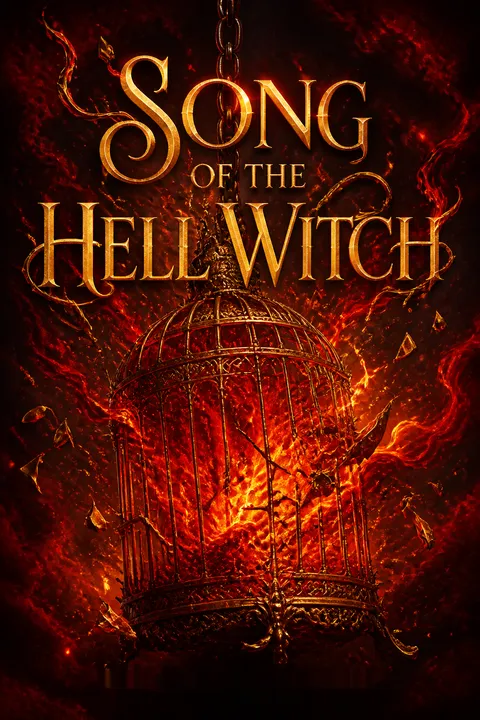

Plot Summary
Perfume, Power, and Pretense
Prudence Merriweather, newly the Duchess of Talonsbury, sits suffocating in a ballroom thick with perfume and privilege. Her rise from street orphan to nobility is a dream realized, yet the trappings of power feel hollow. Her husband Frederick, a war hero, is both her protector and her captor, drawn to the forbidden magic in her blood—she is a Hell Witch, a woman whose power is both coveted and condemned. The city's elite parade their grievances, but the true suffering of Leora's poor is ignored. Prudence's past and present collide as she navigates the expectations of her new life, haunted by the memory of her sister's death and the dangerous magic that awakened within her.
The Ball's Unraveling
As the Provincial Ball unfolds, tensions simmer beneath the surface. Frederick's brother Paris, a zealot devoted to the rising General Hale, publicly accuses Prudence of being a Hell Witch, threatening to expose her and ignite a witch hunt. The accusation is both a personal attack and a political maneuver, as the city teeters on the edge of religious and social upheaval. Old friends and enemies watch, eager for scandal. Prudence's carefully constructed mask begins to crack, and the threat of violence—both magical and mundane—looms over the festivities.
Old Flames, New Threats
Puck Reed, once Prudence's closest friend and first love, crashes the ball with a band of outcasts, demanding justice for the city's poor. Their reunion is fraught with unresolved longing and bitter history. As the night spirals, accusations fly, alliances shift, and the city's divisions are laid bare. The threat of General Hale's zealots grows, and Prudence is forced to confront both her past and the precariousness of her present. The ball ends not in celebration, but in chaos and fear.
The Hell Witch's Song
Prudence's power, born in trauma, is both a blessing and a curse. The memory of her sister's death and the awakening of her magic haunt her, shaping her every choice. The city's history is one of persecution—Hell Witches burned, the Dark Mother's followers hunted. Prudence's marriage is a bargain for survival, but it cannot shield her from the dangers that stalk her. The song of the Hell Witch is a call to transformation, but also a reminder of the price of being different in a world ruled by fear.
Accusations and Alliances
As Paris's accusations echo through the city, Prudence's position becomes untenable. Frederick's protection is no longer enough, and the city's power brokers—nobles, Apostles, and zealots—circle like vultures. Old friends from the streets reappear, offering both help and reminders of what she's lost. The lines between ally and enemy blur, and Prudence must decide whom to trust as the threat of exposure—and execution—grows ever closer.
Night of Blood and Flight
In the dead of night, an assassin strikes. Prudence's magic erupts in violence, and in the chaos, she accidentally kills Frederick. The city's most powerful man is dead by her hand, and she is forced to flee, hunted by both the law and the zealots. Her only hope lies with Puck, the thief lord, and the ragtag family she left behind. Together, they must navigate a city on the brink, where every shadow hides a threat and every ally may be a traitor.
The Thief Lord's Return
Puck, now a father and leader of the city's outcasts, is drawn back into Prudence's orbit. Their shared history is a source of both strength and pain. As they plot her escape, the city's divisions deepen—class, faith, and gender all weaponized by those in power. The threat of General Hale's Zeraphel, men transformed by stolen magic, grows ever more real. The past cannot be outrun, and the choices of youth echo into the present.
Daughter of Talonsbury
Puck's daughter, Beatrice, is mute and sick, her illness a mystery that terrifies him. The possibility that she, too, is a Hell Witch—her magic turned inward, poisoning her—haunts both Puck and Prudence. The bonds of found family are tested as they race against time to save her. The city's underbelly is both refuge and danger, and the lines between monster and victim blur as the true cost of survival becomes clear.
The River's Refuge
Fleeing the city by river, Prudence, Puck, and their allies seek sanctuary in the north, where rumors speak of a coven of Hell Witches who might save Beatrice. The journey is perilous—pursued by zealots, haunted by guilt, and threatened by the ever-present risk of betrayal. Along the way, old wounds are reopened, and the possibility of forgiveness—and love—flickers in the darkness. The river is both escape and crucible, testing the limits of endurance and trust.
Subversal and Sacrifice
Beatrice's illness—Subversal, magic turned inward—is a death sentence unless she can be healed by the coven. The journey north is a race against time, and every delay is a risk. Along the way, the group is forced to confront their own traumas and the ways in which the world has shaped—and scarred—them. Sacrifice becomes inevitable, and the bonds of love and loyalty are tested to their breaking point.
The Succubus's Bargain
In the north, the group encounters Imogen, a succubus and member of the coven, who offers both aid and a reminder of the power—and danger—of women's magic. The coven is both sanctuary and battleground, a place where the rules of the outside world are upended. The threat of the Zeraphel grows, and the group must decide what they are willing to risk—and whom they are willing to trust—to save Beatrice and themselves.
Stormlash Under Siege
The sanctuary of Stormlash is shattered as Paris and the Zeraphel attack, burning the hamlet and slaughtering its defenders. The coven's power is formidable, but the enemy is relentless and fueled by stolen magic. Sacrifice and loss are inevitable, and the survivors are forced to flee once more, their hopes for safety and healing in ruins. The cost of resistance is high, and the price of survival is paid in blood.
The Zeraphel Ascend
Puck is captured and transformed into a Zeraphel, his will and body twisted by Paris's magic. The horror of losing himself—and the threat he now poses to those he loves—becomes the central struggle. The Zeraphel are revealed as both victims and villains, men remade by a system that fears and hates women's power. The battle for Puck's soul is both personal and political, a microcosm of the war raging across Leora.
The Price of Survival
In the aftermath of the battle, the survivors are scattered and broken. Prudence is haunted by guilt—over Frederick's death, over the destruction of Stormlash, over her inability to save everyone she loves. The cost of survival is measured in scars, both visible and hidden. The world they knew is gone, and the future is uncertain. Yet even in the ashes, the possibility of hope remains.
Reunion and Reckoning
In the sanctuary of the Spectabra caves, Prudence and Puck are reunited, both changed by their ordeals. The wounds between them—old betrayals, new traumas—are laid bare, and the possibility of forgiveness is both terrifying and necessary. The bonds of love are tested, and the question of whether they can build a new life from the ruins of the old hangs in the balance.
The Burning of Stormlash
The burning of Stormlash is both a literal and symbolic turning point. The coven's power is not enough to save them from the combined might of the Zeraphel and the forces of patriarchy. The survivors must choose between vengeance and survival, between the desire to fight and the need to protect what remains. The cost of resistance is high, and the price of freedom is paid in blood and fire.
The Making of a Monster
Puck's transformation into a Zeraphel is both horror and tragedy. The struggle to retain his sense of self—to remember who he is, whom he loves—is a battle against both magic and the systems that created it. Prudence's love is both weapon and shield, a reminder of what is at stake. The making of a monster is not just a personal tragedy, but a reflection of a world that punishes difference and fears power.
The Last Promise
In the aftermath, Prudence and Puck make a promise—to each other, to Beatrice, to the women of Leora—that they will not give up. The fight is not over, and the forces arrayed against them are formidable. Yet the bonds of love, family, and sisterhood are stronger than fear. The last promise is both a vow of resistance and a declaration of hope.
The General's Prisoner
Beatrice, captured by General Hale, becomes both pawn and prize in the ongoing war. The forces of patriarchy and zealotry are gathering, and the next battle will be fought not just with magic, but with the hearts and minds of the people. The struggle for freedom is far from over, and the cost of victory remains unknown.
The Guilt and the Gears
Prudence, Puck, and their allies are haunted by guilt—over what they have done, what they have failed to do, and what they may yet be forced to do. The gears of revolution are turning, and the choices they make will shape the future of Leora. The struggle is both personal and political, and the stakes have never been higher.
The Gathering Storm
As the survivors regroup, new alliances are forged and old enmities reignited. The forces of the Zeraphel and the coven are on a collision course, and the fate of Leora hangs in the balance. The gathering storm is both literal and metaphorical, a reminder that the fight for freedom is never truly over.
The Dark Mother's Daughters
The women of Leora—Hell Witches, coven members, and their allies—are the true heart of the resistance. Their power is both magical and mundane, rooted in love, rage, and the refusal to be broken. The promise of change is both fragile and fierce, a beacon in the darkness. The Dark Mother's daughters are ready to fight for a world where they can be free.
The Heart's Undoing
Prudence and Puck, scarred by their journey, find the courage to love again. Their reunion is both a healing and a reckoning, a reminder that even in the ashes, new life can take root. The heart's undoing is both a surrender and a victory, a testament to the power of love in the face of despair.
The End and the Beginning
The story ends where it began—with a promise, a hope, and the determination to fight for a better world. The forces of oppression are not defeated, but the bonds of love and sisterhood are stronger than ever. The end is also a beginning, a reminder that the struggle for freedom, justice, and selfhood is ongoing—and that even in the darkest night, the song of the Hell Witch endures.
Analysis
A feminist fantasy of rage, resilience, and revolutionSong of the Hell Witch is a searing, emotionally charged fantasy that uses the trappings of magic and myth to explore the very real dangers of patriarchy, religious extremism, and the policing of women's bodies and power. At its heart, the novel is about survival—of trauma, of violence, of systems designed to break and erase. Prudence's journey from orphan to duchess to fugitive is both a personal odyssey and a political awakening, a testament to the power of self-acceptance and the necessity of resistance. The novel's magic system is a brilliant metaphor for the ways in which women's anger and pain are both feared and weaponized, and the transformation of men into Zeraphel is a chilling commentary on the dangers of toxic masculinity and the allure of authoritarianism. The story's focus on found family, sisterhood, and the possibility of love and healing in the aftermath of violence is both a balm and a call to arms. In a world that punishes difference and fears power, Song of the Hell Witch insists that survival is an act of rebellion, and that the song of the Hell Witch—of all women who refuse to be broken—will endure.
Review Summary
Characters
Prudence Merriweather
Prudence is a woman forged by trauma and ambition, rising from the streets to the heights of nobility. Her power as a Hell Witch is both her greatest asset and her deepest curse, marking her as both coveted and condemned in a patriarchal, theocratic society. Haunted by the death of her sister and the awakening of her magic, Prudence is driven by a fierce desire for agency, love, and belonging. Her relationships—with Frederick, Puck, and the women of the coven—are fraught with longing, guilt, and the ever-present threat of betrayal. Over the course of the story, she transforms from a woman hiding her true self to a leader willing to risk everything for those she loves. Her journey is one of self-acceptance, the reclamation of power, and the refusal to be defined by the world's fear of women's magic.
Puck Reed
Puck is the embodiment of resilience and contradiction—a streetwise thief who becomes a devoted father, a lover haunted by abandonment, and ultimately a victim of the very systems he's spent his life fighting. His love for Prudence is both a source of strength and pain, complicated by years of separation and the traumas they both carry. As a father to Beatrice, he is fiercely protective, willing to risk everything for her safety. His transformation into a Zeraphel is both horror and tragedy, a literalization of the ways in which men are twisted by systems of power and violence. Puck's struggle to retain his sense of self, to remember love in the face of monstrous transformation, is the emotional heart of the novel.
Beatrice Reed
Beatrice is both a symbol and a character in her own right—the child of trauma, magic, and hope. Her muteness and illness are manifestations of the world's violence, but also of the potential for transformation. As a Subversed Hell Witch, her power is both a threat and a promise, and her fate is the catalyst for much of the novel's action. Beatrice's journey is one of survival, self-discovery, and the forging of a new kind of family. Her relationship with Puck and Prudence is both tender and fraught, a reminder of what is at stake in the fight for a better world.
Frederick Talonsbury
Frederick is both shield and jailer—a war hero who marries Prudence for her power, but cannot protect her from the world's violence or his own desires. His death at Prudence's hands is both tragedy and liberation, the spark that ignites the story's central conflict. Frederick embodies the contradictions of patriarchal power—at once loving and controlling, victim and perpetrator. His legacy haunts Prudence, shaping her guilt and her determination to survive.
Paris Talonsbury
Paris is the story's most chilling antagonist—a man consumed by religious fervor, jealousy, and the desire for power. His devotion to General Hale and the Zeraphel is both personal and political, a means of asserting control in a world that has always seen him as second best. Paris's hatred of Prudence is both misogynistic and deeply personal, rooted in his own sense of inadequacy. His transformation into a Zeraphel is the ultimate act of self-annihilation, a surrender to the very forces he claims to serve.
General Maximus Hale
Hale is the architect of the Zeraphel, a man who weaponizes faith, fear, and stolen magic to build an army and a new order. His charisma masks a deep cruelty, and his vision for Leora is one of absolute control. Hale's manipulation of both men and women is a reflection of the systems he represents, and his pursuit of Beatrice and the coven is both personal and political. He is the story's ultimate antagonist, a reminder of the dangers of unchecked power.
Imogen Shearborn
Imogen is a powerful Hell Witch and member of the coven, embodying both the allure and the danger of women's magic. Her aid to Prudence and Puck is both practical and symbolic—a reminder of the power of sisterhood and the cost of resistance. Imogen's death is a turning point, galvanizing the survivors and underscoring the stakes of the struggle.
Marigold (Mari) Wood
Marigold is Prudence's childhood friend, a woman who has always lived on the margins—by gender, by class, by magic. Her longing to become a Hell Witch is both a personal desire and a metaphor for the search for selfhood in a world that refuses to see her. Marigold's transformation is both triumph and tragedy, a reminder that the price of power is often paid in blood.
Florence (Flossie)
Florence is a member of the coven, a succubus whose power is both seductive and deadly. Her relationship with Rita and her role as a mentor to the younger witches is a testament to the power of chosen family. Florence's grief and rage in the aftermath of the attack on Stormlash are both personal and political, a reminder of the cost of resistance.
Arcadie
Arcadie is the enigmatic owner of the Great Borealis hotel and a crucial ally to Prudence and Puck. Their gender nonconformity and outsider status make them both vulnerable and powerful, able to move between worlds and offer sanctuary to those in need. Arcadie's loyalty is rooted in both personal loss and a commitment to justice, and their role as guide and protector is essential to the group's survival.
Plot Devices
Dual Narrative and Shifting Perspectives
The novel employs a dual narrative structure, alternating between Prudence's and Puck's perspectives, with interludes from antagonists like Paris and General Hale. This allows for a deep exploration of both personal and political stakes, as well as the psychological complexity of each character. The shifting perspectives create a sense of immediacy and intimacy, drawing the reader into the emotional heart of the story.
Magic as Metaphor
Magic in the novel is both literal and symbolic—a manifestation of trauma, rage, and the refusal to be broken. The transformation of women into Hell Witches is a metaphor for the ways in which women's power is both feared and punished in patriarchal societies. The Zeraphel, men transformed by stolen magic, are a literalization of the dangers of weaponized masculinity and religious zealotry.
Found Family and Chosen Sisterhood
The novel foregrounds the importance of found family—both the ragtag group of thieves and outcasts, and the coven of Hell Witches. These bonds are both a source of strength and a site of conflict, as characters navigate love, loyalty, and betrayal. The sisterhood of the coven is both sanctuary and battleground, a place where the rules of the outside world are upended.
Foreshadowing and Symbolism
The recurring motif of the Hell Witch's song, the scars borne by survivors, and the symbolism of the river and the Dark Mother all serve to foreshadow the novel's central conflicts and themes. The river is both escape and crucible, the song both a call to power and a reminder of trauma. The burning of Stormlash is both literal and symbolic, a turning point that marks the end of one world and the beginning of another.
Political and Social Allegory
The novel is a pointed allegory for the dangers of patriarchal power, religious zealotry, and the ways in which systems of oppression are maintained and resisted. The struggle of the Hell Witches is both personal and political, a fight for survival and selfhood in a world determined to erase them. The story's resolution is both a victory and a reminder that the fight for freedom is ongoing.
Download PDF
Download EPUB
.epub digital book format is ideal for reading ebooks on phones, tablets, and e-readers.








































