
Plot Summary
Dawn on Gwithian Beach
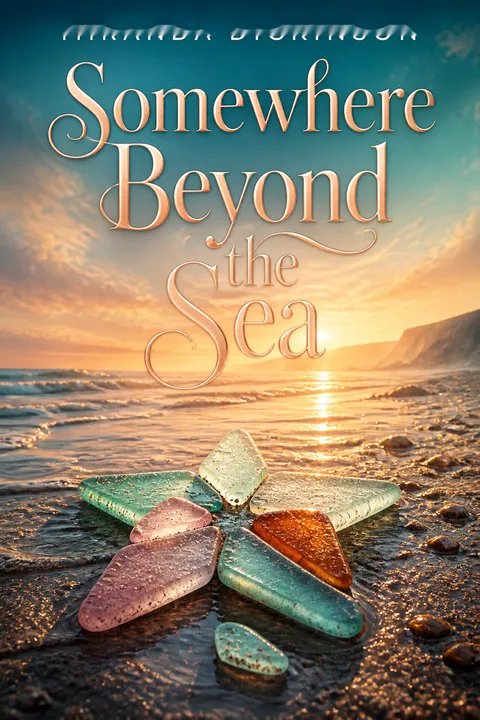
Seren, a young woman living in St Ives, finds her peace in the early morning darkness on Gwithian Beach, collecting seaglass for her jewelry. The beach is her sanctuary, a place where she feels both the wildness of nature and the comfort of routine. On one such morning, she discovers an unfinished star made of seaglass, left by an unknown hand. The act of completing the star herself fills her with a sense of connection and hope, a fleeting magic that momentarily lifts the weight of her recent grief over her father's death. This small, silent exchange with a stranger becomes the spark for a secret game, and for the first time in weeks, Seren feels less alone, as if the universe is quietly reaching out to her.
Stars Left Unfinished
Jack, a widowed father, struggles to keep life afloat for his spirited daughter, Nessie, after the sudden loss of his wife. Their evenings are spent on the same beach, collecting seaglass and building shapes in the sand—most recently, a star left unfinished due to the encroaching dark and Nessie's asthma. Jack's stories of mermaids finishing their work comfort Nessie, and when they return to find the star completed, her joy is boundless. For Jack, the simple act of someone else finishing their star is a balm against the relentless pressures of single parenthood and financial strain. The beach becomes a place of healing, where magic and reality blur, and where hope is quietly rekindled for both father and daughter.
Inheritance and Burdens
Seren's life is defined by loss and responsibility. After her father's death, she inherits his struggling art shop, MacArthur's, and the weight of his unfinished dreams. The shop is a living memory of her father, filled with his presence and the debts he left behind. Seren's days are a battle to keep the business afloat, her own ambitions—like making jewelry from seaglass—set aside for survival. The shop's decline mirrors her own sense of being trapped, yet the secret game of seaglass stars on the beach becomes her private rebellion, a way to reclaim a piece of herself. Through these small acts, she begins to imagine a future where she can honor her father's legacy without being consumed by it.
Single Father, Shifting Sands
Jack's world is a patchwork of odd jobs, mounting bills, and the constant demands of raising Nessie alone. The loss of steady work and their home has forced them into a friend's chalet by the beach, a temporary refuge that Jack fears will soon be lost. Despite his best efforts, Jack is haunted by the feeling that he is failing his daughter. Yet, the ritual of making and finding seaglass stars with Nessie becomes a lifeline, a nightly adventure that brings them closer and offers moments of pure joy. The completed stars are more than just shapes in the sand—they are silent messages of kindness and connection, reminders that even in hardship, unexpected magic can appear.
The Secret Starmaker
The exchange of unfinished and completed seaglass stars becomes a secret dialogue between Seren and Jack, though neither knows the other's identity. Each morning, Seren finds a new star, always missing a point, and she completes it, adding her own creative touch. The ritual grows, with small gifts—marshmallows for the "mermaids," notes in bottles—deepening the sense of connection. For both, the game is a lifeline: for Seren, it's a reminder of her father's belief in everyday magic; for Jack and Nessie, it's a source of wonder and stability. The stars become a symbol of hope, resilience, and the possibility of friendship and love, even between strangers.
Messages in Marshmallows
The game escalates as Jack and Nessie leave marshmallows for the "mermaids," and Seren finds them, puzzled but delighted. The marshmallows, and the playful notes that accompany them, become a bridge between the two families, a way of saying thank you without words. These gestures ripple through their days, bringing unexpected good fortune and a sense of being seen. For Seren, the kindness of the unknown starmaker gives her courage to face the challenges of the shop and her father's legacy. For Jack, the joy in Nessie's eyes is a reminder that, despite everything, he is giving her a childhood filled with wonder.
Community and Campaigns
St Ives is abuzz with controversy over the fate of Bethel Parsonage, the former home of forgotten astronomer Elinor Carne. Seren, reluctantly thrust into the role of campaign leader after her father's death, finds herself fighting to preserve the building against a developer's plans. The campaign is both a burden and a source of pride, tying her even more tightly to her father's memory. The town's meetings are charged with emotion, as history, progress, and personal dreams collide. Seren's struggle mirrors her internal battle: how to honor the past without sacrificing her own future.
The Parsonage Debate
Jack, desperate for work, is offered the job of construction manager for the developer, Brotherson, pitting him directly against Seren in the public debate. Neither realizes the other is their secret starmaker. The campaign meetings become a battleground, with both making passionate cases for their side. Yet, beneath the surface, a mutual respect and attraction grows, complicated by their opposing roles. The debate is not just about a building, but about what kind of future they want for themselves and their loved ones. The tension between public duty and private longing intensifies, setting the stage for revelation and heartbreak.
Losses and Letting Go
As the campaign wears on, both Seren and Jack are forced to confront the limits of their endurance. Seren's shop teeters on the brink of closure, and she must decide whether to keep fighting or let go. Jack, meanwhile, faces pressure from family and friends to accept help, but his pride and fear of failure hold him back. The seaglass stars continue, but the magic is tinged with sadness as both realize that some things cannot be saved. Letting go becomes an act of courage, not defeat, and both begin to imagine new possibilities beyond the burdens they carry.
Gifts Across the Sand
The secret game reaches its peak when Seren leaves a handmade seaglass bracelet for the starmaker, and Jack and Nessie respond with a tiny driftwood house. These gifts are more than objects—they are confessions of gratitude, hope, and longing. The exchange marks a turning point, as both sense the presence of a kindred spirit on the other side of the game. The gifts inspire new dreams: for Seren, the possibility of making jewelry her life's work; for Jack, the courage to imagine building something lasting, both for his daughter and himself. The stars in the sand become a metaphor for the connections that sustain us through loss and change.
Colliding Worlds
The truth begins to surface as Seren and Jack's worlds collide in the campaign's final days. Seren learns that Jack is her starmaker, and Jack discovers Seren's identity through a chance encounter at Nessie's school. The revelation is both exhilarating and terrifying, as both must confront the reality of their feelings and the consequences of their choices. The campaign's outcome hangs in the balance, and the possibility of love is threatened by misunderstandings, pride, and the wounds of the past. The moment of truth arrives, forcing both to decide what they are willing to risk for happiness.
The Truth Revealed
After the vote, which goes in Jack's favor, both are left reeling. Seren feels betrayed, believing Jack lied about preserving the parsonage, while Jack is devastated by her anger and the realization that winning has cost him her trust. Both retreat into themselves, haunted by what might have been. Yet, through the support of friends and the enduring magic of the seaglass stars, they begin to find forgiveness—for each other and for themselves. The journey toward reconciliation is slow and painful, but the seeds of hope remain, waiting for the right moment to bloom.
Choices at the Crossroads
Seren makes the difficult decision to sell her father's shop, finally freeing herself from the weight of his legacy. Jack, too, finds closure with his late wife, allowing himself to grieve and to hope for new beginnings. Both are at a crossroads, uncertain of what the future holds but determined to seek their own happiness. The observatory, built from the stones of the old parsonage, becomes a symbol of transformation—a place where the past is honored, but new dreams can take root. The story's emotional climax is not in grand gestures, but in the quiet courage to choose life, love, and possibility.
Building New Dreams
Jack, with the help of the community and Brotherson's reluctant support, builds a new observatory dedicated to Elinor Carne and Seren's father. The building is a labor of love, incorporating the seaglass stars and the spirit of the secret game. Seren, meanwhile, begins to rediscover her passion for jewelry and design, inspired by the freedom that comes from letting go. The observatory's opening is both an ending and a beginning, a place where the threads of their separate journeys are finally woven together. The gift is not just the building, but the chance to start anew.
The Last Goodbye
On the day she hands over the keys to the shop, Seren feels the full weight of her journey—grief, relief, and the bittersweet ache of moving on. Supported by her friends, she allows herself to mourn what is lost and to celebrate what remains. Jack, too, finds peace in the knowledge that he has done right by his daughter and by the memory of his wife. Both are changed by what they have endured, and both are ready, at last, to embrace the unknown. The past is honored, but it no longer holds them captive.
The Observatory's Light
Seren is drawn back to St Ives by a sense of unfinished business and the gentle urging of her friends. At the new observatory, she finds Jack waiting, the building itself a testament to their shared journey. In a moment of vulnerability and truth, they confess their feelings and acknowledge the magic that brought them together. The observatory, filled with light and possibility, becomes the place where their separate stories converge. Under the stars, they find not just each other, but the courage to believe in love and in the extraordinary beauty of ordinary lives.
Full Circle, New Stars
The story ends where it began: on the edge of the sea, beneath a sky full of stars. Seren and Jack, no longer strangers, stand together, ready to face whatever comes next. The seaglass stars, once a secret game, have become a symbol of hope, resilience, and the power of connection. The past is not forgotten, but it is transformed, woven into the fabric of new dreams. As the tide washes the sand clean, and the stars shine above, Seren and Jack step forward—together—into a future shaped by love, loss, and the quiet magic of everyday life.
Analysis
Somewhere Beyond the Sea is a luminous exploration of grief, hope, and the quiet magic that can be found in everyday acts of kindness. Miranda Dickinson weaves a narrative that is both deeply personal and universally resonant, using the Cornish coast as a metaphor for the tides of loss and renewal. The novel's central device—the secret exchange of seaglass stars—beautifully encapsulates the idea that connection can be forged even in silence, and that healing often begins with the smallest gestures. Through Seren and Jack's intertwined journeys, the story examines the tension between honoring the past and embracing the future, ultimately suggesting that true legacy lies not in monuments or preserved buildings, but in the courage to love, to let go, and to begin again. The book's modern relevance is found in its celebration of resilience, community, and the transformative power of vulnerability. Dickinson's message is clear: magic is everywhere, if we are brave enough to look for it—and sometimes, the greatest adventures begin with a single, unfinished star.
Review Summary
Somewhere Beyond the Sea is widely praised for its enchanting setting in St. Ives, Cornwall, its dual narrative structure, and its emotionally resonant characters, particularly the grieving Seren and widowed Jack. Readers love the magical sea glass storyline, the slow-burn romance, and the community campaign subplot. Many highlight young Nessie as a standout character. The audiobook narration by Jonathan Bailey earned particular acclaim. Critical reviews noted pacing issues, repetitive internal monologues, and an anticlimactic ending. Overall, most readers found it a warm, uplifting, and beautifully written summer read.
Characters
Seren MacArthur
Seren is a sensitive, creative woman caught between honoring her late father's memory and forging her own path. Inheriting MacArthur's, his struggling art shop, she is weighed down by debt, grief, and the expectations of her small Cornish community. Seren's true passion is making jewelry from seaglass, a craft that connects her to her father and the wild beauty of the sea. Psychologically, she is torn between duty and desire, often sacrificing her own dreams for others. Through the secret game of seaglass stars, she rediscovers hope and the courage to let go. Her journey is one of self-forgiveness, learning that honoring the past does not mean being trapped by it, and that vulnerability can lead to unexpected love.
Jack Dixon
Jack is a widowed builder struggling to provide stability for his daughter, Nessie, after the sudden death of his wife. Practical, loyal, and quietly romantic, Jack is haunted by guilt—over his failing marriage, his wife's death, and his inability to shield Nessie from hardship. He is fiercely protective, yet often feels inadequate, masking his pain with humor and hard work. The nightly ritual of making seaglass stars with Nessie becomes his anchor, a way to create magic amid chaos. Jack's arc is one of healing: learning to accept help, to forgive himself, and to risk his heart again. His connection with Seren, first as a stranger and then as a kindred spirit, awakens his capacity for hope and love.
Nessie Dixon
Nessie is Jack's imaginative, spirited seven-year-old daughter. Despite losing her mother and enduring upheaval, Nessie remains a source of joy and optimism. She believes in mermaids, magic, and the power of small kindnesses. Her innocence and determination to find beauty in the world inspire both Jack and Seren. Nessie's emotional intelligence often surpasses that of the adults around her, and her ability to adapt and find happiness in simple rituals—like the seaglass stars—anchors the story's emotional core. She represents the possibility of healing and the enduring strength of hope.
Aggie
Aggie is Seren's fiercely loyal, outspoken best friend and the owner of a bustling coffee hut. She is a whirlwind of energy, humor, and practical support, often pushing Seren to fight for herself and to believe in her own worth. Aggie's own romantic subplot with Kieran adds depth to her character, revealing vulnerability beneath her bravado. She is the glue that holds the friend group together, unafraid to challenge or comfort as needed. Psychologically, Aggie is driven by a need to protect those she loves, sometimes at the expense of her own happiness.
Kieran
Kieran is a photographer and longtime friend to Seren and Aggie. Known for his wit and charm, he provides comic relief and emotional ballast. His flirtatious banter with Aggie masks deeper feelings, and their eventual romance is a subplot of healing and acceptance. Kieran is supportive, creative, and perceptive, often seeing what others miss. He encourages Seren to pursue her dreams and is instrumental in helping her find closure and new beginnings.
Brotherson
Bill Brotherson is the charismatic, self-serving developer determined to build on the parsonage site. He represents progress at the expense of heritage, and his presence forces the community—and the protagonists—to confront what they value most. While not a villain in the traditional sense, Brotherson's pragmatism and disregard for sentimentality make him a formidable antagonist. He is a mirror for Jack, showing what ambition without empathy can become.
Seren's Mother
Seren's mother is a background presence, struggling with her own grief and the practicalities of life after her husband's death. She is supportive but overwhelmed, relying on Seren to manage the shop and family affairs. Her gradual return to her own passions—like quilting and teaching—parallels Seren's journey toward self-fulfillment. She embodies the theme of resilience and the possibility of renewal after loss.
Owen
Owen is Jack's older brother, a farmer and family man who provides practical and emotional support. He is grounded, reliable, and sometimes blunt, pushing Jack to accept help and to face uncomfortable truths. Owen's own experiences with hardship and change make him a source of wisdom and perspective. His presence highlights the importance of family and the strength found in community.
Cerrie
Cerrie is a compassionate schoolteacher and friend to Seren, playing a pivotal role in connecting the threads of the story. She is empathetic, observant, and quietly influential, orchestrating moments that bring characters together. Cerrie's belief in the power of stories and her commitment to her students reflect the novel's themes of legacy and the impact of small acts of kindness.
Elinor Carne
Though long dead, Elinor Carne's legacy as a pioneering female astronomer haunts the narrative. Her story—of brilliance overlooked and dreams deferred—inspires Seren's campaign and serves as a metaphor for the struggle to be seen and remembered. Elinor's journals, star map, and the observatory built in her honor become touchstones for the characters' own journeys, reminding them that even the smallest light can endure.
Plot Devices
Dual Narrative Structure
The novel employs a dual narrative structure, alternating between Seren and Jack's points of view. This structure allows readers to experience the same events through different emotional lenses, building empathy and suspense. The gradual revelation of each character's secrets and struggles creates dramatic irony, as the audience knows more than the protagonists, heightening tension and anticipation for their eventual meeting.
Symbolism of Seaglass Stars
The seaglass stars serve as a central symbol, representing hope, connection, and the possibility of magic in ordinary life. The ritual of making and completing the stars becomes a silent conversation, a way for characters to express gratitude, longing, and love without words. The stars also function as a plot device, drawing the characters together and providing a tangible link between their separate worlds.
Foreshadowing and Parallelism
The narrative is rich with foreshadowing and parallelism—early references to unfinished dreams, lost opportunities, and the search for magic hint at the characters' eventual transformations. The parallel struggles of Seren and Jack—both grieving, both burdened by responsibility—create a sense of inevitability about their connection. The unfinished stars, the repeated motif of letting go, and the recurring presence of Elinor Carne's story all serve to unify the plot and deepen its emotional resonance.
Community as Character
St Ives and its surrounding beaches are more than a backdrop—they are living, breathing forces that shape the characters' choices and fates. The town's debates, traditions, and collective memory provide both obstacles and support, reflecting the tension between progress and preservation. The community's involvement in the campaign, the observatory, and the characters' personal lives underscores the theme that healing and hope are found not in isolation, but in connection.
Gifts and Letters
The exchange of gifts—bracelets, driftwood houses, notes in bottles—serves as a narrative device to mark shifts in the characters' relationships. These tokens are catalysts for change, prompting reflection, confession, and, ultimately, reconciliation. The act of giving and receiving becomes a metaphor for vulnerability and trust, moving the plot forward at key moments.

Download PDF
Download EPUB
.epub digital book format is ideal for reading ebooks on phones, tablets, and e-readers.








































