
Plot Summary
Summer of Strange Longing
In the sticky beginnings of adolescence, Mel, a teenage misfit, finds herself on the threshold of adulthood and confusion. In the bleak, blighted town of Swaffham, Massachusetts, she longs for escape, especially with her best friend Jules soon to part ways for high school. The accidental, electric encounter with Sylvia Marks—an enigmatic, tough, and alluring woman who radiates gender ambiguity and city-cool confidence—unlocks forbidden desires Mel cannot yet understand. What follows is a summer crackling with possibility and uncertainty as Mel's body awakens and the rules she's absorbed about desire, gender, and belonging begin to dissolve. The outside world closes in with judgment and violence, even as Mel's interior world explodes with longing, crushes, and the ambiguous love she feels for both Jules and Sylvia.
Town of Outsiders & Ghosts
Mel's home life is fractured after her older sister Donna's shaming departure, her mother's relentless search for new men, and her father's embittered withdrawal. The town is a decaying remnant of blue-collar New England, threatened by economic and social disintegration, where "sameness" is worshiped, and difference is hunted. As Mel and Jules roam Swaffham's ghost-ridden landscape—cemeteries, abandoned drive-ins, and haunted parks—Mel's sense of alienation deepens, sharpened by family stories, memories of lost friends, and the shadow of her sister's exile. The last summer before high school swells with a haunted nostalgia, mixing the ache of adolescent change with the terror of being unmoored in a world hostile to difference.
Lessons in Desire's Vocabulary
Mel and Jules learn the "secret meanings" of words like "come" and swap stories about kissing, music, and sex, each attempting to decode the adult world from the safety of childhood rituals and mock flirtations. The obsessive, repetitive listening to songs, practicing kissing on pillows, and stealing from older siblings' rooms all become acts of imaginative survival as the girls test boundaries—with language, substances, each other. Into this confusion steps the archetype of forbidden desire: Mel's crush on Sylvia, who embodies both the promise of escape and the threat of being discovered as strange.
To Have and To Be
Summer days drift between Jules' unstable family and Mel's own chaotic home. Their friendship, close and tactile, brims with unspoken feelings, jealousy, and push-pull antagonism—each accuses the other of meanness, childishness, or betrayal. The arrival of sexuality runs parallel to their growing distance, as Mel's fixation on Sylvia and Jules' experiments with older boys and drugs introduce friction. Sex and gender become confusingly entwined: Mel wants to have and to be, coveting both Jules and the status of boyhood itself—a wrestling match of desire and identification so private it is barely conscious.
Crushes, Lies, and Borders
Mel's obsession with Sylvia intensifies as she stalks her across town, finally forging an ambiguous, mentorly relationship. Music—especially Patti Smith—becomes a language of transformation and coded queerness. With every illicit encounter (learning about demolition derbies, New York's queer legends, or "asymmetrical" haircuts), Mel feels herself drawn further from childhood and safety. Simultaneously, Mel's need to hide or lie multiplies: she keeps secrets from Jules and her mother, and spins stories about her friendship with Sylvia, not realizing how dangerous revelation could become in their small, watchful town.
Haunted Houses, Haunted Bodies
Home becomes suffocating—Mel's relationship with her mother grows volatile, sometimes loving, more often cruel or violent. Haunted by the simultaneous shame and allure of queerness (Brenda White's story of lesbian "perversion" and institutionalization haunts her), Mel aches for an elsewhere: a life freer, truer, and less policed. Encounters at forbidden parks, thrift shops, and old libraries become brief glimpses of other possible selves—glamorous, bohemian, gender-ambiguous—but always shadowed by the risk of exposure.
Fathers, Mothers, Fears
Mel's relationships with her parents are shaped by trauma, generational anger, and class resentment. Her father, a shell of former violence; her mother, desperate for status and love, often cruel; both communicate love in the form of insults and punitive rage. These family scripts are internalized in Mel, who learns to mask vulnerability. The chapters pulse with fears: of being "too much," of failing as a daughter, of loving wrongly, and of the ever-present threat of being found out.
Becoming Dangerous, Becoming Seen
Boys leer, grope, and threaten; mothers slap and accuse; girls betray or push back—"survival" means learning when to be small and when to fight. Mel is repeatedly told to "be good" or be erased, a script echoed through school, family, and friendships. But moments of recognition—when Sylvia sees her as kin, or when Mel's desire flashes into assertion—hint at dangerous selfhood and agency. The cost: becoming even more of a target for the town's violence.
The Demolition Derby Reckoning
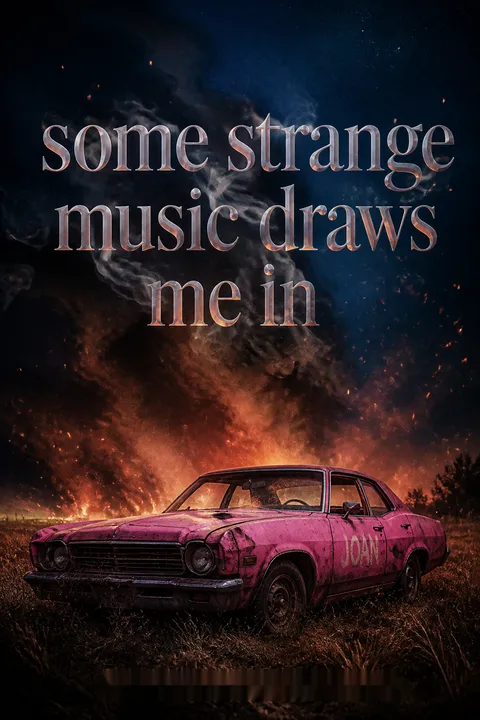
Sylvia's demolition derby is a spectacular, defiant act: driving the pink "Misplaced Joan of Arc" car, she claims power and visibility as a trans woman; Mel watches, terrified and envious, as fire and violence erupt. The chapter is both climax and warning. The community turns, threatening Sylvia; Mel realizes both the allure and the fatal costs of living openly queer or trans in their world. The power of spectacle, the danger of difference, and the violence of small-town "normality" all come to a head.
Fire, Flight, and Fugitives
Tensions boil over. Rumor, betrayal, and a cruel escalation—graffiti, threats, and, finally, arson—drive Sylvia out of town. Acts of violence from peers and adults alike (physical assault, humiliating "wanted" posters) target both her and Mel for their associations and nonconformity. These climactic chapters blend confession with reckoning: Mel's lie about a kiss with Sylvia, told out of longing and jealousy, helps trigger the downfall. Both characters become fugitives—physically and psychically—from the town's punishing boundaries.
Regrets in the Aftermath
After the inferno at Sylvia's house, Mel faces both relief (Sylvia survives, flees) and irreparable loss. The friendships and loves that defined her adolescence—Jules, Sylvia, even her own "Mel" self—are broken, exiled, or dead. The narrative dwells on survivor's guilt and the impossibility of reckoning the pain: sometimes active violence, sometimes mere neglect or forgetting, always shaped by systemic injustice. Mel's attempts to move on—to become "normal," erase the queer past—never fully succeed.
Reckoning with Memory & Change
As Mel grows into adulthood and transitions, the past lingers as both trauma and resource. New friendships and love exist in shadow, shaped by everything that cannot be said (words for gender, for desire) and everything that was lost. A modern chapter reframes the story: the town is emptying out, new queer kids have language and community, yet the scars of the past—betrayal, shame, survivor's guilt—fester. Attempts at repair, with Donna (sister), with Dakota (niece/granddaughter), and, eventually, with Sylvia, never erase the cost.
Modern Genders, Ancient Pains
Mel/Max, now a teacher and out trans man, is caught in the crossfire of contemporary gender politics. Fights over language, pronouns, and belonging play out among students, colleagues, and family. The trauma of 1980s queerphobia is mirrored, at times, in modern debates about "snowflakes" and the shifting rules of inclusion and exclusion. Conversations with Dakota reflect hope—today's youth, despite their own struggles, have more resources and representation—but the cost of earlier generations' isolation, shame, and lost girlhoods still shadows Max's adult life.
Revisiting the Ruins
Returning to Swaffham to empty his mother's house, Max is haunted by the debris of the past—lost friends, old photos, the lingering sense of a self erased or exploded in adolescence. Cleaning, sorting, and reminiscing, he is forced to confront what was never spoken, what was left undone—particularly with Jules, Sylvia, Donna, and his own younger self. The lost opportunities for kinship ("Sylvia needed me as much as I needed her") and the limits of forgiveness shape this late reckoning.
Return of the Survivor
A final act of catharsis: Max tracks down Sylvia, alive and changed, and confesses his childhood lie. The reunion is both disappointing (Sylvia remembers little, is not destroyed) and liberating—she confesses to burning her own house for escape and tells Max he's not responsible for her suffering. Survivor guilt lingers, but the exchange refigures old wounds as sites of growth. Both trans adults sit in solidarity, aware of generational shifts and the ongoing pain and possibility of queer survival.
Across Thresholds, Toward Love
The story's end circles back to the themes that have haunted it throughout: what it means to become, to be loved, and to "have" or "be" another. Max raises Dakota (now nonbinary), trying to provide what he lacked as a child—the possibility of survival, belonging, and language for selfhood. The ruins of the past—trauma, shame, anger—are not erased, but repurposed in the hope that future generations will find easier ways to exist and love. The narrative settles not on triumph, but on the bittersweet recognition that escape, survival, and acknowledgment are, sometimes, enough.
Analysis
Shame, survival, and queer generational repairSome Strange Music Draws Me In is a wrenching, intimate excavation of queer and trans adolescence in small-town America—a story as much about what cannot be spoken or survived as what is. Griffin Hansbury's narrative explores the psychic cost of heteronormativity, the violence (literal and emotional) levied against difference, and the long shadow of survivor's guilt and shame. The book interrogates not only the pain of being "strange"—queer, trans, or otherwise outside—but also the destructiveness of enforced sameness for everyone (cis, straight, poor, hopeful, weird). Through alternating chapters, Hansbury exposes the cost of silence, lies (as self-defense or self-betrayal), and betrayal—yet ultimately finds complicated, unsentimental hope in the possibility of repair: through confession, solidarity, and imperfect acts of caregiving. The novel refuses neat closure; survival is not triumph, but the hard-earned space to become, love, and be loved, however slant or strange. For a new generation of queer and questioning readers, the novel offers language, memory, and the unflinching lesson that being "enough"—even when "enough" is survival alone—can be a form of victory.
Review Summary
Some Strange Music Draws Me In is highly praised for its dual-timeline exploration of trans and queer experiences, earning an average 4.4 stars. Readers celebrate its authentic portrayal of growing up trans, particularly the vivid 1984 coming-of-age sections. Many note it feels written for trans people rather than explaining transness to cisgender audiences. Common criticisms include the 2019 sections feeling heavy-handed, particularly around generational conflicts between older and younger trans communities. Overall, most reviewers found it deeply moving, emotionally resonant, and an important contribution to queer literature.
Characters
Mel / Max (Melanie Pulaski)
Mel begins as an awkward, overweight, self-loathing teen girl in 1980s Swaffham, whose body and desires are out of step with her world. Their journey is defined by intense longing—to both be and have: for friendship, for escape, for gendered recognition, for safety, and for another, truer self. Mel's relationships are shaped by fierce attachments (to Jules; to older sister Donna; to mother Irene), dangerous desires (for both Jules and Sylvia), and the ever-present fear of exposure and rejection. As an adult, now Max—a trans man, lonely but resilient—he is marked by survivor guilt, loss, and the challenges of generational change. Max's development is one of painful awakening: learning that his "strangeness" is both his deepest vulnerability and the source of his survival, that love is risky but necessary, and that the past always remains, if not repaired, at least acknowledged.
Sylvia Marks
Sylvia is both fantasy and reality: a tough, magnetic, gender-nonconforming woman who has survived Swaffham's violence and the wider world's cruelties. She embodies possibility and threat—a blueprint of queer adulthood that both beckons and terrifies young Mel. Sylvia's "cool" and stories of New York, her demolition derby exploits, and her philosophical musings make her an idol and later, as the town turns against her, a scapegoat. Despite a history of abandonment and violence, Sylvia retains a sly humor and defiant agency: her setting fire to her own house is an act of liberation. In reunion, she offers Max the possibility of forgiveness, cautioning against the weight of survivor guilt and showing that sometimes survival itself is a radical act.
Jules Cobb
Jules is Mel's childhood friend, the archetypal "other odd one." Their relationship is visceral, playful, and sometimes cruel—a space of shared secrets, coded languages, and clumsy explorations of desire. As Jules matures into newfound sexuality and fascination with death and darkness, she becomes both a mirror and foil for Mel. The friendship strains under jealousy, secrets, gender confusion, and eventually betrayal: Jules unwittingly participates in the campaign against Sylvia, feeding Mel's guilt and trauma. Her eventual decline and early death are deeply mourned by Max—a symbol of all lost queer kinships and the cost of enforced "normalcy."
Donna Pulaski
Donna serves as an early model for teenage rebellion—swiftly punished by both family and town. Her life, marked by teenage pregnancy, poverty, and endless struggle, is a reminder to Mel of what can happen to those who don't or can't escape. Late in life, she is a source of bitterness and right-wing resentment—at once adversary, burden, and opportunity for Max's attempts at repair through Dakota.
Irene Pulaski (Mother)
Irene is a complicated, working-class mother, driven by a desire for "quality"—status, love, and recognition—she herself never had. Her relationship with Mel ranges from toxic love (slaps, tirades, manipulation) to desperate attempts to fix and save. She is both victim and enforcer of heteronormative, small-town policing. Her own traumas—her father's abuse, failed marriages—echo in her rigid boundaries, and her eventual, partial acceptance of Max reflects a shifting, imperfect grace.
Dakota
Dakota, Donna's granddaughter, represents both the legacy of family trauma and the promise of new survival. Smart, nonbinary, and precociously attuned to the language (and pitfalls) of modern gender, they provoke Max to reconsider the value and risk of queer kinship. Their development allows Max to offer the love, language, and protection that he lacked—suggesting the possibility, but not certainty, of repair.
Ray / Ginny Cobb and Dale (Jules' family)
Jules' father Ray is a menacing, violent, gun-obsessed patriarch—the ghost of "protection" turned predatory. Ginny, her mother, is a local queen of meanness, orchestrator of campaigns against "perverts," and emblem of generational fear. Dale, Jules' brother, toggles between brotherly closeness and sudden violence, enacting the rage and confusion of masculine adolescence.
Brenda White
A young girl, marked and punished for same-sex experimentation, whose story haunts Mel as a warning and omen. Her exile and disappearance underline the consequences of being found out and reinforce Mel's internalized dread.
Vincent
A gay stylist and friend of Sylvia's, Vincent is a brief but vital figure—offering a glimpse of community, resilience, and the toll of the AIDS crisis. His stories of violence and belonging shape Mel's understanding of the stakes and costs of being visible.
Hadley, Randy, Brett, and other teens
College-bound, comfortable, mostly heterosexual, they represent the unattainable "straight path" available to others—and the dangers (sexual assault, betrayal) that lurk there as well.
Plot Devices
Dual Timeline/Alternating Eras
The novel's structure alternates between adolescent Mel's coming-of-age in 1984 and Max's adult reckoning in 2019. This dual timeline permits a simultaneity of feeling: the immediacy and confusion of painful adolescence is brought into dialogue with the wisdom, regret, and societal change of adulthood. Each era foreshadows or echoes the other—past traumas resurging as survivor guilt or sensibility, present events reframing the meaning of childhood episodes. The device heightens the reader's sense of history and the evolution (and persistence) of queer pain and possibility.
Confessional First-Person Voice
The entire narrative is filtered through Mel/Max's interiority—direct, confessional, often self-loathing yet funny and painfully self-aware. The voice weaves analysis and lyricism, capturing both the banality and intensity of adolescent emotion and the wounded, uncertain wisdom of later life. Key: the narrator's self-doubt and capacity for misremembering/forgetting shapes the reader's experience; memory is shown to be a creative, self-editing, even unreliable act.
Music/Literature as Transformation
Patti Smith's "Horses," New York punk, and the forbidden library volumes form a codebook of desire and escape. Music is not simply a background but a site of identification, a source of language for feelings and identities otherwise unspoken or unspeakable. Literature (McCullers, Rich, etc.) similarly becomes both model and mirror—a means to see what is possible and, at times, to mourn what cannot be named.
Foreshadowing, Chekhov's Gun, and Irony
The story is filled with warnings (Brenda White's punishment; family threats; missing children on milk cartons; rumors of "bag a fag" stings) that are both sincere and ironic—at once a product of the time and a darkly comic amplification of the violence that follows. "Small" betrayals and misdeeds (a lie, a thrown rock, a whispered word) become the seeds for future calamity. The irony is often bitter: what is intended as love or protection frequently brings about harm.
Objects as Metaphor
Objects—a rabbit's foot, a Polaroid, a suit, a car, the "asymmetrical" haircut—are charged with meaning, becoming metaphors for luck, transformation, estrangement, or survival. The burning of a house, the theft of a photo, the destruction of a tape echo the violence and loss within and between characters.
Generational Cycles & Inheritance
Parental traumas (abuse, anger, failed dreams), hometown patterns (scapegoating, violence, denial), and queer inheritance (the lack or loss of role models, the loneliness of difference) recur across time. These patterns both trap and teach; the story's true arc is the slow, ambiguous attempt to break or soften these cycles, especially through Dakota.
Download PDF
Download EPUB
.epub digital book format is ideal for reading ebooks on phones, tablets, and e-readers.








































