
Key Takeaways
1. Your Brain is a Supercomputer: Optimize It.
Indeed, our brain is still vastly better engineered than the best design attempts of our most brilliant scientists—and even the uppermost echelon of researchers aren’t afraid to admit that we still have much to understand and discover about how the brain functions.
Unparalleled efficiency. Your brain is an astonishingly powerful and efficient organ, capable of approximately 10 to the 16th power calculations per second, yet it operates on a mere 10 watts of energy—about the same as a laptop. This incredible biological engineering far surpasses even the most advanced supercomputers, highlighting its inherent capacity for high performance.
Constant adaptation. Your brain is not a fixed entity; it's constantly changing and adapting to life's pressures, motivations, and experiences, truly from one minute to the next. This inherent adaptability means you have far more control over your cognitive performance than you might realize, allowing you to actively steer your brain health towards optimal function. Cognitive neuroscientist Dr. Andrew Hill describes optimized cognition as feeling like "the windshield wiper fairy paying you a visit and squeegeeing your world," leading to crisper ideas, clearer thoughts, and a more vivid experience of life.
Neurotransmitter symphony. The brain's approximately 100 billion neurons communicate through special messages called neurotransmitters, which dictate how you act, think, and feel. These brain chemicals, like serotonin (mood), dopamine (motivation), and GABA (calm), are constantly in flux, and their healthy flow—rather than a static "balance"—is key to a productive mental state. Understanding this dynamic system empowers you to influence your mental microclimate for the better.
2. The "Three Ps" of Brain Building: Prime, Protect, Promote Plasticity.
By understanding the power of each of these concepts, you’ll be able to better reach your personal cognitive objectives, simply through the foods you eat.
Everyday maintenance. Priming your brain involves daily nutritional routines that meet key needs, ensuring basic cognitive maintenance. Just as a cyclist performs regular upkeep on their bike, consistent dietary choices keep your brain running smoothly, preventing common deficiencies that can lead to suboptimal cognition and brain fog. This foundational care allows you to feel more cognizant and clearheaded over time.
Defending against decline. Protection focuses on safeguarding your brain from factors that cause cognitive impairment and disease, such as inflammation and cellular damage. Research shows that a well-fed body significantly lowers the risk of neurological decline and diseases like Alzheimer's. Prioritizing brain protection not only extends your life expectancy but also dramatically improves your quality of life.
Embracing change and growth. Plasticity refers to your brain's remarkable ability to adapt, repair, and even grow new cells (neurogenesis) throughout your life. This concept, once thought impossible, means your brain can be strengthened and improved, much like a muscle. Positive plasticity allows you to learn new skills, recover from injury, and continuously enhance your cognitive abilities, making purposeful dietary choices a powerful tool for rewiring your brain.
3. Fuel Your Brain with Smart Tools: Fats, Plant Protein, Less Sugar, More Plants.
A diet that supports a healthy brain includes some fat, some protein, less sugar, and more plants.
Eat some fat. Your brain is 60% fat, making healthy lipids absolutely imperative for cell formation, maintenance, and deterring aging. Focus on:
- Omega-3s (DHA/EPA): Crucial for neurogenesis and neuron protection. Best sourced from algae supplements or plankton, avoiding heavy metals in larger fish.
- Monounsaturated Fats: Found in avocados, nuts, and olive oil; anti-inflammatory and linked to reduced depression.
- MCTs: From coconut oil, provide alternative brain fuel (ketones) for mental stamina.
Avoid harmful trans fats and limit saturated fats, which can cause inflammation detrimental to brain health.
Eat some protein. While most people consume enough protein, the quality and source are paramount for brain health. Plant-based proteins offer a full spectrum of essential amino acids without the drawbacks of excessive animal protein.
- Tryptophan: Precursor to serotonin, influencing mood, alertness, and sleep.
- Tyrosine: Precursor to norepinephrine, epinephrine, and dopamine, boosting motivation and focus.
- Theanine: Calming amino acid, reduces anxiety, enhances focus (found in tea).
Eating less protein overall (around 10-12% of calories) can also promote longevity and boost brain-derived neurotrophic factor (BDNF), which increases neuroplasticity.
Eat less sugar. While your brain needs glucose, excessive refined sugar is addictive and highly detrimental, causing inflammation, impacting neurotransmitter activity, and leading to cognitive deficiencies.
- Avoid: High-fructose corn syrup, cane sugar, artificial sweeteners.
- Limit: Concentrated natural sugars like maple syrup, honey.
- Prioritize: Whole, plant-based sources like fruits, roots, starchy vegetables, and whole grains, which come with fiber to slow sugar release and nourish your gut.
Eat more plants. Plants are the ultimate source of nutrient density, providing a vast array of micronutrients essential for priming, protecting, and promoting plasticity in your brain.
- Leafy Greens: King of nutrient density (kale, spinach, broccoli).
- Variety: Incorporate diverse colors and types of plants daily, eating seasonally.
- Whole Foods: Avoid processed foods, which lack nutrients and can create imbalances.
4. Micronutrients are Your Brain's Essential Building Blocks.
Take away all the water and fat in your brain, and what’s left is a cellular mass that is either composed of, or wholly dependent on, micronutrients to function.
Magnesium: The stress reducer. This ubiquitous mineral is involved in over 300 bodily functions, with high importance for the brain. Magnesium is neuroprotective, preventing excitotoxicity, reducing stress hormones like cortisol, and acting as a natural sleep aid and anti-anxiety mineral. Chronic stress depletes magnesium, creating a vicious cycle that can be broken by regular intake from:
- Tofu and soy products
- Leafy green vegetables
- Nuts and seeds
- Dark chocolate/cacao
- Legumes, whole grains, seaweeds
Vitamin D: Healing and mood. More akin to a steroid hormone, Vitamin D acts as an anti-inflammatory agent, aiding brain healing and regeneration. It's primarily synthesized through sun exposure, linking it to balanced mood. While few foods naturally contain D3, plant-based D3 supplements (often from algae) are a viable option, ideally paired with vitamin K2.
Choline: Memory and learning. This "vitamin-like" essential nutrient is crucial for building and maintaining healthy lipid levels in your brain and for producing acetylcholine, the neurotransmitter vital for memory, learning, and overall neurotransmitter maintenance. Choline also plays a key role in detoxification. Excellent sources include:
- Cruciferous vegetables (cauliflower, broccoli, Brussels sprouts)
- Beans, legumes (garbanzo, navy, split peas, lentils)
- Nuts and seeds (pistachios, cashews, flaxseeds)
- Organic soy lecithin and sunflower lecithin
B Vitamins: The brain's energy team. This family of water-soluble vitamins is critical for daily brain functioning, from metabolism to neurotransmitter production. Deficiencies can lead to irritability, confusion, memory problems, and even severe neurological disorders.
- Thiamine (B1): Brain metabolism, acetylcholine production.
- Riboflavin (B2): Glutathione synthesis.
- Niacin (B3): Antioxidant, acetylcholine production, mental agility.
- Pantothenic Acid (B5): Cognition, memory, anti-stress.
- Pyridoxine (B6): Neurotransmitter production (serotonin, dopamine), fights depression/anxiety.
- Folate (B9): Neurotransmitter manufacture, DNA/RNA synthesis, myelin sheath repair.
- Cobalamin (B12): Crucial for converting carbohydrates and fatty acids into brain fuel. A B12 supplement is strongly recommended for fully plant-based diets and as you age, as plant sources are inactive.
5. Your Gut is Your "Second Brain": Nourish It.
About one in five Americans currently suffers from these kinds of disorders, which include multiple sclerosis and Parkinson’s disease (both of which cause devastating neurological problems). But believe it or not, around 70 percent of your body’s immune system is located in your gut microbiome alone.
The gut-brain axis. Your gastrointestinal tract, often called the "second brain," is made from the same embryonic tissue as your brain and is directly connected via the vagus nerve. This two-way communication means gut health profoundly impacts cognitive function, influencing everything from mental clarity to emotional balance and neurotransmitter production, particularly serotonin.
Microbiome's critical role. The vast ecosystem of microorganisms in your gut (microbiome) is home to 70% of your body's immune system. An imbalanced microbiome, affected by stress, illness, or medication, can drastically increase inflammatory chemicals, leading to chronic inflammation that impairs cognitive function and contributes to serious illnesses. Preliminary studies show compromised gut bacteria can lead to brain inflammation and MS-like symptoms.
Nourishing your gut. To support a healthy gut microbiome and, by extension, a healthy brain, focus on:
- Probiotics: "Good" bacteria found in fermented foods like sauerkraut, kimchi, tempeh, miso, and plant-based yogurts. They aid digestion, nutrient absorption, and neuron communication.
- Prebiotics: The "food" for probiotics, found in high-fiber foods like apples, lentils, onions, yams, and garlic.
- Avoid: High-sugar foods, excessive animal protein, and unnecessary antibiotics or antacids, which can disrupt microbial balance and cause inflammation.
6. Embrace Natural Nootropics for Enhanced Cognition.
Natural nootropics, on the other hand, can improve the entire baseline of your brain health while giving you a cognitive edge that can make a positive difference in the way you think and feel.
Mind-changing substances. Nootropics, derived from Greek words meaning "mind" and "changed," are cognition-enhancing substances that improve how you think, feel, and function. Historically used across cultures for millennia, modern natural nootropics offer a gentle, safe, and effective approach to optimizing brain function without negative side effects.
Beyond stimulants. Unlike temporary stimulants like coffee, which can deplete neurotransmitters and cause jitters, natural nootropics work holistically. They build and maintain healthy neurotransmitter levels, offering lasting, stable cognitive performance. While coffee provides a short-term boost, true nootropics aim for sustained, optimized brain health.
Holistic benefits. Natural nootropics are food-derived or food-based supplements that offer compound nutrients, providing multiple layers of benefits for both the brain and the body. They are neuroprotective, enhance mental performance (memory, mood, focus, attention, learning), and can even promote creative flow. Adaptogens, a special class of nootropics, help your body naturally adapt to stress and restore balance.
7. Distinguish Natural Nootropics from Risky "Smart Drugs."
But when they are taken outside the purview of a medical diagnosis, or by a “healthy normal” person (the unsexy term science uses for the “Average Joe”), smart drugs can have a very different effect.
The allure of "limitless." The idea of a "limitless pill" that instantly unlocks full brain potential, as depicted in popular culture, is a fantasy. However, the use of "smart drugs" or pharmacological cognitive enhancements (PCEs) like Adderall and Ritalin is on the rise, driven by a desire for heightened alertness, memory, and motivation in competitive environments.
Hidden dangers. While smart drugs can be life-changing for individuals with specific neurobiological disorders under medical supervision, their non-medical use carries significant risks. These chemical compounds can:
- Flush the brain with too much dopamine, leading to increased risk-taking and aggression.
- Overstimulate the nervous system, potentially damaging or killing brain cells.
- Cause addiction by disrupting the brain's natural neurotransmitter production, leading to dependence (e.g., nicotine's effect on dopamine).
- Lack long-term safety studies, as many synthetic nootropics are relatively new.
Giurgea's "do no harm" credo. Dr. Corneliu Giurgea, the "Father of Nootropics," emphasized that true nootropics should enhance cognition without impairing motor function, possessing sedative qualities, or having significant side effects or toxicity. Many "smart drugs" fail this test. Caution is also advised against dopamine precursors like Mucuna pruriens, which directly impact neurotransmitter balance and can have dangerous domino effects on your mental microclimate.
8. Top Natural Nootropic Foods for Specific Brain Benefits.
All in all, it’s exciting to see how the unique biological makeup of natural nootropics can help you realize your own cognitive potential and enhance what you go on to do, achieve, and enjoy.
Cacao ("The Happy Bean"): Unroasted chocolate, rich in magnesium, tryptophan, tyrosine, anandamide ("bliss molecule"), flavonoids, and theobromine.
- Benefits: Elevates mood, decreases depression/anxiety, boosts learning/memory, enhances focus, highly neuroprotective.
Matcha ("The Original 'Keep Calm and Carry On' Tea"): Shade-grown green tea powder, a natural blend of caffeine and L-theanine.
- Benefits: Provides calm energy, diminishes anxiety, improves well-being, boosts motivation/focus, promotes creative thinking, highly neuroprotective.
Lion's Mane ("The Smart Mushroom"): Contains hericenone and erinacine compounds.
- Benefits: Nerve regeneration (NGF), neuroplasticity, improves learning/memory/attention, decreases depression/anxiety, supports overall cognitive function, highly neuroprotective.
Reishi ("The Health Insurance Mushroom"): An adaptogen, especially red reishi.
- Benefits: Promotes calm, reduces stress/anxiety, supports better sleep, enhances learning/memory, neuroprotective, strong detoxifier.
Goji Berries ("The Well-Being Berry"): Dried red berries, rich in amino acids, vitamins (C), minerals (iron), and LBPs.
- Benefits: Improves learning/memory, increases feelings of well-being, protects blood-brain barrier, promotes neurogenesis.
Purple Berries ("The Memory Fruits"): Blueberries, blackberries, acai, etc., rich in anthocyanin antioxidants.
- Benefits: Improve problem-solving, learning/memory, fluidity of thought, coordination/balance, alertness/focus, enhance neurogenesis potential.
Rhodiola ("The Edge"): An adaptogen, known as "golden root."
- Benefits: Reduces fatigue, increases mental energy/stamina, enhances mood/well-being, improves focus/motivation.
Ashwagandha ("The Don't-Worry-Be-Happy Herb"): An adaptogen, "king of Ayurveda."
- Benefits: Antianxiety, natural antidepressant, reduces stress (cortisol), soothes fatigue, clears cloudy thinking, aids memory/focus/concentration, promotes BDNF/neurogenesis.
Turmeric ("The Golden Root of Protection"): Contains curcumin.
- Benefits: Powerful anti-inflammatory, potent antioxidant, fights stress, boosts mood, reduces depression, may improve memory, neuroprotective (Alzheimer's prevention).
Schisandra ("The Focus Berry"): An adaptogen, "five flavors fruit."
- Benefits: Promotes calm, reduces stress/anxiety, helps with sleep quality, enhances brain energy/mental activity, boosts attention/work performance, neuroprotective.
9. Mind-Enhancing Supplements for Next-Level Optimization.
Consider this part of the book a peek into the future of “what’s next” for natural nootropics—and another opportunity to take brain optimization to the next level.
Bacopa Monnieri (Brahmi): An ancient Ayurvedic herb, best consumed in capsule form due to its intense bitterness.
- Benefits: Enhances working memory, long-term memory, focus, information processing speed, and reduces anxiety. Often stacked with rhodiola for boosted performance.
CBD Oil (Cannabidiol): Hemp-sourced, non-psychoactive.
- Benefits: Strongly anti-inflammatory, neuroprotective, potent anti-anxiety, and may boost mood. Best added to uncooked foods to preserve nutrients.
Panax Ginseng: A revered root that enhances energy.
- Benefits: Increases mental and physical reaction time and accuracy, reduces mental fatigue, and enhances feelings of well-being and happiness.
Other notable supplements:
- Gotu Kola: Gentle calming effect, decreases anxiety, promotes well-being, stimulates new neuron growth, protects against toxins.
- Holy Basil (Tulsi): Strong antioxidant and adaptogen, reduces stress, manages anxiety, available as a tea for relaxation.
- Artichoke Extract: Improves short-term memory and recall, acts as a natural prebiotic supporting gut flora.
- St. John’s Wort: Potent antidepressant, but requires physician supervision due to interactions with other medications.
- Curcumin (supplement): For higher, more bioavailable doses than turmeric spice, offering "cheap insurance" against brain inflammation and degeneration.
- Astaxanthin: A powerful carotenoid antioxidant from algae, preserves cognitive function by reducing oxidative stress and inflammation, offering broad brain protection.
Nootropic Herbs & Spices: Don't overlook common kitchen ingredients for mild, cumulative benefits:
- Rosemary: Mild memory improvement (even by aroma).
- Ginger: Prevents brain tumors, inhibits inflammation, improves reaction time.
- Cinnamon: Enhances cognition, learning, recognition memory.
- Black Pepper: Helps overall brain function, mild antidepressant, amplifies absorption of other nootropics.
10. The Golden Rule: Balance Your Diet and Lifestyle.
Balance is key.
Holistic dietary choices. There is no single "best" diet for everyone, only the best diet for you right now, which may evolve. The golden rule emphasizes balance in your dietary choices, focusing on foods that make your brain and whole body feel good, supporting a long, healthy life. This means prioritizing a wide variety of plants, eating seasonally, and respecting the potency of all foods.
Moderation and real food. Balance the quantity of foods you consume, understanding that even the healthiest foods can become toxic in excess. For optimal health and easier nutritional balance, rely on real, whole foods as much as possible, rather than solely on supplements. Supplements are supportive tools, not replacements for a well-rounded diet.
Integrated lifestyle. A healthy diet is a powerful foundation, but it's only one component of overall well-being. Your lifestyle profoundly enhances or hinders your cognitive experience. Prioritize:
- Quality Sleep: Essential for brain housekeeping and rebuilding.
- Regular Exercise: Balances brain chemistry, increases BDNF.
- Adequate Hydration: Crucial for all brain functions.
- Mindfulness/Meditation: Reduces stress, promotes calm.
- Setting Goals & Trying New Things: Stimulates neuroplasticity.
- Social Connection: Supports emotional and mental health.
The goal is not to achieve "limitless" genius, but to reach the peak of your personal cognitive potential, living as the most balanced, abundant version of yourself.
Review Summary
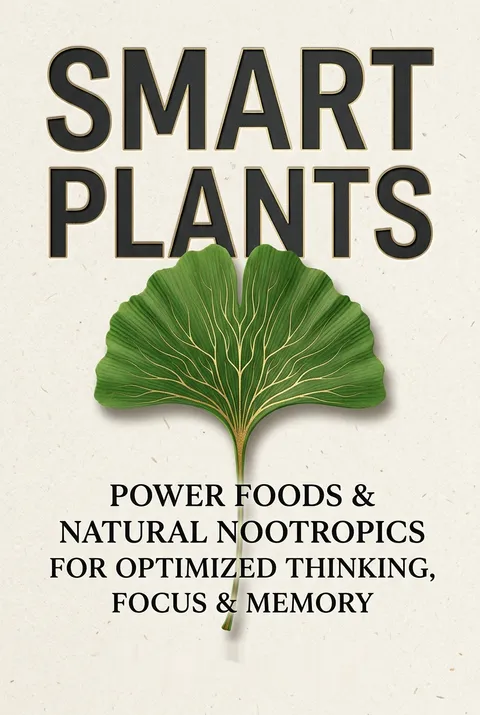
Smart Plants receives praise for its clear, well-researched approach to brain-boosting nutrition and nootropics. Readers appreciate the comprehensive brain science explanations, practical plant-based recipes, and helpful reference materials including glossaries and food charts. The book's structured approach—covering everyday nutrition, nootropic ingredients, and supplements—resonates with health-conscious readers. However, some note that specialty ingredients may be difficult to source locally. Overall, reviewers value the accessible writing style and actionable guidance for optimizing cognitive function through diet, making it worthwhile even for non-vegans seeking healthier options.
People Also Read




Download PDF
Download EPUB
.epub digital book format is ideal for reading ebooks on phones, tablets, and e-readers.








































