
Plot Summary
Cancel Culture's Deadliest Game
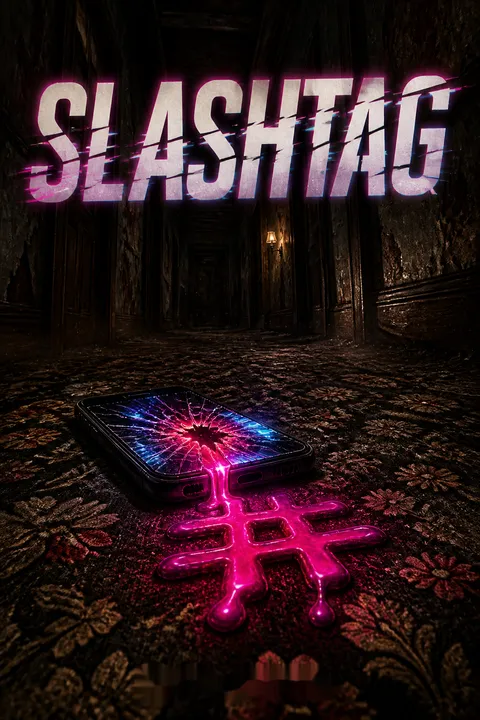
Tawny Howlett, a lifestyle influencer, is thrust into crisis when a tainted health drink she endorsed hospitalizes fans. Facing public outrage and trending hashtags like #TawnyToilet, her manager Maggie insists she must perform a grand act of contrition to save her brand. The solution: join a live-streamed, horror-themed reality show called Slashtag, set in California's most infamous haunted hotel. Tawny is reluctant, but mounting pressure and the threat to her career—and her sister April's well-being—leave her with little choice. The chapter sets the tone: in a world where public opinion is weaponized, survival means more than just staying alive—it means controlling your own narrative.
Haunted Invitations and Hidden Motives
As Tawny debates joining Slashtag, she learns the event is orchestrated by Krentler Media, a shadowy conglomerate with a history of manipulation and power. The show's premise: seven celebrities must survive three days in the Propitius Hotel, solving puzzles and facing the legacy of a notorious serial killer, Arthur Wilson. The winner earns a massive charity donation and a shot at redemption. But the invitation is more than it seems—Krentler's board has engineered Tawny's scandal to ensure her participation, and they dangle a life-saving kidney transplant for April as bait. The haunted house is a stage, but the real horror is the corporate machinery behind it.
Influencers in the Crosshairs
Tawny joins a cast of influencers, reality stars, and athletes, each with their own secrets and reasons for playing. Her "boyfriend" D-wreck, a prankster with a troubled past, is both ally and liability. April, watching from home, is Tawny's anchor and conscience. As the cast arrives at the Propitius, the lines between performance and reality blur. The hotel is rigged with cameras, and every move is broadcast to millions. The contestants' personas—crafted for likes and followers—are tested by fear, humiliation, and the threat of real violence. The chapter explores the psychological toll of living under constant surveillance and the cost of curated identity.
The Price of Survival
The Propitius Hotel is more than a haunted house—it's a labyrinth of secrets, traps, and psychological games. The cast is forced to split up, solve puzzles, and confront their own traumas. Tawny's scars—literal and emotional—are exposed for the world to see. April, fighting for her life and her sister's, is drawn into the show's machinations from the outside. Krentler Media manipulates events, using both carrot and stick to keep the cast in line. The price of survival is steep: dignity, privacy, and sometimes, sanity. The chapter highlights the predatory nature of media empires and the lengths people will go to for redemption or escape.
Ghosts, Scars, and Social Feeds
As the game intensifies, the hotel's haunted history comes alive. Arthur Wilson's legend is retold through immersive videos and puzzles, blending fact and fiction. The cast's darkest secrets are weaponized against them—Tawny's childhood trauma, D-wreck's guilt, Kiki's addiction, Shawn's ostracism. Possession statues hidden throughout the hotel trigger violent outbursts, turning allies into threats. The audience, empowered by interactive feeds, becomes complicit in the suffering. April hacks into the show's messaging system, trying to guide Tawny, but the flood of fake and real messages blurs reality. The chapter explores how trauma, shame, and voyeurism are commodified in the digital age.
Enter the Propitius Hotel
The contestants are locked inside, stripped of their phones, and given new devices with limited functions. The rules are simple: stay in character, solve the mystery, survive. But the first night brings chaos—power outages, jump scares, and the first "elimination." Chef Costanza, a masked celebrity chef, is gruesomely killed in a staged spectacle that feels all too real. The cast is forced to question what's scripted and what's deadly. Tawny's leadership is tested as alliances shift and paranoia grows. The hotel's layout—a maze of secret rooms and dead ends—mirrors the psychological traps set by the producers.
Rules of the Haunted House
The Propitius is a character in itself—claustrophobic, unpredictable, and hungry for pain. The rules are enforced by both the showrunners and supernatural forces. Breaking them brings punishment: loss of privileges, public shaming, or worse. The cast is manipulated into conflict, their weaknesses exploited for maximum drama. April's attempts to help are stymied by Krentler's countermeasures. The audience's appetite for suffering drives the show's escalation—each challenge more dangerous, each twist more personal. The chapter examines the ethics of entertainment and the fine line between horror and cruelty.
The Legend of Arthur Wilson
Through immersive media, the cast learns the story of Arthur Wilson—a doctor's son turned serial killer, occultist, and cult leader. His crimes are reenacted in puzzles and hauntings, blurring the line between past and present. The hotel's architecture is a map of his madness, filled with hidden rooms, torture devices, and totems representing his body, mind, and spirit. The cast must destroy these totems to "free" themselves, but each victory brings new horrors. The legend of Wilson becomes a metaphor for the show's true evil: the system that feeds on pain, obedience, and spectacle.
Puzzles, Alliances, and Betrayals
As the contestants race to solve the hotel's mysteries, alliances form and fracture. Possession statues trigger violent episodes—lust, envy, wrath—turning friends into enemies. Kiki, the puzzle expert, succumbs to addiction and paranoia. Britt, the reality queen, is revealed as a plant, her loyalty bought by Krentler. D-wreck's guilt over a childhood prank gone wrong is weaponized against him. April, now a hacker in the tunnels below, becomes the cast's only hope. The chapter is a gauntlet of betrayals, confessions, and desperate gambits, as the cast is whittled down by both supernatural and human threats.
Possession, Paranoia, and Pain
With each totem destroyed, the hotel's grip tightens. The cast is haunted by personal ghosts—literal and figurative. Possession becomes more frequent and violent, culminating in self-destruction and murder. Kiki dies by her own hand, unable to silence the crying baby only she can hear. Britt is exposed and killed by a possessed Landon, whose own father's ghost torments him. D-wreck sacrifices himself to save Tawny and Shawn, blowing up the distillery to open a path to the tunnels. The survivors are battered, traumatized, and hunted—not just by ghosts, but by the system that created the game.
The Ghost in the Machine
April, captured and brought to the heart of Krentler's operation, discovers the true purpose of Slashtag: to feed a demonic amulet, Duriel, with the pain and suffering of millions. The board of directors, including the man who tried to kill Tawny and April as children, are performing a ritual to unleash mass mind control. April hacks the system, turning Arthur Wilson's ghost against his masters. Tawny, wielding the amulet, confronts her abuser and the architects of the game. The final act is a reckoning—revenge, justice, and the destruction of the system that commodified their pain.
The Final Broadcast
With the board dead and the ritual thwarted, Tawny, April, and Shawn escape the tunnels, broadcasting the truth to the world. The show's ending is debated—was it real, scripted, or something in between? Krentler Media erases evidence, spins the narrative, and installs a new puppet leader. The survivors go underground, hunted but free. The epilogue finds Tawny, scarred but alive, plotting the next move against the system. The story ends with a promise: the cycle of exploitation is not over, but the survivors are no longer victims—they are the authors of their own fate.
Analysis
Slashtag is a razor-sharp satire of influencer culture, reality television, and the machinery of modern media. It weaponizes the tropes of horror—haunted houses, possession, slasher violence—not just for scares, but as a lens to examine how pain, shame, and trauma are commodified in the digital age. The Propitius Hotel is both a literal haunted house and a metaphor for the panopticon of social media, where every moment is content and every wound is spectacle. The story's true horror is not the ghosts or the violence, but the system that profits from suffering and erases agency. By making the audience complicit—through interactive feeds, voting, and meta-narrative twists—Slashtag indicts not just the producers, but all of us who consume pain as entertainment. Yet, the novel is not without hope. Through Tawny and April, it argues for the power of reclaiming one's story, the necessity of solidarity, and the possibility of turning the tools of oppression against their wielders. In the end, survival is not just about outlasting the monster, but about refusing to play by its rules.
Review Summary
Slashtag receives mostly positive reviews (4.26/5), with readers praising its unique blend of reality TV and horror, featuring seven celebrities trapped in a haunted hotel escape room. Fans appreciate the immersive experience including a companion website and podcasts, strong character development, and entertaining horror references. The gore, tension, and fast pacing draw comparisons to Saw, Big Brother, and H.H. Holmes's Murder Castle. Some critics note pacing issues, repetitiveness, or messy plotting, while one reviewer found it laughably terrible. Most recommend it for horror fans seeking fun, inventive slasher entertainment.
Characters
Tawny Howlett
Tawny is a lifestyle influencer whose carefully curated image is shattered by scandal. Beneath the surface, she is haunted by childhood trauma—a failed kidnapping that left her and her sister April scarred for life. Tawny's journey is one of forced vulnerability: her physical and emotional wounds are exposed for public consumption, but she learns to reclaim her narrative. Her relationship with April is the emotional core of the story, grounding her in moments of crisis. Tawny's arc is from passive victim to active avenger, using the tools of her oppressors—media, spectacle, and even supernatural power—to fight back. Her struggle is not just for survival, but for agency in a world that profits from her pain.
April Howlett
April, Tawny's younger sister, is wheelchair-bound due to injuries from their shared trauma. She is fiercely intelligent, resourceful, and unflinchingly honest. April's role is both support and catalyst—she hacks into the show's systems, guiding Tawny and the others through cryptic messages. Her presence is a reminder of what's at stake: family, justice, and the right to tell one's own story. April's arc is from sidelined victim to active participant, ultimately seizing control of the supernatural forces at play. Her bond with Tawny is unbreakable, and her refusal to be silenced is a quiet act of rebellion against the system that tried to erase her.
D-wreck (Derek Sarecki)
D-wreck is a prankster influencer whose persona masks deep guilt and insecurity. His relationship with Tawny is both a PR stunt and a genuine connection—he is one of the few who knows her true self. D-wreck's arc is defined by his struggle with past mistakes, particularly a childhood prank that nearly killed his nephew. The haunted house exploits his guilt, manifesting it as a vengeful ghost. Despite his flaws, D-wreck proves his worth through sacrifice, ultimately giving his life to save others. His journey is a meditation on redemption, masculinity, and the limits of performative identity.
Shawn Eamon
Shawn is a former NFL player ostracized for being openly gay. He is physically imposing but emotionally vulnerable, carrying the weight of family expectations and public scrutiny. Shawn's arc is one of self-acceptance—he enters the game to reclaim agency after being scapegoated by the league and his hometown. The haunted house exploits his fears and traumas, but he emerges as a true "Final Boy," surviving through empathy, loyalty, and quiet strength. Shawn's relationship with Tawny and D-wreck is a model of found family, and his survival is a testament to resilience in the face of systemic cruelty.
Kiki (Koyuki Suura)
Kiki is a young, neurodivergent cosplayer and escape room expert. Her skills make her invaluable, but her addiction and untreated trauma leave her vulnerable to possession and paranoia. Kiki's arc is a tragic one—her drive to solve every puzzle and save the group is undermined by her inability to ask for help. The haunted house exploits her isolation, manifesting her fears as a crying baby only she can hear. Kiki's death is a turning point, exposing the limits of individualism and the dangers of untreated pain.
Britt Holley
Britt is a veteran of reality TV, skilled at manipulating both the audience and her fellow contestants. She is revealed to be a plant, promised victory by Krentler Media in exchange for her complicity. Britt's arc is a study in self-preservation—she plays the victim, the leader, and the traitor as needed. Her downfall comes when the system that empowered her abandons her, and she is killed by a possessed Landon. Britt embodies the seductive power of complicity and the ultimate cost of selling out one's integrity.
Landon Keating
Landon is a former child actor and rock star, forever living in the shadow of his abusive, famous father. The haunted house exploits his need for approval, manifesting his father's ghost as a tormentor. Landon's arc is a descent into madness—he is possessed by Arthur Wilson and becomes the final antagonist. His story is a meditation on generational trauma, the hunger for validation, and the ease with which victims become perpetrators.
Chef Costanza (Miguel Arroyo)
Costanza is a celebrity chef who hides his identity behind a mask, both literally and figuratively. His mysterious persona is a shield for a troubled past—anger issues, criminal history, and a need for redemption. The haunted house unmasks him, both physically and emotionally, before subjecting him to a gruesome death. Costanza's arc is a warning about the dangers of unresolved trauma and the impossibility of hiding from one's true self.
Maggie
Maggie is Tawny's brand manager, more concerned with optics than well-being. She is both friend and foe, pushing Tawny into the game for her own professional survival. Maggie represents the cold logic of the media machine—her advice is often correct, but always self-serving. Her relationship with Tawny is transactional, a reminder that in the world of influencers, even friendship is a commodity.
Arthur Wilson
Arthur Wilson is both a historical figure and a supernatural force—a serial killer, cult leader, and occultist whose legacy haunts the Propitius Hotel. In life, he preyed on the vulnerable; in death, he is weaponized by Krentler Media as the ultimate enforcer. Arthur's arc is a metaphor for systemic evil—he is less a person than a function, a tool for those in power to maintain control through fear, obedience, and spectacle.
Plot Devices
The Haunted House as Media Panopticon
The hotel is a meticulously designed labyrinth, filled with cameras, secret passages, and psychological traps. It is a literalization of the panopticon—the contestants are always watched, always performing, never safe. The house's architecture mirrors the structure of the show: puzzles, totems, and possession statues force the cast to confront their traumas and betrayals. The haunted house is a metaphor for the surveillance state, influencer culture, and the commodification of pain.
Possession Statues and Themed Violence
Hidden throughout the hotel are glass statues representing the seven deadly sins (plus an invented eighth: disobedience). When triggered, these statues possess contestants, forcing them to act out violent or humiliating episodes. The statues are both plot device and psychological trigger, turning the cast's weaknesses into public spectacle. The possession sequences escalate the horror, blur the line between victim and perpetrator, and serve as commentary on how media exploits vulnerability.
Meta-Narrative and Audience Participation
Slashtag is presented as a hybrid reality show, with live feeds, interactive voting, and companion podcasts. The audience is complicit in the suffering, their engagement driving the escalation of violence. April's hacking of the messaging system introduces a meta-narrative—messages from "outside" become lifelines, red herrings, and tools of resistance. The show's producers manipulate events in real time, blurring the line between scripted and unscripted, real and fake.
The Amulet of Duriel and Ritual Sacrifice
The true engine of the story is the Amulet of Duriel, a demonic artifact that feeds on pain and suffering. Krentler Media's board uses the show as a ritual, harvesting agony from both contestants and viewers to fuel mass mind control. The amulet is both MacGuffin and metaphor—a symbol of how systems of power feed on the pain of the marginalized. The final act literalizes the metaphor, as Tawny and April seize control of the amulet and turn it against their abusers.
Trauma as Both Weapon and Salvation
Each character's trauma is both their greatest vulnerability and their only hope for survival. The haunted house exploits their secrets, but it is also through confronting these wounds—often with the help of others—that they find the strength to resist. The story's structure is cyclical: the past is never dead, but it can be rewritten. The survivors reclaim their stories, using the tools of their oppressors to fight back.
Download PDF
Download EPUB
.epub digital book format is ideal for reading ebooks on phones, tablets, and e-readers.








































