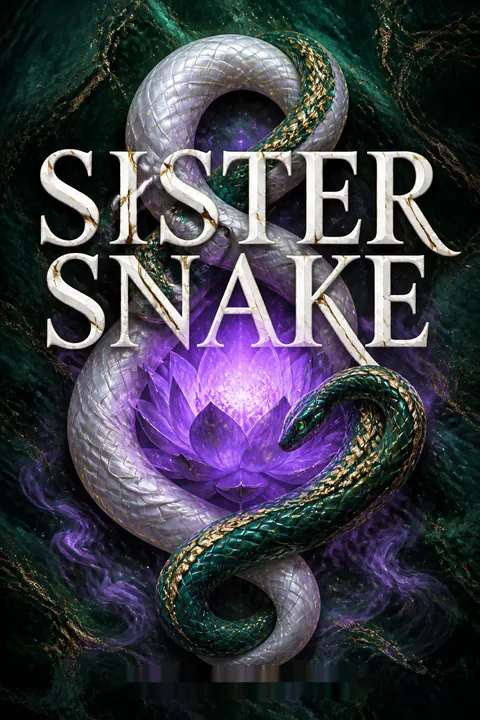

Plot Summary
Sworn Sisters Under Willow
In ancient Hangzhou, beneath a weeping willow by West Lake, a white snake and a green snake become sworn sisters. Their world is simple, primal, and full of shared pleasures—hunting, sunning, and the comfort of each other's presence. Yet, the white snake's longing for something more—humanity, with its names, desires, and adornments—grows insistent. The green snake, content in her skin, is nonetheless moved by her sister's yearning. Their pact is forged in love and difference, a promise to remain together through whatever transformations may come. This foundational bond, both fierce and tender, will echo through centuries, shaping every joy and wound that follows.
Desire for Human Skin
The white snake's longing to be human becomes irresistible. On a fateful Mid-Autumn night, the green snake braves the depths of West Lake to retrieve a magical lilac lotus, whose seeds promise human form and immortality. Together, they swallow the seeds, reciting a mantra of emptiness and form. Their bodies begin to change, and with it, the world's possibilities and dangers open. The white snake is elated, the green snake ambivalent, but both are forever altered. Their new skins bring not only beauty and sensation but also the burdens of desire, vulnerability, and the need to pass as something they are not. The cost of transformation is not yet clear, but the sisters' destinies are set in motion.
New York, Old Hungers
Centuries later, Emerald (the green snake) navigates New York's glittering, predatory world. She feeds on human qi—life force—through sex and proximity, sustaining her immortality while blending in as a young, queer Asian woman. Her relationships are transactional, her existence precarious. She struggles with money, identity, and the loneliness of endless life. Her bond with Su (the white snake), now distant and fraught, is both a lifeline and a source of pain. When a sugar daddy date goes violently wrong, Emerald's animal nature erupts, drawing blood and police attention. The city's chaos mirrors her own, and the ache for her sister—her only true kin—never fades.
Conformity and Camouflage
Su, the white snake, has built a life of immaculate conformity in Singapore. Married to a rising politician, she is the model wife: elegant, disciplined, and invisible in her difference. She abstains from human qi, feeds on goats, and submits to beauty rituals to appear "age-appropriate." Her longing for normalcy is a shield against the trauma of her past and the violence she once endured. Yet, beneath the surface, Su is haunted by emptiness, the memory of violation, and the knowledge that her humanity is always conditional. Her relationship with Emerald is strained by guilt, resentment, and the impossibility of true disclosure.
Sisterhood Fractured by Time
The sisters' paths diverge across continents and centuries. Emerald's recklessness and Su's rigidity create a cycle of need, disappointment, and mutual misunderstanding. Money, survival, and the wounds of the past drive them apart, even as their bond endures. When Emerald is wounded in New York, Su's old instincts to protect her resurface, prompting a journey that will force both to confront what they owe each other—and what they cannot forgive. Their love is both a refuge and a trap, shaped by the trauma and tenderness of their shared history.
Passing, Hiding, Surviving
Both sisters become experts at passing—Su as the perfect wife, Emerald as the adaptable outsider. Yet, the effort to hide their true natures is exhausting and isolating. Su's obsession with blending in leads her to suppress her animal instincts, even at the cost of her health. Emerald, more defiant, risks exposure and danger, refusing to erase her queerness or her difference. Their strategies for survival reflect their deepest fears: Su's of being unmasked and destroyed, Emerald's of being abandoned and unloved. The world's demand for conformity is relentless, and the sisters' choices reveal the limits of adaptation.
Power, Love, and Predation
The sisters' immortality is both a gift and a curse. Their need for qi—whether taken gently or violently—mirrors the human hunger for love, power, and recognition. Su's restraint is a form of self-denial, while Emerald's indulgence is a rebellion against shame. Both are drawn into relationships that echo their primal bond: Su with her husband, Emerald with lovers and friends who can never fully know her. The line between predator and prey blurs, and the sisters must reckon with the harm they cause and the harm they endure. Love, in their world, is inseparable from danger.
Singapore: Rules and Rebellion
In Singapore, Su's carefully constructed world is threatened by political ambition, social scrutiny, and the impossibility of motherhood. Emerald's arrival disrupts the fragile peace, exposing the fault lines in Su's marriage and the city's veneer of harmony. The sisters' presence challenges the boundaries of gender, sexuality, and belonging in a society obsessed with control. Their encounters with Tik, a queer police officer, and Ploy, a Thai entertainer, reveal the hidden networks of care and resistance that exist beneath the surface. The city's rules are both a prison and a provocation, and the sisters must choose between safety and authenticity.
Secrets, Violence, and Loss
As secrets unravel, violence erupts. Su's pregnancy—impossible, miraculous, and monstrous—becomes a battleground for autonomy and survival. The sisters' attempts to protect each other lead to unintended harm: friends die, trust is shattered, and the line between love and violence blurs. The world's intolerance for difference is mirrored in their own inability to accept each other fully. Loss becomes inevitable, and the sisters are forced to confront the limits of forgiveness and the meaning of home.
Molting, Memory, and Return
In the aftermath of violence and betrayal, the sisters retreat to the wild, shedding their human skins and returning to their primal forms. The act of molting becomes a metaphor for renewal, vulnerability, and the possibility of change. Memory—of trauma, love, and shared beginnings—surfaces in new ways. The sisters rediscover the wordless intimacy that first bound them, even as the world outside remains hostile and unchanged. Their journey is both a return and a reckoning, a search for a place where they can exist as they are.
Family, Forgiveness, and Fury
The sisters' reunion is fraught with pain and longing. Attempts at forgiveness are complicated by fresh wounds and old grievances. The world's violence—political, personal, and systemic—intrudes, demanding choices that pit survival against integrity. The sisters' love is tested by the need to protect, the urge to destroy, and the hope for something better. Family, in their world, is both a source of strength and a site of endless struggle.
Becoming, Breaking, Belonging
The sisters' journey culminates in acts of becoming and breaking: Su's monstrous transformation in the face of loss, Emerald's desperate attempts to save her, and the final, shattering confrontation in Singapore's halls of power. Their story is one of perpetual motion—between skins, cities, and selves. Belonging remains elusive, but the act of seeking it is itself a form of resistance. In the end, the sisters choose each other, even as the world crumbles around them.
Parliament in the Snake's Grip
Su's grief and rage explode in a supernatural assault on Singapore's Parliament, exposing the fragility of power and the violence beneath the city's order. Politicians fall, secrets are revealed, and the sisters' true natures are laid bare. The world's refusal to accept difference is met with a force that cannot be contained. In the chaos, the sisters find each other again, choosing solidarity over survival, love over safety.
Aftermath: Red Dust Remains
In the wake of destruction, the sisters escape into the wild, shedding the last remnants of their human lives. The world moves on, but their bond endures, shaped by loss, longing, and the refusal to disappear. The story ends where it began: with the promise that to be sisters in one lifetime is not enough. The red dust of mortal lust, the ache for connection, and the hope for a place to belong remain, undiminished by time or transformation.
Analysis
A modern fable of identity, survival, and the cost of belongingSister Snake reimagines the ancient legend of the White Snake as a queer, feminist epic spanning centuries and continents. At its heart, the novel is a meditation on the price of transformation: what we lose and gain when we change ourselves to survive in a world that fears difference. Through the intertwined lives of Su and Emerald, Amanda Lee Koe explores the trauma of passing, the hunger for connection, and the impossibility of erasing one's origins. The sisters' journey—marked by love, violence, and the refusal to disappear—mirrors the struggles of all who live at the margins, forced to choose between safety and authenticity. The novel's blend of myth, satire, and psychological realism offers a powerful critique of conformity, patriarchy, and the myth of progress. Ultimately, Sister Snake insists that true belonging is found not in erasure or assimilation, but in the fierce, imperfect bonds we forge with those who see and accept us as we are. The story's final image—two snakes, side by side, heading home—reminds us that survival is not enough; to be truly alive is to be seen, to be loved, and to love in return, even if it means shedding our skins again and again.
Review Summary
Sister Snake by Amanda Lee Koe is a queer retelling of the Chinese Legend of the White Snake, following immortal sisters Su and Emerald who transform from snakes to humans. Reviews praise its darkly humorous tone, luscious writing, and sharp social commentary on Singapore's politics and LGBTQ+ issues. Readers appreciated the complex sisterly dynamics and feminist themes, though some found characters one-dimensional and pacing uneven. The novel's treatment of assimilation, identity, and queer experience resonated strongly with Singaporean readers, despite mixed reactions to its ending.
People Also Read






Characters
Bai Suzhen (Su)
Su is the white snake who becomes obsessed with attaining human form, seeking the safety and status of conformity. Her journey is marked by trauma—sexual violence, centuries of hiding, and the relentless pressure to pass as human. As a wife in Singapore, she is the epitome of elegance and self-control, but beneath the surface, she is wracked by emptiness, shame, and the fear of exposure. Her relationship with Emerald is both nurturing and controlling, shaped by guilt and the need to protect. Su's development is a tragic arc: her quest for normalcy leads to self-denial, violence, and ultimately, monstrous transformation. Her love for Emerald is both her salvation and her undoing.
Xiaoqing (Emerald)
Emerald, the green snake, is Su's sworn sister and foil. She embraces her difference, refusing to hide her queerness or her animal nature. Her immortality is a source of both freedom and ennui; she moves through cities and lovers with restless energy, feeding on human qi and seeking connection. Emerald's vulnerability is masked by bravado, but her longing for Su's acceptance is profound. She is reckless, loyal, and often self-destructive, but her refusal to conform is a form of resistance. Emerald's journey is one of self-acceptance, learning to value her own way of being even as the world—and her sister—demand erasure.
Paul Ong
Su's husband, a rising Singaporean politician, embodies the city's obsession with order, hierarchy, and appearances. He is both loving and patronizing, supportive and suffocating. Paul's need for control extends to his marriage, his career, and his sense of self. His inability to accept Su's true nature—and his complicity in her suffering—culminate in tragedy. Paul is a study in the limits of power and the dangers of denial.
Tik
Tik is a queer Malay police officer assigned as Su's bodyguard. Navigating her own marginalization in a conservative society, Tik is both careful and kind. Her relationship with Emerald is a rare space of honesty and mutual recognition. Tik's journey is one of self-assertion, learning to claim her desires and stand up for those she loves. She becomes a bridge between worlds, offering care without judgment and risking her safety for the sisters.
Ploy
Ploy is a Thai entertainer and Tik's former lover. She is pragmatic, warm, and unafraid to speak her mind. Ploy's experiences as a migrant worker and performer give her a unique perspective on survival and solidarity. Her reunion with Tik is a testament to the power of forgiveness and the possibility of new beginnings, even in the face of loss and danger.
Bartek
Bartek is Emerald's best friend in New York, a queer artist who offers her shelter, acceptance, and unconditional love. His vulnerability and creativity make him both a confidant and a casualty of the sisters' world. Bartek's death is a devastating loss for Emerald, underscoring the dangers of intimacy and the cost of being truly seen.
Rizwan Rahmat (Riz)
Riz is Paul's political competitor, embodying the city's anxieties about race, gender, and power. His ambition and cynicism make him both a threat and a mirror to Paul. Riz's downfall in the Parliament attack is a reckoning for the system he represents.
Giovanni (Gabe)
Giovanni is a wealthy sugar daddy who becomes one of Emerald's victims. His objectification of Emerald and his obliviousness to her true nature make him both a symbol of patriarchal power and a casualty of the sisters' hunger.
Uncle Lu
Uncle Lu is a traditional Chinese medicine practitioner who recognizes the sisters' true nature. His knowledge of magic and folklore provides both warning and limited aid, but his ultimate advice is to avoid entanglement with beings like Emerald and Su.
The Chief Minister
The Chief Minister represents the pinnacle of Singapore's political order. His death at Su's hands signals the collapse of the system's ability to contain or comprehend the forces the sisters embody.
Plot Devices
Duality and Transformation
The central device is the sisters' ability to shift between snake and human forms, symbolizing the fluidity of gender, sexuality, and selfhood. Their transformations are both literal and metaphorical, reflecting the pressures to pass, the pain of hiding, and the possibility of renewal. The motif of molting—shedding old skins—recurs as a symbol of growth, vulnerability, and the cost of adaptation.
Qi and Feeding
The sisters' need to feed on qi is a device that explores the ethics of desire, the dangers of intimacy, and the blurred line between care and harm. Feeding becomes a metaphor for love, sex, and power, with each act carrying the risk of exposure, depletion, or destruction.
Passing and Camouflage
The sisters' efforts to pass as human, and as "normal" women, drive much of the plot's tension. The device of passing is used to explore themes of assimilation, shame, and the violence of erasure. The cost of camouflage is both psychic and physical, leading to illness, isolation, and eventual rupture.
Foreshadowing and Cyclical Structure
The narrative is structured around cycles—of desire, violence, separation, and reunion. Early events (the pact under the willow, the trauma of violation, the first transformation) are echoed in later crises (betrayal, loss, and the final confrontation). The sisters' story is both linear and recursive, suggesting that some wounds and loves are never fully healed or left behind.
Political and Social Satire
The setting of Singapore, with its obsession with order, conformity, and surface harmony, is used as a device to satirize the limits of assimilation and the dangers of unchecked authority. The Parliament attack literalizes the eruption of suppressed difference and rage, exposing the fragility of the systems that demand erasure.
Download PDF
Download EPUB
.epub digital book format is ideal for reading ebooks on phones, tablets, and e-readers.








































