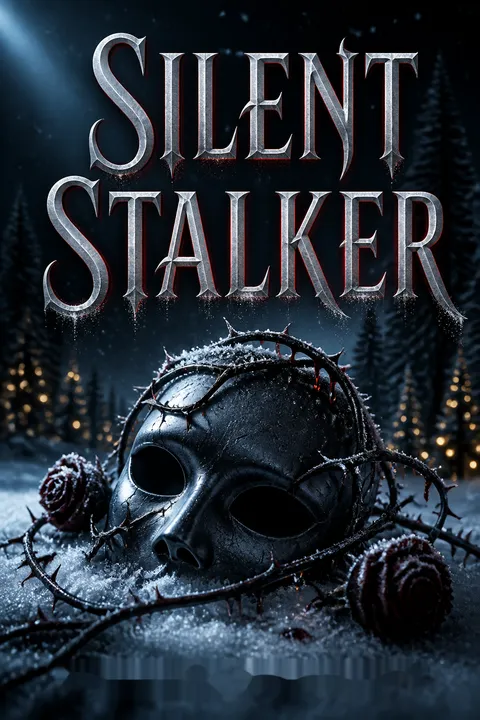

Plot Summary
Homecoming and First Blood
Forensic psychologist Clara Hart returns to her snowy hometown, Evergreen Falls, to care for her ailing father. Her homecoming is shattered when a gruesome murder rocks the local care home: a body staged beneath a pear tree, surrounded by pears and a dead partridge, echoing the "Twelve Days of Christmas." Clara's professional instincts are immediately triggered, and she's drawn into the investigation by her childhood friend, Detective James. The killer's meticulous staging and surgical precision hint at a mind as brilliant as it is disturbed. As the town reels, Clara feels the old darkness inside her stir, both repulsed and fascinated by the artistry of the crime. The first day of Christmas has begun, and the countdown to terror is on.
The Watcher in the Dark
Silas Knight, enigmatic and charming, watches Clara from the shadows, his obsession growing. He's not just a voyeur—he's orchestrating the murders, crafting each scene as a message to her. Through hacked devices, he witnesses Clara's private moments, her secret desires for danger and masked men. Silas sees himself as her salvation, the only one who truly understands her darkness. As he plans his next move, he's both predator and worshipper, determined to draw Clara into his web. The line between hunter and hunted blurs, and the game becomes as much about seduction as it is about death.
Patterns and Paranoia
Clara joins the police investigation, her expertise invaluable as the killer's pattern emerges. Each murder mirrors a verse from the carol, escalating in complexity and spectacle. The media dubs the killer "The Christmas Reaper," fueling public panic and the killer's ego. Clara's analytical mind races to keep up, but she's haunted by the killer's artistry and the sense that the crimes are meant for her. As the body count rises, so does her unease—she can't shake the feeling of being watched, of the killer's gaze lingering on her every move.
Collision of Fates
Clara and Silas "accidentally" meet at a café, a collision orchestrated by him. Their chemistry is immediate and electric, each sensing the other's hidden depths. Silas is charming, attentive, and just dangerous enough to intrigue Clara. He invites her to dinner, and she accepts, drawn to the darkness she senses beneath his polished exterior. The stage is set for a dance of seduction and suspicion, as both conceal their true intentions.
Temptation's First Taste
Preparing for her date, Clara is torn between excitement and dread. Silas arrives, every detail calculated to disarm her. Their dinner is a charged game of questions and confessions, each probing the other's psyche. The attraction is undeniable, and after dinner, passion erupts. Silas pushes Clara's boundaries, awakening desires she's long suppressed. She surrenders to him, both terrified and exhilarated by the loss of control. The night leaves her shaken, marked by his touch, and craving more.
Dinner with the Devil
Over a second, more intimate dinner, Clara and Silas's connection intensifies. Their conversation dances around darkness—Silas hints at his true nature, and Clara confesses her fascination with killers and forbidden fantasies. The line between danger and desire blurs further as Silas asserts his dominance, and Clara finds herself willingly submitting. Their physical connection is raw and consuming, but beneath it simmers a deeper, more dangerous bond.
The Christmas Reaper Emerges
The killer's spree accelerates: two turtle doves, three French hens, four calling birds—each scene more elaborate and public. The town is gripped by fear, and the media frenzy grows. Clara's profile of the killer sharpens, but she's unsettled by the personal nature of the crimes. The victims begin to resemble her, and the killer's messages feel increasingly intimate. The investigation stalls as the killer stays one step ahead, and Clara's obsession with both the case and Silas deepens.
Messages and Macabre Gifts
Silas begins sending Clara cryptic messages and symbolic gifts—flowers, jewelry, and tokens echoing the murders. Each is a twisted love letter, designed to both seduce and implicate. Clara is both repelled and fascinated, unable to resist the pull of the killer's attention. The gifts become more personal, and Clara realizes she's the intended audience for the killer's performance. The psychological game intensifies, and her own darkness threatens to consume her.
The Songbird Connection
As the murders continue, Clara recognizes echoes of an unsolved case from her childhood—the Songbird Killer, who staged victims in musical tableaux. The similarities are chilling: ritual, artistry, and a fixation on Clara herself. Old wounds reopen as she confronts the possibility that the Christmas Reaper is either the same killer or a devoted student. The investigation becomes personal, and Clara's grip on her own sanity begins to slip.
Seduction and Suspicion
Clara's relationship with Silas grows more intense, but so do her suspicions. Clues begin to point toward him—his knowledge of the case, his uncanny ability to anticipate her needs, the gifts that match the murders. Yet, every time she tries to pull away, Silas draws her back with a mix of tenderness and dominance. The police close in, and Clara is forced to choose between her professional duty and her forbidden desire.
Five Golden Rings
The fifth murder—five golden rings—provides a breakthrough. Forensic evidence links the crime scenes, and the police narrow their list of suspects. Clara's own hair is found at a scene, implicating her by association. James grows suspicious of her relationship with Silas, and the investigation turns inward. Clara is caught between protecting Silas and saving herself, her loyalties and identity fracturing under the strain.
The Predator's Ritual
Silas's ritualistic killings are revealed as both punishment and performance—each victim chosen for hidden sins, each scene a message to Clara. He confesses his past, his childhood trauma, and his compulsion to kill. Clara, drawn by both empathy and desire, finds herself complicit—she understands his need for control, his artistry, and the justice he claims to deliver. Their bond deepens, forged in shared darkness.
Surrender and Revelation
The truth can no longer be denied: Silas is the Christmas Reaper, and Clara is both his muse and his accomplice. In a night of brutal honesty and passion, Clara surrenders completely, embracing the darkness within herself. She confesses her own fantasies, her attraction to danger, and her willingness to cross the line. Silas marks her as his, and together they plan their escape from the tightening noose of the investigation.
Boundaries Broken
As the police close in, Silas and Clara execute a daring escape, leaving behind a trail of false leads. The final murders are staged as both a farewell and a challenge to the authorities. Clara fakes a breakdown, using her professional reputation to buy time. Together, they disappear into the storm, leaving Evergreen Falls in chaos and the case unsolved.
The Gift of Darkness
In a remote mountain cabin, Silas and Clara begin a new life. The isolation is both sanctuary and prison, forcing them to confront the reality of their choices. Their relationship deepens, blending domestic intimacy with dark rituals. Clara finds peace in submission, and Silas discovers a capacity for tenderness he never knew he possessed. Together, they create their own twisted version of happiness.
The Seventh Day's Omen
On Christmas morning, Clara awakens to a world transformed. The cabin is warm, the snow falls softly, and Silas prepares breakfast with loving care. The gifts he gives her—both tender and depraved—symbolize their new life. Clara accepts her role as both lover and accomplice, embracing the darkness that once terrified her. The past is left behind, and a new tradition is born.
The Eighth Day's Choice
As winter deepens, Silas proposes to Clara in a moment both tender and perverse. The ring is black diamond, the promise one of eternal partnership in darkness. Clara accepts, sealing their bond with both love and blood. Their union is a rejection of society's rules, a celebration of the forbidden. Together, they vow to hunt those who deserve it, becoming judge, jury, and executioner.
The Dance of Death
Months later, Silas and Clara stalk their first target as a team—a predator who escaped justice. Their methods are precise, their roles perfectly synchronized. The kill is both punishment and pleasure, a dance of death that cements their partnership. The thrill of the hunt, the intimacy of shared violence, binds them closer than ever. They are no longer prey or predator, but equals in the darkness.
The Final Confession
In the aftermath of their first kill together, Silas finally confesses his love for Clara. The words are hard-won, spoken in the language of violence and devotion. Clara reciprocates, her own darkness fully embraced. Together, they find a twisted peace, knowing that only in each other can they be truly seen and accepted. Their love is monstrous, but it is theirs alone.
Escape into the Storm
As law enforcement closes in, Silas and Clara execute their final escape. Through snow and storm, they outwit their pursuers, leaving behind a world that can never understand them. The past is erased, and a new future beckons—a life lived on their own terms, in the shadows, together.
The Cabin in the Snow
In their mountain refuge, Silas and Clara shed the last remnants of their old selves. The cabin becomes both home and hunting ground, a place where they can indulge every desire without fear or judgment. Their rituals grow more elaborate, their bond deeper. The outside world fades, replaced by a reality of their own making.
Christmas Morning
On their first Christmas together, Silas and Clara celebrate with gifts, food, and forbidden pleasure. The day is a testament to their new life—a blend of domesticity and depravity, love and violence. For the first time, Clara feels truly at home, and Silas discovers the joy of giving as well as taking. Their future is uncertain, but their commitment to each other is absolute.
Partners in Darkness
As the months pass, Silas and Clara become a team, hunting those who escape justice. Their methods are ruthless, their standards absolute. Each kill is both a service and a sacrament, a way to channel their darkness into something they can justify. Together, they become legends—ghosts in the night, feared by the guilty and unseen by the innocent.
The New Hunt
The story ends as it began: with a hunt, a kill, and the promise of more to come. Silas and Clara are no longer running from their darkness—they have become its masters. Their love is forged in blood and shadow, unbreakable and eternal. The world may never understand them, but in each other, they have found everything they need.
Analysis
Modern darkness, desire, and the search for meaningSilent Stalker is a provocative exploration of the thin line between good and evil, desire and destruction. In a world where justice is often elusive and trauma shapes identity, the novel asks what it means to truly see—and be seen—by another. Clara and Silas are both products and perpetrators of violence, their love story a testament to the power of acceptance and the dangers of unchecked obsession. The book challenges readers to confront their own fascination with darkness, to question the boundaries of morality, and to consider the ways in which love can both redeem and corrupt. Ultimately, Silent Stalker is less a whodunit than a meditation on complicity, agency, and the seductive allure of the forbidden. It is a story for our time: messy, ambiguous, and unafraid to stare into the abyss.
Characters
Clara Hart
Clara is a forensic psychologist whose return to her hometown triggers a confrontation with both external evil and her own inner shadows. Scarred by childhood trauma and a lifetime of studying killers, she is both repelled and fascinated by violence. Her relationship with Silas awakens desires she's long suppressed—submission, danger, and the thrill of being truly seen. As the murders escalate, Clara's professional detachment crumbles, and she becomes both the hunter and the hunted. Her journey is one of self-discovery, as she moves from analyst to accomplice, ultimately embracing the darkness within and finding liberation in surrender. Her bond with Silas is both her undoing and her salvation, transforming her from victim to partner in crime.
Silas Knight
Silas is the Christmas Reaper—a brilliant, methodical killer who stages his murders as elaborate performances. Traumatized by neglect and abuse, he channels his pain into control, ritual, and violence. His obsession with Clara is both romantic and pathological; he sees her as his equal, his muse, and his salvation. Silas is a master manipulator, able to charm, seduce, and terrify in equal measure. His killings are both punishment and courtship, each scene crafted to draw Clara closer. Beneath his cold exterior lies a desperate need for connection, which only Clara can fulfill. Through her, he discovers a capacity for tenderness and love, but his darkness remains ever-present, shaping their shared destiny.
James Marsden
James is Clara's childhood friend and the lead detective on the Christmas Reaper case. Dependable, honest, and deeply caring, he represents safety and normalcy—the life Clara could have had. His feelings for Clara are complicated by professional respect and unrequited love. As the investigation progresses, James becomes increasingly suspicious of Silas and conflicted about Clara's involvement. His inability to save her from herself is both his tragedy and his strength. James is the moral center of the story, a reminder of what is lost when one embraces the darkness.
Clara's Father
Once a strong presence in Clara's life, her father is now a shell, lost to dementia and regret. His decline mirrors Clara's own unraveling, and his absence is both a wound and a catalyst. The unresolved trauma of her mother's murder and her father's subsequent neglect shape Clara's psyche, driving her toward both danger and understanding. He is a symbol of the past that must be left behind for Clara to fully embrace her new identity.
Sarah Matthews
Sarah is one of the Christmas Reaper's victims, chosen for her hidden crimes beneath a veneer of respectability. Her murder is both punishment and performance, a message to Clara about the nature of justice and the masks people wear. Sarah represents the hypocrisy that Silas despises and the kind of target he and Clara will continue to hunt.
Marcus (Epilogue Target)
Marcus is a serial abuser who has escaped legal consequences, making him the perfect prey for Silas and Clara's new brand of justice. His death is both a catharsis and a warning—a demonstration of the couple's power and purpose. Marcus's fate cements Clara's transformation from analyst to avenger.
The Songbird Killer (Past Case)
The unsolved Songbird murders haunt Clara, shaping her fascination with killers and her sense of unfinished business. The parallels between the Songbird Killer and the Christmas Reaper force Clara to confront her own history and the cyclical nature of violence. This figure is both a literal and symbolic shadow, representing the darkness that can never be fully escaped.
The Victims
Each victim in the Christmas Reaper's spree is chosen for their hidden sins, their deaths staged as both punishment and art. They are not merely casualties, but symbols—each one a reflection of society's failures and the killer's warped sense of justice. Their stories intertwine with Clara's, forcing her to question the nature of good and evil.
The Town of Evergreen Falls
The snowbound town is both sanctuary and prison, its festive facade masking a roiling undercurrent of fear and suspicion. Evergreen Falls is a microcosm of the larger world—a place where darkness lurks beneath the surface, and where the line between cheer and terror is razor-thin. The town's isolation amplifies the sense of claustrophobia and inevitability.
The Mask
The various masks worn by Silas—Ghostface, Ghost, and others—are more than disguises. They are symbols of anonymity, danger, and forbidden longing. For Clara, the mask is both a trigger and a release, allowing her to surrender control and embrace her darkest fantasies. For Silas, it is a shield and a weapon, a way to become both more and less than human.
Plot Devices
Dual Perspective and Unreliable Narration
The story unfolds through alternating chapters from Clara and Silas's perspectives, allowing readers to inhabit both the hunter and the hunted. This duality creates tension and ambiguity, as each character's version of events is colored by desire, fear, and self-deception. The unreliable narration heightens suspense, forcing readers to question what is real and what is fantasy.
Ritualistic Symbolism and Foreshadowing
The killer's use of the "Twelve Days of Christmas" as a blueprint for murder is both a plot engine and a symbolic device. Each crime scene is meticulously staged, foreshadowing the next and deepening the psychological game. The carol becomes a countdown, a prophecy of doom, and a twisted love letter to Clara. The repetition of motifs—masks, gifts, music—reinforces the sense of inevitability and fate.
Psychological Cat-and-Mouse
The core of the narrative is the psychological dance between Clara and Silas. Each tries to outwit, seduce, and dominate the other, with shifting power dynamics and constant reversals. The investigation becomes a metaphor for their relationship—each clue, each confession, a step closer to surrender or destruction. The tension between desire and danger is ever-present, driving both plot and character development.
Trauma and Transformation
Both protagonists are shaped by childhood trauma—Clara by her mother's murder and her father's neglect, Silas by abuse and abandonment. Their journey is one of transformation, as they move from victimhood to agency, from repression to acceptance. The story explores the ways in which trauma can both destroy and create, forging new identities in the crucible of pain.
Moral Ambiguity and Justice
The novel interrogates the nature of justice—who deserves punishment, and who has the right to deliver it. Silas's killings are both monstrous and, in some cases, justified; Clara's complicity forces readers to question their own boundaries. The failure of the legal system is a recurring theme, and the couple's turn to vigilantism is both a critique and an embrace of moral ambiguity.
Erotic Power Exchange
The sexual relationship between Clara and Silas is central to the narrative, blending dominance, submission, and taboo. Their encounters are both a release and a reenactment of trauma, a way to reclaim power and forge connection. The eroticism is inseparable from the violence, each amplifying the other in a feedback loop of pleasure and pain.
Download PDF
Download EPUB
.epub digital book format is ideal for reading ebooks on phones, tablets, and e-readers.








































