
Plot Summary
Midnight Visitor at Silver Lining
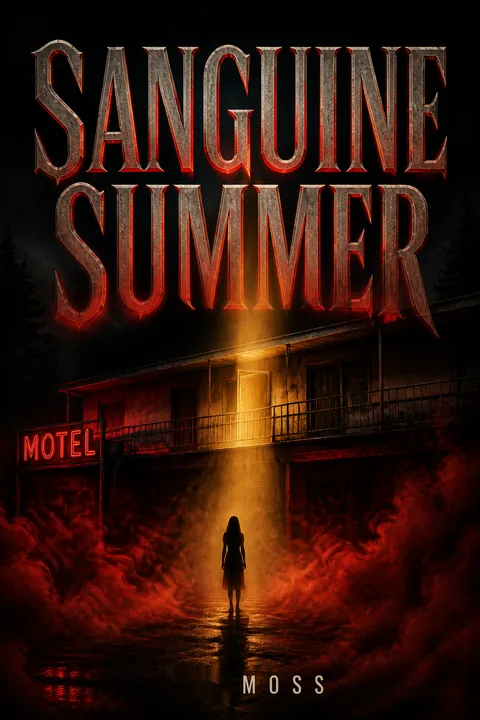
Ned Phillips, the kindly owner of the Silver Lining Motel, is used to desperate travelers, but nothing prepares him for the pale, hypnotic woman who arrives late one June night. She insists on Room Ten, already occupied, and with a few words and a mesmerizing gaze, she bends Ned's will. When she returns, her mouth is smeared with blood, and the room is suddenly vacant. Ned, under her thrall, forgets the horror and only remembers her gratitude. The vampire, Carissa, has claimed her lair, and the Silver Lining Motel is no longer just a haven for the lost, but a hunting ground for something ancient and hungry.
Ruth's Obsession Begins
Ruth Sheridan, a bright but lonely cashier, finds herself drawn to a customer—Zachary Holcomb—whose brief, mundane interaction at her register leaves a deep impression. She begins to notice his blue Subaru everywhere, convinced fate is at work. Ruth's curiosity turns to obsession as she follows him, records his license plate, and stakes out his workplace and home. Her fixation is fueled by a longing for connection and meaning, and she starts to blur the line between innocent interest and dangerous stalking, setting her on a collision course with secrets she can't imagine.
Dario's Lonely Hustle
Dario Caruso, a young sex worker living at the Silver Lining, spends his birthday with clients and cash, but the emptiness gnaws at him. His only real joy comes from a late-night call with his younger sister, RiRi, who is his anchor in a world of transactional relationships. Dario's sense of being watched grows, and a mysterious presence in the motel's shadows unsettles him. The feeling of being seen—by something not quite human—foreshadows the entanglement that will soon upend his life.
Blood on the Door
As the vampire settles in, the town is rocked by the discovery of two mutilated young lovers, their bodies drained of blood. The news ripples through Ruth's world, feeding her roommate Shaylee's true crime obsession and Ruth's own anxieties. Meanwhile, Dario's sense of unease intensifies as he glimpses the vampire outside his room. The Silver Lining Motel, once a refuge, is now a place of lurking death, and the boundaries between predator and prey begin to blur for everyone within its orbit.
The Vampire's Bargain
After Dario survives a violent assault by a client, Carissa intervenes, killing the attacker and moving Dario to a new room. She offers him a deal: money and her blood, which brings blissful oblivion, in exchange for his help. Dario, desperate for escape and comfort, accepts. Carissa's blood is addictive, and Dario is drawn deeper into her world, becoming her accomplice in disposing of bodies and luring new victims. The motel's owner, Ned, is also under her spell, ensuring her secrecy and safety.
Stalking and Secrets
Ruth's obsession with Zachary leads her to dig through his trash, uncovering his identity and family life. She stalks him online and in person, convinced they are connected by fate. When Zachary confronts her at work, calling her a stalker, Ruth is both humiliated and perversely thrilled—he remembered her. Her fixation grows, even as the town reels from more unexplained deaths. Ruth's need for meaning and belonging drives her to ever riskier behavior, blinding her to the dangers gathering at the Silver Lining.
Club Nights and Predators
Seeking escape, Dario visits a queer club, hoping for real connection. Instead, he finds himself targeted by a predatory client, Ian, who tries to kill him. Carissa intervenes, saving Dario but binding him further to her service. She reveals her true nature and her need for secrecy, and Dario becomes complicit in her crimes. The lines between victim and collaborator blur, as Dario's dependence on Carissa's blood and money deepens, and his isolation from his family and former life grows.
The First Victims
Carissa's feeding continues, and Dario is tasked with helping her dispose of bodies—victims from the motel and beyond. The work is grisly and soul-crushing, but the money and the blood keep Dario compliant. Ned, the motel owner, is a hollow shell, his will eroded by Carissa's power. Ruth's investigation brings her closer to the motel's secrets, even as her own life unravels. The Silver Lining becomes a nexus of death, addiction, and secrecy, with Carissa at its center.
Family Ties and Betrayals
Dario's attempt to reconnect with his sister is thwarted by their father, who forbids contact, disgusted by Dario's lifestyle. The pain of rejection drives Dario further into Carissa's orbit. Meanwhile, Carissa's own family history is revealed: she was sold to a vampire as a child, betrayed by her father and abandoned by her sister. Seeking revenge, Carissa forces Dario to help her confront her aging, senile father and estranged sister, leading to a bloody family reckoning that leaves Dario complicit in murder and haunted by guilt.
Carissa's True Nature
Carissa's vengeance against her family is brutal and cathartic, but it leaves her hollow. Dario, traumatized by the violence and his own role in it, tries to break free, but Carissa's hold—through addiction, money, and manipulation—is too strong. Ruth, meanwhile, is spiraling, her obsession with Zachary leading to a disastrous confrontation. The true nature of the monster at the heart of the Silver Lining is revealed: Carissa is not just a predator, but a product of betrayal, loneliness, and centuries of violence.
Ruth's Descent
Ruth's confrontation with Zachary ends in rejection and humiliation. Her obsession, once a source of hope, becomes a source of pain and self-loathing. She lashes out, destroying mementos of her father and questioning her own sanity. Her mother's coldness and the revelation of her father's infidelity compound her sense of isolation. As the vampire's influence spreads, Ruth is drawn inexorably toward the motel and the darkness within.
The Motel's Dark Pact
Dario, now fully enmeshed in Carissa's world, is forced to lure his regular client, Zachary, to the motel as a sacrifice. Ruth, following her obsession, arrives at the Silver Lining just as the trap is sprung. Ned, the owner, is driven to murder by Carissa's power, killing Zachary's wife and spiraling into despair. The motel becomes a prison, with Carissa as warden and everyone else as either victim or accomplice. The web of secrets, lies, and blood tightens around them all.
Blood, Money, and Guilt
Dario's dependence on Carissa's blood is now total, and he is wracked with guilt over the lives lost and the innocence destroyed. Ruth, captured and tied up in the motel, faces the reality of the monster she has been circling. Zachary, broken and grieving, is forced to confront his own failures as a husband and father. The survivors are bound together by trauma, addiction, and the desperate hope for escape, even as Carissa prepares to complete Dario's transformation.
The Family Reunion
Carissa's long-awaited confrontation with her father and sister ends in carnage. She kills them both, unable to find the closure she sought. Dario, forced to witness and participate, is left shattered. The motel is now a mausoleum of secrets and corpses, and Carissa's hunger is undiminished. Ruth, meanwhile, is forced to confront her own family's failures and her complicity in the unfolding horror. The past and present collide in a storm of blood and regret.
The Dead Don't Rest
Dario's transformation into a vampire is completed through a ritual of blood and suffering. He is now both victim and monster, cursed with hunger and immortality. Carissa, triumphant but empty, seeks to bind him to her forever. Ruth, Zachary, and the others are caught in the crossfire, their fates hanging by a thread. The Silver Lining Motel, once a place of refuge, is now a tomb for the living and the dead alike.
Becoming the Monster
As dawn approaches, Dario is forced to feed on Zachary, completing his transformation. The police arrive, but Carissa's power is overwhelming, and violence erupts. Ruth, resourceful and desperate, manages to free herself and the others, but not before more blood is spilled. Carissa is finally confronted by a force even older and darker than herself—her own maker—Grégoire Baudelaire, who drags her into the void. Dario, left behind, must reckon with what he has become and what he has lost.
The Final Confrontation
With Carissa gone, the survivors stagger into the daylight, forever changed. Ned, the motel owner, takes his own life, unable to live with his guilt. Ruth, Zachary, and Dario escape, but the scars—physical and emotional—remain. Ruth quits her job, seeking a new beginning. Zachary returns to his children, haunted by loss. Dario, now a vampire, flees into the night, searching for meaning in his cursed existence. The Silver Lining Motel is left abandoned, a monument to the summer's sanguine horrors.
Sanguine Summer's End
In the aftermath, Ruth and Dario each try to rebuild their lives. Ruth finds solace in new relationships and the possibility of healing, but the trauma lingers. Dario, estranged from his humanity, becomes a wandering predator, his hunger and loneliness unending. The cycle of violence and loss continues, as new victims are claimed and old wounds refuse to heal. The sanguine summer ends, but its legacy of blood and longing endures.
Analysis
Abe Moss's Sanguine Summer is a modern gothic horror that uses the vampire myth to explore the corrosive effects of trauma, addiction, and isolation. The novel's central metaphor—blood as both sustenance and curse—serves as a lens for examining the ways in which people are bound by need, guilt, and longing. The Silver Lining Motel, with its promise of refuge, becomes a crucible for the characters' darkest impulses and most desperate hopes. Through its interwoven narratives, the book interrogates the nature of family, the hunger for connection, and the cost of survival in a world where kindness is easily corrupted. The characters' psychological complexity—especially Carissa's tragic monstrosity, Dario's reluctant complicity, and Ruth's obsessive yearning—invites empathy even as it unsettles. The novel's conclusion, with its survivors haunted and its monsters unvanquished, suggests that evil is not an external force but a legacy of wounds passed down, transformed, and never fully healed. In the end, Sanguine Summer is a meditation on the impossibility of closure, the persistence of longing, and the thin, sanguine line between hope and horror.
Review Summary
Sanguine Summer receives mostly positive reviews, praised for its fresh take on vampire horror without romanticization. Readers appreciate the well-developed characters, especially Dario and Ruth, and the intertwining storylines. The book is noted for its slow build-up, atmospheric writing, and satisfying conclusion. Some critics find the pacing slow and desire more backstory for the vampire, Carissa. Overall, reviewers commend the novel for its gore, psychological tension, and departure from typical vampire tropes.
People Also Read
Characters
Carissa Clarke
Carissa is the vampire at the heart of the story—a creature of immense power, hunger, and loneliness. Sold into vampirism by her father as a child, Carissa is both a victim and a monster, driven by a need for vengeance and connection. Her ability to mesmerize and control others makes her both seductive and terrifying. Psychoanalytically, Carissa embodies the trauma of betrayal and abandonment, seeking to recreate family through domination and destruction. Her relationship with Dario is complex: she is both his maker and his captor, craving loyalty and love but only able to inspire fear and addiction. Carissa's arc is one of tragic self-destruction, as her quest for closure only deepens her isolation.
Dario Caruso
Dario is a young sex worker whose life is defined by transactional relationships and a desperate need for connection. His bond with his sister, RiRi, is his only source of genuine love. Drawn into Carissa's world through violence and addiction, Dario becomes her accomplice, luring victims and disposing of bodies in exchange for money and the bliss of her blood. His transformation into a vampire is both a curse and a release, freeing him from human pain but dooming him to eternal hunger and guilt. Dario's psychological journey is one of self-loathing, complicity, and the search for redemption—a struggle between the monster he becomes and the brother he longs to remain.
Ruth Sheridan
Ruth is a cashier whose fixation on Zachary Holcomb becomes the engine of her unraveling. Haunted by her father's death and her mother's coldness, Ruth seeks meaning and connection in the lives of strangers. Her obsession leads her into dangerous territory, blurring the line between investigator and stalker. Ruth's arc is one of descent and recovery: she is forced to confront her own complicity, her family's secrets, and the reality of evil. Her resilience and empathy allow her to survive, but she is forever changed by the darkness she encounters. Ruth's psychological portrait is one of longing, self-doubt, and the painful search for belonging.
Ned Phillips
Ned is the owner of the Silver Lining Motel, a man who prides himself on offering refuge to the lost. Under Carissa's thrall, Ned becomes a hollow shell, forced to commit murder and cover up atrocities. His psychological collapse is a study in helplessness and guilt, as his kindness is twisted into complicity. Ned's tragic end—suicide—underscores the story's themes of powerlessness and the cost of evil. He is both a victim and an enabler, a symbol of how good intentions can be corrupted by forces beyond one's control.
Zachary Holcomb
Zachary is the object of Ruth's obsession—a married man leading a double life. His infidelity and secrets make him both sympathetic and culpable. When he is lured to the motel and his wife is murdered, Zachary is forced to confront the consequences of his actions. His psychological arc is one of guilt, grief, and the struggle to reclaim his role as a father. Zachary's relationship with Ruth is fraught, oscillating between anger, dependence, and a shared sense of loss. He is a mirror for Ruth's own longing and for the destructive power of secrets.
RiRi (Arianna Caruso)
RiRi is Dario's younger sister, the only person he truly loves and trusts. Her presence grounds Dario, offering him a glimpse of hope and normalcy. When their father forbids contact, RiRi becomes a symbol of everything Dario stands to lose. Her own journey—coping with trauma, loss, and the supernatural—parallels Dario's, and her forgiveness is crucial to his fragile sense of self. RiRi represents innocence endangered, but also the possibility of healing and acceptance.
Kimberly Clarke
Kimberly is Carissa's sister, left behind when Carissa was sold to a vampire. Her guilt and fear shape her relationship with Carissa, culminating in a violent family reunion. Kimberly's attempts to protect her own family are ultimately futile, and her death at Carissa's hands is both a punishment and a release. She embodies the theme of family as both sanctuary and prison, and her arc is one of regret and resignation.
Paul
Paul is Kimberly's husband, caught in the crossfire of Carissa's vengeance. His captivity and eventual death highlight the indiscriminate nature of violence and the cost of loyalty. Paul's pleas for mercy and his attempts to reason with Dario underscore the moral ambiguity of survival. He is a symbol of the ordinary lives destroyed by the machinations of monsters, both human and supernatural.
Shaylee
Shaylee is Ruth's roommate, a horror and true crime junkie whose fascination with darkness is both comic relief and foreshadowing. Her kindness and support offer Ruth a lifeline, even as Ruth's secrets threaten to overwhelm her. Shaylee's presence highlights the thin line between fascination and danger, and her empathy is a counterpoint to Ruth's isolation.
Grégoire Baudelaire (The Darkness)
Grégoire is the shadowy force that ultimately reclaims Carissa, a being of immense age and power. He represents the inescapable past, the trauma that cannot be outrun. His intervention is both a deus ex machina and a reminder that evil begets evil, and that the cycle of violence is never truly broken. Grégoire's presence is felt more than seen, a looming threat that shapes the destinies of all the characters.
Plot Devices
The Silver Lining Motel
The motel is both setting and symbol—a place where the lost seek refuge and instead find danger. Its isolation and transience make it the perfect hunting ground for Carissa, and its rooms become stages for violence, addiction, and betrayal. The motel's name is ironic: there is no silver lining, only the illusion of safety. The structure of the novel, with its shifting perspectives and interlocking stories, mirrors the motel's labyrinthine corridors, where every door hides a secret and every guest is both hunter and hunted.
Blood as Addiction and Currency
Carissa's blood is not just sustenance, but a drug—offering bliss, escape, and dependence. Dario's addiction to her blood is both literal and metaphorical, representing the allure of oblivion and the cost of complicity. Blood is also currency: Carissa pays Dario in both cash and blood, binding him to her service. The motif of blood underscores the novel's themes of hunger, desire, and the price of survival.
Obsession and Surveillance
Ruth's obsession with Zachary is mirrored by Carissa's predation and Dario's complicity. The act of watching—through windows, cameras, and social media—creates a web of surveillance that entraps both victim and voyeur. The novel uses shifting points of view and close third-person narration to immerse the reader in the characters' fixations, blurring the line between empathy and intrusion. Foreshadowing is achieved through repeated motifs of eyes, windows, and mirrors, signaling the collapse of boundaries between self and other.
Family as Wound and Weapon
The novel's central conflicts are rooted in family: Carissa's betrayal, Dario's rejection, Ruth's longing. Family is a source of both comfort and pain, a site of loyalty and violence. The narrative structure interweaves past and present, revealing how old wounds shape new horrors. The climactic family reunion is both catharsis and catastrophe, exposing the impossibility of closure and the persistence of trauma.
Transformation and Becoming
Dario's transformation into a vampire is both a literal and psychological journey, mirroring the process of addiction, complicity, and self-destruction. The novel uses the vampire myth to explore questions of identity, agency, and the possibility of redemption. The process of becoming a monster is gradual, marked by pain, hunger, and the loss of self. The final confrontation with Carissa and her maker is both a battle for survival and a reckoning with the past.
About the Author
Other books by Abe Moss

Download PDF
Download EPUB
.epub digital book format is ideal for reading ebooks on phones, tablets, and e-readers.








































