
Key Takeaways
1. Confronting Danger: The Path to Healing and Growth
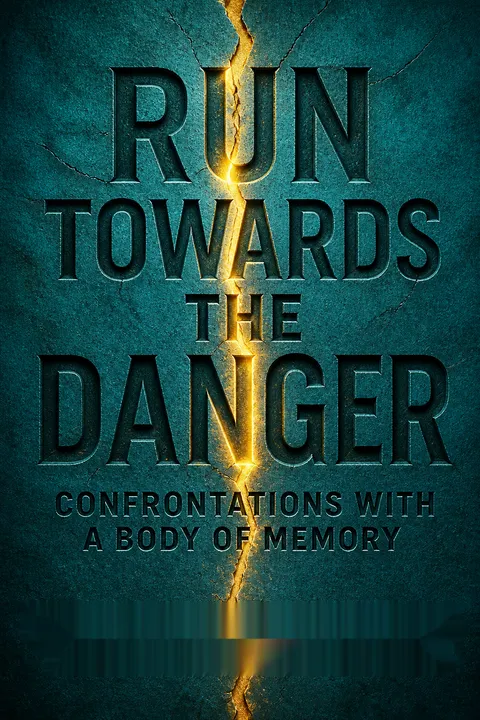
If you remember only one thing from this meeting, remember this: run towards the danger.
Embracing discomfort. The central philosophy of "run towards the danger" emerged from Polley's recovery from post-concussive syndrome. Her specialist, Dr. Michael Collins, challenged her to confront activities that triggered symptoms, rather than avoid them, to retrain her brain. This paradigm shift became an incantation for addressing life's deeper challenges.
Challenging narratives. This principle extended beyond physical recovery to her emotional and psychological life. It meant actively addressing and questioning her own long-held narratives, especially those she had avoided or left untold. By leaning into these "dangerous stories," she found that their power over her diminished, making them "lighter and easier to carry."
Transformative power. The act of telling these difficult stories, even when painful, became a form of running towards the danger itself. This confrontation allowed her to shift her relationship with past traumas, transforming their meaning in the context of an "ever-changing present" and fostering a reciprocal dialogue between her past and adult experiences.
2. Memory's Labyrinth: Trauma, Truth, and Self-Deception
So many of us who have been sexually assaulted know that remembering the truth, knowing the truth, and telling the truth about it is anything but simple.
The fallibility of memory. Polley's experiences highlight how trauma can profoundly distort and suppress memory. Her own "recovered memory" of a sexual assault, only recalled years later after a prompt from her siblings, demonstrates how the brain can hide painful events, creating "dark caverns" where crucial details reside, inaccessible to conscious recall.
Inconsistencies and credibility. The legal system's rigid demand for "the whole truth and nothing but the truth" often clashes with the erratic nature of trauma memory. Polley observed how inconsistencies in victims' testimonies, or their "friendly" post-assault behavior, were used to undermine their credibility, even when the core truth of the assault was believed by those close to them.
Self-deception and normalization. Polley herself admitted to omitting details, being "ingratiating" towards her assailant, and even making jokes about the experience for years. This self-deception served to normalize a terrible situation, protect herself from shame, and avoid confronting the full impact of the trauma, illustrating how individuals adapt to cope with unbearable realities.
3. The Child Actor's Burden: Exploitation and Lost Innocence
I was, by the age of nine, desperate to be a “normal kid.”
Toxic environment. Polley's childhood acting career, particularly on "The Adventures of Baron Munchausen" and "Road to Avonlea," exposed her to a "toxic concoction of coddling and neglect." She endured:
- Long, grueling hours, often exceeding union limits.
- Dangerous stunts with explosives and freezing water.
- Emotional exploitation, like being made to cry about her recently deceased mother for a scene.
- Public humiliation and constant scrutiny.
Erosion of boundaries. The film sets blurred the lines between childhood and adulthood, with adults making inappropriate comments, failing to protect her, and prioritizing production demands over her well-being. This led to a profound "lack of trust in my parents" and a deep-seated resentment towards her own success.
Long-term psychological impact. The constant pressure and lack of agency left her with lasting scars:
- Severe anxiety and stage fright.
- A visible twitch in her eye.
- Suicidal ideation at a young age.
- A feeling of being "used" and a lifelong aversion to professional obligations that felt like a "proxy noose."
4. Deconstructing Genius: Artistry vs. Recklessness
For so long, a certain glamour has come along with this single-minded pursuit of a great film at any cost.
The "mad genius" myth. Polley critiques the pervasive "mad genius" archetype in the film industry, particularly through her experience with director Terry Gilliam. She observed how his "erratic flashes of brilliance" were often excused, even celebrated, despite the chaos and danger they created on set.
Abdication of responsibility. Gilliam's philosophy, "I will sacrifice myself or anyone else for the movie. It will last. We'll all be dust," exemplified a willful disregard for the well-being of his collaborators, especially children. Polley initially absolved him, blaming her parents, but later recognized this as a symptom of a broader cultural phenomenon that allows privileged white men to operate without accountability in the name of art.
Consequences of unchecked power. The unchecked power of such directors leads to:
- Unsafe working conditions.
- Emotional and physical trauma for cast and crew.
- A culture where "false eccentricity and temper" are adopted by aspiring filmmakers.
- A "fetishization" of irresponsibility that disproportionately impacts vulnerable individuals, like child actors.
5. Justice Undone: The Ordeal of Sexual Assault Survivors
The bulk of my rape trauma is not the result of the sexual assault itself but of the brutality of the legal system.
The "second rape." Polley's analysis of the Jian Ghomeshi trial reveals the brutalizing nature of the criminal justice system for sexual assault complainants. The focus often shifts from the alleged assault to the victim's credibility, subjecting them to intense scrutiny and ridicule, effectively causing a "second rape" through the legal process.
Unrealistic expectations of victims. The court system demands an "ideal victim" whose memory is flawless and whose post-assault behavior is perfectly consistent with societal expectations of trauma. This ignores the complex psychological responses to sexual harm, such as:
- Recovered or suppressed memories.
- Attempts to normalize the situation or appease the attacker.
- Shame or embarrassment leading to omissions in testimony.
Systemic failures. Despite progressive "rape shield laws," Polley's conversations with legal professionals revealed a widespread belief that sexual assault cases are incredibly difficult to win and often detrimental to the complainant. This systemic failure discourages victims from coming forward, leaving them to bear their trauma in silence rather than face public evisceration.
6. Motherhood's Mirror: Healing Generational Wounds
I didn’t know how much I missed my mother until I was pregnant. I say that I didn’t know how angry I was at her for dying.
Confronting maternal loss. Polley's journey to motherhood, marked by fertility struggles, a miscarriage, and a high-risk pregnancy, became a profound catalyst for confronting the unresolved grief and anger over her own mother's early death. The intense desire to have a child, coupled with the physical and emotional challenges, brought her mother's absence into sharp focus.
The "incubator" of care. Her high-risk pregnancy, involving placenta previa and severe endometriosis, forced her into a hospital environment that, paradoxically, provided the "incubator that finished off the work that my mother left undone." The compassionate, holistic care from doctors and nurses, who prioritized her mental and physical well-being, offered a model of nurturing she had longed for.
Redefining maternal legacy. Through her own experience of mothering, Polley gained a new perspective on her mother's life and legacy. She realized that despite her mother's early death, the "eleven years with my mother was not very much, not nearly enough, to knowing that to feel adored and cherished by a mother who was full of warmth and joy is quite a lot, actually." This allowed her to appreciate the "fully formed" aspects of herself and her mother's influence.
7. The Unseen Scars: Invisible Illness and Societal Doubt
I’ve had a lot of illnesses and physical problems, many of them invisible: endometriosis, scoliosis, placenta previa, and now a concussion. I think it’s starting to get on people’s nerves and make them suspicious.
The burden of invisible illness. Polley's life has been marked by a series of invisible physical ailments, from debilitating endometriosis pain to scoliosis and a high-risk pregnancy. These conditions, often misunderstood or dismissed, highlight the societal tendency to doubt suffering that isn't outwardly visible, leading to feelings of isolation and suspicion.
Concussion's isolating fog. Her severe concussion, caused by a falling fire extinguisher, plunged her into a three-year period of profound cognitive impairment. Symptoms included:
- Constant headaches and nausea.
- Inability to multi-task, focus, or tolerate light and noise.
- Memory loss and difficulty processing information.
- A feeling of being "underwater" and "numb."
The "malingering" accusation. The lack of visible injury, coupled with conflicting medical advice and her own inability to articulate her suffering, led some family members to accuse her of "malingering"—feigning illness to escape duty. This added a layer of shame and anger to an already devastating experience, forcing her to pretend wellness even when profoundly unwell.
8. Reclaiming Self: Finding Voice and Setting Boundaries
So much of coming to terms with hard things from the past seems to be about believing our own accounts, having our memories confirmed by those who were there and honoured by those who weren’t.
Breaking the silence. Polley's journey is one of gradually reclaiming her voice and agency. From her public confession of stage fright at McMaster University to writing about her sexual assault and confronting Terry Gilliam, she systematically dismantled the "menacing obstacles" of silence and shame that had bound her.
The power of validation. Crucial to her healing was the validation of her experiences by others:
- Ian Holm's empathy regarding stage fright.
- Richard Conway's apology for the "Munchausen" trauma.
- Eric Idle's public confirmation that she "was in danger. Many times."
- Lucy DeCoutere's understanding of her silence.
These moments provided "corroborating witnesses" that allowed her to finally believe her own stories.
Setting new boundaries. Through these confrontations and the "run towards the danger" philosophy, Polley learned to set firm boundaries, particularly regarding her children's potential involvement in acting. She now prioritizes their well-being and joy over external pressures, ensuring their experiences are "for the sake of itself" and free from exploitation, a stark contrast to her own childhood.
Review Summary
Run Towards the Danger by Sarah Polley receives mostly glowing reviews (4.3/5 stars). Readers praise this essay collection exploring traumatic events from her life as a child actor, including stage fright, scoliosis, sexual assault by Jian Ghomeshi, a high-risk pregnancy, and a debilitating concussion. Most reviewers admire Polley's courageous, honest writing and her willingness to re-examine memories. The essays explore themes of trauma, memory, and healing. Several readers found the work emotionally resonant and beautifully crafted. A few reviewers felt disconnected or found the present-tense narration tedious, though they remain outliers among predominantly five-star reviews.
People Also Read

Download PDF
Download EPUB
.epub digital book format is ideal for reading ebooks on phones, tablets, and e-readers.








































