
Plot Summary
Shadows Over Kaedwen
In the cold, haunted land of Kaedwen, suspicion and fear rule. Geralt, a young witcher, finds himself entangled in a web of local politics and ancient prejudices. The land is scarred by old wars, shifting borders, and the ever-present threat of monsters—both human and otherwise. When Geralt is accused of murder after defending a villager, he is saved from execution by the intervention of Preston Holt, an older, legendary witcher. Holt's arrival is both a rescue and a summons, drawing Geralt into a deeper world of witcher tradition, rivalry, and the burdens of their kind. The land's darkness is not just in its forests, but in the hearts of its people, who fear and need witchers in equal measure.
The Raven's Warning
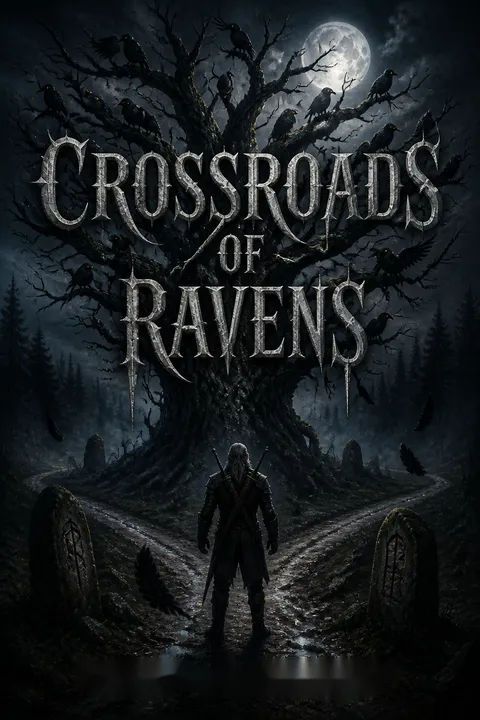
As Geralt and Holt travel together, they encounter a crossroads swarming with ravens—a sign of fate and choice. Holt offers Geralt a partnership: to inherit his reputation, clients, and home, as Holt's own strength wanes. The crossroads becomes a symbol of Geralt's journey, where every path leads to a different future. The ravens, ever-watchful, seem to mock the illusion of choice, reminding Geralt that witchers are always at the mercy of forces beyond their control. The world is changing, and so must the witchers, or be swept away by the coming storm.
Swords and Sins
Geralt's first forays as a witcher are marked by violence and moral ambiguity. He kills to protect, but is condemned for it. Holt, both mentor and judge, teaches him that the world rarely rewards good intentions. In Kaedwen, the law is a tool of the powerful, and witchers are both needed and despised. Geralt learns that every act of violence leaves a mark—not just on the body, but on the soul. The sword is both shield and curse, and every swing carries the weight of judgment.
The Old Wolf's Offer
Holt invites Geralt to his estate, Rocamora, offering him a place in a world that is increasingly hostile to witchers. There, Geralt is trained not just in swordplay, but in the subtleties of survival—how to fight men as well as monsters, how to negotiate, and how to endure the loneliness of their path. Holt's body is a map of scars, each a story of survival and loss. He confides in Geralt the true history of the witchers: their origins in magical experiments, their persecution, and the massacre at Kaer Morhen. The offer is not just of a home, but of a burden—the inheritance of old wounds and unfinished vengeance.
Crossroads of Fate
At another crossroads, Geralt is forced to choose between independence and belonging. Holt's proposal is both a gift and a test: to become his successor, to carry on the work, and to face the enemies that Holt has made. The crossroads is haunted by ravens, symbols of fate and death. Geralt's choice is not just about his own future, but about the legacy of all witchers. The world is watching, and every step forward is a step into the unknown.
Lessons in Blood
Life at Rocamora is a relentless education. Holt drills Geralt in the anatomy of violence—where to strike, how to disable, when to kill. The lessons are brutal, but necessary. Witchers are not heroes; they are survivors, shaped by pain and necessity. Geralt learns that mercy is a luxury, and that every fight is a negotiation with death. The scars he earns are badges of both failure and growth. The old wolf's lessons are harsh, but they are the only shield against a world that offers no forgiveness.
Monsters and Men
Geralt's contracts take him from haunted mines to cursed villages, where the line between monster and man is blurred. He faces creatures born of magic and hatred, but also the cruelty of humans—lynch mobs, corrupt officials, and zealots. Each encounter tests his resolve and his code. The greatest dangers are not always those with fangs and claws, but those who wield power and prejudice. Geralt learns that to be a witcher is to walk a path of endless compromise, where every victory is tinged with regret.
The Price of Mercy
In the village of Szklana Góra, Geralt is hired to lift a deadly curse. The solution demands a terrible price: the death of the one who cast it. Geralt's act of mercy—killing to save others—earns him only suspicion and meager payment. The villagers, quick to blame and slow to thank, remind him that good deeds are rarely rewarded. The witcher's code is tested, and Geralt is left to wonder if there is any justice in a world where mercy is seen as weakness.
The Witcher's Code
As Geralt's reputation grows, so does the scrutiny of those in power. He is pursued by Estevan Trillo da Cunha, the king's prefect, who seeks to use Geralt as a pawn in a larger game. The witcher's code—never to kill for sport, never to harm the innocent—becomes both shield and shackle. Geralt must navigate a world where every action is suspect, and where the law is wielded as a weapon. The code is all that stands between him and becoming the monster others believe him to be.
The Striga's Curse
Geralt is summoned to Brunanburh to confront a striga—a cursed girl, victim of incest and political intrigue. The task is not just to kill, but to save, if possible. The fight is brutal, and Geralt's failure to lift the curse by non-lethal means haunts him. The striga's death is a pyrrhic victory, earning him fame but also the enmity of those who hoped for a miracle. The curse is not just on the girl, but on all who seek easy answers to impossible problems.
The Weight of Legends
The massacre at Kaer Morhen, the persecution of witchers, and the vendettas of the powerful all converge on Geralt's journey. He learns the true story behind the fall of his order: betrayal, propaganda, and the manipulation of fear. The past is never dead; it lives on in the scars of survivors and the ambitions of those who profit from hatred. Geralt must decide whether to avenge old wrongs or to break the cycle of vengeance. The legends that surround him are both armor and chain.
The Web of Vengeance
The true architects of the witchers' suffering are revealed: Artamon, a powerful sorcerer, and the vengeful markiza Graffiacane. Their plots ensnare not just Geralt, but all who aided him. As Geralt seeks justice, he is drawn into a web of assassination, betrayal, and political intrigue. The line between justice and vengeance blurs, and Geralt must confront the cost of retribution. Every act of violence begets another, and the web tightens around all who seek to escape it.
The Fall of Masters
Artamon is slain, but the victory is hollow. Holt, burdened by guilt and hunted by the law, surrenders himself to face execution for crimes both real and imagined. The witchers' enemies close in, and the institutions that once protected them now demand their destruction. Geralt is forced to confront the limits of loyalty and the price of survival. The fall of the old masters is both an end and a beginning—a reckoning for all who have lived by the sword.
The Last Confession
Holt's execution is a spectacle of justice and hypocrisy. Geralt tries to take the blame, but the machinery of power demands a scapegoat. In his final letter, Holt confesses his manipulations and regrets, revealing that he shaped Geralt's path as both mentor and pawn. The confession is both absolution and accusation, leaving Geralt with the burden of unfinished business and unresolved guilt. The past cannot be undone, but its lessons linger.
The Road to Reckoning
With Holt dead and his enemies scattered, Geralt sets out to hunt those responsible for the witchers' downfall. His journey takes him across borders and into the underworld of mercenaries and assassins. Each confrontation is a test of skill and will, as Geralt faces those who once hunted him. The road is long and lonely, and every victory is shadowed by the knowledge that violence begets violence. The reckoning is not just for his enemies, but for himself.
The End of Winter
Wounded and near death, Geralt is nursed back to health by the priestesses of Melitele. The long winter is a time of reflection and recovery, but also of reckoning with the choices that brought him here. The scars—physical and emotional—are reminders of the price of survival. As spring returns, Geralt must decide whether to continue the cycle of vengeance or to seek a new path. The end of winter is both a reprieve and a challenge.
The Reckoning of Ghosts
Geralt's quest for justice leads him to confront the last of his enemies. Each encounter is a mirror, reflecting the choices that have defined him. The ghosts of Kaer Morhen, of Holt, and of all the witchers lost to hatred and betrayal, walk beside him. The reckoning is not just with his foes, but with himself. To be a witcher is to be both hunter and haunted, forever walking the line between justice and vengeance.
The Sea and the Sword
At last, Geralt reaches the sea—a symbol of freedom, possibility, and the unknown. But even here, the past cannot be escaped. He faces one last choice: to pursue vengeance to its bitter end, or to lay down the sword and seek peace. The sea is both an ending and a beginning, a place where old wounds may heal or fester. As Geralt stands at the water's edge, he is no longer just a witcher, but a man shaped by his choices, his losses, and his hope for something more.
Analysis
A meditation on justice, vengeance, and the cost of survival"Crossroads of Ravens" is a profound exploration of the burdens carried by those who live on the margins—witchers, healers, and outcasts. Sapkowski uses the fantasy setting to interrogate the nature of justice: who defines it, who enforces it, and who suffers for it. The novel's structure—built on cycles of violence, confession, and reckoning—mirrors the psychological journey of its protagonist. Geralt's evolution from apprentice to avenger, from pawn to agent, is marked by painful choices and the realization that survival often demands compromise. The recurring motifs of crossroads and ravens underscore the tension between fate and free will, while the epistolary fragments invite the reader to question the reliability of every narrative. Ultimately, the book warns against the seductive simplicity of vengeance and the dangers of dehumanizing the other. Its lesson is both timeless and timely: that true strength lies not in the sword, but in the courage to choose mercy over retribution, and to seek meaning in a world that offers none.
Review Summary
Characters
Geralt of Rivia
Geralt is a young witcher, marked by white hair and the scars of mutation. Trained to hunt monsters, he is thrust into a world where the true monsters are often human. His journey is one of painful growth, as he grapples with the legacy of his order, the burden of violence, and the ambiguity of justice. Geralt's relationships—with Holt, with the priestesses, with those he saves and those he cannot—shape his evolving code. He is both hunter and hunted, struggling to reconcile mercy with necessity. His psychological arc is one of increasing self-awareness, as he learns that survival demands both strength and compassion, and that vengeance is a double-edged sword.
Preston Holt
Holt is an older witcher, legendary and feared, but broken by age, injury, and regret. He becomes Geralt's mentor, offering both guidance and a legacy tainted by vengeance. Holt's past is a tapestry of violence and loss: survivor of the Kaer Morhen massacre, bearer of old grudges, and architect of his own downfall. His relationship with Geralt is complex—part father figure, part manipulator, part cautionary tale. Holt's psychological journey is one of resignation and confession; he seeks redemption through Geralt, but ultimately cannot escape the consequences of his own choices. His death is both a sacrifice and a warning.
Estevan Trillo da Cunha
The king's prefect, Estevan is a master of political maneuvering, tasked with maintaining order in a kingdom rife with secrets and vendettas. He is both adversary and reluctant ally to Geralt, using the witcher as a pawn while occasionally offering unexpected mercy. Estevan's psychoanalysis reveals a man torn between duty and conscience, wielding the law as both shield and weapon. His relationship with Geralt is marked by mutual respect and wary distance, each recognizing the other's necessity in a world where justice is often a matter of perspective.
Vrai Natteravn
Vrai is a skilled magical healer, respected by both witchers and mages. She represents the possibility of compassion and reconciliation in a world defined by violence. Her interventions save Geralt's life and prevent greater tragedies, acting as a counterbalance to the cycle of vengeance. Vrai's psychological depth lies in her pragmatism and empathy; she is neither naïve nor cynical, but understands the cost of survival. Her relationship with Geralt is one of mutual respect and understated affection, offering him both healing and perspective.
Assumpta of Rivia
The head priestess of Melitele's temple, Assumpta is a figure of wisdom and sorrow. She carries the weight of the past—the education of witchers, the persecution of her order, and the failures of compassion. Her relationship with Geralt is maternal but distant, shaped by secrets and the knowledge that some truths are too heavy to share. Assumpta's psychological arc is one of resignation and hope; she seeks to guide without controlling, and her final words to Geralt are both warning and blessing.
Markiza Cervia Herrada Graffiacane
The markiza is the architect of much of the witchers' suffering, driven by grief, pride, and a thirst for vengeance. Her relationship with Artamon and her vendetta against the witchers are rooted in personal loss and the inability to forgive. Psychologically, she is both formidable and pitiable—a woman who wields power ruthlessly, but is ultimately destroyed by her own obsessions. Her death is a final act of retribution, but also of release.
Artamon of Asguth
Artamon is a powerful mage, author of the infamous pamphlet that incited the massacre at Kaer Morhen. His intellect is matched only by his capacity for cruelty and manipulation. Artamon's relationship with the markiza and his role in the persecution of witchers make him a symbol of the dangers of unchecked power. His psychological profile is that of a man who believes in his own righteousness, blind to the suffering he causes. His death is both justice and tragedy.
Meritxell
Meritxell is a formidable swordswoman, survivor, and killer. Her path crosses Geralt's as both adversary and mirror—each shaped by violence, each seeking survival in a world that offers little mercy. Her psychological arc is one of desperation and defiance; she is both victim and perpetrator, driven by necessity and haunted by the ghosts of her choices. Her final confrontation with Geralt is a reckoning for both.
Beauregard Frick
Frick is a master of the blade, trained in the deadliest techniques. His rivalry with Geralt is both personal and professional—a contest of skill, will, and survival. Frick's psychological depth lies in his adherence to a code of honor, even as he serves dark masters. His death is a testament to the cost of vengeance and the inevitability of violence among those who live by the sword.
Timur Voronoff
Voronoff is Holt's agent and later Geralt's, managing the business of witchering in a world that is increasingly hostile to their kind. He is a survivor, adept at navigating the shifting tides of power and danger. His relationship with Geralt is one of cautious partnership, offering support and resources while maintaining his own interests. Psychologically, Voronoff is a realist, understanding that survival often means compromise and adaptation.
Plot Devices
Crossroads and Ravens
The recurring motif of crossroads—often haunted by ravens—serves as a powerful symbol of fate, choice, and the illusion of free will. Each crossroads represents a pivotal decision, with ravens acting as both witnesses and harbingers. This device foreshadows the consequences of every choice, reminding characters and readers alike that destiny is shaped by both action and inaction. The motif ties together the personal and political, the mundane and the magical, reinforcing the novel's themes of agency and inevitability.
Letters, Ballads, and Testimonies
The story is interwoven with letters, ballads, and official testimonies, providing multiple perspectives and layers of truth. These documents serve as both exposition and commentary, revealing the biases, ambitions, and fears of the characters. The use of official reports and personal confessions blurs the line between history and propaganda, challenging the reader to discern truth from manipulation. This device enriches the world-building and underscores the power of narrative in shaping reality.
The Witcher's Code and Moral Ambiguity
The witcher's code—never to kill for sport, never to harm the innocent—is both a guiding principle and a source of conflict. The narrative structure repeatedly tests this code, placing Geralt in situations where the right choice is unclear or impossible. The code becomes a lens through which the reader examines the nature of justice, mercy, and survival. The tension between principle and pragmatism drives the story's emotional arc and character development.
Cycles of Vengeance and Redemption
The plot is structured around cycles of vengeance—old wrongs demanding retribution, new wounds opening as old ones close. Each act of violence is both cause and effect, binding characters in a web of consequence. Yet within this cycle, moments of mercy and forgiveness offer the possibility of redemption. The narrative structure balances despair with hope, suggesting that while the past cannot be undone, the future remains unwritten.
Download PDF
Download EPUB
.epub digital book format is ideal for reading ebooks on phones, tablets, and e-readers.








































