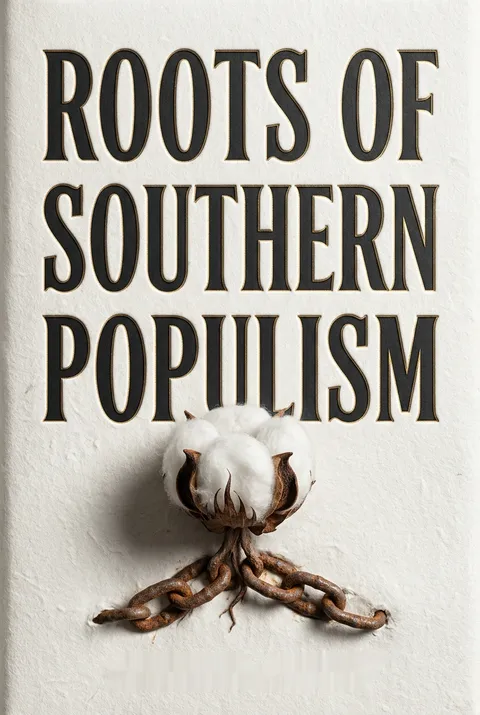

Key Takeaways
1. The Upcountry: A Pre-Industrial Bastion of Yeoman Independence
If the conventional portrait of nonplantation districts as relatively homogeneous zones of smallholding cultivators contains more than a shred of truth, it is far too simple, too static—it speaks of isolated individuals rather than of a society.
A distinct society. Before the Civil War, the Georgia Upcountry stood apart from the commercialized Plantation Belt, fostering a unique social structure. While dominated by white yeoman farmers, this region was a complex tapestry of small landowners, landless farmers, artisans, and laborers, all intricately tied to an agricultural economy. Unlike the Black Belt, large slaveholdings were rare, and the majority of whites were either nonslaveholders or small slaveholders, creating a society where economic hierarchy existed but was less pronounced.
Household economy. Production and consumption revolved around the household, prioritizing family independence and self-sufficiency. Yeoman families typically cultivated diversified crops, with corn, wheat, and oats dominating, ensuring ample foodstuffs for their own needs. Cotton was grown, but usually in small quantities for taxes or supplemental income, not as a primary cash crop. This focus on subsistence and home manufactures meant limited reliance on external markets, distinguishing the Upcountry from the staple-driven economy of the Black Belt.
Limited market integration. Geographic isolation, hilly terrain, and poor transportation networks kept the Upcountry on the periphery of the broader export economy. Local markets, regulated by custom and community interdependencies, facilitated direct exchanges between producers, artisans, and small merchants. This system, characterized by scarce currency and payments in kind or labor, served the yeomen's interests by supplementing household production without dominating their lives, reinforcing a pre-bourgeois cultural sensibility.
2. Customary Law and Community: The Unwritten Rules of Antebellum Life
“Though it is the broad common law maxim, ‘that everything upon a man’s land is his own’ . . . and he can shut it out from his neighbor without wrong to him, yet custom with us, fortified by certain decisions of the court, has gone far to qualify and set limits to the maxim.”
Bonds of mutuality. Upcountry communities, often settled by kin and neighbors, developed strong traditions of mutual aid and cooperation. Logrollings, corn shuckings, and house-raisings were common, reflecting a collective ethos essential for survival and prosperity in an uncertain environment. This reciprocal labor system extended to hiring white laborers for specific tasks and, occasionally, renting out or hiring slaves, creating a web of interdependencies that absorbed social antagonisms and established standards for behavior.
Common rights to land. Crucial to yeoman independence were customary rights to unenclosed land, particularly for hunting, fishing, and livestock grazing. The "open-range" system, enshrined in fence laws requiring farmers to enclose their crops rather than their animals, allowed smallholders and the landless to raise livestock without extensive pastureland. This practice, deeply rooted in Southern tradition, was seen as a fundamental right, challenging notions of absolute private property and reflecting a popular republicanism that linked freedom to communal access to resources.
Debt and protection. The Upcountry's credit system, characterized by scarce currency and widespread indebtedness, was largely governed by custom and community norms. Debts often ran for years, settled in kind or labor, and were frequently scaled down by courts. Laws like the "homestead exemption" protected smallholders' productive property from seizure, limiting the economic leverage of creditors. This legal framework, combined with informal exchange networks, ensured that the market served the community's needs rather than dominating its social relations.
3. Civil War's Crucible: Shattering the Old Order, Fueling Discontent
“When it becomes necessary to defend our rights against so foul a domination,” the governor insisted, “I would call upon the mountain boys as well as the people of the lowlands, and they would come down like an avalanche and swarm around the flag of Georgia.”
Fragile loyalties. While Governor Joseph E. Brown, a figure from the Upcountry, rallied support for secession by linking slavery to white democracy and independence, the region's loyalty to the Confederacy was complex and often conditional. Upcountry yeomen, though generally accepting slavery as a bulwark of social order and a means to preserve a white majority, harbored strong anti-planter sentiments and a deep commitment to local autonomy. This independent spirit, often expressed as Unionism or conditional support for secession, foreshadowed internal conflicts.
War's devastating toll. The Civil War brought immense destruction and hardship to the Upcountry, exacerbating existing vulnerabilities.
- Fields ravaged, fences destroyed, livestock plundered.
- Conscription policies, especially the "twenty nigger law," fueled resentment, leading to widespread desertion and the cry of "rich man's war and poor man's fight."
- Food shortages, soaring prices, and the Confederate tax-in-kind and impressment policies pushed families to the brink of starvation, leading to provision riots and direct retaliation against wealthy hoarders.
Erosion of planter hegemony. The war exposed the deep class and regional divisions within the South. The planters' inability to maintain discipline, coupled with the growing disaffection of Upcountry yeomen and the self-emancipation of slaves, pushed the Confederacy towards internal collapse. The war, intended to preserve the slaveholders' republic, instead shattered its social fabric and laid bare the contradictions that would define the post-war era.
4. King Cotton's New Domain: The Upcountry's Post-War Economic Shift
“Cotton, formerly cultivated on a very limited extent, has increased rapidly . . . so that if the ratio continues, the county will, ere long, take rank among the foremost cotton producing counties of the state.”
Devastation and debt. The immediate post-war years were marked by chronic destitution, compounded by droughts and widespread indebtedness. With depleted resources and a worthless currency, Upcountry farmers faced immense pressure to recover. Cotton, despite its risks, offered the most viable path to cash income due to relatively high prices and lower transportation costs compared to grains. This necessity began to shift the region's agricultural focus.
Railroads and fertilizers. The slow but steady construction of railroads into the Upcountry, coupled with the increasing availability and affordability of commercial fertilizers, accelerated the expansion of cotton culture. Railroads linked the interior directly to national markets, while fertilizers enabled farmers to overcome climate limitations and increase yields. This infrastructure development, though initially met with yeoman skepticism, became a powerful engine for commercialization.
A transformed landscape. By 1880, the Upcountry had moved from the periphery to the mainstream of the cotton economy. Cotton production surged by nearly 200% over 1860 levels, and its acreage dramatically increased, often at the expense of food crops. This shift led to declining per capita corn production and growing reliance on external sources for provisions. While some farmers attempted to maintain self-sufficiency through crop adjustments (like winter wheat), the overall trend indicated a profound transformation of the yeoman household economy towards specialization in staple agriculture.
5. The Merchant's Ascendancy: Forging a New System of Debt and Control
“The cotton trade has been brisk [in Harmony Grove],” the Jefferson Forest News declared in 1878. “Before the last days of April the merchants of [the] town will have bought four thousand bales of cotton.”
Filling the vacuum. The collapse of the antebellum financial system and the factorage houses, combined with the planters' reluctance to provision individual black laborers, created a vacuum that country merchants eagerly filled. Often newcomers with limited capital, these merchants established stores in proliferating Upcountry towns, obtaining goods on consignment and extending credit to farmers and tenants. This marked a significant departure from the pre-war local exchange networks.
The crop lien system. Merchants instituted a two-price system (cash vs. credit, with credit prices 40-70% higher) and demanded crop liens as collateral. This system tied farmers, white and black, to cotton production, as it was the most marketable commodity. The lien not only secured the debt but also gave merchants a foothold in the productive process, influencing crop choices and creating a vicious cycle of indebtedness: more cotton meant less food, which meant more credit for provisions, leading to more cotton.
Expanding economic power. Merchants rapidly expanded their operations beyond simply selling goods. They became central to marketing cotton, often buying directly from producers or claiming crops via liens, then ginning and shipping the fiber. Many invested in gins, fertilizer sales, and other local enterprises like mills and even early banks. This accumulation of capital and control over key agricultural services allowed them to become a powerful agrarian-commercial bourgeoisie, reshaping local class relations and challenging the traditional authority of landowners.
6. Dispossession and Dependency: The Unraveling of Yeoman Freehold
“I just got tired of working for the other fellow,” he grimly explained, “I worked and toiled from year to year and all the fruits of my labor went to the man who never struck a lick . . . I never made anything, and I determined to go to a grain country and quit cotton.”
Weakening protections. The post-war era saw a deliberate dismantling of legal protections for smallholders. The Republican-era homestead exemption, which shielded a significant portion of property from debt seizure, was drastically reduced and, crucially, debtors were permitted to waive its protection. This legal shift, driven by merchant and commercial interests, made it easier for creditors to claim property.
The mortgage trap. Mortgaging property, once an infrequent recourse for large sums, became a common prerequisite for obtaining even small amounts of credit for supplies. Farmers, desperate for provisions, were forced to mortgage their land, livestock, and farming implements in addition to their crops. This created a direct path to dispossession, as mounting debts and declining cotton prices often led to foreclosures and sheriff sales.
Rise of tenancy. The widespread loss of land transformed many independent yeoman freeholders into tenants and sharecroppers. While tenancy had antebellum precedents, its post-war character changed dramatically. Landlords and merchants, through the lien system, gained extensive control over tenants' crop choices and farming practices. This process of proletarianization, though often disguised by kinship ties, created a growing class of landless whites whose economic status increasingly mirrored that of black laborers, fueling deep resentment and a sense of "slavery" to the merchant.
7. The Stock Law: A Fierce Battle for Common Rights and Local Power
“The stock law is the topic in this part of the county now. I want to say to the voters of Carroll county, that we as poor men and negroes do not need the law, but we need a democratic government and independence, that will do the common people good.”
Clash over property rights. The stock law, which required livestock owners to fence their animals rather than farmers to fence their crops, became a central and acrimonious political issue in the Upcountry during the 1880s. Proponents, primarily landlords and merchants, argued for "progress," conservation, and absolute property rights, claiming the open range was inefficient and costly. Opponents, largely small farmers and laborers of both races, fiercely defended the traditional "common rights" to forage, viewing the law as a direct attack on their economic welfare and independence.
A class-based struggle. The debate over the stock law clearly exposed deep class divisions.
- Pro-stock law: Supported by wealthy landowners, merchants, and town interests who saw it as essential for commercial agriculture and property control.
- Anti-stock law: Championed by small landowners, tenants, and black laborers who relied on the open range to raise livestock and supplement their subsistence. They argued it would lead to dispossession and dependency.
- The rhetoric often invoked religious and moral arguments, with opponents asserting a "Bible right" to common grazing and accusing proponents of "communism" for denying traditional rights.
Political mobilization. The stock law controversy galvanized popular sentiment, leading to impressive voter turnouts in local elections, even after the institution of a poll tax. Despite initial overwhelming defeats for the law in county-wide votes, proponents, leveraging their dominance in the Democratic party and local institutions, eventually pushed through district-level implementation through a combination of political maneuvering, electoral fraud, and persistent pressure. This struggle politicized rural communities and laid groundwork for future agrarian movements.
8. Town vs. Country: The New Fault Lines of Upcountry Politics
“It has been said that Carroll has no less than a dozen candidates for the [legislative] nomination,” one resident moaned in 1872, “each one feeling called not by his fellow citizens, but by himself . . . .”
Shifting political landscape. The post-war era saw a significant shift in political power within the Upcountry, with town-associated elites (merchants, professionals, large landowners) consolidating control over county governments and the Democratic party. This was driven by the towns' growing economic importance due to railroads and commercial agriculture, and by the need to stabilize social relations after Emancipation. County offices, once more accessible to rural yeomen, increasingly became tools for reshaping society in favor of market relations.
Independent challenges. This consolidation of power sparked "Independent" movements, often led by disaffected farmers and former Whigs, who challenged the "ring rule" of the Democratic party. Figures like William H. Felton, representing Upcountry districts, campaigned on platforms of currency reform, railroad regulation, and an end to the poll tax, appealing to farmers squeezed by the new economic order. These movements, though often rooted in personal ambition, tapped into growing resentment against perceived corruption and the economic policies favoring commercial interests.
Biracial alliances. Crucially, the Independents, and later the Populists, began to forge tentative alliances with black voters. While often driven by pragmatic electoral needs and still tinged with racism, these overtures represented a significant departure from the Democratic party's "white unity" platform. Black communities, despite facing intimidation and violence, remained politically active, using their votes to support candidates who promised a "free ballot and a fair count" and offered some hope for economic relief, even if their specific grievances were not fully addressed.
9. Populism's Genesis: A Radical Cry for a Producers' Commonwealth
“We have in this country two dangerous classes,” a Southern Populist could declare. “One a band of capitalist conspirators who enjoy special advantages which they are determined to maintain and increase even at the cost of involving the nation to ruin. The other, homeless and friendless, goaded to desperation by the teaching of designing men, clamoring for something they do not understand themselves, filled with a desire by a reign of riot and confusion, to establish a new order of things based on chimerical values.”
Articulating discontent. The Farmers' Alliance, spreading rapidly through the Upcountry in the late 1880s, provided an organizational framework for rural discontent. Initially focused on cooperative buying and selling, the Alliance's radical wing soon pushed for broader political reforms, including the subtreasury plan and government ownership of transportation. This shift, often fueled by the stock law controversy and merchant opposition, transformed local grievances into a national political movement.
A producers' commonwealth. Populism, born from this ferment, articulated a powerful republican producer ideology. It assailed "money kings" and "speculative parasites," blaming the concentration of wealth on political corruption. Populists envisioned a cooperative commonwealth where economic independence, rooted in productive labor and control over resources, was protected by a government responsive to the public good. This vision, though not socialist, challenged the tenets of bourgeois individualism and the free market, advocating for systemic changes to benefit "the yeomanry of the country."
Contradictions and demise. Despite its radical critique and biracial aspirations, Populism faced inherent contradictions. The enduring racism of its white base, rooted in the fear of the "permanently dispossessed" (often associated with blacks), hampered full racial solidarity. Furthermore, the movement's focus on exploitation in the sphere of exchange (credit, money) rather than production (land ownership) limited its appeal to the most landless. Organizational weaknesses, coupled with fierce opposition from elites who branded them "communists," ultimately led to the movement's decline after 1896, paving the way for accelerated rural dispossession and a narrowing of political discourse.
Review Summary
Roots of Southern Populism receives mixed but generally positive reviews averaging 3.78 out of 5 stars. Readers praise Hahn's detailed statistical analysis of two Georgia upcountry counties, examining the shift from subsistence farming to cotton economy and the emergence of populist movements after Reconstruction. Reviewers appreciate the extensive research and insights into poor farmers' experiences with capitalism and political tensions between southern Democrats and radical Republicans. However, some find the heavily quantitative approach makes for dense, difficult reading that resembles research notes more than narrative.
Download PDF
Download EPUB
.epub digital book format is ideal for reading ebooks on phones, tablets, and e-readers.








































