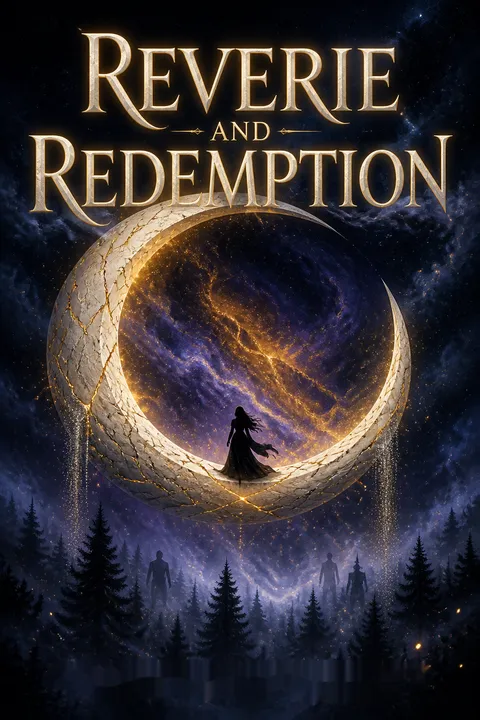

Plot Summary
Waking in the Woods
Reverie Hofman wakes up in the middle of the forest, disoriented and covered in scratches, with no memory of how she got there. This isn't the first time she's sleepwalked into danger, but the isolation and the indifference of her small town, Gritton, weigh heavily on her. She's an outcast, shunned for a mysterious curse: whenever she sleepwalks, someone she cares about falls into a coma. Her only solace is her home and her plants, which she tends with love. The chapter sets the tone of loneliness, the burden of guilt, and the sense of being trapped by forces she can't control. Reverie's resilience is clear, but so is her pain.
The Curse of Sleep
After returning home, Reverie learns that Diana, a coworker she likes, has fallen into a mysterious coma. The pattern is painfully familiar—every time Reverie sleepwalks, someone she cares about is struck down. The guilt is crushing, and she's convinced she's cursed. The town's suspicion and cruelty only intensify her isolation. Reverie's emotional turmoil is palpable as she struggles with the knowledge that her mere existence seems to endanger others. The chapter deepens the sense of helplessness and the weight of responsibility she carries, even as she tries to keep her distance from everyone.
Voices in the Silence
Reverie begins to hear voices—three distinct male presences—whispering at the edge of her consciousness, both in dreams and waking life. At first, she fears she's losing her mind, but the voices are too vivid, too real. They comment on her life, her dreams, and even her outfits, sometimes with humor, sometimes with concern. The voices become her constant, unwanted companions, blurring the line between reality and imagination. Reverie's loneliness is now haunted by these unseen entities, and her frustration grows as she's unable to communicate with them directly or understand their purpose.
Dreamwalkers Revealed
Through a series of increasingly lucid dreams, Reverie finally confronts the three men: Oskar, Hollis, and Sinan. They reveal themselves as Dreamwalkers—beings who exist in the realm of dreams, able to enter and influence the dreams of the living. They are not ghosts, but once-human entities tasked with guiding, observing, and sometimes helping dreamers. Reverie learns she is a Seheraum, a rare dream-seer who can interact with Dreamwalkers in both dreams and waking life. The revelation is both a relief and a new burden, as she realizes her abilities are at the heart of the curse that has shaped her life.
Haunted by the Past
The Dreamwalkers help Reverie piece together her past: every person who fell into a coma was someone she cared about, and each incident coincided with her sleepwalking episodes. The pattern is undeniable, but the Dreamwalkers insist she is not the cause—something else is at work, using her as a conduit. Reverie's memories of childhood, her parents' comas, and the loss of her best friend Nora are revisited with new understanding. The emotional weight of her history is immense, but the presence of the Dreamwalkers offers a glimmer of hope and connection.
The Three Unseen
As Reverie grows closer to Oskar, Hollis, and Sinan, their personalities and histories unfold. Each man carries his own guilt and unfinished business from his human life, and their interactions with Reverie are a mix of flirtation, camaraderie, and deep emotional support. They become her confidants, protectors, and, eventually, lovers—first in dreams, then, through her growing power, in the waking world. The relationships are unconventional but deeply fulfilling, offering Reverie the acceptance and love she's been denied for so long.
Lucid Dream Lessons
With the Dreamwalkers' guidance, Reverie learns to control her dreams, practicing lucid dreaming to communicate more effectively and explore her abilities. She discovers she can manipulate the dreamscape, summon the Dreamwalkers at will, and even draw them into the physical world for brief periods. These skills are hard-won, requiring emotional vulnerability and trust. The process is both empowering and exhausting, as each success brings her closer to understanding the true nature of her curse—and the entity behind it.
The Sandmen's Truth
The Dreamwalkers explain their origins, likening themselves to the Sandman of myth—guides and guardians of sleep, but also witnesses to humanity's darkest fears. They reveal that Dreamwalkers are former humans who, after death, chose to remain in the dream realm to atone for their regrets or unfinished business. Reverie's role as a Seheraum is unique: she bridges the waking and dream worlds, able to see, hear, and touch Dreamwalkers, and to influence the boundary between realms. This knowledge reframes her sense of self and her place in the world.
The Maron's Shadow
The true antagonist emerges: the Maron, a corrupted Dreamwalker who preys on the sleeping, trapping them in comas to feed its own power. The Maron is drawn to Reverie's abilities, using her as a shield to hide from other Dreamwalkers and as a tool to access new victims. The Maron's attacks escalate, targeting not just those close to Reverie but the entire town. The Dreamwalkers and Reverie realize they must confront the Maron directly, but doing so will require Reverie to risk everything—including her newfound happiness.
Prophetic Nightmares
Reverie's dreams become prophetic, warning her of impending attacks and the Maron's growing strength. She sees visions of the entire town succumbing to sleep, of herself hunted and alone, and of the Maron demanding to be made real. The pressure mounts as the townspeople turn against her, blaming her for the comas and gathering in a mob. The Dreamwalkers urge her to trust her instincts and her power, but the fear of failure and loss is overwhelming. The emotional stakes reach their peak as Reverie prepares for a final confrontation.
The Town Turns
The town's fear and anger boil over, and Reverie is nearly lynched by the people she once called neighbors. The Maron uses the chaos to force her hand, threatening to destroy everyone unless she grants its wish: to become corporeal, to live again. With the Dreamwalkers at her side, Reverie agrees to the Maron's demand—but on her terms. She insists the Maron return to its original, human form, confronting the entity's true identity and the pain that created it. The scene is tense, heartbreaking, and cathartic.
Facing the Monster
Reverie faces the Maron—revealed to be her childhood imaginary friend, Christopher, a Dreamwalker she abandoned in grief. The Maron's rage is rooted in loneliness and betrayal, mirroring Reverie's own wounds. In a moment of both mercy and necessity, Reverie embraces Christopher, apologizes, and then, with the Dreamwalkers' help, banishes him from both realms. The act is both a release and a sacrifice, costing Reverie dearly but freeing the town and herself from the curse at last.
Redemption and Reunion
With the Maron gone, the comatose awaken—including Reverie's mother Felicity. The town, shamed and grateful, seeks to make amends, but Reverie's focus is on healing her own heart. The Dreamwalkers, their purpose fulfilled, begin to fade from her world. The pain of their loss is sharp, but Reverie is no longer alone—her mother's return and the town's tentative acceptance offer hope. The chapter is suffused with bittersweet emotion, balancing grief with gratitude.
Choosing Love, Choosing Life
In a final twist, the Dreamwalkers return, given the choice to move on to peace or to live again as mortals. They choose Reverie, embracing life, love, and the messy, beautiful reality of the waking world. Together, they build a new future—one rooted in acceptance, vulnerability, and the hard-won knowledge that true connection is worth any risk. The story closes on a note of joy and fulfillment, as Reverie, once cursed and alone, finds her place in the world and in the hearts of those she loves.
Analysis
Reverie and Redemption is a powerful exploration of loneliness, trauma, and the redemptive potential of love. At its core, the novel asks what it means to be seen, to be heard, and to be forgiven—not just by others, but by oneself. Reverie's journey from cursed outcast to beloved partner and daughter is both fantastical and deeply human, grounded in the messy realities of grief, guilt, and the longing for connection. The Dreamwalkers—each haunted by their own regrets—mirror Reverie's struggles, and their unconventional romance is a testament to the healing power of acceptance and vulnerability. The Maron, as both monster and wounded child, embodies the dangers of unaddressed pain and the desperate need for belonging. The novel's use of dreams as both setting and metaphor allows for a rich exploration of the subconscious, the boundaries between worlds, and the possibility of transformation. Ultimately, the story is a celebration of second chances, the courage to face one's fears, and the belief that even the most broken among us can find redemption and love.
People Also Read





Characters
Reverie Hofman
Reverie is a young woman marked by loss, guilt, and isolation. Ostracized by her small town for a curse she can't control, she's fiercely independent, sarcastic, and deeply compassionate beneath her armor. Her ability as a Seheraum—one who can see, hear, and touch Dreamwalkers—makes her both a target and a bridge between worlds. Reverie's journey is one of self-acceptance, learning to trust others, and transforming her curse into a source of strength. Her relationships with the Dreamwalkers are healing and redemptive, allowing her to reclaim her life and her capacity for love.
Oskar Klein
Oskar is the most thoughtful and measured of the Dreamwalkers, a former academic from 19th-century Germany. He is introspective, compassionate, and deeply curious about the world. Oskar's presence is grounding for Reverie, offering wisdom and emotional support. His own guilt over past losses mirrors Reverie's, and their connection is built on mutual understanding and respect. Oskar's journey is one of forgiveness—of himself and others—and his love for Reverie is both tender and profound.
Hollis Adler
Hollis brings levity and warmth to the trio, masking his own pain with humor and flirtation. A product of the Roaring Twenties, he is outgoing, adventurous, and endlessly curious. Hollis's easygoing nature belies a deep well of regret and a longing for connection. With Reverie, he finds acceptance and the freedom to be vulnerable. His arc is one of healing old wounds and embracing the possibility of happiness, even after lifetimes of disappointment.
Sinan Bennani
Sinan is the most intense and guarded of the Dreamwalkers, a former Barbary corsair from 17th-century Morocco. He is stoic, direct, and sometimes abrasive, but his loyalty and passion run deep. Sinan's past is marked by violence and loss, and he struggles with feelings of unworthiness. Through his relationship with Reverie, he learns to let down his defenses and accept love. Sinan's journey is one of redemption, as he transforms from a self-imposed outcast to a devoted partner.
The Maron / Christopher
The Maron is the story's antagonist—a monstrous, corrupted Dreamwalker who feeds on the sleep of others, trapping them in comas. Once, he was Christopher, Reverie's childhood imaginary friend and a Dreamwalker who lingered out of love and loneliness. His transformation into the Maron is a tragic result of abandonment and unaddressed pain. The Maron's actions are driven by a desperate need for connection, making him both terrifying and pitiable. His confrontation with Reverie is the emotional climax of the story, forcing both to face their deepest wounds.
Diana Rivers
Diana is a waitress at the diner where Reverie works and one of the few people Reverie allows herself to care about. Her fall into a coma is a catalyst for Reverie's renewed guilt and determination to break the curse. Diana represents the collateral damage of the Maron's predation and the cost of Reverie's isolation.
Vera Bechamp
Vera is a teacher and Reverie's childhood friend turned enemy. She embodies the town's suspicion and hostility, often leading the charge against Reverie. Vera's own pain and fear drive her actions, making her both a source of conflict and a symbol of the community's need for scapegoats.
Agent Andersen
Andersen is the federal agent assigned to investigate the mysterious comas in Gritton. Initially suspicious and adversarial, he becomes a reluctant protector as the truth emerges. His presence adds tension and external pressure, forcing Reverie to confront her situation publicly.
Nora Martin
Nora was Reverie's childhood best friend and one of the first victims of the curse. Her eventual recovery and new life serve as both a source of pain and a reminder that healing is possible. Nora's daughter becomes a potential target, raising the stakes for Reverie's final confrontation with the Maron.
Felicity Hofman
Felicity spends years in a coma, her absence shaping Reverie's loneliness and guilt. Her awakening after the Maron's defeat is a moment of profound healing and reconciliation, allowing Reverie to reclaim her family and her sense of belonging.
Plot Devices
Dreamwalking and Lucid Dreaming
The narrative structure hinges on the interplay between waking life and the dream realm. Lucid dreaming becomes both a metaphor and a literal tool for agency, as Reverie learns to control her dreams, communicate with the Dreamwalkers, and ultimately confront the Maron. The shifting boundaries between worlds heighten the sense of uncertainty and possibility, allowing for both psychological depth and fantastical elements.
The Curse and the Maron
The recurring comas serve as both a plot engine and a symbol of Reverie's isolation. The Maron's attacks escalate the stakes, forcing Reverie to confront her past and her power. The revelation that the Maron is her childhood imaginary friend adds a layer of tragic irony, reframing the curse as a consequence of unaddressed pain and the human need for connection.
The Outcast and the Mob
Gritton's hostility toward Reverie provides external conflict and amplifies her internal struggles. The town's eventual turn to mob justice mirrors the Maron's predation, highlighting the dangers of fear and the longing for easy answers. The resolution requires Reverie to stand up for herself and the truth, breaking the cycle of blame and isolation.
Redemption and Second Chances
The Dreamwalkers' arcs are built on the possibility of redemption—atoning for past mistakes, choosing connection over regret, and embracing the messiness of life. Reverie's journey is one of self-forgiveness and the courage to accept love, even after profound loss. The final choice—to live again as mortals—underscores the story's faith in the power of vulnerability and the value of a life fully lived.



Download PDF
Download EPUB
.epub digital book format is ideal for reading ebooks on phones, tablets, and e-readers.








































