
Plot Summary
Ancient Darkness Unleashed
In the ancient city of Taaranas, twin Aazheri brothers, the Ashvins, perform a ritual to open a portal to the demon realm, unleashing the nairatta upon the world. Their nightfire magic, born of darkness, is both beautiful and terrifying, and their ambition to rule sets in motion a legacy of ruin. The city descends into chaos as the sky turns red and monsters pour through the mountains, marking the beginning of a curse that will echo through generations. The Ashvins' hunger for power and their pact with darkness become the origin of the blight that will haunt Rahajhan, setting the stage for a prophecy that will demand a sacrifice centuries later.
Daughter of Prophecy
Zarya, raised in isolation and forbidden from using her magic, is thrust into a world of political intrigue and ancient prophecy. She is the daughter of Queen Asha and the powerful King Abishek, but her existence is shrouded in secrecy. When she learns of her true parentage and the prophecy tied to her nightfire magic, she is drawn north to Andhera, her father's kingdom. Accompanied by Rabin, her paramadhar and fated protector, and Yasen, her loyal friend, Zarya faces the daunting task of reconciling her identity, her family's legacy, and the growing rebellion against the oppression of the vanshaj—those born into magical servitude.
Reunion and Deception
Zarya's arrival in Andhera is met with warmth and curiosity by King Abishek, who claims to want to know his daughter. Yet beneath the surface, old wounds and suspicions linger. Rabin, once Abishek's protégé, senses unease, while Zarya is torn between longing for belonging and Row's warnings about her father's true nature. The king's court is a web of secrets, and Zarya's presence stirs both hope and danger. As she navigates new alliances and the complexities of her heritage, she is unaware that Abishek's interest in her is far from paternal love—it is the key to his own ambitions.
The King's True Face
Zarya's attempts to free the vanshaj from their magical collars reveal the king's true priorities. Abishek, obsessed with Aazheri supremacy, refuses to support her cause, fearing chaos and loss of control. He is fascinated by Zarya's nightfire and the sixth anchor, but his interest is clinical, not compassionate. When Zarya and Rabin's Bandhan—their magical bond—is revealed to be tainted, Abishek's manipulations intensify. He delays their departure, orchestrates their isolation, and prepares to use their connection for his own ends. The warmth of family is a mask for a calculated plan to harness Zarya's power and fulfill an ancient prophecy.
Collars and Rebellion
While Zarya seeks answers in Andhera, the rebellion in Ishaan grows. Miraan, her half-brother, and Yasen return to a city in turmoil, where the vanshaj, newly freed from their collars, struggle to find their place. The resistance, led by Vikas and Farida, faces betrayal and the threat of re-collaring by the Jadugara. The city teeters on the brink of civil war as the old order clings to power. Zarya's magic, capable of breaking the collars, becomes a symbol of hope and fear. The struggle for freedom is fraught with sacrifice, and the lines between friend and foe blur as the cost of change becomes clear.
The Tainted Bond
Zarya and Rabin's Bandhan, performed in haste, is revealed to be corrupted by the sixth anchor—darkness. Kishore, the king's mystic, claims only he can repair it, but his true purpose is to bind Zarya's power to Abishek's will. The lovers are cut off from the mind plane, their connection strained, and Rabin's health deteriorates. As the king's manipulations tighten, Zarya's visions of the Ashvins and the blight intensify. The bond that was meant to protect becomes a weapon, and the couple's trust in each other is tested as they realize they are pawns in a much larger game.
Secrets in the Tower
Haunted by dreams of her mother, Zarya discovers Asha imprisoned in a forgotten tower within Andhera's castle. The revelation shatters her illusions about Abishek and confirms Row's worst fears. Asha, once a powerful queen and nali—a conduit to the gods—has been tortured for decades, her knowledge exploited to further Abishek's schemes. The reunion is bittersweet, as Zarya's hope for family is replaced by the horror of betrayal. The truth about her birth and the prophecy is laid bare: Zarya was created to be used, her destiny manipulated by those who should have loved her most.
Betrayal and Capture
Abishek's mask falls as he captures Zarya and Rabin, binding them with a new, cruel Bandhan that turns Rabin's love into a weapon. Ekaja, Rabin's oldest friend, is forced to betray him, and Kishore's magic ensures their obedience. Abishek reveals his plan: Zarya's nightfire will break the ancient seal in Taaranas, freeing the Ashvins and the nairatta, and granting him ultimate power. The lovers are forced into the mountains, separated and hunted, their magic twisted against them. The prophecy's true cost becomes clear—Zarya must choose between her own life and the freedom of her people.
Into the Lost City
Zarya and Rabin are thrust into the spectral ruins of Taaranas, the lost city sealed away for a millennium. The city is a labyrinth of memories and magic, haunted by the Ashvins' legacy. Rabin, transformed into a dragon and driven to hunt Zarya, is both her greatest threat and her only hope. As Zarya navigates the city's secrets, she discovers the key to the seal and the truth of her connection to the Ashvins. The city becomes a crucible, testing her resolve, her love, and her willingness to sacrifice everything for a future she may never see.
Dragon's Wrath Unleashed
Enchanted to destroy the one he loves, Rabin hunts Zarya through Taaranas, his mind clouded by pain and fury. In a desperate bid to reach him, Zarya risks her life, using the mind plane and the remnants of their bond to break through the enchantment. Their reunion is both passionate and tragic, a testament to the power of love in the face of darkness. Together, they confront the seal, knowing that opening it will unleash both hope and horror upon the world. The fate of Rahajhan rests on their courage and the strength of their connection.
Breaking the Seal
Zarya, guided by visions and the god Loka, opens the seal with her nightfire, freeing the vanshaj and breaking the curse on the Aazheri. But the act also unleashes the nairatta and the Ashvins, who immediately begin their assault on the world. Abishek, revealed as a fraud and consumed by his own ambition, is confronted and destroyed by Row, Zarya's true father. The cost of freedom is steep, and the world teeters on the edge of annihilation. Zarya's sacrifice is the linchpin, and the final battle looms as the Ashvins seek to reclaim their dominion.
The Ashvins Return
The Ashvins, now free, lead the nairatta in a campaign of destruction. The Chiranjivi—champions of each realm—gather with Zarya and the newly freed Taara Aazheri to form a united front. The final battle is a symphony of magic and sacrifice, as Zarya's nightfire and the collective power of the people push back the darkness. The Ashvins' strength is formidable, but the bonds of love, friendship, and hope prove stronger. In a moment of ultimate risk, Zarya gives her life to expel the Ashvins from her soul, trusting Rabin to bring her back.
Sacrifice and Salvation
Zarya's self-sacrifice allows the Chiranjivi to destroy the Ashvins and banish the nairatta. Rabin, her paramadhar, reaches into the void to pull her back from death, their bond transcending even the gods' designs. The world is remade: the vanshaj are free, the curse on the Aazheri is lifted, and the darkness is purified. The cost is immense, but the promise of a new beginning is real. The survivors mourn their losses and celebrate their victories, knowing that the future will be shaped by the choices they made in the crucible of war.
Aftermath and Reckoning
In the wake of the battle, the old order is dismantled. Dishani is exiled, the Jadugara are disbanded, and new laws enshrine the rights of the Taara Aazheri. Miraan becomes king, and Asha is restored to her family. Rabin and Zarya, scarred but unbroken, find solace in each other and in the community they helped create. Old wounds begin to heal as forgiveness is sought and granted. The survivors reckon with their pasts, and the promise of democracy and equality takes root in Andhera and beyond. The world is forever changed, but hope endures.
A New Dawn
One year later, Zarya and Rabin have built a life together in Ishaan, surrounded by friends and family. The Taara Aazheri thrive, and the realms are united in peace. The scars of war remain, but the bonds forged in struggle are stronger than ever. Zarya's dream of belonging is realized, and the world she helped save is filled with possibility. The story ends not with an ending, but with a beginning—a new dawn for Rahajhan, where love, sacrifice, and hope have triumphed over darkness.
Analysis
Queen of Shadows and Ruin is a sweeping fantasy romance that interrogates the nature of power, destiny, and the cost of freedom. At its heart, the novel is a story about breaking cycles—of oppression, of violence, of inherited trauma. Through Zarya's journey from exile to savior, the book explores the tension between fate and agency, asking whether we are bound by the past or capable of forging a new future. The use of prophecy and magical bonds serves as both metaphor and mechanism for the ways love, trauma, and hope shape our lives. The rebellion against the vanshaj collars is a powerful allegory for social justice, and the narrative does not shy away from the pain and messiness of real change. The psychological depth of the characters—especially Zarya, Rabin, and Row—grounds the epic stakes in intimate emotion, making the story both grand and deeply personal. Ultimately, the novel argues that true power lies not in magic or birthright, but in the willingness to sacrifice, to forgive, and to build community. The ending, with its focus on healing, democracy, and the promise of new beginnings, is a hopeful vision for a world remade by love and courage.
Review Summary
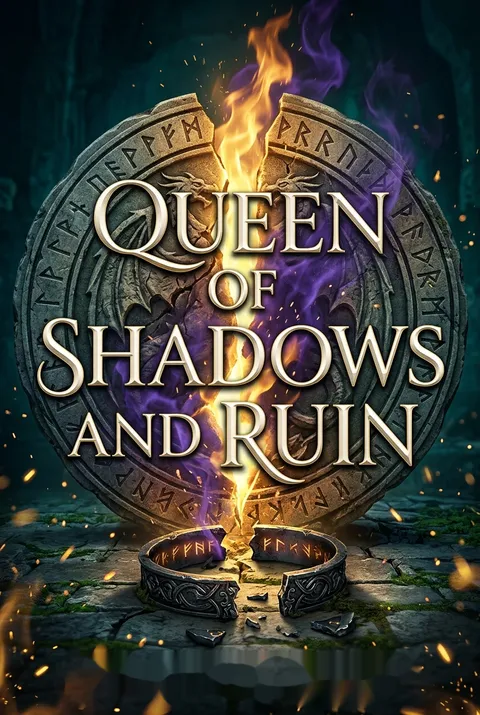
Queen of Shadows and Ruin concludes the Nightfire Quartet series with mixed reviews. Many readers praise the epic finale, complex characters, and satisfying ending. The book is lauded for its unique magic system, found family trope, and steamy romance. Some criticize pacing issues, with a slow first half and rushed ending. Overall, fans appreciate the emotional journey, character growth, and worldbuilding. While some found the main characters naive at times, most readers enjoyed the series' conclusion and recommend it for romantasy lovers.
Characters
Zarya Rai
Zarya is the daughter of Queen Asha and King Abishek, raised in isolation and burdened by a prophecy she never asked for. Gifted with nightfire and the rare sixth anchor—darkness—she is both a symbol of hope and a vessel for ancient evil. Zarya's journey is one of self-discovery, sacrifice, and the search for belonging. Her relationships—with Rabin, her paramadhar and husband; Row, her adoptive father; and her found family—define her growth from a lonely exile to a leader willing to give everything for her people. Her psychological arc is marked by trauma, resilience, and the ultimate act of selflessness, as she chooses to die to save the world, trusting love to bring her back.
Rabindranath (Rabin) Ravana
Rabin is a rakshasa, former commander, and Zarya's paramadhar—magically bound to protect and amplify her power. Once Abishek's protégé, he is manipulated into bringing Zarya to Andhera, unwittingly playing into the king's schemes. Rabin's journey is one of redemption and devotion, as he battles his own darkness, the corruption of their bond, and the pain of betrayal by those he trusted. His love for Zarya is fierce and unwavering, culminating in his willingness to follow her into death and bring her back. Rabin's arc explores themes of agency, forgiveness, and the transformative power of love.
King Abishek
Abishek is the powerful king of Andhera, Zarya's biological father, and the architect of much of the story's suffering. Obsessed with Aazheri supremacy and haunted by his own inadequacy, he manipulates everyone around him—including Zarya and Rabin—to fulfill an ancient prophecy and seize ultimate power. His relationship with Zarya is a twisted blend of pride, ambition, and exploitation. Abishek's psychological complexity lies in his ability to mask cruelty with charm, his need for control, and his ultimate downfall at the hands of those he underestimated.
Row
Row raises Zarya in secrecy, sacrificing his own happiness to protect her from Abishek's reach. A former advisor and Chiranjivi, he is haunted by guilt over Asha's fate and his own perceived failures. Row's love for Zarya is unconditional, and his arc is one of healing, forgiveness, and reclaiming lost love when Asha is finally freed. He represents the enduring power of chosen family and the importance of standing against tyranny, even at great personal cost.
Yasen Varghese
Yasen is Zarya's closest friend and a former commander, marked by trauma and a deep sense of unworthiness. His journey is one of self-acceptance, as he finds love with Miraan and a sense of purpose in the rebellion. Yasen's humor and irreverence mask a profound loyalty and courage. His arc explores the healing power of friendship, the struggle to believe in one's own worth, and the possibility of happiness after pain.
Miraan Madan
Miraan is Zarya's half-brother, a prince of Gi'ana, and a key figure in the resistance. Torn between loyalty to his family and the demands of justice, he funds and leads the rebellion, ultimately becoming king after Dishani's exile. Miraan's relationship with Yasen is a source of vulnerability and strength, and his arc is defined by the willingness to risk everything for a better future. He embodies the hope for a new, more just order.
Asha Madan
Asha is Zarya's mother, a powerful queen and conduit to the gods, whose visions set the prophecy in motion. Imprisoned and tortured by Abishek for decades, she is a symbol of resilience and the cost of ambition. Her reunion with Row and Zarya is a moment of healing and closure, and her arc is one of survival, forgiveness, and the quiet strength to endure unimaginable suffering.
Ekaja Bhari
Ekaja is Abishek's loyal commander and Rabin's oldest friend, forced to betray him under the king's orders. Her arc is one of guilt, regret, and the struggle to atone for her actions. Tasked with leading Andhera after Abishek's death, she represents the possibility of change and the burden of leadership. Ekaja's psychological complexity lies in her loyalty, her capacity for remorse, and her hope for forgiveness.
Vikas
Vikas rises from the ranks of the vanshaj to become a leader of the resistance and a beacon for the newly freed Taara Aazheri. His journey is one of empowerment, as he learns to wield his magic and inspire others. Vikas's arc is a testament to the power of ordinary people to change the world and the importance of collective action in the face of oppression.
The Ashvins
The Ashvins are the original wielders of nightfire, whose ambition and pact with the nairatta set the curse in motion. Their spirits are bound to Zarya, and their return threatens to destroy the world. They are both villains and victims of their own hunger for power, and their defeat requires the ultimate sacrifice. The Ashvins represent the seductive danger of unchecked ambition and the cyclical nature of history.
Plot Devices
Prophecy and Destiny
The narrative is driven by a prophecy foretelling the return of nightfire and the one who will free the vanshaj. This device creates tension between fate and free will, as characters struggle to fulfill or escape their destinies. The prophecy is both a burden and a guide, shaping Zarya's journey and the choices of those around her. Its fulfillment requires sacrifice, and its ambiguity allows for both hope and tragedy.
Magical Bonding (Bandhan)
The Bandhan between Zarya and Rabin is both a source of strength and vulnerability. It amplifies their magic, deepens their connection, and becomes a weapon in the hands of their enemies. The corruption of the bond by the sixth anchor introduces themes of trust, agency, and the dangers of power without understanding. Its ultimate redemption—Rabin's ability to bring Zarya back from death—underscores the transformative power of love.
Duality and Mirrors
The story is structured around dualities: the Ashvin twins, Zarya and Rabin, Abishek and Row, freedom and servitude. These mirrors highlight the choices that define the characters and the thin line between heroism and villainy. The use of visions, dreams, and the mind plane blurs the boundaries between past and present, self and other, reinforcing the cyclical nature of history and the possibility of breaking free.
Rebellion and Social Change
The struggle to free the vanshaj and dismantle the old order is both a personal and political journey. The rebellion is not just a backdrop but a living force, with characters like Vikas and Farida embodying the hope for a better world. The breaking of the collars, the rise of the Taara Aazheri, and the creation of new laws are plot devices that ground the fantasy in real questions of justice, equality, and the cost of change.
Sacrifice and Resurrection
The climax hinges on Zarya's willingness to die to save the world and Rabin's ability to bring her back. This device elevates the stakes and explores the limits of love, agency, and destiny. The resurrection is not just a return to life but a transformation, marking the end of an era and the beginning of a new one. The motif of sacrifice recurs throughout, from Asha's suffering to Row's choices, reinforcing the theme that true change requires loss.
About the Author
Other books by Nisha J. Tuli






Download PDF
Download EPUB
.epub digital book format is ideal for reading ebooks on phones, tablets, and e-readers.








































