
Key Takeaways
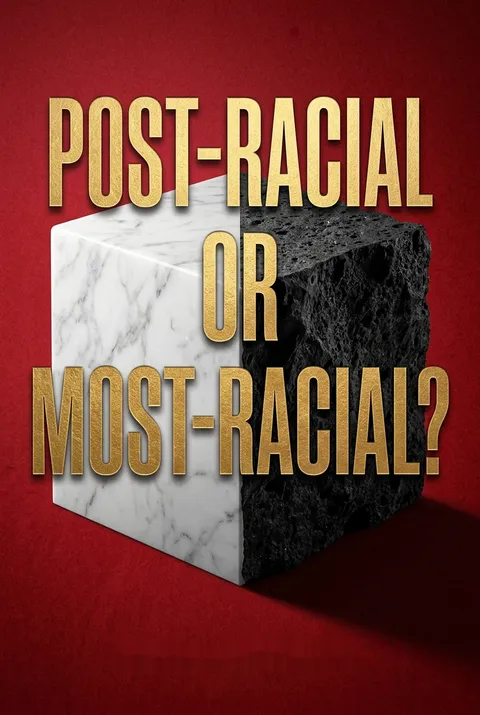
1. Obama's Presidency: Not Post-Racial, But Most-Racial
His election, as David Sears and I put it in the subtitle our 2010 book, Obama's Race, carried with it “the dream of a post-racial America.”
Shattered dreams. Barack Obama's election in 2008 ignited hopes for a "post-racial America," a sentiment shared by citizens across racial lines. However, this dream quickly faded, replaced by a stark reality of deepening racial divisions in American politics. Public opinion polls showed a rapid decline in the belief that Obama's presidency improved race relations, with many perceiving a deterioration instead.
A "most-racial" era. Far from transcending race, Obama's presidency ushered in a "most-racial" political era. This period saw racially liberal and racially conservative Americans become more polarized across a wide array of political issues than ever before. The initial optimism gave way to growing fears of racial polarization, particularly evident in the 2012 election results where Obama won with a historically low share of the white vote.
Racialization defined. This phenomenon, where racial considerations increasingly influence political evaluations, is termed "racialization." The book argues that despite the administration's efforts to neutralize race's political impact, Obama's presence in the White House further racialized American politics, making race a central lens through which many viewed political events and figures.
2. Racial Attitudes: A Stable Yet Potent Political Force
Racial resentment taps into the aforementioned components of the symbolic racism belief system with a battery of four questions asked in American National Election Studies (ANES) surveys from 1986 to 2012.
Measuring prejudice. Understanding racialization requires defining and measuring racial attitudes. The book primarily uses "racial resentment," a modern form of prejudice characterized by the belief that Black Americans violate traditional American values like individualism and self-reliance, and that their disadvantages stem from cultural deficiencies rather than systemic discrimination. Other measures include:
- Antiblack stereotypes: Rating groups on traits like hardworking/intelligent.
- Antiblack affect: Thermometer ratings of warmth/coldness towards Black people.
- Old-fashioned racism (OFR): Desire for social distance or opposition to interracial marriage.
Stable, yet influential. Despite the dramatic shifts in racial politics, white Americans' underlying racial prejudice remained remarkably stable throughout Obama's presidency. Longitudinal studies showed no significant net change in average racial resentment, stereotypes, or affect. This stability suggests that Obama's rise didn't fundamentally alter individual biases, but rather amplified the influence of existing biases on political opinions.
Chronic accessibility. Obama's unique position as the first African American president made race a "chronically accessible" consideration in public opinion. This meant racial attitudes were almost inevitably activated when evaluating him, his policies, or those associated with him. This chronic accessibility made it difficult for campaign messages or events to either deactivate or further enhance the impact of racial attitudes on perceptions of Obama.
3. The Spillover of Racialization: How Obama's Race Influenced Politics
If, as these studies suggest, the salient social background characteristics of elite sources have the potential to activate considerations in the realms of race, religion, and gender, then President Obama’s most visible political positions should have been especially ripe for racialization.
Elite cues matter. The core "spillover of racialization" hypothesis posits that Obama's race, as a salient characteristic of an elite political figure, caused racial attitudes to influence a broader range of political evaluations. This is analogous to how media framing or coded language can link racial groups to policies, making racial predispositions more central to public opinion.
Conditions for spillover: Not all political positions were equally susceptible to racialization. The spillover was most likely when:
- Visible position: Obama took a clear, highly publicized stance on an issue.
- Reinforced over time: Media consistently highlighted Obama's connection to the issue.
- Perceived beneficiaries: Black Americans were seen as disproportionately benefiting from the policy.
- Low pre-Obama racialization: Racial attitudes had a relatively minor influence on the issue before Obama.
- Uncrystallized opinions: Public opinions on the issue were not yet firmly established.
Beyond policy. The hypothesis predicted that this racialization would extend beyond direct evaluations of Obama to encompass his political rivals, allies, policy preferences, congressional elections, and even partisan attachments. This broad impact underscores the pervasive nature of race in the Obama era.
4. Racialization of Public Figures: From Rivals to Pets
Governor Crist believed that racial animus spilled over from Barack Obama into evaluations of his gubernatorial performance after their 2009 hug linked the two politicians in some Floridians’ minds.
Obama's orbit. The influence of racial attitudes extended to how Americans viewed other public figures, depending on their association with President Obama. This "spillover" was evident in the evaluations of both his political rivals and allies. For instance, Mitt Romney's favorability ratings became increasingly polarized by racial resentment as his candidacy was contrasted with Obama's presidency.
Hillary Clinton's shifting image. Hillary Clinton's relationship with Obama dramatically altered how racial attitudes influenced her public support. During her 2008 primary contest against Obama, racially conservative Democrats grew warmer towards her, while racial liberals became more hostile. However, after she served as Obama's Secretary of State, aligning herself with his administration, racial liberals and African Americans became significantly more favorable towards her, while racial conservatives grew less so.
Unexpected targets. The racialization even reached seemingly apolitical figures. A survey experiment showed that white Americans' evaluations of the Obama family's Portuguese water dog, Bo, were more polarized by racial resentment than their evaluations of a similar dog owned by Senator Ted Kennedy. This humorous yet telling finding suggests that any direct link to President Obama, regardless of political content, was sufficient to activate racial predispositions in public opinion.
5. Healthcare: A Case Study in Policy Racialization and Anger
The coefficients for racial resentment in the third column show that the most racially liberal and conservative whites were divided by nearly 40 percent of this 0 to 1 measure’s range—even after controlling for the large effects of party and ideology on economic perceptions.
Obamacare's racial dimension. The Affordable Care Act (ACA), widely known as "Obamacare," became a prime example of policy racialization. Despite President Obama's insistence that the debate was not about race, media coverage and public discourse frequently linked the policy to his racial identity. This led to a significant increase in the influence of racial attitudes on white Americans' healthcare opinions.
Evidence of racialization:
- Increased influence: Racial resentment and antiblack stereotypes became significantly stronger predictors of opposition to government healthcare after Obama became the policy's face.
- Experimental proof: When identical healthcare proposals were attributed to President Obama, racial attitudes had a much greater impact on public opinion compared to when they were attributed to President Clinton or a neutral source.
- Economic perceptions: Racial attitudes also began to influence subjective evaluations of objective economic conditions, such as the unemployment rate, for the first time in recent history during the Obama era.
Anger and polarization. The racialization of healthcare contributed to the unusually vitriolic nature of the 2009-10 debate. Research shows that racial resentment is uniquely tied to anger, unlike other non-racial ideological predispositions. Experiments revealed that fewer respondents were angered by healthcare proposals when attributed to Clinton than to Obama, and media analysis confirmed a five-fold increase in "anger" mentions in healthcare news during the Obama era compared to the Clinton era.
6. Congressional Elections: Racial Attitudes Shape Outcomes
The models used to forecast the 2010 elections share three things in common... All ignore the fact that the president in 2010 is of African descent. And all seriously underestimate the magnitude of the Democratic midterm disaster.
Beyond the presidency. The spillover of racialization extended beyond presidential elections, significantly impacting congressional contests. In both the 2010 and 2012 elections, white Americans' voting behavior for the House of Representatives became more racialized than in the preceding quarter-century. Racial resentment and even more blatant forms of prejudice, like antiblack stereotypes, became stronger predictors of Republican vote share.
Tea Party's role. The rise of the Tea Party Movement, often linked to racial conservatism, further fueled this trend. Tea Party sympathizers scored significantly higher in racial resentment, and their fervent opposition to Obama and his policies helped nationalize the 2010 midterms into a referendum against a "most-racial" president. This strong link between racial attitudes and Tea Party evaluations likely contributed to the racialization of congressional voting.
Obamacare's moderating effect. The highly publicized House vote on the Affordable Care Act served as a "natural experiment." The racialization of congressional voting was most pronounced in districts where Democratic members voted for Obamacare, directly aligning themselves with President Obama's signature policy. Conversely, the effect of racial conservatism on Democratic vote share was largely unchanged in districts where Democrats voted against the ACA, suggesting that the direct link to Obama was crucial for racialization.
7. Partisan Attachments: Deepening Racial Divides in Party ID
Party attachments tend to be stable because the social group imagery associated with the parties tends to change slowly over time.
Racializing party identity. Even the typically stable partisan attachments of white Americans became more polarized by racial attitudes during the Obama era. This was a significant development, as racial attitudes had largely plateaued in their influence on party identification by the early 2000s. The presence of an African American president leading the Democratic Party reinvigorated the cognitive association between race and party in the minds of the electorate.
Evidence of polarization:
- Increased correlations: Bivariate correlations between racial conservatism (racial resentment, antiblack affect, opposition to interracial dating) and Republican Party identification significantly increased across multiple surveys (ANES, GSS, Pew).
- Independent effects: Even after controlling for other strong predictors of partisanship like economic conservatism, moral traditionalism, and religiosity, racial attitudes became significantly stronger independent predictors of white partisanship.
- Two sides of racialization: This polarization was driven by both white racial liberals becoming more Democratic and white racial conservatives becoming more Republican.
Low-information racialization. The racialization of partisanship was particularly pronounced among low-information Americans (those without a college education). Obama's visible racial identity made it easier for these voters to connect race to partisan politics, narrowing the historical "education gap" in awareness of the parties' differing stances on race. This contrasts with traditional "conflict extension" models, where polarization is strongest among the politically informed.
8. The Expanding Racial Divide: White vs. Nonwhite Political Realities
Bill O’Reilly’s much-publicized election night proclamation that “the white establishment is now the minority” drew criticism for hastening the decline of white political influence in the United States.
Divergent realities. The Obama era saw a dramatic expansion of the political divide between white and nonwhite Americans, creating increasingly "separate realities" regarding racial issues and political preferences. This was starkly evident in reactions to events like the Trayvon Martin and Michael Brown cases, where partisan divisions along racial lines were far greater than in previous race-related incidents.
Black-white divide:
- Obama approval: The black-white racial divide in presidential approval was consistently 50 percentage points or more, significantly wider than for previous presidents like Bill Clinton.
- Group consciousness: This strong black support for Obama was rooted in racial group consciousness, with African Americans who rated their own group most favorably being most likely to strongly approve of his performance.
- Partisan shift: African Americans became significantly more Democratic, driven by the perception that Obama's party was more supportive of Black interests.
White-Latino and Asian American shifts:
- Republican image: Latinos and Asian Americans also moved decisively towards the Democratic Party, largely influenced by the Republican Party's increasingly hostile rhetoric and policies towards minorities, leading them to view the GOP as the "party of white people."
- Anti-white sentiment: For Latinos, a colder attitude towards whites became a strong predictor of Democratic identification. For Asian Americans, both anti-white attitudes and intergroup solidarity with other minorities drove their Democratic alignment.
9. Lasting Legacy: Racialization Beyond Obama's Tenure
We cannot ignore the inequities that persist in our justice system. ... Imagine what we would feel, and what we would do, if white drivers were three times as likely to be searched by police during a traffic stop as black drivers instead of the other way around.
Enduring impact. While some racial spillover effects may dissipate after Obama leaves office (e.g., specific candidate evaluations), many are likely to leave a lasting imprint on American politics. The racialization of party identification, in particular, is expected to endure due to the inherent stability of partisan attachments and the slow-changing "social group imagery" associated with political parties.
Obamacare's continued racialization. Healthcare, now deeply intertwined with Obama's legacy, is poised to remain a racialized issue. The persistent link between the ACA and Obama has made racial attitudes a chronic determinant of public opinion on healthcare, influencing congressional voting and partisan divides for years to come.
Future political landscape: The growing racialization of mass politics, coupled with changing demographics, presents significant implications:
- Republican constraints: The increased racial conservatism among rank-and-file Republicans may constrain the party's ability to appeal to minority voters, potentially solidifying its image as the "party of whites."
- Democratic strategy: Democrats may increasingly abandon their "racial silence" to mobilize minority and racially liberal white voters, as exemplified by Hillary Clinton's stronger statements on racial inequality.
- Broader group-based politics: The book suggests that similar "spillover effects" could occur with other social identities (e.g., gender, religion) as the demographic composition of elected officials continues to diversify, making group-based attitudes more central to mass politics.
Download PDF
Download EPUB
.epub digital book format is ideal for reading ebooks on phones, tablets, and e-readers.








































