
Plot Summary
1. Discovery of Dark Secrets
While cleaning her son Nathan's room, Wanda stumbles upon a series of meticulously illustrated journals. Each book is filled with graphic, anatomically precise drawings of dissected animals, accompanied by detailed notes. The horror of her discovery is compounded by the realization that these are not mere artistic studies, but evidence of a secret, escalating obsession. Wanda's initial shock is visceral—her stomach churns, her mind reels, and she is haunted by the images even as she tries to return the journals to their place. The idyllic facade of her home is shattered, replaced by a creeping dread that something is deeply wrong with her eldest child. Wanda's attempts to rationalize or ignore the evidence are undermined by Nathan's cold, emotionless demeanor, and the chilling sense that her family's safety and innocence are under threat.
2. Fractured Family Portrait
Wanda's discovery sets off a chain reaction of anxiety and suspicion within the family. Her husband Charles dismisses her concerns, insisting Nathan's behavior is a phase, while Wanda becomes increasingly isolated in her fear. The family's daily routines—meals, cleaning, sibling squabbles—are now tinged with unease. Nathan's interactions grow more ominous, his presence unsettling. Wanda's attempts to maintain normalcy are undermined by her growing sense of helplessness and guilt. She clings to Simon, her younger son, as a source of innocence and joy, but even this comfort is tainted by the knowledge of what lurks in Nathan's private world. The family's outward appearance remains intact, but beneath the surface, cracks widen, and Wanda's sense of control slips away.
3. The Journals' Horrors
Unable to shake the images from Nathan's journals, Wanda becomes obsessed with understanding their meaning and origin. She questions Nathan, who responds with chilling detachment, and tries to confide in friends, but finds little solace. The journals become a symbol of her failure as a mother and the growing gulf between her and her son. Wanda's anxiety manifests in nightmares and intrusive thoughts, blurring the line between reality and her fears. The journals' presence in the house is a constant reminder of the darkness festering within her family, and Wanda's attempts to intervene are met with resistance and denial from both Nathan and Charles. The sense of impending doom intensifies, as Wanda realizes she is alone in confronting the horror.
4. Thanksgiving Tensions
Thanksgiving brings Wanda's parents into the home, amplifying the existing tensions. Margery, Wanda's mother, is critical and controlling, while Harold, her father, is jovial but oblivious. The holiday meal is a battleground of passive-aggressive remarks, generational conflict, and forced cheer. Nathan's behavior is scrutinized, but his grandmother favors his quiet intellect over Simon's exuberance. Wanda's efforts to present a perfect home and family are undermined by her mother's criticisms and her own mounting anxiety. The wishbone ritual between Nathan and Simon becomes a microcosm of the family's dynamics—competition, resentment, and the fleeting illusion of harmony. Wanda's sense of alienation deepens, and the holiday only serves to highlight the fractures within the nuclear family.
5. The Woods' Hidden Cruelty
Driven by suspicion, Wanda follows Nathan into the woods behind their home and uncovers a clearing filled with the remains of tortured animals. The scene is a grotesque tableau of cruelty—makeshift tables stained with blood, animals strung up or buried alive, and evidence of systematic experimentation. Wanda's horror is compounded by the realization that Nathan's journals were not fantasy, but documentation of real acts. The discovery shatters any remaining illusions of safety or normalcy. Wanda is forced to confront the reality of her son's capacity for violence, and the inadequacy of her previous attempts to intervene. The woods become a symbol of the darkness at the heart of her family, and Wanda's sense of helplessness turns to desperation.
6. Christmas Eve Catastrophe
On Christmas Eve, the fragile peace of the household is obliterated. Nathan, in a fit of cold, calculated violence, murders Simon using the very tools gifted to him by his parents. Wanda, in a frenzy of grief and rage, attacks Nathan, blurring the line between victim and perpetrator. Charles arrives to find the aftermath—a scene of blood and devastation. The family's secrets are laid bare, and the consequences of denial and inaction come crashing down. In the chaos, Wanda and Charles make a fateful decision: to conceal the crime and preserve the appearance of a family, rather than face public shame and legal repercussions. The night marks the end of innocence and the beginning of a descent into madness.
7. Preservation and Denial
In the aftermath of Simon's death, Wanda and Charles embark on a grim campaign to erase all evidence. They wrap the bodies, hide them in a freezer, and begin remodeling the house to remove every trace of blood and violence. The process is both physically and psychologically exhausting, as Wanda's obsession with cleanliness and order becomes a means of coping with guilt and horror. The couple's relationship deteriorates under the strain, with blame and resentment simmering beneath the surface. Wanda's need to control the narrative—to present a perfect home and family—drives her to ever more extreme measures. The act of preservation becomes both literal and symbolic, as Wanda seeks to freeze time and deny the reality of her loss.
8. Remodeling the Evidence
Wanda and Charles undertake a massive renovation of the house, tearing out carpets, replacing floors, and repainting walls. Every action is calculated to eliminate forensic evidence and create a plausible story for the children's disappearance. The process is a grotesque parody of domestic improvement, with each act of cleaning and repair serving to bury the truth deeper. Wanda's fixation on order and perfection becomes pathological, as she channels her grief and guilt into obsessive labor. The couple's complicity binds them together, even as it isolates them from the outside world. The remodeled house becomes a mausoleum, a monument to denial and the cost of maintaining appearances at any price.
9. The Missing Children
As school resumes, the absence of Nathan and Simon is noticed, and the authorities are alerted. Wanda is forced to play the role of the grieving, bewildered mother, fielding questions from police, neighbors, and school officials. Detective Sims emerges as a persistent, skeptical presence, probing for inconsistencies and evidence of wrongdoing. Wanda's performance is strained by the constant threat of exposure and the psychological toll of her secret. The investigation brings old wounds to the surface, including a previous child services inquiry. Wanda's isolation deepens, and her sense of reality becomes increasingly fragile. The pressure of maintaining the lie threatens to unravel both her sanity and the carefully constructed facade of the family.
10. Wanda's Descent Begins
With the investigation intensifying and her marriage crumbling, Wanda's coping mechanisms become more extreme. She turns to taxidermy, inspired by Nathan's journals and her own need to reclaim agency. The act of preserving animal skins becomes a metaphor for her desire to halt decay and loss, to impose order on chaos. Wanda's experiments grow increasingly elaborate and disturbing, as she lures neighborhood pets and wildlife to their deaths. The freezer fills with bodies, and the house becomes a laboratory of denial and delusion. Wanda's identity shifts from mother and homemaker to creator and preserver, as she seeks to transcend the limitations of mortality and imperfection.
11. Taxidermy as Salvation
Taxidermy evolves from a coping mechanism into Wanda's all-consuming purpose. She seeks validation from a local taxidermist, Marty, and becomes fixated on mastering the craft. The process of skinning, tanning, and mounting animals is both a ritual of control and a rehearsal for something greater. Wanda's sense of self is bound to her ability to create beauty from death, to redeem the horrors of the past through art. The boundaries between preservation and desecration blur, as Wanda contemplates extending her skills to human subjects. The house, once a symbol of domestic order, is transformed into a workshop of resurrection and madness.
12. Consuming the Past
As Wanda's obsession deepens, she begins to consume the flesh of the animals she preserves, and eventually, the remains of her victims. The act of eating becomes a twisted form of communion, a way to internalize and possess what has been lost. Wanda's relationship with Charles deteriorates further, culminating in his discovery of her activities and his own demise. The boundaries between nourishment, preservation, and destruction collapse, as Wanda seeks to erase all traces of the past—both physical and psychological. The house becomes a closed system, feeding on itself, as Wanda prepares for the ultimate act of resurrection.
13. Charles Confronts the Truth
Charles's accidental discovery of the freezer full of animal and human remains forces a confrontation with Wanda. His horror and threat to involve the authorities are met with violence and resolve. Wanda, now physically and psychologically transformed by her year of labor, overpowers Charles and adds him to her collection of preserved bodies. The act is both a final severing of her ties to the past and a necessary step in her quest for perfection. Wanda's isolation is now complete, and her sense of purpose is unshakable. The family, once fractured by secrets and denial, is now united in death and preservation.
14. The Final Transformation
With her family and friends dead and preserved, Wanda embarks on the final phase of her project. She refines her taxidermy techniques, acquires mannequins and supplies, and sells off the remnants of her old life to fund her work. The house is stripped of its former identity, becoming a shrine to her vision of perfection. Wanda's sense of time and reality becomes increasingly distorted, as she loses herself in the rituals of preservation and creation. The boundaries between art, memory, and madness dissolve, and Wanda's identity is subsumed by her role as the architect of a new, eternal family.
15. Christmas of Perfection
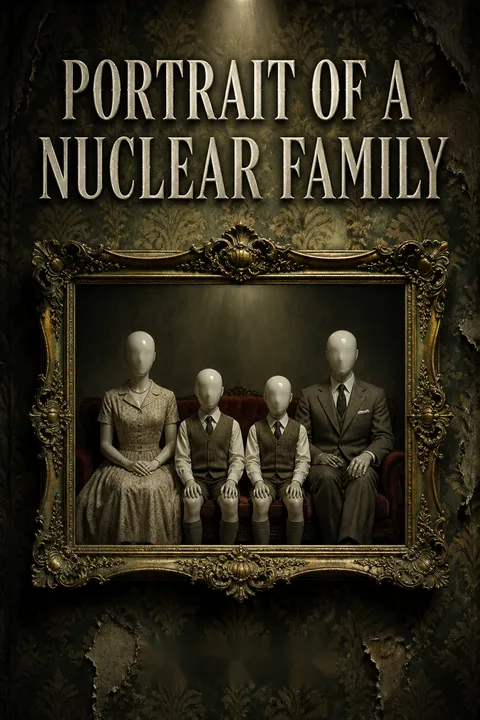
On Christmas Eve, Wanda unveils her masterpiece: the preserved, mounted bodies of her family and friends, arranged in a tableau of domestic bliss. The house is meticulously cleaned and decorated, every detail attended to in service of the illusion. Wanda's parents arrive, expecting reconciliation, and are confronted with the grotesque reality of Wanda's "perfect" family. The scene is both horrifying and tragic—a monument to the destructive power of denial, control, and the longing for lost innocence. Wanda's triumph is short-lived, as the outside world closes in and the consequences of her actions become unavoidable.
16. Arrival of the Grandparents
Wanda's parents, Margery and Harold, are drawn into the nightmare as they discover the truth behind Wanda's invitation. Their reactions—shock, denial, and horror—mirror Wanda's own journey, and the generational cycle of control and repression is laid bare. The confrontation between Wanda and Margery is the culmination of years of resentment, misunderstanding, and failed expectations. The arrival of the police and the collapse of the family's facade mark the end of Wanda's delusion and the exposure of the truth. The nuclear family, preserved in death, is revealed as a monument to the impossibility of perfection.
17. The Unraveling
As the police and neighbors converge on the house, Wanda's carefully constructed reality unravels. The grotesque tableau of her preserved family is exposed, and the full extent of her crimes is revealed. Wanda's final moments are a mixture of triumph and despair, as she clings to the illusion of perfection even as it is destroyed. The house, once a symbol of safety and order, becomes a crime scene—a testament to the dangers of repression, denial, and the refusal to confront the darkness within. The story ends with Wanda's mantra: "Waste not, want not," a chilling reminder of the cost of her obsession.
18. Waste Not, Want Not
In the aftermath, Wanda's voice lingers, rationalizing her actions as acts of love, preservation, and necessity. The phrase "Waste not, want not" becomes both a justification and a curse, encapsulating the twisted logic that led to the family's destruction. The nuclear family, once the ideal of stability and happiness, is revealed as a fragile construct, vulnerable to the forces of denial, control, and unacknowledged pain. The story closes with the image of Wanda, alone in her house of preserved memories, clinging to the illusion of perfection as the world moves on without her.
Analysis
A modern horror of domestic perfection and denialPortrait of a Nuclear Family is a chilling exploration of the dark side of domesticity, perfectionism, and the American nuclear family ideal. Through Wanda's psychological descent, the novel interrogates the costs of denial, repression, and the relentless pursuit of order in the face of chaos. The story is a meditation on generational trauma, the impossibility of reclaiming lost innocence, and the dangers of refusing to confront the darkness within ourselves and our loved ones. The use of taxidermy as both metaphor and plot device is particularly effective, transforming the home into a mausoleum of preserved memories and unacknowledged pain. The novel's structure—blending domestic rituals with escalating horror—serves to heighten the sense of unease and to critique the societal pressures that demand perfection at any cost. Ultimately, the book is a cautionary tale about the limits of control, the necessity of facing uncomfortable truths, and the tragic consequences of loving too blindly and too much. Its final image—a family preserved in death, surrounded by the trappings of holiday cheer—lingers as a powerful indictment of the myths we build to protect ourselves from reality.
Characters
Wanda Stiles
Wanda is the protagonist and tragic anti-heroine of the novel—a woman whose desire for control, order, and familial perfection drives her to madness. Initially portrayed as a loving, if anxious, mother and wife, Wanda's psychological unraveling is catalyzed by the discovery of her son Nathan's journals. Her identity is deeply tied to her role as caretaker and homemaker, and her sense of self-worth is threatened by any deviation from the ideal. As the family's secrets and traumas accumulate, Wanda's coping mechanisms become increasingly pathological: obsessive cleaning, denial, and ultimately, taxidermy and cannibalism. Her journey is marked by a desperate need to preserve innocence and beauty, even as she destroys the very things she seeks to protect. Wanda's relationships—with her husband Charles, her sons, her mother Margery, and her friend Cindy—are shaped by cycles of control, resentment, and longing for validation. Her final transformation into the architect of her family's "perfection" is both horrifying and deeply tragic, a testament to the destructive power of denial and the impossibility of reclaiming lost innocence.
Nathan Stiles
Nathan is Wanda's eldest son, a teenager whose intelligence and artistic talent are matched by a chilling emotional detachment. His journals, filled with anatomical drawings and notes on animal dissection, are the catalyst for the family's unraveling. Nathan's relationship with his mother is fraught—he is both the object of her hopes and the source of her deepest fears. His interactions with his younger brother Simon are marked by rivalry and latent hostility, culminating in violence. Nathan's psychological profile suggests a blend of sociopathy and a desperate need for understanding and control. He is both victim and perpetrator, shaped by the pressures of parental expectation and his own inability to connect emotionally. In death, he becomes an object of preservation, his essence both immortalized and erased by Wanda's obsession.
Simon Stiles
Simon is the youngest member of the Stiles family, a child whose innocence and joy are a source of comfort for Wanda. He is depicted as playful, loving, and eager to please—a stark contrast to Nathan's coldness. Simon's relationship with his mother is one of uncomplicated affection, and he is largely oblivious to the darkness consuming the household. His tragic fate—murdered by his brother and preserved by his mother—serves as the emotional core of the novel. Simon represents the lost innocence that Wanda is desperate to reclaim, and his death is the point of no return for the family. In preservation, he becomes both a symbol of Wanda's love and the ultimate victim of her inability to let go.
Charles Stiles
Charles is Wanda's husband, a man whose initial warmth and stability have eroded into passivity and denial. He is depicted as well-meaning but emotionally distant, more comfortable with routine and avoidance than confrontation. Charles's refusal to acknowledge the severity of Nathan's behavior, and his insistence that everything is a phase, contribute to the family's downfall. His relationship with Wanda is marked by a lack of communication and mutual resentment, as both retreat into their own coping mechanisms. Charles's eventual complicity in covering up Simon's death and his inability to assert himself make him both a victim and an enabler. His fate—murdered and preserved by Wanda—serves as a grim commentary on the dangers of denial and the abdication of responsibility.
Margery Letterman
Margery is Wanda's mother, a woman whose perfectionism and emotional coldness have shaped Wanda's psyche. She is depicted as controlling, judgmental, and emotionally withholding, constantly criticizing Wanda's housekeeping and parenting. Margery's relationship with Wanda is a source of both longing and resentment, as Wanda seeks her approval while chafing under her scrutiny. The generational cycle of control and repression is embodied in Margery, whose own standards of perfection are both a model and a curse for Wanda. Margery's presence in the narrative serves to highlight the roots of Wanda's pathology and the impossibility of satisfying inherited expectations.
Harold Letterman
Harold is Wanda's father, a genial and somewhat oblivious presence in the family. He is more emotionally available than Margery, but largely disengaged from the domestic drama. Harold's relationship with his grandchildren is affectionate, particularly with Simon, and he serves as a counterpoint to Margery's severity. His role in the narrative is to provide moments of levity and to underscore the generational disconnects within the family. Harold's inability to recognize or address the underlying issues mirrors the broader theme of denial and avoidance.
Cindy
Cindy is Wanda's college friend, a free-spirited and irreverent presence who serves as both confidante and foil. Her independence and lack of domestic ties contrast sharply with Wanda's life, and their friendship is marked by both affection and underlying tension. Cindy's attempts to support Wanda are ultimately futile, as she is drawn into the family's orbit of secrecy and violence. Her fate—murdered and preserved by Wanda—serves as a commentary on the dangers of proximity to dysfunction and the limits of friendship in the face of madness.
Detective Sims
Detective Sims is the primary representative of the outside world and the force of accountability. He is persistent, skeptical, and methodical, probing for inconsistencies in Wanda's story and refusing to be placated by appearances. Sims's presence is a constant source of anxiety for Wanda, and his investigation serves as the catalyst for her escalating paranoia and desperation. He embodies the threat of exposure and the inevitability of truth, even as he is ultimately outmaneuvered by Wanda's cunning and the limitations of evidence.
Wes Jarren
Wes Jarren is Nathan's teacher, a young and idealistic figure who recognizes the darkness in Nathan's art and attempts to intervene. His empathy and concern for the family are genuine, and he serves as a potential ally for Wanda. However, his efforts are thwarted by institutional limitations and Wanda's resistance. Jarren's fate—murdered and preserved by Wanda—underscores the futility of outside intervention in the face of entrenched denial and pathology.
Marty
Marty is the local taxidermist who becomes Wanda's mentor in the art of preservation. He provides technical knowledge and validation for Wanda's burgeoning obsession, unaware of the true nature of her intentions. Marty's workshop is both a sanctuary and a laboratory for Wanda, and his eventual murder and preservation mark the point at which Wanda's descent into madness becomes irreversible. Marty represents the seductive allure of mastery and the dangers of unchecked curiosity.
Plot Devices
The Journals as Foreshadowing
Nathan's illustrated journals serve as the primary plot device for foreshadowing the novel's descent into horror. Their presence is both literal evidence of Nathan's cruelty and a metaphor for the hidden darkness within the family. The journals' escalating detail and realism mirror the progression of violence, and their discovery is the catalyst for Wanda's unraveling. They function as a narrative device to externalize internal anxieties and to blur the line between art and atrocity.
Domestic Rituals as Irony
The novel employs the rituals of domestic life—cleaning, cooking, holiday celebrations—as ironic counterpoints to the unfolding horror. These routines are both a means of maintaining appearances and a mechanism for denial. The juxtaposition of mundane activities with acts of violence and preservation heightens the sense of unease and underscores the fragility of normalcy. The rituals become increasingly grotesque as Wanda's obsession with order and perfection leads her to preserve her family in death.
Remodeling and Erasure
The act of remodeling the house serves as both a literal and symbolic device for erasing the past. Wanda and Charles's efforts to remove all traces of violence are a manifestation of their psychological denial and desire to control the narrative. The process of tearing out carpets, repainting walls, and hiding evidence mirrors the internal process of repression and the impossibility of truly erasing trauma. The remodeled house becomes a mausoleum, a space where the past is both buried and preserved.
Taxidermy as Metaphor
Taxidermy is the central metaphor of the novel, representing Wanda's refusal to accept death, change, and imperfection. The act of preserving animals—and eventually humans—is both an assertion of control and a denial of reality. Taxidermy blurs the boundaries between art, science, and desecration, and becomes a vehicle for Wanda's descent into madness. The preserved family is both a triumph of skill and a monument to the destructive power of obsession.
Cannibalism and Communion
The act of consuming the flesh of her victims is a plot device that deepens the novel's exploration of intimacy, guilt, and the desire for unity. Cannibalism becomes a form of communion, a way for Wanda to internalize and possess what has been lost. It is both an act of love and a final erasure of evidence, collapsing the boundaries between preservation and destruction. The motif of "waste not, want not" encapsulates the logic of this device, as Wanda seeks to make use of every part of her family.
Narrative Structure and Interludes
The novel employs a nonlinear structure, with interludes and flashbacks that provide context for Wanda's psychological development and the family's history. These sections deepen the reader's understanding of generational trauma, the roots of Wanda's perfectionism, and the dynamics that shape the family's downfall. The structure allows for a gradual revelation of secrets and motivations, building suspense and complicating the reader's sympathies.
Download PDF
Download EPUB
.epub digital book format is ideal for reading ebooks on phones, tablets, and e-readers.








































