
Plot Summary
Sarajevo's Priceless Treasure Unveiled
After war's end in Sarajevo, rare book conservator Hanna Heath is summoned from Australia to stabilize and study the famed Sarajevo Haggadah—a priceless, illuminated Jewish manuscript that has survived centuries of turmoil and, most recently, a bitter siege. Working behind layers of security, Hanna is keenly aware of the manuscript's rarity and mythology. As she first opens the fragile book, surrounded by wary guardians, she contemplates the vast, multiethnic history and the unknown hands that created and preserved its mysteries. Possessing a scientist's rigor and an artist's awe, Hanna prepares to examine the codex, hoping to uncover the hidden stories trapped in its pages, materials, and stains—unaware how these threads will enmesh her life with the book's tumultuous journey.
Fragments and Faint Clues
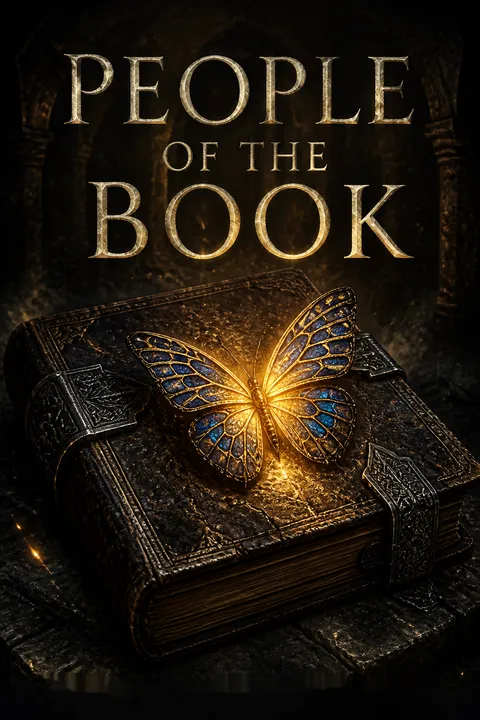
In her initial inspection, Hanna slowly begins uncovering small but tantalizing physical clues: a fragment of butterfly wing pressed deep into the binding, a single white hair, curious salt crystals, and mysterious stains. Each artifact, mundane yet evocative, hints at the far-flung journeys and lives that the Haggadah has touched across centuries. Meanwhile, Hanna faces friction with Ozren, the young Bosnian librarian who saved the book from destruction, and is forced to defend her philosophy—preserving history's scars rather than erasing them. As she scrutinizes the manuscript for damage and evidence, a parallel arises: the book is a survivor, bearing the wounds, migrations, and testimonies of multiple cultures, faiths, and families. Questions swirl about its creation and the shadowy figures who dared illuminate it.
Pages Rebound, Secrets Unbound
As Hanna disassembles and repairs the delicate codex, she reflects on damage inflicted by previous, careless restorers—the act of rebinding as both a repair and a loss. She develops a rapport, then a tension-laced intimacy, with Ozren. Their conversations and a fragile romance are haunted by their past griefs: Ozren's wounded family; Hanna's own sense of inadequacy and disconnect from her formidable surgeon mother. Hanna's clarity and devotion to her craft contrast with her inability to heal human hearts, even her own. Working late into the nights, she pieces together not just physical evidence but glimpses into the lives that have touched the Haggadah—knowing, always, that some secrets may remain forever out of reach.
City at War, Hearts at Risk
Sarajevo's post-war cityscape is marked by devastation, yet hope persists among its cobblestones. Hanna, despite her usual emotional caution, shares an intensely vulnerable night with Ozren, bonding over a shared love for rare books and the ache of loss. Even as impermanence hovers, their brief relationship is filled with moments of comfort, laughter, and a renewed sense of possibility. The city's scars, and the courage of those who protect its fragile symbols, mirror the emotional risks Hanna must take. Yet when confronted with the raw facts of Ozren's suffering—his comatose son, a loss he cannot mend—Hanna withdraws, returning her focus to her work, and leaving love as tentative and imperiled as the treasures she preserves.
Survival and Divided Loyalties
Historical flashbacks reveal the epochal threats the Haggadah has survived—from Nazi occupation in WWII, where a Muslim librarian, Serif Kamal, risks his life to outwit Nazis and hide the book, to earlier eras of violence and migration. In each crisis, the manuscript's unlikely guardians—of all backgrounds—must weigh personal risk against communal responsibility, and material value against spiritual legacy. Through Lola, a young Jewish partisan during WWII, we see how faith in cultural memory, and the compassionate actions of individuals from outside her religion, can shape destinies and challenge narratives of enmity. The Haggadah persists because of such acts of unlikely friendship and hard, moral choices under fire.
Traces Through Vienna's Past
Seeking answers about the Haggadah's lost clasps, the book's path, and her own finds, Hanna consults with her cherished mentor, the elderly Viennese scholar Werner, and Vienna's archival elite. In this "laboratory of apocalypse," the rise of anti-Semitism, forgotten rivalries, and the erasures of the fin de siècle are everywhere. Hanna uncovers evidence of lost beauty—a pair of silver clasps, described by century-old conservators but now vanished after a botched rebinding. Vienna's ghosts, and the choices of those tasked to care for precious things, show how easy it is for resilience to be undermined by self-interest, envy, and forgetfulness, leaving only ephemeral clues behind.
Love and Guilt Across Generations
As Hanna crisscrosses from Vienna to Boston, pursuing forensic evidence in labs and confessions from her powerful mother, she is forced to confront a lineage of reticence and disappointment: her mother's refusal of her father's legacy, the silence about her parentage, and her own patterns of withdrawal. Through interviews, psychiatric insights, and the revelations of her parents' doomed love affair, Hanna comes to realize that love, like preservation, demands both risk and acceptance of imperfection. The search for identity, and the urge to name the unspoken, at last links her more closely to the manuscript's long chain of keepers—each haunted by traumas, each finding solace and meaning in acts of care.
Vienna's Missing Clasps
Hanna's painstaking research into the vanished silver clasps leads her to the story of Florien Mittl, an ailing Vienna bookbinder. In a city thrumming with prejudice, Mittl's own shame, illness, and need for money drive him to a fateful bargain—trading the precious clasps to a Jewish doctor as payment for experimental treatment. The clasps are ultimately transformed, lost to their binding, but preserved in a different domestic form. Through this strand, Brooks echoes a theme: cultural treasures are buffeted by personal failures, small betrayals, and the unconscious workings of history. What is destroyed is not only art, but the forgotten acts of those who once valued its wholeness.
Haggadah in Flames and Ashes
The novel travels back further, to the inquisitorial flames of Renaissance Venice and beyond, tracing the hands of Jews and Christians—rabbis, censors, gamblers, printers—who shape the Haggadah's meaning and fate. Priests like Vistorini wrestle with loyalty and secret identity as they confront works of beauty that offend doctrine. The Haggadah's images, and the very fact of its illustration, become sites of anxiety, contest, and even personal breakdown. Faith, art, and heritage are interwoven in a vortex of risk and necessity—the act of "passing on" the book as crucial as surviving oneself, even when it demands complicity in games of greed and frailty that threaten the soul.
Games of Faith and Betrayal
In Venice, the Haggadah's escape from the fire hangs not just on legal rulings but on literal games of chance—with words, with cards, with fate—where men of faith and learning wager reputation, integrity, and sometimes their very identity. Vistorini, himself a man torn between backgrounds, is both savior and betrayer, his official inscription an ambiguous act of rescue for a book and for his own self-image. These chapters reveal how, across generations, games—be they political, religious, or personal—can preserve as much as they destroy, leaving both damage and hope written in the marginalia of history.
Inquisitors and Secret Artists
Further back in time, the origins of the Haggadah's brilliance are unveiled—the Muslim artist Zahra, enslaved and exiled, who brings her Irani brush and African sensibility into Christian Spain. Trained in Islamic art, sheltering her identity, and secretly in love with a Christian noblewoman, Zahra's illuminations blend influences, genders, and spiritualities, daring to transgress every boundary. Her coded signature—hidden in the folds of a painted robe—waits centuries to be deciphered. Through Zahra, Brooks posits that cultural masterpieces are often created in the margins, by the exiled and the silenced, and that their beauty is a record of resilience and yearning.
The Passover of Exiles
The medieval persecution and expulsion of Spain's Jews become the crucible for both tragedy and transcendence. Families are torn apart; identities are remade; babies receive life not only through births but through ritual immersions into new faiths and lands. The newly illustrated Haggadah becomes a wedding gift, a vessel of memory, and ultimately a passport—its silver medallion traded by a young woman, Ruti, to buy refuge for herself and an orphaned child. The book survives only because individuals are willing to surrender what they cherish or what defines them, creating a cycle of extinction and renewal as tides of hate and migration sweep Europe.
Bravery in a Broken Bosnia
In war-torn Sarajevo, the resurrection of the Haggadah as a symbol of pluralism pits present-day courage against exhaustion, cynicism, and the threat of further cycles of violence and theft. After being restored and mounted in a newly immaculate exhibition, the book's security is threatened by human frailty and ambition. Hanna's growing suspicion, the strain of loss on those responsible, and the presence of political and scholarly actors with hidden motives entwine in a tense, ambiguous dance. The weight of the past, and the symbolic value of the Haggadah, magnify every choice, demanding sacrifice, confession, and—eventually—a troubled kind of redemption.
The Collector's Doubt and Betrayal
Hanna, certain that the displayed Haggadah is not authentic, faces a crisis of faith in her own judgment as her mentor and Ozren, both implicated by personal loss and guilt, dismiss her discoveries. Isolated, humiliated, and questioning her entire professional identity, Hanna is forced to reckon with how easily truth can be suppressed, erased, or rewritten—not just by regimes or censors, but by those she most trusted. Her subsequent retreat from the field mirrors the many self-imposed exiles and isolations within the book itself, and sets the stage for a reckoning with both her lineage and her life's purpose.
False Facsimiles, Real Losses
Years later, the real Haggadah surfaces in Israel, far from Sarajevo, prompting international intrigue, covert diplomacy, and Hanna's own reluctant return to the world of conservation. The "theft" turns out to be an act born of trauma, guilt, and pessimism—a desperate, misguided attempt to shield a treasure from perceived future threats. The conspirators, including Ozren and Werner, are men broken by history who choose secrecy over transparency, inflicting deep wounds on Hanna and the museum's trust. As political delicacies demand oblique solutions, Hanna's expertise and resolve are finally validated, but the scars of betrayal and loss linger.
Trials and Miracles in Jerusalem
Through the voice of an elderly Lola in Jerusalem, we learn how kindness and courage—often across lines of faith—are commemorated and forgotten. Lola's survival, enabled by Muslim protectors honored as righteous gentiles, and her later life cleaning the museum where the Haggadah is ultimately rediscovered, echo the cycles of rescue and neglect, of coldness and connection, that define the book's odyssey. The miracle of its reappearance is less a supernatural event than a testament to unnoticed, ordinary devotion: the act of preserving a plaque, telling a story, cleaning a page. The Haggadah, like the lives it touches, endures because of such daily, often invisible acts.
Homecoming, Forgiveness, Truth Restored
In the novel's conclusion, Hanna's journey comes full circle: she must decide what it means to belong, to forgive, and to continue the work of caretaking in a broken world. Returned to Sarajevo, she and Ozren collaborate not only to restore the Haggadah to its rightful home but to reveal its hidden origins—honoring the African Muslim woman whose artistry made the book immortal. In their reunion, and in the literal and metaphorical act of sparing a book from the flames, the possibility of redemption and healing is offered. The cycles of loss, concealment, and misunderstanding are not broken, but are acknowledged, mourned, and—at last—transformed into a shared promise for the future.
Analysis
People of the Book is a meditation on the fragility and resilience of culture, identity, and truth. Through its layered narrative, the novel honors not only the extraordinary artifact at its heart—the Sarajevo Haggadah—but all those whose humble, courageous, or flawed actions ensure even the possibility of continuity in a broken world. Brooks uses the interdisciplinary tools of conservation, forensics, and fiction to expose how objects become living witnesses to centuries of violence and coexistence, betrayal and repair. The book interrogates who gets to tell history and whose stories survive, using a female protagonist to challenge gendered erasures and a diverse cast to limn the costs of dogma and the necessity of pluralism. In an age grappling with memory wars, forced migrations, and the repatriation of cultural treasures, People of the Book offers a cautionary tale: preservation is an ongoing, collective act, and the lines between restoration and destruction, stewardship and theft, are thinner than we may wish to admit. Ultimately, Brooks's sweeping yet intimate adaptation asks us what kind of ancestors we intend to be, and whether we can find enough courage, humility, and imagination to keep passing the fragile light forward.
Review Summary
People of the Book receives generally positive reviews, averaging 4.04/5. Readers praise Brooks' meticulous historical research, vivid storytelling across multiple timelines, and the fascinating fictional history of the Sarajevo Haggadah. Many appreciate the novel's exploration of Jewish, Muslim, and Christian relationships throughout centuries. Critics note weaknesses in the contemporary storyline, particularly Hanna Heath's melodramatic relationship with her mother and some contrived plot points. The historical vignettes are widely considered the strongest sections, though some readers found the shifting timelines and multiple characters challenging to follow.
People Also Read





Characters
Hanna Heath
Hanna is a brilliant, fiercely independent Australian conservator of rare books. Raised by a cold, accomplished mother who dismisses her chosen field, Hanna's personal relationships are marked by emotional guardedness and longing for acceptance. Her scientific rigor, tactile fascination with materials, and intuition make her an extraordinary sleuth of material history. Hanna's journey with the Haggadah—both a professional milestone and a personal crucible—triggers deep ambivalence about heritage, trust, and the nature of love and belonging. Her relationships with mentors, lovers, and her absent father parallel the book's narrative: Hanna, too, is a survivor of damage, both visible and hidden, seeking meaning and healing in the act of connecting past to present in all its flawed beauty.
Ozren Karaman
Chief librarian of the Sarajevo museum, Ozren becomes both partner and adversary to Hanna. A Bosnian Muslim, scarred physically and emotionally by war, Ozren is marked by resilience, melancholy, and the burden of having lost his wife and son. He embodies the complexities of Bosnia's multiethnic, wounded identity, at once proud and disillusioned. His decision to later collaborate in the Haggadah's risky removal grows from grief, fear, and a broken faith in his society's power to protect its treasures. Ozren's intellectual and moral struggle, his vulnerability, and his need for forgiveness mirror the dilemmas that confront those who serve as perennial stewards of culture under threat.
Werner Heinrich
A legendary Viennese specialist in Hebrew manuscripts and Hanna's beloved teacher, Werner is the epitome of old-world scholarship—but also a man heavy with survivor's guilt and trauma. As a young boy, he was forced by the Nazis to burn priceless Jewish books; as an adult, he is obsessed with preventing further loss, ultimately becoming complicit in the Haggadah's falsification and secret removal. Werner's brilliance and affection for Hanna are undermined by his inability to trust, his wounds distorting even noble intentions into dangerous acts. His story is a meditation on how trauma can lead even the well-intentioned to betray those they most wish to protect.
Serif Kamal
In WWII Sarajevo, Serif Kamal, a respected Muslim librarian and scholar, is thrust into the role of protector for both the Haggadah and the Jewish orphan Lola. His calm, erudite manner, interfaith generosity, and willingness to risk everything define him as one of the novel's true heroes. Through his eyes, the cost of ethical action—personal, familial, spiritual—is made clear. His kindness, dignity, and later post-war persecution highlight both the fragility and necessity of cross-cultural solidarity in the face of fanaticism.
Lola
From a humble Bosnian Jewish background, Lola's adolescent experiences—escape, loss, friendship, resistance, and ultimately the kindness of strangers—embody the costs and possibility of resilience. Saved and hidden by Serif Kamal, she becomes both a literal and figurative "person of the book"—her survival illustrating the power of memory and of small acts of bravery. As an old woman in Jerusalem, she honors the past through ritual and work, symbolizing how stories are preserved not only by scholars but by ordinary, invisible hands.
Zahra bint Ibrahim al-Tarek (al-Mora)
Through historical fragments, we learn that Zahra is the African Muslim illuminator responsible for the Haggadah's stunning images. Born in Ifriqiya, enslaved, she survives by painting for Jews and Christians, infusing her secret signature into the manuscript. Ambivalent about her identity, she lives on the margins of multiple societies, loving another woman and pouring herself into her art. Zahra's existence and erasure—only centuries later glimpsed by Hanna—illuminate questions of authorship, silencing, gender, and the secret resilience of exiled creators.
Hanna's Mother (Sarah Heath)
Sarah, a preeminent Australian neurosurgeon, is defined by her emotional reserve, ambition, and complex relationship to motherhood. Her inability to connect with Hanna, her secret loss of Hanna's father and guilt over his death, and her inability to forgive or be forgiven contribute to Hanna's own emotional landscape. Sarah's story reveals how knowledge and power are not always sufficient to deliver healing—either in medicine or in families.
Amitai Yomtov
An Israeli manuscripts expert and one of the few who both guides and thwarts Hanna, Amitai embodies the dual role of teacher and gatekeeper. His deep expertise, loss of a child, and loyalty to his country set him at painful odds with both scholarly and moral imperatives. Ultimately, his recognition of the power and needs of restoration over possession helps resolve the Haggadah's fate, inverting a tradition of secrecy and rivalry among cultural caretakers.
Judah Aryeh
In the Venice of the Inquisition, Judah balances wit, learning, and survival as he navigates censorship, prejudice, and his own frailties (notably, a gambling addiction). His debates with Vistorini, and his efforts to preserve Jewish texts in the face of official suspicion and games of chance, mark him as both a victim of and a participant in the system. Judah's story is a microcosm of the dangers and bravery of spiritual intermediaries in perilous times.
Vistorini
Vistorini, the Inquisition's censor in 1609 Venice, is torn between religious mandate and private empathy. His ambiguous acts—both destruction and saving—are undercut by a sense of divided identity, spectacle, and spiritual exhaustion. Vistorini's relation to Aryeh and the book embodies the paradox that those charged with policing faith can be both rescuers and destroyers, their legacies tangled with both justice and guilt.
Plot Devices
Multi-layered flashbacks through artifacts
The chief device is the use of physical traces—wing, hair, salt, stains—discovered by Hanna in the Haggadah as portals through which the story time-travels into the past. Each artifact becomes a narrative doorway, drawing the reader into emblematic episodes that explain not only the provenance of the clue but also unveil new facets of faith, identity, love, and loss across the centuries. This innovative structure transforms forensics into story, restoration into revelation.
Framing device of the book as witness
The "person of the book" extends to both the manuscript and its keepers, each generation's actions inscribed upon its existence—sometimes literally in stains and ownership marks, sometimes metaphorically in sacrifices or betrayals. The book's journey through war, exile, religious strife, and familial trauma serves as the lattice on which all other stories grow, emphasizing the ways in which objects become animate, their meanings evolving with each new guardian.
Interwoven narratives and temporal leaps
The narrative moves seamlessly between Hanna's contemporary story, the memories and testimonies of those who preserved or threatened the Haggadah, and the elaborate reconstruction of its creation. By echoing motifs—exile, secrecy, moral ambiguity—across timelines, Brooks accentuates the costs of heritage and the fragility of tolerance. This technique keeps the stakes high and constantly deepens each revelation, showing how survival and violence are mirrored across the centuries.
Embedded mysteries and partial revelations
Brooks deploys gradual discovery—both in Hanna's forensic work and in the novel's deeper secrets about authorship, betrayal, and rescue. Devices such as ambiguous stains, lost clasps, and signatures hidden in brush-strokes incrementally unfold; each question answered gives rise to another. This detective-story structure, coupled with the emotional stakes of recovery (or loss), draws readers forward and intensifies every plot twist.
Doubles, mirrors, and mistaken trust
Characters often double or echo each other—Hanna and her mother, Zahra and her beloved, Vistorini and Aryeh, Werner and Ozren—highlighting how love, loss, and guilt ricochet through time. The repeated motif of betrayal by those closest—be they family members or professional mentors—forces protagonist and reader alike to question who can be trusted, and what "ownership" of a story or artifact really means.
The use of forgery and authenticity
The climactic betrayal—substituting a facsimile for the real Haggadah—literalizes questions about what is truly preserved, valued, and passed on. The arc from suspicion to certainty, from false accusations to painful truths, exposes the fragility of both amateur and expert knowledge, and the high stakes of presuming to "know" the past.

Download PDF
Download EPUB
.epub digital book format is ideal for reading ebooks on phones, tablets, and e-readers.








































