
Key Takeaways
1. The "Works of the Law" Debate: A Persistent Puzzle
"It is a matter of doubt, even among the learned, what the works of the law mean."
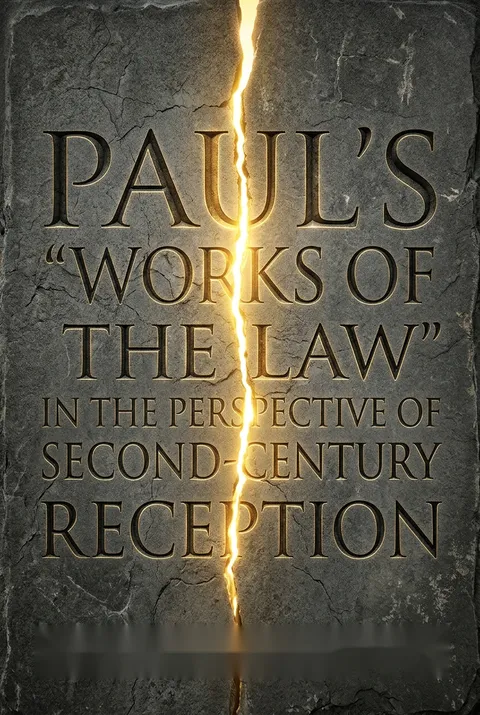
Paul's famous declaration. The Apostle Paul famously declared that righteousness comes by faith, not by "works of the law," a forceful antithesis in his letters to the Romans and Galatians. This statement has profoundly shaped Christian theology, becoming a definitive articulation of the faith for many. However, the precise meaning of "works of the law" remains a central point of contention in New Testament studies.
Core questions. The debate revolves around fundamental questions: What specific "works" are being opposed? Which "law" is Paul referring to? What is the significance of practicing these works, and why does Paul reject them? The answers to these questions directly influence one's understanding of faith, justification, and the very essence of the Christian gospel.
Unexamined early witnesses. Despite extensive modern scholarship, a crucial body of evidence has been largely overlooked: the perspectives of early patristic figures who lived in close proximity to Paul's debates. This study aims to bridge that gap, exploring how these second-century readers understood "works of the law" and how their insights might inform contemporary discussions.
2. The "Old Perspective": Works as Human Effort for Salvation
"The true meaning of Christianity," according to Martin Luther, is the teaching that "we are justified by faith in Christ, not by the works of the Law."
Reformation roots. The "Old Perspective" on "works of the law" is deeply rooted in the Protestant Reformation, particularly in the theology of Martin Luther and John Calvin. They viewed "works of the law" as any and all human actions performed to earn justification or salvation before God, emphasizing humanity's inability to perfectly fulfill God's demands.
Broad interpretation. For Luther, "works of the Law" were to be taken "in the broadest possible sense," encompassing civil, ceremonial, and moral law, even love for God. Calvin concurred, arguing that Paul "includes all works without exception, even those which the Lord produces in His own people," setting up an absolute contrast between faith and any human merit.
Modern echoes. Twentieth-century scholars like Rudolf Bultmann and Douglas Moo, while nuanced, largely maintained this interpretation. Bultmann described it as "man’s self-powered striving to undergird his own existence," while Moo, though acknowledging the Mosaic context, ultimately saw "works of the law" as a synecdoche for a broader rejection of human "achievement" in justification.
3. The "New Perspective": Works as Jewish Identity Markers
"The problem is, again, that of Gentile inclusion in the people of God."
Challenging tradition. The "New Perspective on Paul," inaugurated by E.P. Sanders in 1977, challenged the traditional Reformation reading. Sanders argued that first-century Judaism was not a system of "works-righteousness" but "covenantal nomism," where obedience to the law was a response to God's grace, not a means of earning it.
Specific practices. For Sanders, James Dunn, and N.T. Wright, "works of the law" referred specifically to Mosaic commands like:
- Circumcision
- Food laws
- Sabbath observance
These practices functioned as "boundary markers" that identified Jews as God's chosen people and separated them from Gentiles.
Differing rationales. While agreeing on the nature of these works, New Perspective scholars offered varied reasons for Paul's opposition:
- Sanders: Paul's own experience as an apostle to the Gentiles and his converts' experience of receiving the Spirit apart from the law.
- Dunn: Paul's rejection of ethnocentric exclusivism and the "boundary-drawing attitude itself."
- Wright: The fulfillment of God's covenant promises in Christ, which were always intended for all nations and addressed humanity's sinfulness beyond what the Torah could achieve.
4. Early Christian Consensus: Mosaic Law, Not General Works
"The law promulgated at Horeb is already obsolete, and was intended for you Jews only, whereas the law of which I speak is simply for all men."
Specific, not general. The early patristic sources consistently understood "works of the law" as referring to the Mosaic law, specifically its distinctive practices. These included circumcision, Sabbath observance, Jewish calendar feasts (new moons, Passover), sacrifices, and dietary regulations. This stands in stark contrast to the "Old Perspective's" broad definition of "works" as any human effort.
Distinction from good works. Crucially, these early Christian writers explicitly distinguished these Mosaic "works of the law" from general good or righteous works. Justin Martyr, for instance, praised Jewish acts of mercy while rejecting their ritual observances. Irenaeus affirmed the Decalogue's moral precepts as "the entrance into life," even while declaring other Mosaic laws obsolete.
Christ's intensified law. The early church did not reject "law" or "works" in an absolute sense. Instead, they believed Christians were under the "law of Christ," which often intensified the moral demands of the Decalogue, extending prohibitions like adultery and murder to lust and anger. This new law superseded the Mosaic code, making its specific ritual practices unnecessary.
5. Significance: Jewish Identity, Not Self-Righteousness
"For you are not recognised among the rest of men by any other mark than your fleshly circumcision."
Boundary markers. For early Christian writers, observing the "works of the law" primarily signified identification with the Jewish people, their covenant, and their distinct way of life ("Judaism"). These practices served as clear "boundary markers" separating Jews from Gentiles, a point explicitly articulated by Justin Martyr in his Dialogue with Trypho.
Not earning salvation. The patristic sources do not portray Jewish interlocutors as attempting to earn salvation through these works in a "works-righteousness" sense. Instead, the debate centered on whether Gentiles needed to adopt these markers to be part of God's people. Trypho's argument, for example, was that Justin should be circumcised and observe the law to be "incorporated into the body of your people."
Old covenant association. From a Christian perspective, continuing these practices also represented an adherence to the "old covenant" and a pre-Christological understanding of humanity's spiritual condition. It was seen as identifying with a past dispensation, a "yoke of bondage," rather than the freedom offered in Christ.
6. Reasons for Rejection: Christ's New Covenant and Prophetic Fulfillment
"An everlasting and final law, Christ himself, and a trustworthy covenant has been given to us, after which there shall be no law, or commandment, or precept."
Christ's new law. The most prominent reason for rejecting the Mosaic "works of the law" was the advent of Christ and the establishment of a new covenant and a new law. This "law of Christ" superseded the old, rendering its specific ordinances obsolete. Justin Martyr, Ignatius, and Irenaeus all emphasized Christ as the new Lawgiver, whose teachings replaced the Mosaic code.
Prophetic witness. Early Christians consistently appealed to the Hebrew Scriptures themselves, arguing that the prophets foretold the coming of this new covenant and the cessation of the old works. Isaiah and Jeremiah, in particular, were cited to show that God promised a "new covenant" for "all nations," not just Israel.
Universal scope and transformation. The new covenant's universal nature, intended for all nations, meant that becoming a Jew through Mosaic observance was no longer necessary. Furthermore, Christ's transformative power, often described as a "new birth" or "circumcision of the heart," rendered the old laws (given for hard-hearted Israel) superfluous, enabling a deeper, spiritual obedience.
7. Abraham's Example: Justification Before the Law
"Abraham himself, without circumcision and without observance of Sabbaths, 'believed God, and it was reckoned to him as righteousness; and he was called the friend of God'."
Precedent for faith. A recurring and powerful argument in early Christian writings, mirroring Paul's own, was the example of Abraham. Justin Martyr and Irenaeus repeatedly highlighted that Abraham was justified by faith before he received circumcision and long before the Mosaic Law was given. This demonstrated that these "works of the law" were not essential for righteousness.
Spiritual lineage. This argument established a spiritual lineage for Christians, positioning them as the true "spiritual Israel" and descendants of Abraham through faith, regardless of their physical circumcision or ethnic origin. This directly countered Jewish claims of exclusive inheritance based on fleshly descent.
Law's purpose clarified. By showing Abraham's justification apart from the law, these authors argued that the Mosaic Law and its specific works were given for other purposes:
- To serve as a "sign" for the Jewish people.
- To constrain hard-hearted Israel due to their sins.
- Not as a means of achieving righteousness.
8. Early Perspectives Align with the "New," Not the "Old"
"With respect to the works themselves and the significance of practicing them, the so-called new perspective is found to correspond quite closely with these second century perspectives, while the old perspective lacks similar parallels."
Meaning and significance. On the fundamental questions of "what works of what law" and "what does their practice signify," the early patristic perspectives align remarkably with the "New Perspective on Paul." Both identify the Mosaic Law and its specific ritual practices (circumcision, Sabbath, food laws, sacrifices) as the "works of the law." Both also agree that these works functioned as ethnic identity markers for the Jewish people, not as a means of earning individual salvation through moral effort.
Divergence on "why." However, this alignment is less consistent regarding why Paul rejected these works. While the early sources share N.T. Wright's emphasis on covenantal fulfillment and the universal scope of God's promises, they do not strongly support Sanders' experiential rationale or Dunn's focus on "boundary-drawing attitudes" as the primary reason for Paul's opposition.
"Old Perspective" as a novum. The "Old Perspective's" central tenets—that "works of the law" refer to all human efforts to earn salvation, and that Jews were engaged in "works-righteousness"—find virtually no support in the second-century reception. This suggests that the Reformation's interpretation, while profoundly influential, represents a significant theological innovation rather than a direct continuation of early Christian understanding.
9. Paul's Core Message: The Messiahship of Jesus
"It is because Jesus is the Messiah and has established the new covenant that Paul implores the Galatians to become like him."
Beyond the works. The early patristic sources suggest that the debates over "works of the law" were ultimately subordinate to a more fundamental question: the identity of Jesus as the Messiah. Both Justin Martyr and his Jewish interlocutor, Trypho, implicitly agreed that if Jesus was the Messiah, then his new law and covenant would indeed supersede the Mosaic Law.
Christ as the new lawgiver. Paul's rejection of Mosaic practices was not an arbitrary act or a reaction to social exclusivity, but a logical consequence of Christ's messianic advent. Jesus, as the promised Messiah, inaugurated a new dispensation, a "law of Christ," which redefined and intensified ethical demands while rendering the old ritual markers obsolete.
Continuity and discontinuity. The early church understood Paul's message as affirming a profound continuity with God's overarching plan (prophesied in the Hebrew Scriptures) while simultaneously marking a decisive discontinuity in the specific practices required for God's people. The "works of the law" were rejected not because "works" were inherently bad, but because they belonged to a former covenant now fulfilled and surpassed by Christ.
People Also Read




Download PDF
Download EPUB
.epub digital book format is ideal for reading ebooks on phones, tablets, and e-readers.








































