
Key Takeaways
1. Biblical Ministry: God's Design, Not Man's Trends
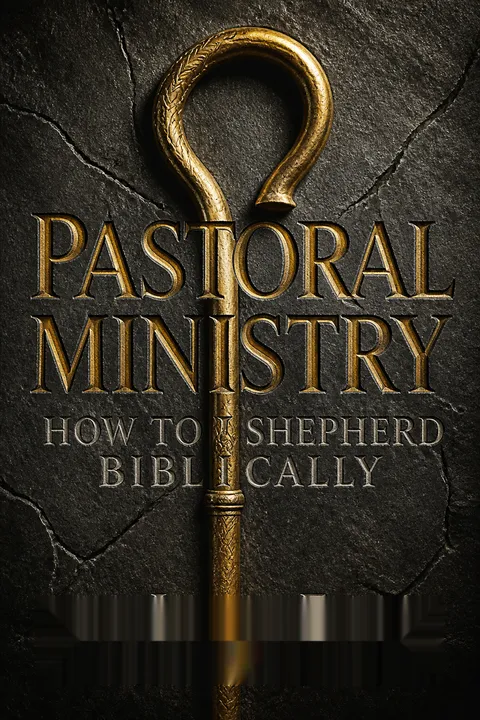
This volume purposes to recover, reaffirm, and restore a biblical approach to pastoral ministry.
Reclaiming purpose. Many contemporary churches have strayed from God's intended design, adopting consumer-driven or market-driven philosophies that prioritize human needs and cultural relevance over divine revelation. This shift risks creating a "Christ-condemned church" that is less biblical and more palatable to man. The core challenge is not between traditional and contemporary, but between scriptural and unscriptural approaches.
God's unchanging will. While time and culture evolve, God's character, revelation, and will remain constant. Therefore, timeless biblical mandates must define ministry, not fleeting temporal trends. Pastors are undershepherds, laborers in Christ's church, which He purchased with His blood and continues to build. Their authority stems from Scripture, not from popular opinion or modern theories.
The church's essence. The church is the Lord's promised institution, a gathering of true worshipers, precious to Christ, and the earthly expression of heavenly reality. It is the realm of spiritual fellowship, the proclaimer of divine truth, the chief place for edification, and the launching pad for world evangelization. Effective ministry is built on understanding and upholding these foundational truths, ensuring spiritual relevance over worldly appeal.
2. The Pastor's Character: Above Reproach in Every Sphere
"Above reproach" is the overarching quality of the pastor.
Blameless living. A pastor must be "above reproach" (anengklētos), meaning blameless and consistently exemplary in his life. This isn't sinless perfection, but a high standard ensuring his preaching isn't contradicted by his lifestyle, and his indiscretions don't shame the ministry. This quality is foundational for anyone assuming the stewardship of God's ministry.
Moral integrity. The pastor's character is detailed in three crucial areas:
- Sexual Morality: He must be "the husband of one wife," a "one-woman man" devoted solely to his spouse, free from past or present sexual scandal. This sets a model for God's marital ideal.
- Proven Family Leadership: He must manage his household well, with children who believe and are not accused of dissipation or rebellion. His home is the proving ground for his spiritual leadership in the church.
- Nobility in Attitude and Conduct: He must not be self-willed, quick-tempered, addicted to wine, pugnacious, or fond of sordid gain. Instead, he should be hospitable, loving what is good, sensible, just, devout, and self-controlled.
Credibility and power. A man marked by these qualities gains credibility, honor, and respect, endowing him with effective leadership. This internal godliness, rather than external control, is what truly qualifies a man for pastoral ministry, ensuring his life aligns with the divine model he presents.
3. The Divine Call: Assurance Through Confirmation and Competence
The work of the ministry is too demanding and difficult for a man to enter it without a sense of divine calling.
Beyond general service. While all Christians are called to salvation and service, a distinct call to vocational ministry involves specific leadership in the church. This calling is imperative, as the ministry's demands require an unshakable conviction that God has personally selected and commissioned the individual. Without this divine urgency, ministers often lack courage and perseverance.
Four pillars of assurance. A man can evaluate his call through four criteria:
- Confirmation by Others: Public recognition by godly leaders and the church, often through ordination, validates the call. This involves others identifying gifts and leadership abilities, and affirming the individual's suitability for ministry.
- Confirmation from God's Providence: God orchestrates circumstances, opening doors for effective service and providing a place of ministry. This doesn't guarantee easy results, but a sense of divine leading despite obstacles.
- Possession of Abilities: God gifts men for the ministry with instructional (preaching, teaching), shepherding (caring, guarding), and administrative (oversight, ruling) capabilities. Training develops these gifts, but doesn't create them.
- Deep Longing: An intense, disinterested desire for the work of ministry, not for status or personal gain, but for God's glory and the good of souls. This inner compulsion is so strong that other vocations seem impossible.
Integrity of life. Underlying all these is a lifestyle characterized by moral integrity, consistent with biblical qualifications. This ensures that the leader's character aligns with his calling, providing a powerful witness and preventing hypocrisy.
4. Holistic Training: Character, Knowledge, and Skills
Specifically, training for ministry demands the pursuit of at least the three phases of training noted in Paul’s exhortation to Timothy (1 Tim. 4:12–16): godly character (what a man should be), biblical knowledge (what a man should know), and ministry skills (what a man should be able to do).
Foundational godliness. Training for ministry must prioritize godly character, as it is the cornerstone of effective service. Without spiritual, moral, and personal qualifications, ministry attempts can lead to tragedy. This involves rigorous self-discipline in moral life, home life, maturity, and reputation, cultivated through Scripture, accountability, and emulation of godly examples.
Indispensable biblical knowledge. A deep understanding of God's Word is crucial for personal growth and effective ministry. This includes:
- Linguistic Facility: A working knowledge of Greek and Hebrew to accurately interpret Scripture and evaluate commentaries.
- Theological Framework: A cohesive understanding of historical, biblical, and systematic theology to grasp God's revelation comprehensively and defend truth.
- Bibliographical Familiarity: Exposure to a broad range of Christian authors and thinkers to understand doctrinal development and avoid past errors.
This knowledge, often best acquired through formal, rigorous instruction, prevents superficiality and ensures preaching is rooted in truth.
Honing ministry skills. Academic achievement alone is insufficient; practical skills are vital. A prepared pastor learns to:
- Lead with Conviction: Anchored in strong biblical beliefs, generating discipline, vision, and courage.
- Teach with Authority: Deriving authority solely from God's Word, communicating it clearly and persuasively.
- Preach with Passion: Personally embracing the message, demonstrating zeal and concern for listeners.
- Shepherd with Care: Vigilantly watching, guiding, and providing for the flock's welfare with love.
Effective training blends academic rigor with hands-on ministry experience, ideally within a local church context, to develop these essential skills.
5. The Pastor's Home: A Prerequisite and Model for Ministry
If a man cannot lead the little flock of his own family effectively, he certainly cannot fruitfully undertake leadership of the larger flock, the church.
Biblical imperative. God mandates a strong, exemplary family life as a prerequisite for pastoral ministry, not a casualty of it. The pastor must be wholly devoted to his wife, leading his household excellently, and raising children who believe and live harmoniously with his example. These standards are timeless and non-negotiable, serving as a visible testament to his spiritual leadership.
Parsonage under siege. Modern ministry pressures, including constant demands, public scrutiny, and societal decline in family values, pose significant hazards to a pastor's marriage and family. However, these challenges are not insurmountable. A pastor and his wife must proactively embrace biblical standards and depend on God's strength to withstand assaults, ensuring their home remains a haven of retreat, relaxation, and spiritual refreshment.
Cultivating strength. A strong home is built on the fruit of the Spirit and the love of Christ. Husbands and wives must continually reaffirm these truths, practicing sacrificial love, patience, kindness, and self-control. Open communication, mutual support, and shared spiritual disciplines are vital. The pastor's home, when flourishing, serves as a powerful example to the congregation, demonstrating the transformative power of Christ in family life.
6. Prayer: The Pastor's Foundational Power Source
Prayer is obviously of momentous consequence!
Foundational, not supplemental. Prayer is the most strategic approach to ministry, foundational for spiritual victory, not merely a supplement to human effort. Jesus modeled extended prayer before crucial decisions, and Paul's intercessions for believers reveal prayer's paramount importance in Christian living. Neglecting prayer means ministering by one's own agenda, not Christ's.
Spiritual warfare. Many problems faced by individuals and churches are ultimately spiritual, not merely physical or financial. Recognizing that "our struggle is not against flesh and blood, but against the rulers, against the powers, against the world forces of this darkness, against the spiritual forces of wickedness in the heavenly places" (Eph. 6:12) transforms prayer from a perfunctory exercise into a vital weapon. Leaders must prioritize prayer meetings over planning meetings.
All-encompassing prayer. Paul's call to "all-out prayer" in Ephesians 6:18 emphasizes:
- All situations: Every form of prayer (praise, thanks, confession, petition, intercession).
- All seasons: Habitual, continuous prayer.
- All in the Spirit: Praying in the Spirit's power and guidance, aligned with God's Word.
- All steadfastness: Alert, watchful, persevering prayer.
- All saints: Interceding for the entire body of Christ.
This comprehensive approach to prayer is essential for glorifying God, multiplying spiritual fruit, and authenticating discipleship.
7. The Pastor's Study: The Engine Room of Ministry
If the Sunday morning message is the driving force in the life of the church and right behind it the Sunday evening message, if this is where people are taught, if it is the time and place for teaching the great truths around which the church builds and grows, then it demands the most rigorous kind of study.
Crucial for church life. The pastor's study is the generative force of church life, where the Sunday message, the primary point of contact for the entire congregation, is meticulously prepared. This demands rigorous, diligent study of God's Word to ensure that foundational doctrines are accurately propounded, allowing God to speak through His Word and build His people spiritually.
Seminary's influence. Seminary training, particularly in biblical languages (Hebrew and Greek), systematic theology, and church history, is invaluable for deep, accurate exposition. While a "bird's-eye view" of Scripture is helpful, the "worm's-eye view"—the ability to dissect the original text and understand its nuances—is indispensable for accuracy and boldness in preaching. This rigorous academic discipline prepares pastors for a lifetime of hard work in the study.
Diligence and integrity. Study is hard, relentless work that never truly ends for a pastor. It requires unwavering discipline, intellectual integrity, and a commitment to accuracy. A pastor must never pretend preparedness; if a text is not understood, it should not be preached until it is. This diligence, coupled with a deep devotion to God and His Word, ensures that the pastor's teaching is profound, trustworthy, and transformative for the congregation.
8. Compassion and Care: Balancing Nurture with Guidance
The shepherd who does not slight His teaching of the Word of God "in order to serve tables" can expect the same outcome as from the Acts strategy.
Universal and exemplary compassion. All Christians are called to love and show compassion, but a pastor's responsibility is accentuated as he must model this for the flock. This includes deep concern for the lost, the downtrodden (widows, orphans, poor, disabled), and fellow believers. A pastor's heart for people, properly defined, is a commitment to give his life for the sheep, even if his expression of affection is reserved.
Prioritizing spiritual needs. While compassionate care for physical needs is vital, the pastor's primary function is guidance through teaching the Word and guarding from error. The example of Acts 6:1-7 shows that deacons were appointed to handle physical needs ("serve tables") so apostles could "devote themselves to prayer, and to the ministry of the word." Pastors who focus excessively on physical care may neglect their core duty and deprive deacons of their God-given function.
Nurturing through truth. A shepherd nurtures his flock best by giving them what they need most: biblical teaching, reinforced by personal example. This involves exhorting, encouraging, and imploring them to respond to God's Word, leading them to "walk in a manner worthy of God." This balance ensures that compassion is biblically controlled, addressing ultimate spiritual needs while inspiring the entire church to engage in holistic care.
9. True Worship: Honor and Adoration in Spirit and Truth
All worship not offered in spirit and in truth is utterly unacceptable to God, no matter how beautiful the external forms.
Beyond ritual. Worship is not about holy hardware, sacred rites, or formal liturgy; it is about the attitude of the worshiper's heart toward God. Deepening worship occurs when the heart is earnest and the mind is consumed by truth. God rejects all self-styled or aberrant worship, emphasizing that sincerity alone is not the test of true worship.
Four forms of deviant worship:
- Worship of False Gods: Idolatry, whether of material things, power, or pagan deities, is an abomination to God, who is jealous and will not share His glory.
- Worship of the True God in a Wrong Form: Reducing God to an image (statue, painting, or even a mental visualization) corrupts worship and denigrates His eternal glory. Only Christ's incarnation adequately reveals God in tangible form.
- Worship of the True God in a Self-Styled Manner: Adding to or taking away from God's commands for worship, as the Pharisees did with their traditions, makes worship an abomination. The principle of sola Scriptura governs acceptable worship.
- Worship of the True God with a Wrong Attitude: Hypocrisy, disdain, or flippancy in worship, even with correct forms, is unacceptable. True worship requires devotion of the whole heart, soul, mind, and strength, filled with awe and reverence.
Whole-life worship. True worship is honor and adoration directed to God in everything, an overflow of a heart warmed by truth, righteousness, and love. It encompasses:
- Outward Dimension: Treating others with sensitivity, evangelism, and giving to those in need.
- Inward Dimension: Personal behavior characterized by goodness, righteousness, and truth.
- Upward Dimension: Continually offering sacrifices of praise and thanksgiving to God.
This whole-life worship, presenting oneself as a living sacrifice, is the primary essential and the greatest priority in the Christian life.
10. Preaching: The Supreme Priority of Biblical Exposition
The faithful preaching of the Word is the most important element of pastoral ministry.
God's ordained means. Preaching is God's primary means to save, sanctify, and strengthen His church. It elicits saving faith, imparts knowledge of truth leading to godliness, and encourages believers to endure suffering. Paul's charge to Timothy to "preach the word" (2 Tim. 4:2) underscores its paramount importance, a theme echoed throughout the New Testament and validated by church history.
Biblical foundation. Effective preaching must be built solely on the Word of God, not on psychology, social commentary, or political rhetoric. Preachers must "hold fast the faithful word," loving it, adhering to it, and believing in its absolute authority and sufficiency. Scripture alone is the source of spiritual food, able to build up believers and lead to salvation. Departing from this foundation leads to the church's weakness and worldliness.
Proper content and commitment. Preaching must contain solid, substantial, and abundant teaching, accurately explaining Scripture and applying it to life. It must also include exhortation in "sound doctrine" and the ability to "refute those who contradict," protecting the flock from false teaching. This demands intense commitment, diligence, and hard work from the preacher, who, as a steward from God, is under compulsion to proclaim God's Word faithfully, regardless of popular trends or personal cost.
11. Leadership: Servant-Hearted Vision and Mobilization
Leadership in a local church is indispensable if the church is to have direction and purpose.
Essential for the church. Leadership is vital for the church's direction, purpose, and mission. Without it, the church flounders, unable to minister effectively, reach the lost, or glorify God. The pastor, as the ultimate leader, is called to provide this direction, rooted in biblical principles and distinct from secular leadership models.
Biblical basis and guidelines. God has always worked through human leaders, from Abraham to the apostles, to accomplish His will. The New Testament clearly designates elders/overseers as leaders, responsible for guarding, leading, and feeding the flock. This leadership is a spiritual calling, requiring adherence to biblical qualifications (1 Tim. 3:1-7; Titus 1:5-9) and servant-hearted execution, not lordship.
Servant leadership. The great paradox of Christian leadership is that greatness lies in servanthood, as Christ modeled by washing His disciples' feet. Leaders are servants of God first, accountable to Him, and serve the sheep for their ultimate good, not their own whims. This Spirit-led approach, characterized by humility and a focus on God's purposes, is ultimately more effective than traditional, power-driven leadership.
12. Outreaching and Discipling: The Mandate to Reproduce
The mandate, then, is to evangelize the world.
Christ's imperative. Evangelism is a non-negotiable mandate from Christ, encompassing more than just proclamation. It involves:
- Going: Proactively reaching out to the lost, not expecting them to come to the church.
- Gospel Preaching: Presenting the pure message of Christ's deity, atonement, resurrection, repentance, and faith, without dilution.
- Transformed Lives: Calling sinners to public declaration of faith and repentance, resulting in lives yielded to Christ.
- Ongoing Discipleship: Incorporating converts into the local church for spiritual growth and maturity.
This holistic approach ensures that evangelism results in true disciples, not just professions of faith.
Pastor's catalytic role. The pastor must be actively engaged in evangelism, motivated by obedience to Christ, love for Christ, and genuine love for lost mankind. He serves as a catalyst, inspiring his congregation through his personal example, clear expectations, fervent exhortations, and promotion of special evangelistic efforts. The church's evangelistic zeal directly correlates with its leadership's fervor.
Christ's discipling method. Discipleship is a clear command, not an option, for all believers, especially pastors. Jesus' method for making disciples involved:
- Prayerful Meditation: Seeking God's guidance in selecting disciples.
- Careful Selection: Choosing those whom God wants, who evidence readiness for discipleship.
- Purposeful Association: Spending valuable, Christ-honoring time with disciples for fellowship, teaching, and modeling.
- Powerful Proclamation: Equipping disciples to go out and preach the gospel with authority.
This process ensures that disciples are nurtured towards Christlikeness and empowered to reproduce spiritual leadership, continuing the chain until Christ's return.
Review Summary
Pastoral Ministry receives strong reviews (4.12/5) for its comprehensive, biblically-grounded approach to ministry. Readers praise its breadth, covering topics from character and calling to prayer, discipleship, and leadership. MacArthur and The Master's Seminary faculty emphasize scriptural authority and practical application. Strengths include applicable advice for churches of all sizes and emphasis on pastoral integrity. Common criticisms note redundancy from multiple authors, lack of cohesiveness, and occasionally dry academic tone. Some reviewers desired more practical examples. Recommended especially for new or aspiring pastors seeking biblical foundations for ministry.
People Also Read








About the Author
Other books by John F. MacArthur Jr.








Download PDF
Download EPUB
.epub digital book format is ideal for reading ebooks on phones, tablets, and e-readers.








































