
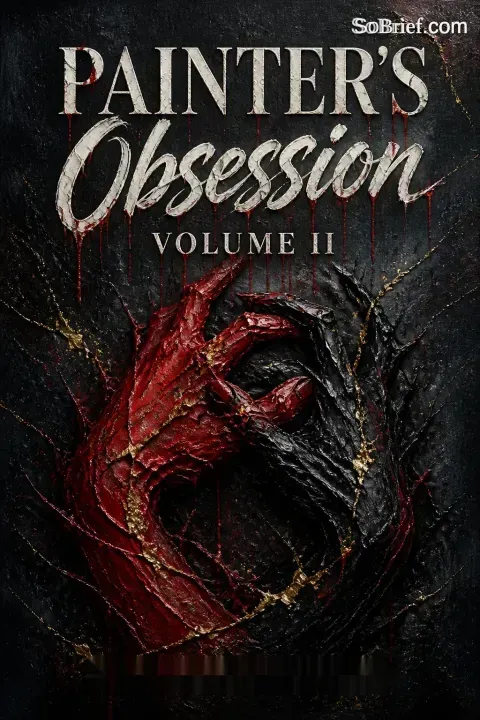


Plot Summary
Prologue
In a feverish blur, Ren1 feels a woman's naked body against his, her voice asking, Do you love me? He knows the correct answer is yes, but the lie lodges in his throat. As skin shifts under his hands, soft curves become scars and muscle; the scent of jasmine becomes cannabis and leather.
Now it is Byron's2 deep voice demanding love, his inked hand tightening around Ren's1 throat. Ren1 cannot breathe, cannot speak. The two figures merge, one voice, one need. He climaxes. When his eyes open, the face above him is not his lover's but his mother's,7 her red lips smiling, her darkness suffocating him.
The prologue fuses Ren's two formative relationships into a single erotic nightmare. The morphing of mother into Byron reveals that Ren's desire is born not of affection but of repetition compulsion: he seeks in Byron the same control and consumption his mother demanded. The unanswered question, Do you love me?, becomes the novel's central motif. Ren is constitutionally incapable of love, yet craves its performance. This triadic hallucination signals that all intimacy for Ren will always be haunted by his original abuser, and that Byron's fate is to be mistaken for a ghost.
The Ghost of Laguna Bay
Ren Sato1 opens his eyes to a makeshift hospital bed, the beeping of monitors and an IV tugging at his arm. He has been unconscious for weeks, nursed back from near death by Kevin,4 who now hovers with expectant greed. On the television, a news segment shows Byron2 and Gabriela3 leaving a courthouse.
Byron,2 his prison fade grown out, stares into the camera and vows that if Ren1 is alive, he will not escape. The anchors call Ren1 a monster masquerading as a respected lawyer, now presumed dead, his body likely swallowed by the bay. Watching the screen, Ren1 traces a finger over Byron's2 image and smiles. To the world, he is a ghost. To his Thorn,2 he intends to be much more than a memory.
This opening reestablishes the power vacuum left by Ren's 'death' while demonstrating his predatory instinct. The media's definitive narrative provides him cover, but Byron's public dare is the real ignition. Ren interprets the speech not as a threat but as an invitation, proving his solipsism: he cannot conceive that anyone might want justice rather than reunion. Kevin's presence introduces the theme of transactional morality; unlike Ren's aesthetic sadism, Kevin is a pure mercenary, a narrative contrast that will later prove fatal.
A Chain in the Ruins
Byron2 drives to the site of Ren's1 studio, now gutted by vandals and stripped of art. He walks through the familiar space where Theresita9 died, the scent of blood and bleach still clinging. He drinks a beer, then crawls to the silver chain Ren1 once used on him. Wrapping it around his neck, he sobs, not because he misses Ren,1 but because he misses who he was before.
His body betrays him: he masturbates with rough, punishing strokes, replaying the feel of Ren's1 skin, voice, violence. After climax, he vomits and screams his abuser's1 name. Byron2 cannot be touched, cannot heal. He is only pretending for Gabriela's3 sake, and part of him already knows Ren1 is not finished.
Byron's solitary ritual is a portrait of unresolved trauma. The chain becomes a self-imposed leash, suggesting that Ren's physical absence has not broken his psychological captivity. His sexual response to his own degradation illustrates the complex neurology of abuse: his body has learned to eroticize the very stimuli that destroyed him. This scene also establishes the central tension: Byron's protective love for his sister is the only thing stronger than his self-loathing, and Ren will exploit exactly that hinge.
The SUV's Sleeping Gas
For weeks, Ren1 has haunted the edges of Byron's2 life. Today he waits outside the community center where Byron2 attends group therapy. When Byron2 emerges, phone pressed to his ear, he climbs into his SUV without registering the chemical smell. Ren,1 parked nearby, has activated a service blocker and infused the AC with sedative. The door locks.
Byron's2 hand reaches for the handle too late; his phone clatters, his breath slows, and his head rolls back. Ren1 watches through the divider as the drug claims him, then whispers approval. Driving through isolated roads to a cabin with a secret underground bunker, Ren1 plans the total reconstruction of his Thorn.2 He will strip Byron2 of light, family, and self.
The kidnapping's clinical efficiency underscores Ren's methodical nature. Every detail, the weeks of stalking, the service blocker, the sedative, speaks to a predator who savors preparation as much as the act. The moment of Byron's whispered recognition of his captor before unconsciousness suggests a subconscious complicity, or at least the resignation of a man who never truly believed he was free. Ren's vow to 'reconstruct' rather than simply kill elevates the crime from murder to art, aligning with his self-image as a sculptor of souls.
Seven Days Without Light
The bunker smells of damp earth and rot. Ren1 drags Byron2 inside and, before the man wakes, strips him and rapes him with deliberate, silent cruelty. He then leaves. When Byron2 opens his eyes, absolute darkness presses in. He is naked, violated, the memory of Ren's1 hands ghosting his skin. Days blur. A bucket serves as toilet; a small water pail is the only mercy.
No food. Ren's1 voice occasionally crackles through a hidden speaker, offering a deal: create something for me, and you will eat. Byron,2 hallucinating from hunger, refuses. The smell of his own waste, the whispers of dead friends, and the ceaseless dark become his world. He begins to talk to ghosts, but his resolve holds.
The deprivation phase is textbook psychological destruction: removing all external stimuli so that the self begins to unravel. Ren's strategic use of sensory assault (the voice from nowhere) and bodily humiliation (the waste bucket) aims to reduce Byron to a creature of pure need. However, Byron's refusal, even when starving, indicates the strength of his protective instinct. The ghosts of Theresita and his mother that begin to visit him are not merely hallucinations but manifestations of guilt that Ren will later twist into weapons.
The Blindfolded Carver
When Ren1 finally returns with a container of cooked meat, Byron2 falls upon it with animal desperation, not caring what it is. Ren1 then offers a shower in exchange for a lesson. Blindfolded, Byron2 is led to a room reeking of blood. Ren1 presses a scalpel into his hand and guides him to a warm, bound body.
Byron2 carves lines he cannot see, tremors of resistance weakening as Ren's1 voice directs. Then his hands are placed around a throat. He squeezes, long past the point of struggle. When the blindfold falls, he sees a stranger's face, not his sister's.3 Relief and horror crash together; he collapses in sobs, broken by what he has done and what he was willing to do.
The decoy murder is Ren's masterstroke of misdirection. By exploiting Byron's constant fear for Gabriela, he engineers a test that is simultaneously a lesson in helplessness. The blindfold functions as a psychological buffer, allowing dissociation, but the aftermath forces Byron to confront his own capacity for violence. The victim's anonymity proves to Ren that Byron's obedience has been achieved, while also implanting in Byron the toxic relief that his sister is safe, creating a Pavlovian association between killing and protection.
Cannibal's Dinner and Flight
After the murder, Ren1 invites Byron2 to a candlelit dinner. They eat in silence until Ren1 asks how the meat tastes and then reveals it came from the woman Byron2 killed. Byron2 vomits, hurls his plate, and screams. Ren1 calmly activates a screen showing Johnathan,5 the gentle friend from Byron's2 support group, captive in a separate room.
He has been using Byron's2 phone to lure him. Ren1 then offers a choice: run into the woods, and if caught, submit. Byron2 headbutts Ren1 and flees into the night. Ren1 grins, discarding his clothes. The hunt is on, and in these woods, there are no neighbors to hear screams.
Cannibalism is the ultimate taboo, and Ren deploys it not just for shock but for symbiosis: by consuming the victim's flesh, Byron metabolizes his own crime, becoming physically complicit. The revelation of Johnathan's captivity weaponizes Byron's compassion, punishing him for any remaining human connection. Ren's offer of a chase is a calculated regression to primal predator-prey dynamics, but it is also a gift, a chance for Byron to reclaim a semblance of agency before the inevitable.
Thorn Etched Under Stars
In the moonlit forest, Ren1 tracks Byron2 with a steak knife. A flashback to his mother7 disorients him, and Byron2 ambushes, driving him to the ground. In a surge of rage, Byron2 mounts Ren's1 face, forcing his cock into Ren's1 mouth. Ren1 bites down, then stabs the knife into Byron's2 thigh, retaking control.
Pinning him, Ren1 carves a bleeding thorn into Byron's2 chest, licking the wound. The fight becomes a fuck; hard, bloody, each climax a surrender. Ren1 whispers ownership. Byron,2 beneath the stars, feels his body betray him again. By dawn, they lie tangled in dirt and semen, a fresh brand on Byron's2 skin, a mirror of the one on Ren's1 back.
This scene is the story's fulcrum: Byron briefly inverts their roles, making Ren the receiver, yet Ren's resilience turns violation into a lesson. The carving of the thorn transforms Byron's body into a signed canvas, an act of ownership that also mimics a wedding vow. The violence and sex coalesce into a single language, one that both men understand. That Byron cannot control his physical response despite his hatred illustrates the somatic depth of his conditioning; his body has been colonized.
Mercy for Blue Eyes
Back in the bunker, Ren1 tortures Byron2 with recordings of Kevin4 bedding Gabriela,3 a constant reminder of his failure. Days pass. Eventually Ren1 leads him inside. In the studio, Johnathan5 lies strapped to a table, chunks of flesh already removed but still alive. His blue eyes, glassy with pain, lock onto Byron's.2
Ren1 hands Byron2 a scalpel, sits against the wall, and begins to sketch. Without hesitation, Byron2 slices Johnathan's5 throat, a clean, deep cut meant to end suffering swiftly. Ren1 murmurs awe as he draws. Afterward, Byron2 hurls the scalpel into the wall and collapses into unconsciousness, finally a killer by his own hand.
Byron's killing of Johnathan is not obedience but a reclamation of moral agency: he chooses mercy over the prolonged artistic butchery Ren would prefer. That distinction is everything. Ren's sketching suggests he values the aesthetics of the moment regardless of intent, but for Byron, the act is a final goodbye to his old self. The mercy killing completes the transformation begun in the decoy murder; now he has killed not under duress but by conscious decision, albeit a compassionate one.
Mother's Mirror Sacrificed
Needing to reassert dominance after an unguarded moment of near-tenderness, Ren1 visits a bar and finds Vivian,6 a woman whose short black hair and red dress echo his mother's7 signature look. He seduces her with lies, brings her to the cabin, and forces her into the bedroom where Byron2 waits, hollow-eyed.
In the studio, Ren1 slices her Achilles tendons so she cannot flee, then presents her to Byron,2 framing her murder as the price for Gabriela's3 safety. Byron2 takes the scalpel and begins to carve, silencing her screams by severing her vocal cords. He kills her while Ren1 watches, his arousal evident, calling Byron2 magnificent. When it ends, Byron2 is drenched in another woman's blood.
Vivian's sacrifice is the novel's most explicit reenactment of Ren's maternal trauma. By selecting a surrogate and forcing Byron to re-kill 'mother,' Ren attempts to bond them through shared sin. But the parallel fails: Ren killed his mother to escape, while Byron kills for the sake of another. That difference, which Ren cannot comprehend, ensures the conditioning will never be complete. Byron's horror persists; he is not void, not yet.
Kevin's Gun at the Door
After the murder, Ren1 and Byron2 lie tangled, breathless, a fragile calm settling. Then slow clapping. Kevin4 stands in the doorway, holding a gun to Gabriela's3 head. He has betrayed them all, informing the police and coming to collect the hidden cash. He marches the group into the woods at dawn, toward a cliffside where the money is supposedly buried.
Kevin4 taunts Byron2 with his failure, then shoots him in the leg to prove his conviction. Gabriela3 screams into her gag. Ren's1 face remains unreadable, but his grip on the bag tightens. The predator has just become prey, and the only exit involves fire.
Kevin's betrayal functions as an external chaos agent that collapses Ren's controlled universe. His greed and pettiness (kissing Gabriela, mocking Byron) reveal a cruder form of evil against which Ren's artistry appears almost principled. The abrupt shift from psychological horror to action-thriller (guns, money, standoff) signals the story's final act: the outside world has intruded, and there is no more time for lessons.
Reaching Toward the Void
At the cliffside, Ren1 hurls the money bag as a distraction and lunges at Kevin.4 During the struggle, Kevin's4 knife plunges into Byron's2 back as he shields his sister.3 Ren1 beats Kevin's4 skull to pulp with a rock. Then, seeing Gabriela3 as the last tether, he brings the rock down on her head, knocking her unconscious. Byron,2 believing she is dead, drags himself upright.
He pulls the knife from his own wound, crawls to Ren,1 and presses their foreheads together. They kiss, a bloody communion, and Byron2 slides the blade into Ren's1 chest. Ren1 smiles, whispers that in another life he would have liked this, and dies. Byron2 collapses, hand reaching toward Ren's,1 as the light fades. Gabriela3 stirs, alive. The sirens close in.
The final murder-suicide is the culmination of the novel's dark romance thesis: two men so fundamentally intertwined that neither can exist without the other. Ren's violence against Gabriela, seemingly final, is also a gift to Byron: it frees him from the obligation of survival, granting him permission to end them both. Their shared deathbed kiss, with the knife still inside Ren, is the closest thing to love either has ever experienced. Byron's hand reaching even in death underscores that Ren was not just his tormentor but his mirror.
Epilogue
Five months later, Gabriela3 opens The Garden of Thorns, an art studio for survivors. She keeps two urns on a shelf: one white, one black, side by side, because Byron2 and Ren1 died reaching toward each other. She has read the official narrative that her brother2 was a victim, but she has also faced a harder truth. Pulling from an envelope, she unfolds Byron's2 final letter, retrieved from evidence.
His words, whatever they are, shatter her. As she sobs, a kick flutters in her womb. She is pregnant, and she decides to name the child Byron,2 after the man who gave his life for her. The rain outside feels like a shared gift. She whispers a farewell to her brother,2 and for the first time, peace settles over her.
Gabriela's epilogue offers a form of closure that refuses to sanitize the past. By keeping the ashes together, she acknowledges the inseparable nature of victim and perpetrator in this unique case. Her unborn child, fathered by the traitor Kevin, becomes a symbol of rebirth and redemption, literally carrying on Byron's legacy. The studio name, The Garden of Thorns, embraces the novel's central metaphor: beauty and pain are not opposites but intertwined growths. Gabriela's peace is hard-won, not because she has forgotten, but because she has chosen to live.
Analysis
This novel is a study in the architecture of captivity, where the prison is as much psychological as physical. Ren's1 methods, sensory deprivation, forced complicity, cannibalism, are drawn from real-world coercive control, but they are elevated to an operatic scale by his aesthetic ideology. He does not merely want Byron2 obedient; he wants Byron2 to choose darkness willingly, to become a mirror. This ambition is the flaw that undoes him, because Byron's2 choices, even when monstrous, are always tethered to love for his sister.3 Ren1 cannot comprehend or replicate that tether, no matter how exquisitely he tortures. The book also explores the erotic dimension of trauma. Both protagonists were sexually abused as children: Ren1 by his mother,7 Byron2 by his father's8 violent attempts at conversion. Their adult sexuality is a battlefield of reenactment and rebellion. Byron's2 physical response to Ren's1 violence is not consent but a textbook trauma bond, laced with genuine self-discovery. Ren's1 inability to distinguish between abuse and intimacy, inherited from his mother,7 means that the closest he can come to love is mutual destruction. Ultimately, the story is not a romance but a tragedy of two broken mirrors facing each other. Neither man can heal the other; they can only shatter together. The epilogue suggests that healing belongs to the survivor, Gabriela,3 who must carry the weight of their story and transform it into something that can give life. The Garden of Thorns is the story's final symbol: from the blood of the innocent and the damned, something new grows.
People Also Read



Characters
Ren Sato
Obsessive Serial Killer and ArtistA brilliant former defense attorney revealed as the notorious Laguna Bay Painter. Ren is the product of his mother's7 sexual conditioning, which he ended by murdering her while she was pregnant with his child. He is devoid of empathy but capable of mimicry, having built a public persona as a respected lawyer. His obsessions are aesthetic: he views murder as immortalization and Byron2 as his ultimate canvas. Throughout the story, cracks in his psychopathy emerge; moments of confusion, even pain, when confronted with Byron's2 unwavering love for his sister3. He cannot understand such feeling, but he covets it. His mantra, 'to love is to consume,' reflects his only model of intimacy, learned from his mother7. He dies having discovered the closest thing to reciprocity he ever will.
Byron
Captive Protector and Reluctant MuseA muscular ex-con with a thick lip scar and a body covered in prison tattoos. Byron was raised by a violently homophobic father8 who tried to beat the 'sickness' out of him, leaving him with deep-seated shame about his desires. His sole moral compass is his love for his sister Gabriela3, for whom he would endure any degradation. He entered Ren's1 orbit first as a client, then as a victim, but his fascination with Ren's1 darkness predates his captivity. Throughout the book, Byron oscillates between fierce defiance and traumatic submission, his body responding to Ren1 even as his mind rebels. He kills twice, both times as acts of mercy, and ultimately chooses death to free his sister3 from the cycle, taking Ren1 with him.
Gabriela
Innocent Sister as LightByron's2 younger sister, whose safety is his primary motivation. She is unaware of the depth of her brother's2 suffering until the end. After his death, she channels her grief into creating a healing arts studio and resolves to raise her unborn child, whom she names after Byron2, as a testament to his sacrifice.
Kevin
Greedy Mercenary and BetrayerA resourceful, morally vacant man who saves Ren1 solely for profit. He serves as Ren's1 outside fixer, managing Gabriela3 and supplies, but his loyalty dissolves the moment a larger payday appears. His crude opportunism makes him a foil to Ren's1 aestheticized violence.
Johnathan
Kind Friend Turned PawnA gentle, supportive man from Byron's2 therapy group who develops a romantic interest in him. Ren1 kidnaps him to use as psychological leverage. Byron2 ultimately gives him a merciful death.
Vivian
Mother's Mirror SacrificeA woman Ren1 picks up at a bar because her physical resemblance to his mother7 is uncanny. She is an unwitting sacrifice in Ren's1 attempt to replicate his primal trauma through Byron2.
Ren's Mother
The Original MonsterA sexually abusive parent who groomed Ren1 from childhood, conditioning him to equate love with consumption and subjugation. Even after death, her voice drives his compulsions.
Byron's Father
The Patriarch's FistA hypermasculine father who beat Byron2 for any perceived weakness and forced him into sexual situations to 'make him a man,' instilling lifelong shame.
Theresita
Dead Friend and Guilty SpecterByron's2 murdered friend, whose ghost appears in his hallucinations as an emblem of his failures.
Yolanda
Instrument of Forced ConversionThe mother of Byron's2 childhood friend, used by his father8 in a traumatic attempt to 'cure' Byron's2 homosexuality.
Plot Devices
The Bunker
Deprivation and conditioning chamberA concealed underground room beneath a dead tree on Ren's1 remote property. It is equipped with only a thin mattress, a waste bucket, and a water pail. The complete darkness and silence for seven days are meant to erase Byron's2 sense of self, making Ren's1 subsequent 'lessons' the only source of stimulation. The bunker also contains a hidden camera and speaker, allowing Ren1 to monitor and deliver auditory torture without being present. It functions as a womb of rebirth, from which Ren1 expects a new, compliant Byron2 to emerge.
Hidden Cameras and Speakers
Omnipresent surveillance and weaponized soundA network of cameras and intercoms installed throughout the cabin and bunker, enabling Ren1 to observe Byron2 at all times and speak to him without revealing his location. The system is also used to pump in sounds of Gabriela3 having sex with Kevin4, weaponizing Byron's2 protective love into despair. This panopticon setup gives Ren1 an almost supernatural presence, reinforcing his self-image as a god who sees and controls everything.
The Scalpel
Tool for carving flesh and soulA sharp, thin-bladed surgical instrument that Ren1 places in Byron's2 hands during each forced creation. It is small enough to be controlled precisely, yet lethal. Symbolically, it bridges Ren's1 dual identity as artist and killer. Byron2 first uses it to carve a stranger, later to mercy-kill Johnathan5, then to kill Vivian6, and finally, to stab Ren1 in the heart. Each use marks a stage of Byron's2 descent and his simultaneous reclamation of moral choice.
Cannibalistic Meals
Boundary annihilation through ingestionRen1 repeatedly cooks the flesh of his victims and serves it to Byron2, both to nourish him and to force him into metaphysical complicity. The first meal is from the decoy woman; later, Ren1 makes a pot roast from parts of Johnathan5. Ren1 frames cannibalism as the purest expression of his philosophy: to consume is to love, to immortalize. For Byron2, eating human meat is a visceral violation that physically binds him to Ren's1 crimes, making him feel irredeemably tainted.
The Doppelganger (Vivian)
Trauma reenactment through a surrogateRen's1 deliberate selection of a victim who physically mimics his late mother7 (short black hair, red dress) in order to recreate his own primal murder and force Byron2 to participate in a shared catharsis. The doppelganger represents Ren's1 failed attempt to externalize his internal haunting by making Byron2 replay the death of the woman who created him7.
Download PDF
Download EPUB
.epub digital book format is ideal for reading ebooks on phones, tablets, and e-readers.








































