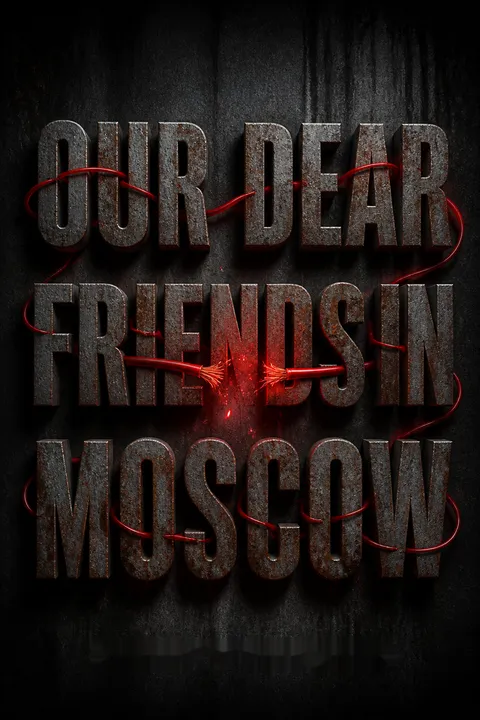

Key Takeaways
1. The Fading Promise of Post-Soviet Freedom
The political history of the country is one of constant battle between isolation and modernization through reconnection with the West.
Initial optimism. The early 2000s in Russia began with a sense of hope for a more globalized and democratic future, following the collapse of the Soviet Union. Journalists, including the authors, believed in the potential for a free press and an open society, eager to connect with Western ideas and technologies. This period saw the emergence of new media outlets and a vibrant intellectual scene.
Putin's ascent. However, this optimism quickly began to wane with Vladimir Putin's rise to power. His background in the KGB and the ongoing Second Chechen War signaled a shift towards a more security-focused state. Early actions, such as the controversial detention of media mogul Vladimir Gusinsky, demonstrated the Kremlin's willingness to suppress independent voices, challenging the nascent democratic institutions.
Erosion of ideals. The initial belief that Russia was moving towards a rule of law and a free press was gradually undermined by events like the Kursk submarine disaster, where official narratives prioritized image over truth. This period marked the beginning of a deliberate strategy to detach Russia from the West, reversing the globalization trend that had started in 1991.
2. The Pervasive Reach of the Security State
The security services themselves remained ultrasecretive.
KGB's enduring legacy. Despite the collapse of the Soviet Union, the successor agencies of the KGB, particularly the FSB, retained significant power and influence. Initially in retreat, these services began to reassert themselves under Putin, who himself hailed from the KGB. This resurgence was evident in their ultrasecretive operations and their systematic efforts to control information.
Infiltration and control. The FSB's reach extended beyond traditional security matters, infiltrating various sectors of society. From ministries and banks to universities and cultural venues, FSB officers became ubiquitous. This pervasive presence was exemplified by an FSB major, once tasked with counterterrorism, being assigned to supervise a Moscow acting school, highlighting the agency's expanding role in civilian life.
Rewriting history. The security services also embarked on a concerted effort to rewrite their own history, including the politically sensitive period of Stalin's purges. Access to historical archives was restricted, and figures like Yuri Andropov, a former KGB chairman known for his repressive tactics, were rehabilitated and celebrated. This historical revisionism aimed to legitimize the FSB's role as the protector of the state against perceived Western threats.
3. Journalism's Moral Crossroads
It was a conversation between two very polite and intelligent people who had completely ceased to understand each other.
Diverging paths. The increasing pressure from the Kremlin forced journalists to confront difficult moral choices, leading to profound ideological and personal divisions. What began as shared professional aspirations among friends evolved into starkly different paths, with some embracing state narratives and others clinging to independent reporting. This created an environment where former colleagues found themselves on opposing sides of critical national issues.
Compromise and complicity. Some journalists, driven by ambition or a desire to maintain access and privilege, chose to align with the Kremlin. This often involved participating in disinformation campaigns, such as the fabricated story of Vasily Kalinkin, or accepting roles in state-controlled media. The book highlights how personal vulnerabilities and career aspirations could lead individuals to compromise their journalistic integrity.
The price of integrity. For those who prioritized truth and independent reporting, the path was fraught with challenges. The authors' own experiences at Izvestia and Versia, where their investigative stories were censored or led to harassment, illustrate the shrinking space for critical journalism. This period marked a growing chasm between those who adapted to the new political reality and those who refused to compromise their principles.
4. Propaganda as a Weapon of Control
The FSB had openly set its sights on building a full-scale propaganda and disinformation machine with the help of the newspapers—but we didn’t want to be part of it.
Orchestrated narratives. Under Putin, state media transformed into a sophisticated propaganda machine, actively shaping public opinion and justifying Kremlin policies. This involved not only censoring dissenting voices but also creating elaborate narratives, often based on conspiracy theories, to demonize perceived enemies and bolster the regime's image. The Kalinkin story, implicating the CIA in Russian terrorism, is a prime example.
Exploiting national sentiment. Propaganda effectively tapped into deep-seated national pride and historical grievances. The 2008 war with Georgia, for instance, was framed as Russia's triumphant return to the global stage, garnering immense public support. Journalists like Zhenya Baranov played a crucial role in disseminating these narratives, often blending aggressive reporting with nationalistic fervor.
Targeting dissent. The propaganda machine also actively worked to discredit and marginalize any opposition. Protesters were labeled "losers" or "traitors," and independent media outlets were accused of being foreign agents. This systematic effort aimed to isolate and delegitimize critical voices, ensuring that the Kremlin's narrative remained dominant and unchallenged.
5. The Allure of Power and Privilege
Baranov, it appeared, more than anyone among our friends, wanted to find a way into the Russian elite.
Access as currency. For many journalists, proximity to power and access to the Kremlin elite became a powerful draw. Working for influential media outlets or cultivating relationships with high-ranking officials offered opportunities for career advancement and a sense of importance. This allure often overshadowed concerns about journalistic independence or ethical compromises.
Elite connections. The book illustrates how personal connections, often inherited from Soviet times, played a significant role in career trajectories. Olga Lyubimova's family ties to filmmaker Nikita Mikhalkov, a close confidant of Putin, provided her with a pathway into state television and eventually a ministerial position. Similarly, Evgeny Krutikov's family history within the Soviet elite influenced his aspirations and choices.
The "St. Petersburg Way." The rise of Putin's inner circle, largely composed of former KGB officers from St. Petersburg, created a new hierarchy where loyalty and personal relationships were paramount. Journalists like Sveta Babayeva, who cultivated close ties with figures like Sergei Ivanov, benefited from this system, gaining unprecedented access and influence, even if it meant becoming a mouthpiece for the regime.
6. The Cost of Dissent
For any liberal journalist who had thought there was any possibility for any kind of coexistence with Putin, the illusions they had harbored disappeared after Anna Politkovskaya’s death.
Escalating repression. The consequences for those who dared to challenge the Kremlin's narrative grew increasingly severe. From job losses and media blacklisting to physical threats and assassinations, the regime demonstrated its ruthless determination to silence dissent. The murders of Sergei Yushenkov and Yuri Shchekochikhin, and the poisoning of Alexander Litvinenko, sent chilling messages to the journalistic community.
Personal and professional ruin. The authors themselves experienced the direct impact of this repression, facing criminal investigations, asset freezes, and being declared "foreign agents." Their dismissal from Novaya Gazeta after investigating an FSB officer involved in Politkovskaya's murder underscored the dangers of pursuing sensitive stories. This environment forced many independent journalists into precarious financial situations and professional isolation.
Exile as the last resort. Ultimately, for many, including the authors, the only option left was exile. The systematic crackdown on independent media, the blocking of websites, and the constant threat of legal and physical harm made it impossible to continue their work in Russia. This exodus marked a profound loss for Russian civil society and a stark illustration of the regime's intolerance for any form of opposition.
7. The Ukraine War: An Irreversible Divide
There will be no more Ukraine as anti-Russia.
The ultimate breaking point. The 2022 invasion of Ukraine served as the definitive rupture, shattering any remaining illusions of coexistence or a return to normalcy. For many, it was a moment of profound moral reckoning, forcing individuals to take an unequivocal stance. The war exposed the deep ideological chasm that had developed within Russian society and among former friends.
Unrestrained propaganda. The Kremlin's propaganda machine went into overdrive, promoting a triumphalist and often dehumanizing narrative about Ukraine. Journalists like Petya Akopov and Evgeny Krutikov, now fully integrated into state media, enthusiastically disseminated these messages, denying Ukrainian sovereignty and justifying the invasion with historical revisionism and xenophobic rhetoric.
Global isolation. The war led to Russia's unprecedented international isolation, with widespread sanctions and condemnation from Western countries. This isolation, however, was often framed by the Kremlin and its supporters as a necessary step to restore Russia's greatness and resist Western aggression. For those in exile, the war meant an irreversible separation from their homeland and a new identity as outlaws.
8. Personal Histories Shaping Political Paths
Krutikov’s big hero was John le Carré’s fictional British Cold War spy George Smiley.
Family legacies. The book reveals how personal histories and family legacies profoundly influenced the choices made by the characters. Evgeny Krutikov's complex relationship with his father's tragic fate under Stalin's secret police, for instance, shaped his ambition and his disdain for the KGB, yet he later worked for its successor. This often led to seemingly contradictory actions.
Trauma and ideology. Individual traumas and experiences, such as Baranov's exposure to the Balkan wars or Lyubimova's strict Orthodox schooling, contributed to their ideological development. These experiences were often reinterpreted through a nationalistic lens, reinforcing anti-Western sentiments and a belief in Russia's unique spiritual path. The bombing of Belgrade, for Baranov, became a "splinter" in his head, coloring all international relations.
The search for belonging. For some, aligning with the state offered a sense of purpose and belonging in a turbulent post-Soviet world. Petya Akopov, after losing his job and apartment, sought to "work for ideology, for the state," finding stability and validation in serving the Kremlin's narrative. This quest for identity and stability often led them to embrace increasingly radical views.
9. The Illusion of a "Global Club"
During our careers, essentially all our adult lives, we had firmly believed that we were part of something bigger—a global community of journalists, where there were no borders or nationalities, and where we all shared clear professional ethics.
Shared professional ethics. The authors, like many of their generation, initially believed in a universal standard of journalism, transcending national boundaries. They saw themselves as part of a global community, collaborating with international colleagues and adhering to shared ethical principles. This belief was a cornerstone of their professional identity.
Shattered ideals. This illusion was brutally shattered by geopolitical events and the actions of some international actors. The WikiLeaks controversy surrounding the Panama Papers, where Russian journalists investigating Putin's inner circle were accused of having an "anti-Russian agenda" by Sarah Harrison, deeply wounded the authors. This incident highlighted a perceived double standard and a lack of solidarity from some Western counterparts.
The cost of betrayal. The realization that their international colleagues might not share the same commitment to journalistic integrity, especially when it came to Russia, was a profound disappointment. This sense of betrayal, coupled with the escalating repression at home, underscored the unique and dangerous position of independent Russian journalists, often left to face the consequences alone.
10. Russia's Self-Imposed Isolation
The war that started in February 2022 in Ukraine was part of the same pattern. But this time, Russia was fighting against a former part of the Soviet Union, a war in which contact with the West was minimal.
Deliberate detachment. The war in Ukraine was not merely a consequence of Russia's isolation but a deliberate strategy to deepen it. Putin's regime actively sought to sever ties with the West, viewing globalization and Western ideas as threats to its power. This strategy, evident since 2011, culminated in the full-scale invasion, which pushed Russia into unprecedented international isolation.
Cultural and economic barriers. This isolation manifested in tangible ways, impacting everyday life and cultural exchange. Western brands disappeared from Moscow, cultural events from Europe and the US ceased, and travel became severely restricted. For a generation that had grown up with the freedom to engage with the world, this represented a profound loss, even for those who publicly supported the isolation.
The human cost. The book concludes with the poignant reality of this isolation, affecting both those who stayed and those who left. Friends like Petya Akopov, despite his anti-Western rhetoric, still yearned for European travel for his family. Krutikov, who loved England, could no longer visit. The authors, in exile, faced the pain of separation from family and the constant threat of state persecution. The imprisonment of Andrei's father, an internet pioneer, symbolized Russia's tragic rejection of its own modernizers and its embrace of a closed, authoritarian future.
People Also Read




Download PDF
Download EPUB
.epub digital book format is ideal for reading ebooks on phones, tablets, and e-readers.








































