
Plot Summary
Crossing the River of Doubt
Dr. Arthur Calgary, play-weary from travel and his recent return from Antarctic explorations, stands at the river ferry, hesitating—a symbolic Rubicon. He is bracing to deliver a revelation to the Argyle family: that their adopted son, Jacko, died in prison wrongly condemned for his mother's murder. With dread, he approaches Sunny Point, a modern home that sits uneasily atop ancient ground, already weighted with local whispers and grim history. Calgary knows that his confession is not simple truth-telling—he suspects it will upend the lives of everyone within the house. Every step toward the family estate is an inward journey, one fraught with guilt, trepidation, and the knowledge that bringing light to injustice may awaken even darker shadows.
Innocence Interrupts the Silence
As Calgary is reluctantly welcomed inside, he meets a somber host of Argyles and their companions, all seemingly resigned to Jacko's guilt and wishing the past would stay settled. Leo Argyle, paternal and philosophical, and the others see Calgary as a nuisance reopening old wounds. But when Calgary reveals he was Jacko's missing alibi—a witness to his innocence—the announcement lands with chilling stillness. Instead of relief, an icy apprehension settles. The prospect of justice for Jacko is not met with joy, but with fear of the precipice now opening. Old certainty was comfort; new possibilities are terrifying.
Family Unraveled, Truths Unsettled
The news electrifies and destabilizes the Argyles. The siblings and household caretakers—each with their buried grievances and quiet resentments—react less with vindication and more with dread. Hester, the youngest daughter, voices the unthinkable: "It's the innocent who matter." The exoneration does not free them; it thrusts them back into the traumatic night of Rachel Argyle's murder. If Jacko is innocent, then one of them is not. Rumblings of suspicion, shame, and self-interest divide them further. Justice for the dead brings only ordeals for the living.
Justice Arrives Too Late
Calgary's delayed testimony clears Jacko's name too late for his deliverance. He visits the defenseless Jacko's bewildered young widow, whose self-justifications and lack of true attachment to the deceased further intensify Calgary's increasing sense of futility. Maureen, Jacko's wife, expresses only dim, personal concern for her own reputation. For all involved, the reopening of the case is more invasion than vindication. Calgary's visit reveals that for the living, such justice can be not salvation, but an onslaught of renewed pain.
The Burden of Exoneration
Each family member, from Leo to the skittish Christina (Tina), and the compassionate Kirsten Lindstrom, feels the cold discomfort in the aftermath. The police, too, are forced to re-examine evidence they once considered airtight. Superintendent Huish recognizes the "cold trail"—he knows that the reopening of the investigation is an ordeal for all, a reminder of how weak justice can be when entwined with personal histories and hidden motives. The justice system now exposes a higher cost: with Jacko innocent, suspicion poisons every relationship.
Whispers Behind Closed Doors
Tensions in the house mount; everyone's movements that fateful evening are reinvestigated. Seemingly innocuous details begin to bristle with suspicion. Each inhabitant—Leo, steadfast Gwenda the secretary, practical Mary and her invalid husband Philip, the distant and quiet Tina, brooding Micky, and emotionally unstable Hester—find themselves questioning one another. Private doubts are whispered but rarely spoken, casting a pall over the fragile family unity. The doors may be closed, but unease seeps through every wall.
Inheritance of Loneliness
Through flashbacks and personal introspection, we see how each adopted Argyle child was chosen—each one orphaned or rejected, wounded in different ways by their pre-Argyle lives. Despite Rachel Argyle's boundless attempts at maternal generosity, the bonds created are artificial, sometimes resented, never fully secure. The children's longing for belonging and struggles with gratitude or rebellion reflect the limits of environment over blood. Kindness here breeds not only love, but dependency, guilt, and, ultimately, lonely isolation.
Repercussions Spread Like Fire
As news of Jacko's innocence circulates beyond the family, public scrutiny returns. Reporters seek stories; the police begin probing anew. Emotional and psychological strain reveals itself dangerously: Hester's insecurity, Mary's jealous neediness, Micky's simmering resentment, and Kirsten's anxious devotion. Partnerships waver, long-harbored grievances rise to the surface. Amidst the shared crisis, deep fractures widen further, and the possibility of fresh tragedy hovers.
Suspicion Shadows Every Face
Now, everyone moves through the house like suspects—each haunted by their own actions, thoughts, or omissions. Philip, the invalid, plays psychological detective, studying everyone's behavior—especially own wife Mary's ambiguous calm. Don Craig, the young doctor in love with Hester, vacillates between trust and doubt. Even daily routines become suspect, and loyalties are shaken. The fear of being suspected or, worse, unjustly accused, makes every resident a prisoner of their own histories.
Fractures in Love and Loyalty
The plan for Leo and Gwenda to marry is derailed by new uncertainties and mutual suspicion. Gwenda's warmth is countered by Leo's withdrawal; neither can now be sure of the other's innocence. Don Craig's faith in Hester erodes; Hester, devastated by being doubted, feels truly isolated. Mary's devotion to Philip is at odds with his emotional distance. The only thing binding them is shared ordeal and the secret fear of exposure. Love here is not antidote to suspicion, but its reluctant twin.
The Steep Price of Alibis
As the police query each person's alibi, the evidence becomes murkier. The supposed security of "not being there" or "being with someone else" falters as collective memory is revealed as porous, and details contradict. Even small lies, once told to protect oneself or another, now have fatal consequences. In attempting to shield loved ones, the Argyles become further entangled in uncertainty, and eventually, two more deaths strike the household, testimony to the dangers of "harmless" secrets.
Night of Fear and Foresight
The family's insomnia becomes metaphor: in the night, every character confronts their own demons. Micky relives his abandonment. Philip analyzes everyone for motive and opportunity. Tina, ever-observant and reserved, buries her deeper knowledge in silence. Hester, consumed by the thought that everyone expects her guilt, contemplates escape—or worse. Even Kirsten, the steadfast housekeeper, fears the consequences of her loyalties. The night is not restful, but fraught with guilt, vulnerability, and prophetic dread.
Probing Old Wounds
As the investigation deepens, the costs mount. Philip, determined to uncover the culprit to relieve the innocent, is murdered for getting too close to the truth. Tina, who harbored her own dangerous knowledge, is gravely wounded. These new crimes starkly demonstrate that the original tragedy's shadow is not only emotional but lethally real. Calgary, racing to assemble the final pieces, knows now that resolution is a moral necessity, not merely a point of honor.
Mistrust Breeds Isolation
With Philip dead and Tina hospitalized, the family's isolation is absolute—each person a suspect or victim of suspicion. Kirsten's constant presence and clumsy lovingness turn from comfort to menace. Gwenda, Mary, Hester, Micky—each is locked in their own psychic cell. Love, once a bulwark, has become a myth. The innocence that needed defending now seems impossible anywhere but in death.
The Deadly Gift of Knowledge
Calgary's final investigation arrives at a harrowing truth: justice is not simply the prosecution of the guilty but the exoneration of the innocent. Each confession—of motive, of secret longing, of betrayal, of misplaced love—becomes a fragment in a puzzle that only reveals its shape when the cost has become irreversible. The price for seeing the truth—paid in suffering and lives—is almost as heavy as the price of justice denied.
Echoes from the Nursery
The failed experiment of the war nursery, and Rachel Argyle's efforts to impose motherly love, are revealed as the original alchemy that made the tragedy inevitable. The adopted children's backgrounds, the forced intimacy, and the burdens of gratitude and belonging all become twisted into the morass of conflicting emotions and layered secrets that led to murder.
Exposure and Desperation Collide
Under the searching gaze of Calgary and the mounting terror of imminent justice, Kirsten Lindstrom—the loving but emotionally starved housekeeper—breaks. Her secret, born of Jacko's predatory manipulation of her romantic loneliness, and her desperate act meant to please him, emerges. Murder was not born of hate, but of devotion, delusion, and the ultimate abuse of innocence and trust. The real tragedy: love so distorted it breeds destruction.
The Truth Bares Its Fangs
With confession comes not relief, but sobered catharsis. The innocent are finally freed from the shadow of suspicion, but at terrible cost: deaths, broken relationships, and a permanent loss of faith. Forgiveness is possible, but not easy. Calgary, once an outsider, becomes the family's reluctant redeemer, but he cannot restore what was lost. Hester, recognizing the only secure ground is being known and believed, realizes what true love demands: not perfection, but trust. The ordeal is over, but the innocence lost can never be restored.
Analysis
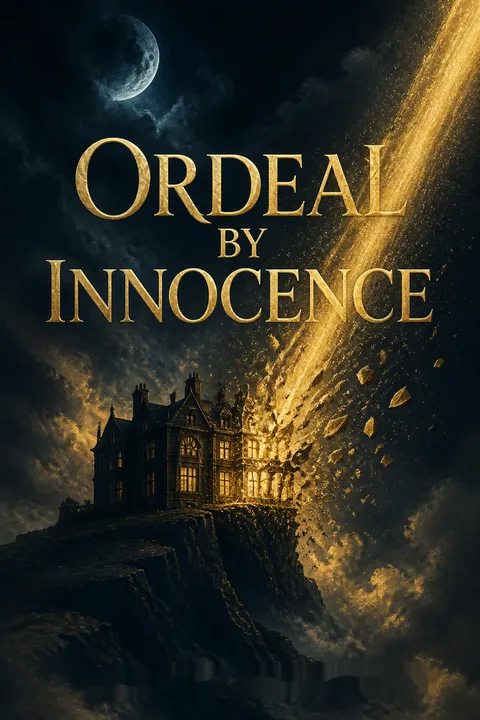
Ordeal by Innocence is a stark meditation on the limits and costs of justice—not just as an ideal, but as it plays out in messy, damaged lives. Far from the neat structure of the average whodunit, the book uses the frame of a cleared murder case to reveal how families (especially those constructed by charity or necessity) can become cauldrons of unspoken resentment, guilt, and longing. Beneath the procedural surface lies a rich exploration of the consequences when truth, long suppressed, is finally unearthed: relationships collapse, old wounds bleed fresh, and the innocent, meant to be protected, suffer most until true culpability is reckoned with. Christie's take is modern, even existential; innocence itself becomes an ordeal—a condition that is fragile, painfully won, and forever at risk in a world shaped by secrets and the hunger for love. In asking, "if justice arrives too late, can it still set anyone free?" Christie leaves readers with the knowledge that the restoration of innocence is always complex, always incomplete, and forever shadowed by the tragedies that even the best intentions cannot avert.
Review Summary
Ordeal by Innocence receives mixed but generally positive reviews, averaging 3.83/5. Readers praise Christie's tight prose, clever characterization, and surprising plot twists. The premise — a belated alibi exonerating a dead convict — creates compelling family tension as suspicion falls on everyone. Critics note the lack of a central detective weakens the narrative focus, and many find the pacing uneven. Controversial views on adoption and heredity embedded throughout trouble several readers. Most agree the mystery delivers a satisfying, unexpected resolution, with many confessing they failed to identify the killer.
Characters
Dr. Arthur Calgary
Calgary is the outsider whose delayed testimony absolves Jacko but unintentionally inflicts turmoil on the entire family. Driven by a fierce sense of justice and personal guilt for his role in Jacko's wrongful conviction, he returns not only with evidence but with a mission—to set things right, no matter the emotional cost. He is intelligent, introspective, and haunted by the ambiguity of his own actions; his arc takes him from mere witness to moral agent, grappling with the realization that delivering truth isn't a simple salvation but a force that agitates complex human suffering. Ultimately, he becomes both detective and healer, seeking peace for the truly innocent.
Leo Argyle
Leo is the legal father, an academic, withdrawn and detached. His love for his wife Rachel is of the cerebral, supportive kind; after her death he seeks comfort in routine and intellectual pursuits. Underneath his passivity, however, lies regret—he let Rachel dominate their family and never truly understood the emotional needs (or hidden pain) of his adopted children or himself. His engagement to Gwenda reveals a timid yearning for warmth, stymied by the suspicions and secrecy Jacko's exoneration brings. Ultimately, Leo is paralyzed by uncertainty, facing the limits of rational control and the consequences of benign neglect.
Gwenda Vaughan
Gwenda, efficient and competent, has been Leo's loyal secretary for years, eventually becoming his intended. Her feelings expose the toll that guilt and closed cases take on new happiness; after Calgary's revelation, her relationship with Leo is poisoned by mistrust, and her own alibi is scrutinized. Gwenda navigates the thin line between professional loyalty and desperate romance, struggling to clear herself and Leo in both law and in love's eyes. Her vulnerability makes her both suspect and tragic, and she embodies the price relationships pay under collective suspicion.
Mary Durrant
Mary is the eldest adopted child, married to Philip, and outwardly the most stable and controlled. She shows limited emotional range—her affections for her family are largely transactional or possessive. Her devotion to Philip is near-obsessive, veering into the suffocating. Mary craves stability and order, seeing the entire ordeal as an unwelcome disturbance. Ultimately, her rigid self-sufficiency is both her shield and her downfall—she neither trusts nor truly connects, embodying a cold detachment that makes her an unlikely but memorable suspect.
Philip Durrant
Once adventurous, now paralyzed by polio, Philip finds intellectual diversion in unraveling the psychology of those around him. A blend of cynic, detective, and provocateur, he is simultaneously affectionate and ironic regarding Mary's devotion and the family's miseries. His fatal curiosity—his dogged probing of suspicions—becomes his undoing when he gets too close to the truth about the murder, paying with his life. Philip represents the price of seeking truth in a world eager to forget.
Hester Argyle
Hester is the youngest, unstable and hypersensitive, marked by adolescent rebellion and a desperate desire to be seen and loved. Both prone to wild imaginings and genuinely empathetic, she is tormented first by grief for Jacko, then by the suspicion that others (and even she herself) might be capable of murder. Her relationship with Don Craig, the young doctor, disintegrates under the weight of mutual distrust; her sense of isolation is only alleviated by Calgary's unflinching belief in her. Hester's journey is one from self-doubt to self-respect—her innocence both literal and symbolic.
Micky Argyle
Micky, the brooding adopted son, wears his abandonment like armor. He is angry, rootless, and troubled by class and history. Quick to suspicion and slow to trust, Micky's identity is built around rebellion and alienation from his adoptive family. His relationship with Tina offers the promise of connection, but he is always haunted by his origins and inability to accept love without suspicion. The family's ordeal both hardens and humanizes him, forcing a reckoning with personal and inherited trauma.
Christina (Tina) Argyle
Tina, the half-caste adopted daughter, is gentle, introspective, and silent—her "foreignness" and distance make her the least obvious but perhaps most perceptive character. She absorbs everything, missing little, and often knows truths others do not. Her reticence conceals both suffering and dangerous knowledge; when she attempts to act or speak, it comes at great personal risk, nearly costing her life. Tina is emblematic of the child who, having escaped the worst, becomes the one who watches and waits for others to heal or destroy themselves.
Kirsten Lindstrom
Kirsten, the Scandinavian housekeeper and former war nurse, is fiercely loyal to the Argyles. Her role moves from maternal presence to focal suspect as her protective instincts morph into something more troubling. Under Jacko's manipulative influence she becomes the unwitting instrument of tragedy: her love for him drives her to murder, and her subsequent efforts to conceal the act unleash more violence. Kirsten embodies the destructive power of love turned desperate, the tragedy of the lonely heart exploited by cruelty.
Jacko Argyle
Though long dead by the time the main events occur, Jacko's character looms over the narrative. Adopted from a troubled background, inherently deceitful and selfish, his actions and persona are the catalysts for both the murder and the subsequent ordeal. Jacko is both victim of miscarriage of justice and the architect of others' misery, manipulating Kirsten's devotion to serve his schemes. The ultimate irony: the exoneration of Jacko reveals not his redemption, but his deeper moral failure.
Plot Devices
Shifting Innocence and Guilt
Central to the story's architecture is the reversal of a closed case: Jacko's conviction anchors the Argyles' uneasy equilibrium, but Calgary's revelation detonates those certainties. Christie intentionally blurs the lines between legal guilt and emotional culpability, showing how the lifting of suspicion from one figure merely moves it onto all others. The pursuit of exoneration, instead of liberating, traps the family in paranoia, forcing every action and memory into doubt. Throughout, the suspense is not "whodunit," but how suspicion mutates among characters and what price innocence exacts.
Polyphonic Perspectives
Christie's narrative oscillates through interviews, introspective monologues, dreams, and dialogues, allowing each character to narrate their anxieties and guilt. No single voice is authoritative, and events are reconstructed through dozens of contradictory or incomplete memories, mirroring the way trauma fragments individuals and communities. The result is a patchwork of motives and alibis, a psychological labyrinth where the reader is invited to mistrust not only the characters, but the very process of recollection and investigation.
Psychological Realism
Rather than pursuing clues or typical detective fare, Ordeal by Innocence relies on the emotional states of its ensemble: unresolved grief, longing for identity, love frustrated by mistrust, and the corrosive agony of suspicion. The story's tension arises not from the external investigation, but from the internal unraveling as each character is forced to re-examine their place, their motives, and their capacity for both love and harm.
Foreshadowing through Disintegration
Long before deaths occur, Christie seeds the narrative with foreboding: the "wrongness" of the family's relationships, the recurring motif of isolation, the characters' confessions of dreams of murder or self-harm. Small lies, suppressed expressions of gratitude and affection, and the children's resentment toward their forced "family" are all subtle harbingers of greater calamity. The structure almost presupposes disaster, aligning plot and theme for maximum impact.
Thematic Reversal
Crucial to Christie's design is the revelation that the real murderer is not driven by hatred, but by a twisted form of love, and that exoneration is not simple justice, but a fresh ordeal. The adopted children, supposed "beneficiaries" of charity, become objects of suspicion and enmity. Law, designed to comfort the innocent, instead multiplies the suffering of those it should protect. In this reversal, Christie compels the reader to question the meaning of guilt, retribution, and the limits of forgiveness.
About the Author
Other books by Agatha Christie








Download PDF
Download EPUB
.epub digital book format is ideal for reading ebooks on phones, tablets, and e-readers.








































