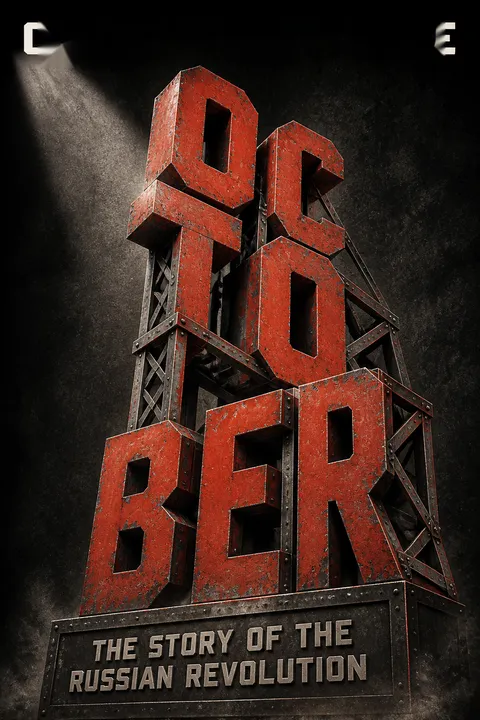

Key Takeaways
1. The Tsarist Empire's Deep-Seated Instability Paved the Way for Revolution
‘One need not be a prophet to foretell that the present order of things will have to disappear.’
A decaying autocracy. Russia in the early 20th century was a vast, contradictory empire, a blend of European modernity and feudal backwardness, ruled by an autocratic monarchy that resisted meaningful reform. Despite the abolition of serfdom in 1861, peasants remained impoverished, fueling waves of rural unrest and the rise of radical groups like the narodniki, who sometimes resorted to terrorism, culminating in the assassination of Tsar Alexander II in 1881. This period also saw the emergence of Marxism, with figures like Plekhanov, Lenin, and Martov, who debated Russia's path to socialism in a country with a small working class and a "cowardly" bourgeoisie.
Seeds of dissent. The disastrous Russo-Japanese War (1904-05) exposed the regime's incompetence and ignited the 1905 Revolution, marked by Bloody Sunday, widespread strikes, and the formation of the first Soviets (councils of workers' deputies), notably the Petrograd Soviet led by Leon Trotsky. Though brutally suppressed by Stolypin's repression, the 1905 events left an indelible mark, fostering a fierce class pride among workers and a deep distrust of the tsar, while also giving rise to Trotsky's theory of "uneven and combined development" and "Permanent Revolution," suggesting Russia could bypass bourgeois-democratic stages.
War's fatal blow. By 1914, Tsar Nicholas II, a man described as an "expressionless" vacuity, led Russia into the First World War, despite warnings of impending revolution. The war proved catastrophic, draining resources, causing inflation, and leading to millions of casualties. The tsar's decision to take personal command of the army in 1915 further destabilized the government, leaving power in the hands of the unpopular Tsarina Alexandra and the notorious Grigori Rasputin, whose murder in December 1916 by disgruntled aristocrats was a morbid symptom of a regime already on the brink of collapse.
2. February's Spontaneous Uprising Ushered in a Precarious Dual Power
‘We have no Tsar!’
The spark of hunger. Petrograd in February 1917 was a city on edge, gripped by a brutally cold winter and severe food shortages. Long queues for bread became "crucibles for dissent," culminating in a massive strike on January 9th, the anniversary of Bloody Sunday. The true catalyst, however, was International Women's Day on February 23rd, when thousands of women textile workers poured onto the streets, demanding "Bread!" and quickly escalating their calls to "An end to the war!" and "An end to the reviled monarchy."
Soldier solidarity. The protests rapidly swelled, with nearly half the city's workforce joining the demonstrations. Crucially, the Cossacks and soldiers, many demoralized conscripts, showed unprecedented solidarity, refusing to fire on the crowds and even turning their weapons on the police. This "ca'canny cavalry charge" signaled the collapse of the regime's coercive power. By February 27th, "Red Monday," soldiers openly mutinied, joining workers in ransacking government buildings, freeing prisoners, and burning police stations, effectively overthrowing the autocratic rule.
The birth of Dual Power. Amidst the chaos, two rival centers of authority emerged:
- The Duma's Provisional Committee: Formed by liberal politicians, it reluctantly assumed power to restore order, fearing anarchy.
- The Petrograd Soviet of Workers' and Soldiers' Deputies: Spontaneously formed by socialist intellectuals and hastily elected representatives from factories and military units, it quickly gained immense popular legitimacy, issuing Order Number 1, which asserted Soviet authority over the military in political matters.
This "tumultuous coexistence" of two conflictual powers, often described by the conditional "in so far as" (postol'ku-poskol'ku), marked the beginning of a period of profound instability.
3. Lenin's Radical April Theses Challenged the Revolutionary Consensus
‘Long live the worldwide socialist revolution!’
Lenin's explosive return. After years in Swiss exile, Vladimir Lenin returned to Petrograd on April 3rd, 1917, to a rapturous welcome at Finland Station. However, his initial greeting to his Bolshevik comrades was a sharp rebuke for their moderate stance. Ignoring the welcoming speech of the Soviet chairman, Chkheidze, Lenin immediately addressed the crowd, proclaiming the imperialist war as the prelude to a global socialist revolution and demanding "Long live the worldwide socialist revolution!"
The April Theses. The next day, Lenin presented his seminal "April Theses," a document that shocked and alienated many, even within his own party. Key tenets included:
- Rejection of the Provisional Government: No support for the "capitalist" government, even with socialist participation.
- End to "revolutionary defencism": The war remained imperialist, even under a democratic government.
- "All Power to the Soviets": The goal was to transfer all state power to the Soviets, not to a parliamentary republic.
- Nationalization of land: Confiscation of landlord estates and redistribution by peasant soviets.
- Abolition of police, army, and bureaucracy: Replaced by a people's militia.
Party realignment. Initially, Lenin's ideas were met with near-total isolation, with Mensheviks calling him an "anarchist" and "madman," and even his own comrades like Kamenev publicly distancing themselves. However, as the Provisional Government's inadequacies became apparent and social tensions escalated, Lenin's uncompromising stance began to gain traction. By the end of April, the Bolshevik Petrograd City Conference, after intense debate, overwhelmingly adopted Lenin's call for "all power to the soviets" and opposition to the war, marking a significant shift in the party's direction.
4. The Illusion of Coalition Government Fueled Widespread Disillusionment
‘I cannot conceal that I disagree with much that is going on here.’
Socialists join the government. In early May, the Soviet Executive Committee, despite initial reservations, voted to join the Provisional Government, forming the First Coalition Government. This move, driven by a belief in the necessity of a bourgeois-democratic stage and a fear of the radical left, saw prominent Mensheviks and SRs take ministerial posts, including Alexander Kerensky as Minister of War. However, the Soviet set conditions for its support, including a push for peace, army democratization, and land reform, which proved "obligingly elastic" and often unfulfilled.
Trotsky's return and condemnation. Leon Trotsky, returning from exile, immediately condemned the socialist entry into government, echoing Lenin's call for "All Power to the Soviets." He warned against trusting the bourgeoisie and urged reliance on the workers' own strength, a stance that resonated with the increasingly militant working class. Meanwhile, the Mensheviks, at their own conference, fiercely debated their collaborationist policy, with Martov leading a vocal but ultimately defeated internationalist opposition.
Escalating crisis. Despite Kerensky's theatrical "persuader-in-chief" campaign to rally troops for a new offensive, morale at the front plummeted, and mass desertions continued. In the countryside, peasant land seizures grew more violent, while urban crime and shortages worsened. The Kronstadt Soviet, a bastion of radicalism, openly defied the Provisional Government, declaring itself the sole power on the island. This period saw the "Bolshevisation" of factory committees, which increasingly demanded worker control over production, signaling a growing leftward shift among the industrial proletariat.
5. The July Days: A Premature Uprising and a Bolshevik Setback
‘The street will organize us.’
Spontaneous combustion. By early July, Petrograd was a tinderbox of unrest, fueled by the collapsing June Offensive, food shortages, and the government's perceived treachery. On July 3rd, machine-gunners, angered by orders to transfer to the front, initiated an armed demonstration, supported by anarchists and some Bolshevik Military Organisation (MO) activists. Despite the Bolshevik Central Committee's (CC) caution that the time was not ripe for insurrection, the movement gained momentum, with thousands of armed workers and soldiers, including the radical Kronstadt sailors, converging on the Tauride Palace, demanding "All Power to the Soviets!"
Chaos and accusations. The demonstration quickly turned violent, with clashes between left and right, and the city plunged into chaos. Inside the Tauride Palace, the Soviet leaders, terrified by the armed crowds, struggled to maintain control. In a dramatic moment, Trotsky saved the SR leader Chernov from being lynched by an angry mob. Amidst the turmoil, the Minister of Justice, Perverzev, leaked a dossier accusing Lenin of being a German spy, a "tangle of mendacity, invention and tendentiousness" that nonetheless had devastating immediate effects, turning public opinion against the Bolsheviks.
Bolshevik retreat. The July Days ended in a "bleak reaction." Loyal troops arrived, the demonstrations dispersed, and the government launched a crackdown, arresting many Bolshevik leaders, including Trotsky, Kamenev, and Lunacharsky, while Lenin went into hiding, disguised as a Finnish peasant. The Bolshevik press was attacked, and the party suffered a temporary "disarray in the ranks," with some members resigning. In response to this severe setback, Lenin, from his hideout, declared the slogan "All Power to the Soviets" obsolete, arguing that the moderate socialists had proven unwilling to take power, and the party must now prepare for a direct seizure of power by the proletariat.
6. Kornilov's Failed Coup Galvanized the Left and Resurrected Soviet Power
‘Without firing a single shot we were victorious.’
The right's desperate gamble. Following the July Days, Kerensky became Prime Minister, but his government remained weak, caught between a resurgent left and a clamoring right yearning for order. General Lavr Kornilov, appointed commander-in-chief, emerged as the figurehead for authoritarian aspirations, demanding martial law and military control over industry. Kerensky, in a desperate and blundering attempt to stabilize the country, initially sanctioned some of Kornilov's demands, even planning for a cavalry corps to impose martial law in Petrograd, leading to a "sinister comedy of skulduggery and errors" between the two men.
The coup unfolds. On August 27th, Kornilov, believing he had Kerensky's implicit support, ordered troops to march on Petrograd, ostensibly to suppress a "Bolshevik uprising." Kerensky, realizing he was being outmaneuvered and potentially overthrown, denounced Kornilov as a counterrevolutionary. This triggered an immediate and widespread mobilization against the coup. The Petrograd Soviet, including the Bolsheviks, formed a "Committee for Struggle Against the Counterrevolution," which quickly became the de facto defense force of the city.
Revolutionary defense. The response to Kornilov's threat was swift and decisive:
- Railway workers (Vikzhel): Sabotaged tracks, diverted troop trains, and disrupted communications, effectively stalling Kornilov's advance.
- Armed workers (Red Guards): Organized into fighting detachments, erecting barricades and digging trenches around Petrograd.
- Soldiers and sailors: Agitated among Kornilov's troops, particularly the "Savage Division," convincing them to abandon the coup.
- Bolsheviks: Played an indispensable role in coordinating the defense, arming workers, and maintaining contact with mass organizations, despite their recent suppression.
The Kornilov Revolt collapsed "without firing a single shot" in Petrograd, a victory for the revolutionary forces and a profound humiliation for the right.
7. Lenin's Urgent Call for Insurrection Met Party Hesitation
‘The crisis is ripe.’
A new political landscape. The defeat of Kornilov dramatically shifted the political balance, pulling the country sharply to the left. The Petrograd Soviet, for the first time, adopted a Bolshevik resolution, signaling a potential for socialist unity. Lenin, from his Finnish hideout, initially proposed a "compromise" with moderate socialists, suggesting a peaceful transfer of power to an exclusively socialist Soviet government, with Bolsheviks acting as a "loyal opposition." However, this offer was quickly rendered moot by the moderates' continued support for Kerensky's weak Directory.
Lenin's renewed urgency. Witnessing the leftward surge in local elections and fearing that the government might surrender Petrograd to the Germans, Lenin abandoned his conciliatory stance. He became convinced that the moment for armed insurrection was "positively criminal" to delay. He barraged the Central Committee (CC) with letters, demanding immediate action and accusing them of being "miserable traitors to the proletarian cause" if they waited for the Second Congress of Soviets.
Party divisions. Lenin's demands provoked consternation and division within the Bolshevik leadership. His letters were initially suppressed by the CC, who feared his "unspeakable" new position would be seen as adventurist. While the CC eventually voted to boycott the Preparliament (a consultative body designed to bridge the gap between the government and the left), many, including Kamenev and Zinoviev, remained deeply hesitant about an immediate uprising, arguing that the masses were not yet ready and that the party should focus on consolidating influence within the Soviets and awaiting the Congress.
8. Red October: A Swift, Decisive Seizure of Power by the Bolsheviks
‘It smells terribly of revolution.’
The MRC takes charge. Amidst escalating tensions and Kerensky's attempts to transfer radical troops from Petrograd, the Soviet Executive Committee, on October 9th, voted to create the Military Revolutionary Committee (MRC), led by Trotsky. Though initially framed as a defensive body to protect Petrograd from counterrevolution, the MRC quickly became the de facto headquarters for the Bolshevik-led insurrection. Its commissars gained control over military units, and its authority was increasingly recognized by the garrison.
Lenin's decisive intervention. On October 10th, Lenin, disguised and having secretly returned to Petrograd, attended a clandestine CC meeting. He passionately argued for immediate armed insurrection, overcoming the hesitations of Kamenev and Zinoviev. The CC voted 10-2 in favor of an uprising, though the exact timing and form remained debated. Kamenev and Zinoviev, in a stunning breach of party discipline, publicly voiced their opposition in a non-Bolshevik newspaper, drawing Lenin's furious condemnation.
The final push. On October 24th, Kerensky, misjudging his strength, ordered a crackdown on the Bolshevik press and attempted to draw the city's bridges, signaling his intent to suppress the left. The MRC, under Trotsky's leadership, responded swiftly, reopening the Bolshevik press, securing key bridges, and taking control of strategic points like the telegraph office and electric station. Lenin, now at Smolny, drafted a proclamation declaring the Provisional Government overthrown, even as the final assault on the Winter Palace was still underway.
The Winter Palace falls. In the early hours of October 25th, the cruiser Aurora, manned by radical sailors, sailed into the Neva, its searchlights cutting the night. Its blank shot signaled the final assault on the Winter Palace, where the last remnants of the Provisional Government, including the briefly appointed "dictator" Kishkin, huddled in despair. Revolutionary forces, including Red Guards, soldiers, and sailors, easily overwhelmed the palace's meager defenses. Antonov-Ovseyenko arrested the ministers, and by 3:10 a.m. on October 26th, the Winter Palace had fallen, marking the end of the Provisional Government and the triumph of the Bolshevik-led insurrection.
9. The Revolution's Immediate Aftermath: Civil War and Ideological Struggle
‘We shall now proceed to construct the socialist order.’
A new order proclaimed. As the Winter Palace fell, the Second Congress of Soviets opened at Smolny. Lenin, making his first public appearance since July, announced the overthrow of the Provisional Government and proclaimed the "beginning of a new period," declaring, "We shall now proceed to construct the socialist order." The Congress, dominated by Bolsheviks and Left SRs, immediately passed decrees abolishing private land ownership and calling for a democratic peace, sparking tears of joy and a sense of profound historical change among the delegates.
Embattled beginnings. The new Soviet government, the Council of People's Commissars (Sovnarkom), immediately faced fierce resistance. Kerensky, in a last-ditch effort, attempted to retake Petrograd with loyalist Cossacks, but his forces were defeated at Pulkovo Heights. Within Petrograd, a "Junker mutiny" was swiftly crushed. While some moderate socialists initially sought a broad socialist coalition, the Bolsheviks, after internal debates, eventually formed a government with the Left SRs, though this alliance was short-lived.
Civil War and Terror. The consolidation of Bolshevik power was uneven and bloody. The Constituent Assembly, elected before October and dominated by Right SRs, was suppressed in January 1918 when it refused to recognize Soviet sovereignty. The punitive Treaty of Brest-Litovsk with Germany ended Russia's involvement in WWI but cost vast territories, leading to the Left SRs' withdrawal from government and an uprising against the Bolsheviks. This period plunged Russia into a brutal Civil War (1918-1921) against "White" counter-revolutionary forces, backed by foreign powers, and saw the unleashing of the Red Terror, a period of state-sponsored violence and repression that, while often a response to extreme threats, also led to widespread atrocities and a "political and moral rot."
10. The Enduring, Contested Legacy of October's Unfinished Sentences
‘One must always try to be as radical as reality itself.’
A revolution's paradox. The October Revolution remains a pivotal and fiercely debated event, a "ground zero for arguments about fundamental, radical social change." While the old Tsarist regime was undeniably "vile and violent," and Russian liberalism weak, the question of whether October "led inexorably to Stalin" is complex. The initial years saw genuine attempts at radical social transformation, including:
- Social rights: Equal rights for men and women, right to divorce, maternity support, decriminalization of homosexuality.
- Economic changes: Workers' control of production, peasant rights to land.
- Cultural explosion: Free and universal education, expanded literacy, new artistic movements.
- National self-determination: Moves towards autonomy for ethnic minorities.
The weight of isolation. However, the revolution's isolation, the devastating Civil War, and the failure of international socialist revolutions created immense pressures. The emergency measures of "War Communism" and the subsequent New Economic Policy (NEP) were desperate responses to collapse, but they also contributed to the rise of a bureaucratic apparatus detached from the working class it claimed to represent. Lenin, in his final years, fought against these "bureaucratic tendencies" and warned against Stalin's growing power, but his advice was ultimately ignored.
Stalinism's shadow. After Lenin's death in 1924, Stalin consolidated his rule, ushering in "Socialism in One Country," a dramatic reversal of Bolshevik internationalism. This led to brutal industrialization, forced collectivization, purges, gulags, and mass murder, transforming the revolutionary dream into a "police state of paranoia, cruelty, murder and kitsch." The "midnight in the century" that followed was a tragic perversion of October's initial promise, leaving behind "unfinished sentences" and a haunting question: "What will it be like?" The revolution of 1917, with its "branch lines of time," continues to challenge us to be "as radical as reality itself," and to learn from its triumphs and its devastating failures.
Review Summary
Reviews of October are largely positive, averaging 3.91/5. Many praise China Miéville's novelistic storytelling, which makes complex revolutionary history accessible and compelling. Readers appreciate how he brings 1917 Russia to life month by month, capturing the chaos, factionalism, and human drama of the revolution. Some note his leftist bias, though he acknowledges this openly. Common criticisms include the overwhelming number of characters and political factions, limited coverage of post-October events, and occasional dry passages. The epilogue, where Miéville honestly confronts Stalinism's horrors, receives particular praise across multiple reviews.
People Also Read

About the Author
Other books by China Miéville



Download PDF
Download EPUB
.epub digital book format is ideal for reading ebooks on phones, tablets, and e-readers.








































