
Plot Summary
Oatmeal, Shadows, and Orange
Rigby John's world begins in a kitchen warm with oatmeal but cold with emotional distance; a childhood spent straddling the divide between dumb and smart, inside and out, the sacred and the mundane. His earliest revelations come through his senses—the smell of oatmeal and beeswax, the magic of a color that appears just when he needs it. But harsh realities—the cruelty from classmates, the weight of a misfit's isolation—shadow even small victories. Rigby clings to thin seams of hope, miracles hidden in cloakrooms and on movie screens, and the overpowering longing for something beyond the horizon of his parents' farmstead. Through stories and little moments, he learns magic is equal parts faith and wild invention.
Blood Brother, Broken Home
In the fragile light of Rigby's early days, everything pivots around his mother's shimmering eyes, his father's remoteness, and the sanctity of shared rituals. Life changes when his baby brother, Russell, arrives, sick and suffering, his cries fracturing the tenuous peace at home. After Russell's brief, anguished life, grief carves silence into the walls and the family transforms—warmth replaced by devotion to sorrow and endless rosaries. His mother disappears inside migraines; his father, inside work and anger. Rigby's sense of self blurs, survivor's guilt confusing love and responsibility. As childhood magic withers, the lines between faith and pain grow inescapably tangled.
Cowboys, Mexicans, and Magic
Rigby's world expands with the arrival of outsiders—vibrant, mysterious Mexicans and stoic Indians on distant borders, lives impenetrable yet magnetic. Longing to belong, he finds solace in secret places—haylofts, barn roofs, and forbidden places to read and smoke. He absorbs lessons from books, from the rhythm of fields and ghosts of the past. When Flaco and Acho arrive, their gentle camaraderie invites Rigby into real friendship, redefining family and trust. These connections contrast the farm's racial divisions and his father's rigid lessons, teaching Rigby that belonging might be found, not inherited. It is a summer of laughter, first naked joy, and bittersweet goodbyes.
Shame, Sin, and Survival
Rigby's adolescence chafes against his family's Catholic strictures, the shadow of sin stretching from the barn to the confessional. Caught masturbating by his mother, then forced to confront his guilt before Monsignor, Rigby spirals deeper into shame, isolation, and punishment. Parental love is conditional, discipline corporal—he learns to hide every part of himself that can't be purified or explained away. Even resilience becomes a curse—each humiliation compounded by fear of exposure and longing for tenderness. Through cycles of mortification and forbidden pleasure, Rigby starts to intuit the dividing line between what he is supposed to be and his true self.
Bones, Beats, and Beatings
The pressure to conform burns especially fierce at school, where nicknames and fists teach lessons as sharp as any catechism. Rigby is both marked and excluded—too smart, too sensitive, too "different"—and a target for Joe Scardino's relentless bullying. Triumphs, like the spelling bee and the altar boy contest, are poisoned by threats of violence, and even moments of hope are undone by betrayal: turning on Allen Price, the only kid more ridiculed than himself. Each new injury—physical, emotional, spiritual—layers shame atop longing, reinforcing the terrifying possibility that salvation may not come from God or family.
Jitterbug Contest of Doubt
Dancing with his sister at Catholic youth events, Rigby experiences freedom—body and spirit twined—and a moment of glory in a jitterbug contest. Such moments suggest another possible life: joy, confidence, and connection earned through risk. Yet old patterns persist. Even as Rigby dreams of the priesthood as a refuge, sexuality and doubt coalesce. Encounters with the Church's hypocrisy, his parents' limitations, and the realities of adulthood—the wedding, the pregnancies, the betrayals—catch up with him. The dance ends, and Rigby is left with questions that no prescribed answer can satisfy.
Flower Power Awakening
Adulthood beckons as Flaco and Acho invite Rigby to step outside inherited boundaries. Their friendship is playful and tender—rides in the hay truck, laughter, language, swimming naked at the canal—and these moments reveal more to Rigby about love and identity than anything his family or school ever offered. The boy who once lived for praise and feared sin now risks authentic joy. Summer's end, amid prejudice and family fallout, brings devastating loss but also a growing conviction that his path will require both courage and departure.
Hayfields, Laughter, and Desire
Summers of hard labor become stages for transformation. Hiring on George Serano, the enigmatic "queer Indian," as his father's last resort, Rigby learns, slowly, to see past fear and prejudice. Amid the monotony and heat, a subtle intimacy grows—shared cigarettes, moments of rest under the willows, the revelation of stories and scars. Conflicts erupt, laughter follows, and at the edge of exhaustion and confession, erotic tension surfaces. This is a season of work and awakening—of bodies learning both desire and limits, friendship morphing, possibility quickening toward risk.
Billie's Promise, Billie's Pain
With Billie Cody, bright and battered, Rigby finds the rare comfort of being seen. Their relationship is built of jokes, cigarettes, late-night talks at Mount Moriah cemetery, and tentative kisses. Yet beneath their shared laughter lies hurt—Billie's pregnancy, the baby's paternity, and betrayals that threaten everything. Both are bound by the mistakes of others—her father's violence, his family's shame—and by their own indecision and longing. Ultimately, Billie's crisis reveals the limits of Rigby's ability to save or be saved; friendship, not romance, becomes their bond, and Billie's promise of enduring love becomes bittersweet hope for both.
Divisions, Death, and Dancing
As Rigby navigates prom nights, weddings, and funerals, divisions of class, race, and sexuality sharpen. The town's ugliness erupts—bigotry, gossip, and violence reach into every joy. Deaths—accidental, chosen, or inevitable—become turning points: confrontations in parking lots, collisions in the street, the passing of George's beloved grandmother. Each leave an empty space, a haunted room, a lingering ache. Yet within these endings, Rigby discovers the stubborn persistence of love: in dances with unlikely partners, in Billie's laughter, and in the memory of hands touching hands.
Thunderbirds and Thunderbolts
George leads Rigby—struggling with identity and loss—toward a deeper understanding of heritage and hope. Together, they dig graves, smoke in silence, listen for the sound of Thunderbird: the mythic force promising vision and transformation. George's struggles—with addiction, with being "twice outcast"—mirror Rigby's own. The land itself becomes a teacher: the wind in the sacred cedar, the shade of poplars, the heat lightning at the horizon. In death and mourning, in sex and laughter, Rigby touches something ancient and alive. For a while, love, real and mutual, seems possible.
Back Door Revelations
Rigby accompanies George through rituals of loss and acceptance: the death of Granny Queep, the burning and giving away of her possessions, the buried secrets of the Back Door lounge. In these acts—part dance, part prayer—Rigby finds grace in queer bodies, in forbidden touch, in finally being able to name what he is, and what he wants. The world outside still threatens with violence and shame, but inside the "back door," love and pleasure, grief and joy, become sacred. Rigby is irrevocably changed by what he discovers in George's arms: self-acceptance, and the courage to leave.
Storms, Escapes, Goodbyes
Tension at home peaks in a violent escape, a mom wielding a broom, arrests, and frustration. Rigby's parents, siblings, and friends all bid him farewell in their own broken ways. At last, new rituals supplant the old: the last family supper, a clandestine visit with Billie, a sunrise conversation with his mother, one more cigarette between fingers that finally touch. Rigby leaves with keepsakes and wounds—a corncob pipe, a photo, a painting, a heart that has weathered loss and learned to hope again. Every step along the highway west is an act of faith, and an assertion of love's possibility.
Parades Toward San Francisco
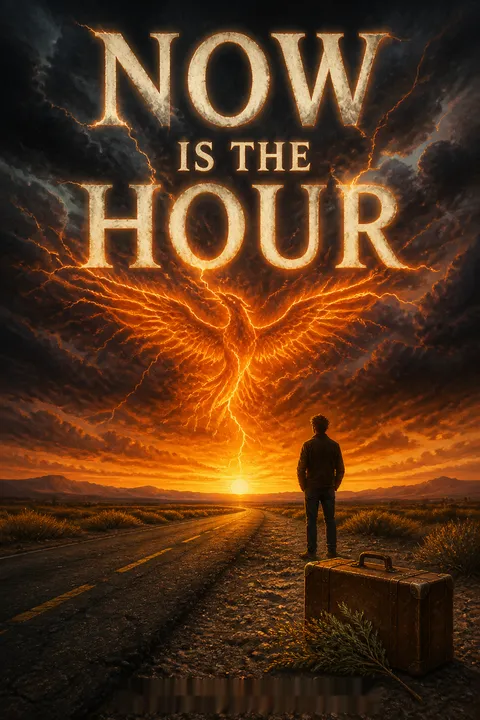
On Highway 93, thunder roaring and the past swirling like dust, Rigby sets foot on the road out of Idaho. Farewells echo: Billie with her promise, George with his red tie and suitcase, a mother's secret wish for freedom. Even the desert storms hold revelation as George's car appears on the horizon, thunder and laughter and tears. Their reunion fuses passion and pain, hope and uncertainty, as they drive toward California—dreaming, singing, brave, unsure. The journey is unfinished, the destination less important than the act of going. Whatever awaits in San Francisco, Rigby's parade continues, full of risk, love, and the ongoing hunt for color in a world too often gray.
Analysis
Now Is the Hour is a queer epic of rural America, a coming-of-age saga that refracts the larger tumults of the 1960s—racism, sexual revolution, religious dogma—through the raw, wounded consciousness of one Idaho misfit. Tom Spanbauer crafts Rigby John's voice with radical intimacy: at once wounded and seeking, comic and yearning, always on the edge of joy or despair. The book's achievement lies in its willingness to render growth as messy, recursive, and nonlinear. Family and faith offer both wounds and, improbably, medicine; love is both peril and possibility. The alternating cycles of shame and hope mirror the reader's own journey toward authenticity. Ultimately, Spanbauer suggests that liberation, creative or sexual or spiritual, can never be complete, but is always a series of escapes, parades, and acts of kindness—first for oneself, and then toward others. We read in Rigby's story both the specific longing of the outcast and the universal quest to be known, loved, and seen in full color.
Review Summary
Reviews for Now Is the Hour are largely positive, averaging 4.14/5. Many readers praise Spanbauer's lyrical, poetic writing style and the deeply emotional coming-of-age story set in 1960s rural Idaho. Rigby John's relationships, particularly with George and Billie, resonate strongly. Critics note the book's repetitive prose and excessive length as drawbacks, with some finding the stylistic quirks tiresome. Several reviewers compare it favorably to Steinbeck, Kerouac, and Hinton. International readers, particularly Spanish and Portuguese, also respond enthusiastically, highlighting its universal themes of identity, sexuality, and self-discovery.
People Also Read


Characters
Rigby John Klusener
Rigby is a queer boy growing up on a strict Catholic Idaho farm in the 1960s, caught in the crossfire of family expectation, rural homophobia, and the stirrings of the counterculture. Marked by shame, longing, and a near-mystical sensitivity, he narrates his own coming-of-age in hybrid tones—at once comic, searching, and deeply vulnerable. Throughout, Rigby strives to find magic in the mundane: the color orange in a gray world, hope in forbidden friendships, and freedom in self-acceptance. Bound to his mother by a web of longing, guilt, and ferocious love, he remains troubled by a father's coldness and the world's cruelty, yet discovers self-reliance and capacity for joy by journey's end. His development tracks from inward-turned shame to outward-seeking agency.
Mary Klusener ("Mom")
Mary is the magnetic center of the family—at once source of warmth and sorrow. Her devotion to Catholic ritual is a means to survive heartache: the early death of son Russell, loneliness in her marriage, and a sense of unfulfilled dreams. Prone to migraines, she fluctuates between moments of joy (especially at the piano) and brittle efforts to keep despair at bay. Both nurturing and fiercely controlling, she transmits Rigby both his gift for wonder and his burdens of shame. Their relationship is psychologically fused yet volatile, tied by trauma and a latent, unspoken empathy.
Joe Klusener ("Dad")
Joe represents the limits of frontier masculinity—hard, withholding, often racist and brutal. Scarred by his own upbringing (a family of drunks), he turns to work and silence to cope with trauma and loss. Though he never truly lets Rigby or anyone in, there are rare moments where father and son nearly touch. Joe's inability to express or process emotion leaves the family caged in cycles of violence and repression, yet even he possesses a kernel of wounded humanity, revealed in moments of vulnerability, particularly after his son Russell dies.
Sis (Mary Margaret)
Initially Rigby's playmate and co-conspirator, Sis becomes more distant as adolescence reshapes their roles. Her struggles with body image, popularity, and ultimately an unplanned pregnancy mirror and magnify the family's drama around sex and shame. Sis is both victim of expectations and, at times, complicit in Rigby's betrayals or humiliations. Her resilience—dancing, navigating marriage, and finally motherhood—demonstrates a tenacity similar to Rigby's, yet she remains bound to the family and its cycles.
Flaco and Acho
Flaco (gentle, beautiful, watchful) and Acho (playful, humorous, less fluent in English) become Rigby's first true friends. To them, he is "gringa loca," and through their eyes, he discovers the possibility of belonging outside his family and culture. Their presence enables experiences of trust, laughter, and physical freedom. Both embody an alternative masculinity—tender and open—contrasting with the rigid, Anglo male models Rigby knows. Their eventual exile by Rigby's family is a formative loss, deepening his understanding of prejudice and the fragility of joy.
Billie Cody
Billie is the sharp, funny, theater-obsessed Highland High girl with impossible breasts and weary blue eyes (tear duct "cancer"). Both Rigby's first great love and best friend, she shares his outcast sensibility, sharp intellect, and longing for escape ("Pisces to his Cancer"). Together they share cigarettes, jokes, deep talks, kisses, and betrayals—her pregnancy by another boy is both heartbreaking and liberating. Billie's capacity for authenticity and forgiveness shapes Rigby's own, even as their relationship must change from romance to deep friendship.
Joe Scardino
Scardino is the embodiment of small-town violence—a big, handsome Italian whose cruelty wreaks havoc on Rigby throughout school. Whether through direct assault or the more subtle policing of masculinity and difference, Scardino enforces the community's codes of belonging and shame. He is both the object of fear and—ironically—a victim of the same repression, perhaps haunted by secrets of his own. His death in a car crash with Chuck diPietro is a final, violent punctuation to years of torment.
George Serano
George, a half-Shoshone, half-Italian "drunken Indian and a queer to boot," is initially presented as a threat—a fever dream of forbidden longing, violence, and shame. Over time, George becomes Rigby's greatest ally and teacher: a survivor of exile, addiction, prejudice, and loss. Trained in ritual and steeped in spiritual myth (Thunderbird, the "Back Door"), George guides Rigby toward genuine self-acceptance. Their love is hard-won, jeopardized, but authentic, rooted in mutual difference and vulnerability. George's presence allows Rigby to imagine a life beyond Idaho, beyond hiding.
Grandma Queep
George's grandmother, a wizened, sharp-tongued survivor, anchors her family and community with stories, ritual, and a refusal to sentimentalize suffering. Through her—guardian of the "ancestor tree"—Rigby is introduced to a world beyond white Idaho: communal mourning, the giveaway, death as transformation. Her death is both a crisis and a passage for George and Rigby, as her house is emptied, her legacy of resilience and laughter echoing after she's gone.
Billie's and Rigby's Supporting Characters
Among them: Chuck diPietro (Billie's other lover, ultimately crippled by fate and longing), Mr. and Mrs. Cody (Billie's divided parents—a liberal, loving mother and a violent, bigoted father), Flaco and Acho's extended family (mirrors of both love and marginalization), Matthew Owlfeather (elder at the giveaway, keeper of secrets), and the rotating cast of priests, teachers, bullies, and outcasts. Each pushes Rigby to confront the boundaries of blood, faith, prejudice, and sexual possibility. All are marked by longing, by wounds old and new, and by the persistent hope of becoming more.
Plot Devices
Nonlinear Memory and Layered Storytelling
Spanbauer employs a recursive, spiraling timeline: Rigby's now—on the desert road west, hitchhiking toward San Francisco—interpolated with flashbacks to crucial moments, big and small, from childhood to the present. This structure mirrors how trauma and longing echo, and how meaning emerges only upon looking back. First-person narration, marked by repetition, incantatory language, and careful motifs, immerses the reader in Rigby's internal dialogue. Stories repeat, deepen, reinterpret themselves; emotional truths override linear cause and effect. The result is a storytelling voice at once protean and intimate, inviting empathy and revisitation.
Recurrent Motif and Symbolism
Symbolic objects recur: hats, pipes, cigarettes, sacred trees, and especially bodies (nakedness, bruises, sex, and wounds). The magic of "the color orange" becomes emblematic of hope, possibility, and the artist's journey. Family rituals, Catholic rites, and Indigenous ceremonies structure both trauma and healing. Every chapter uses symbols to foreshadow, reinforce, and even subvert expectations—what begins as everyday detail is continually invested with new emotional meaning as Rigby's understanding grows.
Parallel and Mirrored Relationships
Father/son, mother/child, brother/sibling, friend/lover, oppressor/victim—the boundaries blur as characters trade roles, inflict harm, and offer redemption. Rigby and his mother seem inextricably fused; his father and George, mirrors of neglect and longing. Billie's pregnancy mirrors Sis's, infidelity echoes the casual cruelties Rigby has suffered and meted out. The "back door"—both literal and figurative—frames the path to queerness, authenticity, and the cost of survival. These parallel arcs heighten the story's psychological complexity and suggest that liberation requires both repetition and rupture.
The Road, Thresholds, and Escapes
From the farm to San Francisco, the ditch bank to the dance floor, Rigby's odyssey is marked by thresholds: being cast out, running away, making a stand, saying goodbye. Each escape is fraught with trauma, hope, and the risk of both failure and authentic transformation. The final journey, both literal and metaphorical, is left deliberately open-ended, inviting the reader to imagine what comes next.
Download PDF
Download EPUB
.epub digital book format is ideal for reading ebooks on phones, tablets, and e-readers.








































