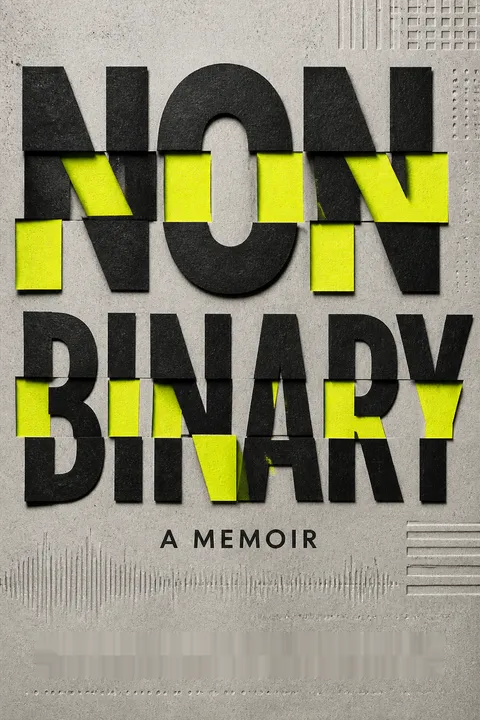

Key Takeaways
1. Art and Life are Inseparable: Short-Circuiting Control
Genesis … your task from now on is to tell me … HOW DO WE SHORT-CIRCUIT CONTROL?
Burroughs's Challenge. The book centers on Genesis P-Orridge's lifelong quest to "short-circuit control," a challenge posed by William S. Burroughs. This involves dismantling societal norms, inherited value systems, and the very concept of gender to reclaim individual identity and freedom.
Provocative Life. P-Orridge's life is presented as a radical experiment in art and identity, pushing boundaries in music, sexuality, and spirituality. This journey includes the creation of industrial music with Throbbing Gristle, explorations of acid house, body piercing, and the pursuit of pandrogyny with Lady Jaye Breyer.
Legacy of Inspiration. The memoir aims to inspire readers to live authentically, discard inherited constraints, and embrace the freedom to define their own identities. P-Orridge's life serves as an example of how to subvert tradition, challenge control, and create a unique narrative free from intrusion or interference.
2. Birth as Displacement: The Alien Within
My only vivid memory from being an infant is also the feeling that I was unable to express: I felt displaced.
Early Alienation. From infancy, P-Orridge experienced a profound sense of displacement, feeling disconnected from biological family, peer groups, and society. This sense of being an alien within a human world fueled a lifelong quest for belonging and understanding.
Private Thoughts. This feeling of alienation was combined with an ongoing awareness that deeper, private thoughts are best kept to oneself. The author felt that if they tried to join in with any socially focused behavioral dance or conversation, they would immediately be exposed for the alien brain that they constantly, internally, experience themselves as being.
Orange Cloud. This sense of being drawn down into materiality by birth from an orange place of peaceful, cloudy immateriality and eternity—this deliverance from an orange source—is what my given name actually meant. That source of quaquaversal bliss that I have strived to reconnect with ever since I was sucked away from it is precisely the meaning of my given name, Neil, and for a moment I feel all these threads of my life binding me to mortality at the end of my sojourn within so-called linear time.
3. Family Karma: Echoes of Parental Dreams
My father told me several times that he had been forced by circumstances to give up his dreams for himself to support and raise his family instead.
Unfulfilled Aspirations. P-Orridge's life is intertwined with the unfulfilled creative aspirations of their parents, particularly their father's passion for acting, music, and motorcycles. This creates a sense of karmic inheritance, with P-Orridge living out the dreams their father was forced to abandon.
Connecting Threads. Specific connections to the father's passions include involvement with biker culture, receiving a drum kit, and pursuing performance art. These echoes suggest a deeper, perhaps unconscious, drive to realize the father's creative potential.
Karmic Avatar. The author questions whether they were fated to live out their father's creative gifts, becoming a form of genetic reincarnation or a karmic avatar. This adds a layer of complexity to P-Orridge's artistic journey, suggesting a sense of duty or destiny.
4. War's Shadow: From Speedway to Blitz
Fear does no good. In fact, that’s when you make mistakes.
Father's Valor. The book recounts the father's experiences in World War II, from volunteering as a motorcycle messenger to surviving the Dunkirk evacuation. These stories reveal a hidden side of the father, a teenage rebel who faced danger with courage and resilience.
Blitz Spirit. The father's wartime experiences, including riding through bombed-out streets during the Blitz, shaped his character and instilled a sense of stoicism and practicality. This spirit of perseverance influenced P-Orridge's own approach to life and art.
Emotional Distance. Despite his heroism, the father remained emotionally distant, never expressing love or approval. This emotional rift created a lasting impact on P-Orridge, contributing to feelings of inadequacy and a lifelong need for validation.
5. The Power of the Image: Coronation to Curses
Placing a curse correctly required extreme attention to detail.
Symbolic Conflict. The coronation of Queen Elizabeth II, witnessed on a small black-and-white television, becomes a symbolic starting point for a lifelong conflict with authority. This sets the stage for future clashes with censorship, persecution, and the establishment.
Burroughs's Curses. The book details William S. Burroughs's use of "cut-up magic" to curse a rude café owner, highlighting the power of language and intention. This introduces the idea that words and actions can have real-world consequences, both positive and negative.
Moka Bar. Burroughs cursed the Moka Bar using his cut-up magic technique. First, he recorded all the ambient street sounds. Once back home, he began to “cut in” by randomly recording what he called “trouble noises.” Within weeks the Moka Bar was closed and suddenly out of business, never to reopen.
6. Fractured Memories: Cut-Ups of the Self
Just as it seemed life was chaos, it actually was.
Sparkling Fragments. Early childhood memories are presented as fragmented and disjointed, like glitter pouring between fingers. This reflects the chaotic and fluid nature of lived experience, challenging the notion of a linear, coherent narrative.
Gysin's Influence. Brion Gysin's "cut-up" technique, which involves rearranging existing text to create new meanings, becomes a guiding principle for understanding and representing reality. This approach embraces disorder and contradiction as essential elements of truth.
Liberation from Form. The cut-up technique liberates P-Orridge from the obligation to impose a formal sense or shape on their fractured memories. This allows for a more authentic and unfiltered portrayal of the self, embracing the messiness and complexity of lived experience.
7. Education and Rebellion: From Grammar School to the Underground
I knew the fragility of the most substantial structures—meaning bureaucratic as well as economic or social.
Class Divide. The eleven-plus examination, which determined a child's educational path, highlights the rigid class system in Britain. This system channeled children towards predetermined roles, reinforcing social inequalities and limiting opportunities.
Stockport Grammar. Attending Stockport Grammar School on a scholarship provides a brief respite from the harsh realities of social stratification. However, the experience also exposes the limitations of traditional education and the need for alternative forms of learning.
Solihull School. The oppressive and violent environment of Solihull School fuels a sense of rebellion and a determination to challenge authority. This experience solidifies P-Orridge's commitment to subverting the status quo and creating a more equitable world.
8. The Allure of Androgyny: Brian Jones and Beyond
He became symbolic to me of both the exotic idea of androgyny, but also of experimentation.
Gender Roles. Growing up in a household dominated by women and attending all-boys schools creates a sense of unease with traditional gender roles. This fuels a desire to explore androgyny and challenge the limitations of masculinity.
Brian Jones. Meeting Brian Jones of the Rolling Stones becomes a pivotal moment, as Jones embodies androgyny and experimentation. This encounter inspires P-Orridge to embrace a more fluid and unconventional approach to identity.
Mrs. Peel. The author was never a person who felt I was a woman trapped in a man’s body. But I did feel totally trapped in the expectation of my role within “masculinity.” All the “male” traits and behaviours that were supposed to be so natural to me. I did a lot of boy things in childhood. But I hated being associated with “maleness.”
9. The Nightmare Roof: Terror and Transformation
I’d wake up petrified and run to my parents’ bedroom, afraid to look behind me.
Recurring Nightmare. A recurring nightmare of being trapped on a slippery roof, pursued by a malevolent monster, haunts P-Orridge's childhood. This nightmare symbolizes the constant threat of external forces seeking to control and harm.
Symbolic Meaning. The nightmare can be interpreted as a warning or a message from a source outside time, representing the ongoing struggle against control and the need for constant vigilance. It also highlights the vulnerability and isolation of the individual in the face of overwhelming forces.
Anticlimactic Details. The details of the nightmare, though seemingly corny, underscore the power of fear and the lasting impact of childhood trauma. This emphasizes the importance of confronting and understanding our deepest anxieties.
10. The Lure of the Occult: From Gysin to Gurdjieff
I found my senses tingling, close to a palpable shivering within my mind.
Poetry Bug. Discovering poetry unlocks a new form of expression and a deeper understanding of language. This leads to a lifelong exploration of words, symbols, and their power to shape reality.
Gurdjieff's Influence. The "Stop Game," adapted from Gurdjieff's teachings, becomes a tool for self-analysis and breaking down ingrained habits. This highlights the importance of self-awareness and the constant questioning of assumptions.
The occult. The author found that the occult was a way to explore the unknown and challenge conventional thinking. This led to a lifelong fascination with magic, ritual, and the power of altered states of consciousness.
11. The Death of Neil: Rebirth as Genesis
It made all the decisions so much easier thereafter.
Medical Death. A near-death experience due to cortisone withdrawal becomes a catalyst for transformation. This event reinforces the preciousness of life and the need to pursue one's true passions without delay.
New Name. Adopting the name Genesis P-Orridge symbolizes a conscious break from the past and a commitment to creating a new identity. This act of self-creation reflects a desire to control one's own narrative and destiny.
Unwavering Focus. The near-death experience and the adoption of a new identity solidify P-Orridge's focus on creativity, subversion, and the pursuit of personal freedom. This sets the stage for a life dedicated to challenging control and exploring the boundaries of human experience.
12. Finding Cosmosis: Love, Loss, and Liberation
I was to explore in a fully tactile, sensual, three-dimensional explosion what joyful combinations were possible when actual pussies and penises devoured each other in passionate sex.
Sexual Exploration. The book details P-Orridge's exploration of sexuality, from early experiences with masturbation to later relationships with women. This journey reflects a desire to understand and challenge societal norms surrounding sex and the body.
Angel Jane. The relationship with Angel Jane Ray becomes a source of inspiration and creative collaboration. This highlights the importance of finding partners who support and encourage one's artistic vision.
Transgression. The author's relationship with Lady Jaye Breyer becomes a catalyst for further transformation, leading to the pursuit of pandrogyny and a deeper exploration of identity. This underscores the power of love and connection to transcend boundaries and challenge societal expectations.
Review Summary
Nonbinary receives mixed reviews, with ratings ranging from 1 to 5 stars. Some praise Genesis P-Orridge's boundary-pushing life and artistic contributions, while others criticize the memoir for glossing over accusations of abuse and manipulative behavior. Many readers find the book's title misleading, as it focuses more on P-Orridge's music career than gender identity. The writing is generally considered engaging, offering insights into counterculture and challenging societal norms. However, some question the reliability of P-Orridge's narrative and feel the memoir ends abruptly due to the author's death during its creation.
People Also Read
FAQ
1. What is Nonbinary: A Memoir by Genesis P-Orridge about?
- Life and Art Intertwined: The memoir chronicles Genesis P-Orridge’s journey through gender, art, music, and personal transformation, emphasizing the inseparability of life and art.
- Cultural and Musical Influence: It details Genesis’s pivotal role in creating industrial music, their involvement in avant-garde art, and their influence on underground movements from the 1960s onward.
- Exploration of Identity: The book deeply explores themes of gender fluidity, nonbinary identity, and the concept of pandrogyny, presenting Genesis’s life as a continuous process of self-reinvention.
- Personal and Philosophical Narrative: The memoir blends personal stories, cultural history, and philosophical inquiry, particularly around the question of how to “short-circuit control” in society and the self.
2. Why should I read Nonbinary: A Memoir by Genesis P-Orridge?
- Unique Gender Perspective: The memoir offers a rare, firsthand account of living beyond traditional gender definitions, challenging readers to reconsider the importance of gender in identity.
- Insider View of Counterculture: Readers gain an in-depth look at the evolution of avant-garde art, industrial music, and countercultural movements, with insights into the intersections of art, music, politics, and rebellion.
- Inspiration for Authentic Living: Genesis’s story is a testament to living authentically despite adversity, encouraging readers to pursue personal freedom and creative ambition.
- Blueprint for Self-Invention: The book provides a model for embracing change, self-authorship, and the ongoing process of personal transformation.
3. Who is Genesis P-Orridge, the author of Nonbinary: A Memoir, and why are they significant?
- Pioneering Artist and Musician: Genesis P-Orridge (1950–2020) was a groundbreaking figure in experimental music and performance art, founding COUM Transmissions, Throbbing Gristle, and Psychic TV.
- Cultural Engineer: They described themselves as a “cultural engineer,” dedicated to challenging societal norms and creating new forms of expression and identity.
- Nonbinary and Pandrogynous Identity: Genesis was a trailblazer in exploring nonbinary and pandrogynous identities, using their own body and life as a canvas for transformation.
- Enduring Legacy: Their influence extends across music, art, and alternative culture, with archives held at Tate Britain and a global community of admirers.
4. What are the key takeaways from Nonbinary: A Memoir by Genesis P-Orridge?
- Identity is Fluid: The memoir emphasizes that identity is a mutable, self-created construct, challenging traditional gender, family, and social roles.
- Art as Life Practice: Genesis demonstrates that art and life are inseparable, with creativity serving as both self-discovery and resistance to control.
- Subversion of Control: A central theme is the lifelong quest to “short-circuit control,” undermining societal and internal forces that restrict freedom.
- Personal and Cultural Transformation: The book advocates for discarding inherited value systems and embracing self-determined identity, inspiring readers to pursue their own transformation.
5. How does Nonbinary: A Memoir by Genesis P-Orridge explore the concept of “short-circuiting control”?
- Central Philosophical Question: The memoir is framed by William S. Burroughs’s challenge, “How do we short-circuit control?”—a question that drives Genesis’s life and art.
- Art as Resistance: Genesis uses art, music, and performance to disrupt and dismantle control mechanisms, employing techniques like the cut-up method to break linear narratives.
- Personal Liberation: The book illustrates reclaiming autonomy over identity and creative expression as a form of resistance to societal conditioning.
- Cultural Subversion: Genesis’s life and work serve as ongoing experiments in subverting norms and exposing hidden power structures.
6. What is the significance of the term “pandrogyny” in Nonbinary: A Memoir by Genesis P-Orridge?
- Definition and Origin: Pandrogyny, coined by Genesis and Lady Jaye, describes the fusion of male and female into a “third being,” transcending binary gender categories.
- Evolutionary and Philosophical Concept: The memoir presents pandrogyny as an evolutionary step for humanity, breaking down binary systems that control identity and behavior.
- Artistic and Ritual Practice: Genesis and Lady Jaye underwent body modifications and rituals to physically and spiritually embody pandrogyny, making their transformation a living art project.
- Challenge to Societal Norms: Pandrogyny promotes unity and the dissolution of separation, challenging conventional ideas about gender, identity, and the body.
7. How does Nonbinary: A Memoir describe the origins and impact of industrial music and Throbbing Gristle?
- Formation and Philosophy: Genesis co-founded Throbbing Gristle to create music that broke from traditional structures, using unconventional instruments and noise to challenge norms.
- DIY and Innovation: The band’s first album was recorded on a low-fi cassette recorder, emphasizing concept over technical polish, and they founded Industrial Records for independent releases.
- Music as Information: Industrial music was conceived as “stored information” meant to subvert control systems and provoke new ways of thinking, not just entertain.
- Global Legacy: The genre became a worldwide phenomenon, influencing countless artists, though Genesis later criticized its commercialization.
8. What role do occultism and ritual play in Genesis P-Orridge’s life as depicted in Nonbinary: A Memoir?
- Early and Ongoing Exploration: Genesis’s interest in magic and altered states began in the 1970s and evolved through studying figures like Aleister Crowley and Austin Osman Spare.
- Thee Temple ov Psychick Youth (TOPY): Genesis founded TOPY as a paramilitary occult association, combining ritual, magick, and community-building with a focus on sexual magick.
- Sigil Magic and Reprogramming: Inspired by Spare, Genesis developed rituals like the “Sigil ov Three Liquids” to reprogram the unconscious mind and break societal conditioning.
- Integration with Art: Occult practice was inseparable from Genesis’s art and daily life, serving as a method to short-circuit control and foster transformation.
9. How does Nonbinary: A Memoir portray Genesis P-Orridge’s relationships and their influence on their work?
- Creative Collaborations: Early partners like Cosey Fanni Tutti were integral to COUM Transmissions and early Psychic TV, pushing boundaries in performance and sexuality.
- Fluid Intimacy: Genesis had multiple relationships, including with punk icon Soo Catwoman, reflecting an open approach to intimacy and identity.
- Profound Partnership: Lady Jaye Breyer was Genesis’s “other half” and collaborator in the pandrogyny project, deeply shaping their later life and art.
- Influential Friendships: Close ties with figures like William S. Burroughs and Ian Curtis provided intellectual and emotional support, influencing Genesis’s philosophy and creativity.
10. What challenges and controversies does Genesis P-Orridge face in Nonbinary: A Memoir?
- Legal and Censorship Issues: Genesis was arrested and tried for sending “indecent” mail art, facing potential prison time but ultimately avoiding it with support from allies.
- Media and Police Harassment: Their home was raided by Scotland Yard’s Obscene Publications Squad, leading to confiscation of materials and public vilification.
- Health Struggles: Genesis survived near-death experiences, including a pulmonary embolism and later battled leukemia.
- Personal and Band Conflicts: Tensions within Throbbing Gristle and personal relationships led to splits, emotional turmoil, and even a suicide attempt.
11. How does Nonbinary: A Memoir by Genesis P-Orridge explain their philosophy on art and creativity?
- Art as Communication: Genesis views art as a dialogue to expand perception and challenge societal norms, not as a commodity or career.
- Breaking Conventions: They emphasize stripping away routines and traditional structures to find the essence of expression and provoke change.
- Inclusivity of Experience: Art should reflect all aspects of life, including taboo subjects, politics, and personal pain, to capture the full human condition.
- Inspiring Others: Genesis believes in inspiring others to realize their creative potential and use art as a tool for personal and cultural evolution.
12. What are the best quotes from Nonbinary: A Memoir by Genesis P-Orridge and what do they mean?
- On Binary Systems: “It’s my belief that one of the problems of the world so far... is the binary system. The either/or system... That’s not the way the universe is built.” This encapsulates Genesis’s rejection of dualistic thinking in favor of fluidity and unity.
- On Art and Life: “The excitement was the fact that LIFE and ART were inseparable.” This highlights Genesis’s view that creativity is a continuous, integrated process, not separate from living.
- On Pandrogyny: “Every man and woman is a man and woman.” This expresses the idea that gender distinctions are artificial and that embracing unity is essential for evolution.
- On Death and Legacy: “We make decisions based on where you want to be and what you want to be on that last day.” This reflects the memoir’s theme of living consciously with awareness of mortality and ethical responsibility.
About the Author
Other books by Genesis P-Orridge
Download PDF
Download EPUB
.epub digital book format is ideal for reading ebooks on phones, tablets, and e-readers.








































