
Key Takeaways
1. The Quest for Hidden Substance: Beyond Surface Reality
The “thirst for an inner substance and vision which transcends the obvious surface of existence” is not rare in our world.
Seeking deeper meaning. The author embarks on a personal journey to uncover the "life secrets of a mystical tradition sometimes known as the Kabbala," driven by a pragmatic search for a "supertreasure" unaffected by external circumstances. This quest is for yesh, a Hebrew word meaning "there is," signifying an inner substance and vision that transcends superficial reality. This yearning for "more" is the starting point of mysticism, a strenuous effort to encounter a deeper, hidden truth.
Beyond surface logic. The author notes that surface logic and observation cannot justify the suffering and chaos of the world, citing events like Hiroshima and Auschwitz. This leads to the conviction that texts and explanations, if not lies, must possess a deeper meaning. Mysticism, or chochmat ha nistar (hidden wisdom), delves into these subterranean realities, believing they hold greater truth and access to life's source-springs.
The mystic's perspective. Mystics, like the saint Reb Zusya who saw illness and poverty as fitting for his soul, perceive a level of reality where conventional distinctions between good and evil dissolve. While few achieve such annulment, many feel the need for a truth beyond outer evidence. This hunger for an interior realm is not exclusive to traditional believers, but also resonates with contemporary seekers exploring diverse spiritual paths.
2. Kabbala's Cosmic Blueprint: Sefirot and the Dance of Creation
The Zohar tries to proceed from speculation about the creation to speculation about God; similarly, it tries to analyze God’s manner of creation by analyzing the creative process in nature and man.
Divine emanations. The Kabbala, meaning "that which has been received," uses the concept of sefirot—ten elementary and primordial numbers or attributes—to describe a dynamic, pulsating "world of divinity" underlying our reality. These sefirot mediate between the ein sof (infinite source of all being) and our finite world, addressing the philosophical problem of how a perfect God can create an imperfect universe.
The tree of life. The sefirot are often arranged in a tree diagram, with keter (Crown) at the top, followed by chochma (wisdom) and bina (understanding), then chesed (grace) and gevurah (strength), leading to tiferet (beauty/mercy), and finally netzach (lastingness), hod (glory), yesod (foundation), and malkut (kingdom) at the bottom.
- Chochma (male) is the primal flash of insight.
- Bina (feminine) is the vessel that expands and analyzes this insight.
- Malkut (feminine) is the recipient of all divine flow, also called shekina (God's presence).
Unification and flow. The goal of all movements in the upper world is zivvug (coupling), the unification of the sefirot. This process, often described with erotic imagery, ensures the flow of shefa (life-sustaining grace) into our world. Human actions, including sexual acts, are seen as instruments that enable these upper worlds to function, emphasizing that "what happens above depends upon what happens below."
3. The Lurianic Mythos: Divine Withdrawal, Shattered Vessels, and Human Repair
The process of “lifting the sparks” to their roots and effecting a tikkun or “repair” is the task of man, a task in which all generations ply a role.
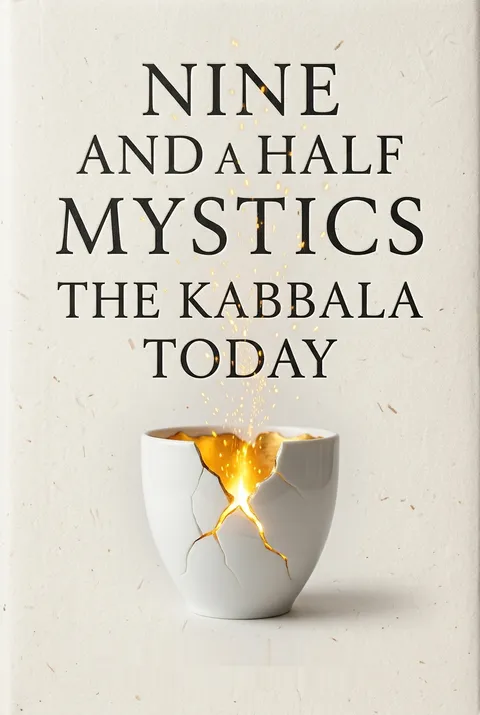
Cosmic catastrophe. The Lurianic Kabbala, a highly influential system, presents a dramatic mythos of creation. It begins with tzimtzum, God's self-contraction to create an empty space, followed by hitpashtut, a partial reentry of divine light. This light, however, was too intense for the "vessels" (kelim) meant to contain it, leading to shevirat ha-kelim (the breaking of the vessels).
Scattered sparks. The shattering scattered holy sparks of divine light, entangling them with the broken husks (klipot), which fell into the lower realms. Man's purpose is to perform tikkun (repair), separating these sparks from the klipot and lifting them back to their divine source. This task involves all levels of creation:
- Mineral, vegetable, animal, and human.
- Every human thought and action contributes to this cosmic repair.
Redemption and danger. The ultimate goal is the Great Tikkun, the final redemption, which requires liberating the holiest sparks from the deepest abyss, where the power of darkness is formidable. This descent into the depths is fraught with danger, as the line between the holy and the satanic is "as thin as a hair." This mythos provided a powerful explanation for Jewish exile and suffering, transforming it into a cosmic mission.
4. The Perilous Path: Mysticism's Edge of Heresy and Anarchy
The mystic may begin by affirming the validity of a sacred text or tradition, but his dissatisfaction with surfaces tends to make him look upon them as external shells which enclose a deeper and more important kernel of truth, and people who think they have found the kernel are inclined to discard the shell.
Challenging authority. Jewish tradition approaches mysticism with caution, recognizing its inherent dangers. The intensely personal nature of mystical experience can undermine canonical authority and lead to a disregard for established laws and traditions, viewing them as mere "shells" to be discarded once the "kernel" of truth is found. This "flight from the plain meaning of words and facts" is seen as an invitation to anarchy.
The demoniac potential. The pursuit of ecstatic experiences, or dvekut (intimate clinging to God), can lead to a disconnection from common reality and even antisocial behavior. As Dr. Henry Slonimsky notes, subjective feelings of awe can be evoked by acts of destruction as easily as by mercy. This accessibility of mystical rapture to "devil and sinner as well as to saint" makes traditional Judaism wary of subjectivist religiosity.
Historical heresies. Gershom Scholem highlights how this anarchic potential manifested in movements like Shabbatai Zevi and Jacob Frank. These messianic heresies, rooted in Lurianic Kabbala, pushed the paradox of inner truth versus outer reality to extremes, leading to apostasy and antinomianism (transgression of the Law to fulfill it). The "breaking of the shells" became a justification for embracing sin, demonstrating the thin line between profound spiritual insight and destructive nihilism.
5. Hasidism: Bringing Mysticism to the Masses with Joy and Simplicity
The Hasidic teaching is the most powerful and unique phenomenon which the Diaspora has produced.
A popular movement. Hasidism, emerging in the 18th century, transformed Kabbala from an elite, esoteric pursuit into a "folk ethos" accessible to ordinary people. Martin Buber, a key interpreter, championed Hasidism as a "legendary reality" that vitalized diverse classes, emphasizing joy, simple faith, and the importance of the "here and now."
The Baal Shem Tov's message. Israel, the Baal Shem Tov (Master of the Good Name), founded Hasidism as a response to the despair and excessive legalism of his era. He preached that life should be filled with joy and purpose, challenging the ascetic tendencies of the time.
- He affirmed the body's elemental rights, enjoying simple pleasures.
- He stressed kavannah (inner intent) over rote prayer, valuing the sincere cry of an illiterate shepherd as much as complex mystical formulae.
- He taught that God's presence (shekina) would not rest where sadness prevailed, urging followers to "lift the holy sparks" even from sinful situations.
Opposition and spread. Despite fierce opposition from the Misnagdim (opponents), who accused Hasidim of pantheism and indecorous behavior, the movement spread rapidly. Its emphasis on emotional devotion, communal meals (tisch), and the tzaddik as an intermediary, resonated deeply, creating numerous Hasidic dynasties across Eastern Europe.
6. The Rebbe's Role: A Living Bridge to the Divine
The rebbe is like a little Moses, like ‘a picture whose size has been reduced.’
Spiritual shepherd. In Hasidism, the tzaddik or rebbe serves as a spiritual leader, a "living bridge" between the divine and the human. Followers often attribute extraordinary powers to their rebbes, seeking guidance not only in religious matters but also in health, livelihood, and life decisions. This role is seen as an inheritance of accumulated merit and a direct connection to the divine.
Lubavitch's organized mysticism. The Lubavitcher movement, a prominent Hasidic sect, exemplifies an organized approach to mysticism. Their rebbes, direct descendants of Schneur Zalman, are seen as spiritual shepherds for all Israel, not just their immediate followers.
- They emphasize chabad (wisdom, understanding, knowledge) – a rational, intellectual approach to mystical concepts.
- They believe in mesiras nefesh (self-sacrifice) and the pintele Yid (a spark of authentic Jewishness in every Jew).
- Their missionary zeal, educational institutions, and public relations efforts are seen as practical extensions of their theology, aiming to "make obvious the hidden."
The rebbe's authority. The Lubavitcher rebbe's authority is absolute, with followers submitting to his counsel in all aspects of life. This is justified by the belief that the rebbe, through his holiness and self-extinction (hitbatlut), can awaken dormant powers within individuals and connect them to higher divine forces. This unique blend of intellectual rigor, organizational prowess, and unwavering faith in the rebbe's guidance defines the Lubavitcher path.
7. Bratzlav's Tortuous Simplicity: Embracing Despair for Ascent
“Jews, don’t despair,” was the constant cry of our rebbe, may his memory be a blessing.
The "dead Hasidism." Bratzlav Hasidism, founded by Rabbi Nachman (great-grandson of the Baal Shem Tov), is unique in having no living rebbe since his death in 1810. His followers, known as "dead Hasidim," continue to revere his teachings and stories, believing his "light will glow till the days of the Messiah." This sect thrives on paradox, advocating naive faith while grappling with deep despair.
Hisbod'dus and Simcha. Rabbi Nachman emphasized hisbod'dus (solitary, spontaneous prayer, often outdoors at night) as a means to connect with God and overcome inner struggles. He also stressed simcha (joy), even in the face of suffering, believing that despair is Satan's tool.
- Hisbod'dus helps pierce through doubt to natural faith.
- Hischazkus (stubborn self-strengthening) is crucial for battling inner and outer obstacles.
- The goal is to find joy in the sadness, not to run from it.
The "moon man" and his tales. Nachman, a "moon personality" subject to waxing and waning, taught that "every ascent must be preceded by a descent." His parables, like "The Tale of the Seven Beggars" or "The Wise Man and the Simpleton," are central to Bratzlav literature. They use kabbalistic imagery to illustrate the search for lost harmony, the value of simple faith, and the idea that even in grossness, one can find a path to God.
8. The Fragrance of Eden: Rabbi Chen's Call for Singularity and Inner Truth
The absence of identity or repetition in nature proclaims that in reality there is no “detail” in the sense of a part having meaning only in relation to the “whole.” For every detail is not just a part, not one part, but—singular.
Singularity of being. Rabbi Abraham Chen, a scholar bridging traditional Hasidism and modern thought, emphasized the "singularity" of every moment, every creature, and every human soul. He argued that this uniqueness is the "seal of all creation," repudiating any view that reduces individuals to mere "cogs" in a larger community. This perspective elevates the individual's inherent worth and purpose.
Rebirth and return. Chen believed in a "second birth," a tearing away of "veils of oldness" to recover a childlike sense of wonder and connect with one's "essential point." This rebirth can be triggered by great love or profound tragedy, which rip away "pasted-on externals." He linked this to tshuvah (return), the process of rediscovering one's essential self.
The "fragrance" of holiness. Rabbi Chen's teachings, often expressed through evocative prose poems, sought to reveal the "fragrance of Eden" in everyday life. He criticized "partial thinking" that prioritizes abstract principles over human life, asserting that "the teaching which places goals or principles above the sacrifice of human beings is the fountainhead of all the world’s sins." His life and writings embodied the tension of living "between the suns"—between a fading traditional world and a not-yet-risen new one.
9. Rav Kook's Holistic Vision: Unifying the Sacred and the Secular
“Expanses, expanses—enclose me not in cages of mind, spirit or word. . . .”
The "roots above" perspective. Abraham Isaac Kook, the first Chief Rabbi of Palestine, offered a holistic vision (hachlala) that sought to reconcile apparent contradictions within Judaism and the world. He viewed all creation as an organic unity, ultimately rooted in the divine, where evil is merely a "veiling of the light" or a lesser good. This "view from the roots above" allowed him to see individual phenomena from the perspective of the overall whole.
Reconciling paradoxes. Kook embraced the paradoxes of his time, such as the conflict between religious and nonreligious Jews in Israel. He saw the "brazenness" (hutzpah) and "fleshly" qualities of secular pioneers as a necessary pendulum swing from diaspora "overspiritualization," preparing "thickened vessels" for powerful spiritual illuminations. He even asserted that atheism could be a purifying force, clearing away inadequate religious institutions for a "higher knowledge of God."
Inclusiveness and detail. Kook's philosophy emphasized the need for "full faith" and an all-inclusive perspective, yet he also stressed the absolute importance of every "smallest detail" of Torah law. He believed that the high and the low, the universal and the particular, are interconnected. His vision aimed to unite all streams of Judaism—law, philosophy, poetry, mysticism, Hasidism—into a harmonious whole, a "well" continually bubbling with new ideas.
10. The Enduring Challenge: Faith, Doubt, and the Search for Meaning
“U’v’cHEN, and so?” is an expression which Lubavitcher Hasidism like to append to the end of every theoretical discussion. It is a phrase spoken with raised eyebrows. It asks the individual what he plans to do, in concrete terms, about all his theories and observations.
The ongoing quest. The journey into Jewish mysticism, like life itself, has no definitive end. It is a continuous search for shefa (light, joy, truth) that leads from "gate to gate." The central question remains: how can one acquire or discover this inner substance without a full commitment to the Law, and the faith in its divine origin? This challenge confronts both the Orthodox insider and the outside observer.
The problem of vitality. The author observes a fading vitality in some traditional mystical communities, a sense of creative power having withdrawn, leaving only an "impression" in empty space. This raises the question of whether traditional forms can still construct a viable "house of life" in the modern world, especially when confronted with the trauma of events like the Holocaust.
Historic events and divine light. Jewish mysticism, at its core, is deeply connected to concrete historic events, such as the revelation at Mount Sinai or the Six Day War. These events are seen as moments when a "great light" bursts through utter darkness, offering a sense of contact with the deepest level of truth. The challenge is to detect and reveal this "wavering impression" of light in all periods of history, transforming darkness into light and sour into sweet. The ultimate call is for "no compromise" in faith, yet a welcoming of even partial observance, recognizing that "if all we can accomplish is to save only one limb, we save that. Then we worry about saving another."
Download PDF
Download EPUB
.epub digital book format is ideal for reading ebooks on phones, tablets, and e-readers.








































