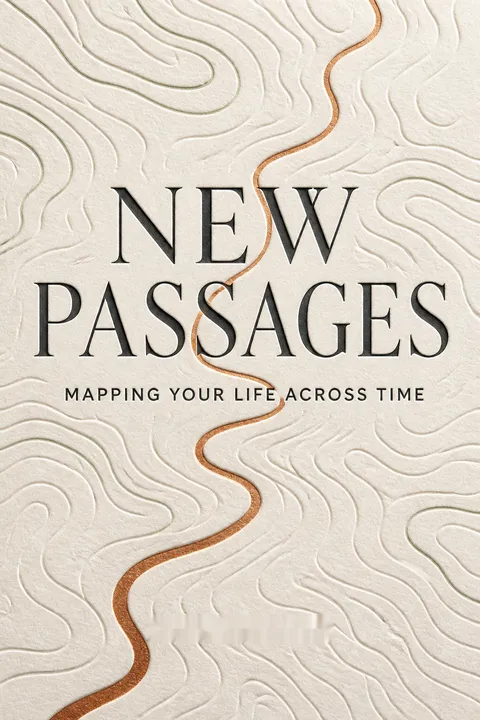

Key Takeaways
1. The Revolution in the Life Cycle: Extended Second Adulthood
There is a revolution in the life cycle. In the space of one short generation the whole shape of the life cycle has been fundamentally altered.
Extended lifespan. The life cycle has undergone a dramatic transformation, with people now living much longer and healthier lives. This has resulted in an extended "Second Adulthood" - a period from roughly age 50 to 85+.
Shifting stages. Traditional life stages have been pushed back:
- Adolescence often extends into the late 20s
- "True adulthood" may not begin until 30
- Middle age has been pushed into the 50s
- Old age may not begin until very shortly before death
New opportunities. This extended Second Adulthood offers unprecedented opportunities for:
- Personal growth and reinvention
- New careers and pursuits
- Deeper relationships
- Spiritual development
- Contributing to society in meaningful ways
2. From Survival to Mastery: The Shift in Middle Life
The massive shift in the passage to Second Adulthood involves a transition from survival to mastery.
Evolving focus. In young adulthood, the focus is on survival - figuring out how to please others and perform for those in power. In Second Adulthood, the emphasis shifts to mastery - taking control of one's life and acting on the world rather than reacting to it.
Key elements of mastery:
- Greater self-confidence and self-knowledge
- Ability to navigate complex environments
- Capacity to change conditions around oneself
- Less concern with proving oneself to others
- Focus on meaningful work and relationships
Conscious effort required. Achieving mastery in Second Adulthood is not automatic - it requires conscious effort, reflection, and often a willingness to let go of old identities and ways of being.
3. The Pits-to-Peak Phenomenon: Women's Journey Through Menopause
Surprise! You're not getting older, you're getting happier!
The pit. Many women experience a "pit" or low point in their mid to late 40s, often coinciding with perimenopause. This can involve:
- Mood swings and depression
- Physical discomfort
- Identity crisis
- Feelings of invisibility
The peak. Contrary to popular belief, many women report feeling happier and more fulfilled in their 50s and beyond:
- Greater self-confidence and authenticity
- Reduced concern with pleasing others
- Increased focus on personal growth and meaningful pursuits
- "Postmenopausal zest" - a surge of energy and creativity
Shifting perspective. This pits-to-peak journey often involves a fundamental shift in how women view themselves and their place in the world, moving from a focus on external validation to internal satisfaction.
4. The Samson Complex: Men's Struggle with Aging
What most men want to do at 50 is to stay where they are, to keep what they've got. They don't want to make a passage.
Resistance to change. Many men struggle with the physical and psychological changes of aging, desperately trying to maintain the strength, dominance, and identity of their youth - a phenomenon Sheehy calls "the Samson Complex."
Key manifestations:
- Obsession with hair loss
- Pushing physical limits in sports and fitness
- Denial of health issues
- Difficulty expressing emotions or seeking help
Potential consequences. This resistance can lead to:
- Increased stress and health problems
- Difficulty adapting to changing social and professional landscapes
- Missed opportunities for personal growth and deeper relationships
5. Custom-Designing Your Approach to Menopause
Custom-design your approach to menopause.
Individualized approach. Every woman's experience of menopause is unique, and there is no one-size-fits-all solution. Factors to consider include:
- Personal health history and risk factors
- Severity of symptoms
- Life goals and priorities
- Attitudes toward hormone replacement therapy (HRT)
Informed decision-making. Women should educate themselves about:
- The stages of menopause (perimenopause, menopause, postmenopause)
- Various treatment options (HRT, natural remedies, lifestyle changes)
- Long-term health considerations (bone density, heart health, etc.)
Ongoing adjustments. The approach to menopause may need to be adjusted over time as symptoms and priorities change. Regular check-ins with healthcare providers and self-reflection are crucial.
6. The Mortality Crisis: Facing Our Limitations
We all have to learn how to husband our bodies as we get older.
Confronting mortality. The midlife passage often involves a confrontation with one's own mortality, triggered by:
- Health scares or diagnoses
- Deaths of parents or peers
- Physical changes and limitations
Potential responses:
- Denial and risk-taking behavior
- Depression and withdrawal
- Acceptance and proactive health management
- Spiritual or philosophical exploration
Opportunity for growth. While challenging, facing mortality can lead to:
- Greater appreciation for life
- Clarification of priorities
- Deepened relationships
- Spiritual or personal growth
7. From Pleasing to Mastery: Women's Transformation in Second Adulthood
I can now live by my own lights and stop trying to please everyone.
Shifting focus. Many women describe a fundamental shift in their 50s and beyond:
- From trying to please others to living authentically
- From external validation to internal satisfaction
- From sacrificing for others to prioritizing personal growth
Key aspects of this transformation:
- Increased self-confidence and assertiveness
- Willingness to express opinions and set boundaries
- Pursuit of long-held dreams and passions
- Deeper, more authentic relationships
Challenges and rewards. This transformation can be challenging, particularly in established relationships, but often leads to greater fulfillment and a sense of living one's true purpose.
8. Redefining Masculinity in the Age of Mastery
Men are going to live much longer than they expected, whether they like it or not.
Outdated models. Traditional definitions of masculinity often focus on:
- Physical strength and dominance
- Emotional stoicism
- Career success and provider role
- Competitiveness
New paradigm needed. As men enter Second Adulthood, a new model of masculinity is required, emphasizing:
- Emotional intelligence and vulnerability
- Deeper, more nurturing relationships
- Flexibility and adaptability in career and identity
- Contribution to community and society
Potential benefits. Men who successfully redefine their masculinity often experience:
- Improved mental and physical health
- More satisfying relationships
- Greater sense of purpose and fulfillment
- Increased resilience in face of life changes
9. The Fantasy of Fertility Forever: Risks and Realities
The cosmic joke today is: You spend the first half of your adult life trying not to get pregnant; then you spend the second half trying to get knocked up.
Delaying childbearing. Many women are postponing pregnancy into their late 30s and 40s, often due to:
- Career priorities
- Later marriages
- Assumption of continued fertility
Risks and challenges:
- Declining fertility with age
- Increased risk of pregnancy complications
- Emotional and financial strain of fertility treatments
- Potential regret over delayed childbearing
Societal implications:
- Need for better education about fertility and aging
- Ethical considerations around advanced reproductive technologies
- Changing family structures and dynamics
10. Forging a New Identity in Second Adulthood
Second Adulthood is not about repeating ourselves; it's about finding a new version of attractiveness.
Identity reconstruction. Second Adulthood often requires a fundamental reimagining of one's identity, involving:
- Letting go of outdated self-concepts
- Embracing new roles and pursuits
- Integrating life experiences into a cohesive narrative
Key elements of a new identity:
- Authenticity and self-acceptance
- Focus on personal growth and learning
- Emphasis on contribution and legacy
- Integration of multiple aspects of self
Ongoing process. Forging a new identity in Second Adulthood is not a one-time event, but an ongoing process of exploration, reflection, and adaptation.
Review Summary
New Passages by Gail Sheehy explores aging and life stages, focusing on the concept of a "Second Adulthood" beginning at 45. Readers appreciate Sheehy's insights and research, finding the book affirming and inspiring. However, some criticize its focus on wealthy professionals and dated information. The book's relevance varies depending on the reader's age and life stage. While some find it thought-provoking, others consider it outdated and overly generalized. Overall, opinions are mixed, with ratings ranging from 1 to 5 stars.
People Also Read



FAQ
1. What is New Passages: Mapping Your Life Across Time by Gail Sheehy about?
- Exploration of adult life stages: The book maps the evolving adult life cycle, focusing on transitions from midlife into later adulthood, and introduces the concept of "Second Adulthood."
- Integration of research and stories: Sheehy combines scientific research, interviews, and personal narratives to illustrate how adults navigate changes in identity, relationships, and purpose.
- Challenging old age stereotypes: The book redefines aging as a period of growth and opportunity, rather than decline, and addresses generational and cultural shifts in adulthood.
2. Why should I read New Passages by Gail Sheehy?
- Insight into midlife transitions: The book offers a compassionate, research-based guide to understanding and navigating the emotional, physical, and social changes of midlife and beyond.
- Empowerment and optimism: Sheehy provides practical advice and an optimistic vision for aging, encouraging readers to embrace change and reinvent themselves.
- Breaking taboos: The book addresses topics often ignored, such as menopause, male midlife changes, and the psychological impact of aging, making it a valuable resource for both men and women.
3. What are the key takeaways from New Passages by Gail Sheehy?
- New map of adulthood: Sheehy introduces three main adult life stages—Provisional Adulthood, First Adulthood, and Second Adulthood—each with unique challenges and opportunities.
- Predictable passages and crises: The book identifies predictable transitions, such as the "little death" of First Adulthood and the "Meaning Crisis" in midlife, as opportunities for growth.
- Redefining aging: Aging is presented as a time for mastery, creativity, and new forms of love and community, rather than inevitable decline.
4. How does Gail Sheehy’s concept of "Second Adulthood" in New Passages redefine midlife and aging?
- Shifted age norms: Second Adulthood begins around age 45 and extends into the eighties, pushing traditional notions of middle age later due to longer life expectancy and better health.
- Two phases of Second Adulthood: Sheehy describes the Age of Mastery (45-65) and the Age of Integrity (65-85+), each offering new possibilities for growth and fulfillment.
- Opportunity for reinvention: The book encourages readers to see midlife as a time for conscious reinvention, learning, and adventure, challenging outdated stereotypes about aging.
5. What are the main adult life stages and passages described in New Passages by Gail Sheehy?
- Three adult stages: Provisional Adulthood (18-30), First Adulthood (30-45), and Second Adulthood (45-85+), each with distinct developmental tasks.
- Passages as transitions: Predictable crises or "passages" signal the end of one stage and the beginning of another, prompting self-reflection and change.
- Middlescence: Sheehy introduces "middlescence," a second adolescence in midlife marked by confusion, growth, and the search for authenticity.
6. How does New Passages by Gail Sheehy address generational and cultural differences in adulthood?
- Five generations analyzed: The book compares World War II, Silent, Vietnam, Me, and Endangered generations, highlighting their unique life experiences and developmental timelines.
- Changing life courses: Later generations experience prolonged adolescence, delayed family formation, and different career patterns, affecting their midlife transitions.
- Cross-cultural perspective: Sheehy includes research from the U.S., U.K., Europe, and China, showing global shifts in adult development.
7. What is the "Time Flies Test" in New Passages by Gail Sheehy and how does it help readers find passion?
- Definition of the test: The "Time Flies Test" asks what activity makes time pass unnoticed, helping individuals reconnect with childhood passions and authentic interests.
- Rediscovering the dormant self: The test encourages readers to uncover suppressed passions, often lost due to societal or gender expectations.
- Pathway to fulfillment: Identifying these passions guides readers toward meaningful pursuits in Second Adulthood, fostering a sense of purpose and aliveness.
8. How does New Passages by Gail Sheehy explore menopause and male midlife changes?
- Menopause as a passage: Sheehy frames menopause as a significant psychological and spiritual transition, not just a biological event, with three phases: perimenopause, intermediate, and postmenopause.
- Male menopause ("unspeakable passage"): The book discusses the gradual decline in male vitality and potency, often denied or stigmatized, and the psychological impact of changing masculinity.
- Custom approaches and support: Sheehy advocates for informed choices about hormone therapy, lifestyle changes, and emotional support for both men and women navigating these changes.
9. What is the "Sexual Diamond" in New Passages by Gail Sheehy and how does it explain changes in sexuality during midlife?
- Model of gender convergence: The Sexual Diamond describes how men and women psychologically and emotionally move closer together in their fifties and sixties, breaking down rigid gender roles.
- Role reversals and crises: Men become more nurturing and expressive, while women become more assertive, sometimes leading to a "Crossover Crisis" in relationships.
- Opportunities for deeper intimacy: These shifts can create new harmony and fuller expression of both masculine and feminine traits, enhancing intimacy and connection.
10. How does New Passages by Gail Sheehy address relationships, singlehood, and community in midlife?
- Changing marriage patterns: Divorce rates peak in midlife, with many women choosing singlehood for independence and fulfillment, while men may struggle with loneliness.
- New forms of community: Both genders seek new social bonds and redefine intimacy, with some embracing singlehood as a time of freedom and exploration.
- Redefining fatherhood and connection: The book encourages men to become nurturing, emotionally available fathers and to move from competition to connection in relationships.
11. What practical advice does New Passages by Gail Sheehy offer for maintaining vitality and well-being in midlife and beyond?
- Lifestyle changes: Sheehy recommends avoiding smoking, maintaining a healthy diet, moderating alcohol, and managing stress to protect health and sexual function.
- Mental and social engagement: Continuous mental stimulation, social involvement, and spiritual growth are emphasized as keys to successful aging.
- Embracing new passions: The book encourages cultivating new interests and relationships to foster resilience, purpose, and overall well-being.
12. What are the best quotes from New Passages by Gail Sheehy and what do they mean?
- On successful life: “To laugh often and much; to win the respect of intelligent people and the affection of children…” highlights the value of joy, respect, and contribution.
- On embracing struggle: “The struggle itself toward the heights is enough to fill a man’s heart. One must imagine Sisyphus happy.” suggests fulfillment comes from embracing life’s challenges.
- On forgiveness and growth: “It’s almost as if you have to forgive the things that happened in the first half of your life…the people who failed you and the ways you failed yourself—in order to go on for the second half.” underscores the importance of forgiveness for personal growth in Second Adulthood.
About the Author
Other books by Gail Sheehy

Download PDF
Download EPUB
.epub digital book format is ideal for reading ebooks on phones, tablets, and e-readers.








































