
Plot Summary
Stranger in Camlin
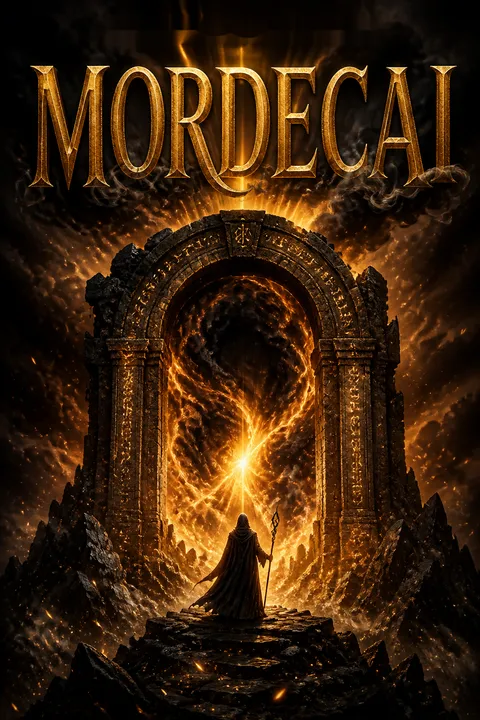
Mordecai, disguised as Tom the Tinker, enters the village of Camlin, offering repairs and news. Beneath his humble exterior, he's a powerful archmage on a secret mission to root out a hidden threat. His acts of kindness—healing a widow's limp and mending a pot—are tinged with guilt and a longing for redemption. The village's simple life contrasts with Mordecai's inner turmoil and the weight of his past. His compassion is genuine, but his presence is a harbinger of larger, unseen dangers. The chapter sets the tone: even in peace, shadows linger, and Mordecai's burdens are never far behind.
Homecomings and Healing
Returning home, Mordecai is greeted by his wife, Penny, and their children. Domestic warmth is laced with anxiety—recent traumas have left scars on everyone. Mordecai's compulsion to heal strangers is both a gift and a curse, threatening to expose his true power and disrupt their fragile peace. Penny's fears for their family's safety are justified by past kidnappings and betrayals. Their banter masks deeper worries, and Mordecai's guilt over the world's suffering is palpable. The home is a sanctuary, but the outside world's dangers—and Mordecai's own secrets—are always pressing in.
World-Roads and Wounds
Mordecai inspects the World-Road, a magical network transforming trade and travel. The road's security measures are a testament to his caution, born from loss—his friend Dorian's sacrifice haunts him. The world sees Mordecai as both savior and monster, and he struggles with the legacy of his power. The World-Road is a symbol of change, but also a reminder of the cost of progress. Mordecai's journey is as much about confronting his own darkness as it is about building a better future.
Royal Shadows and Reminiscence
In Albamarl, Mordecai navigates court politics and memories of lost friends. His cousin, Queen Ariadne, is isolated by her crown and haunted by the absence of true confidants. Their reunion is bittersweet, filled with regret and unspoken longing for simpler times. Ariadne's marriage is a political necessity, not a source of joy, and her barrenness is a private sorrow. Mordecai's offer of sanctuary is a lifeline, but also a reminder of the distance between who they were and who they've become. The past is a comfort and a burden, shaping every choice they make.
Family, Guilt, and the Void
A family gathering for Mordecai's mother's birthday is tinged with the awareness of aging and loss. Mordecai's magical senses reveal the slow approach of death in those he loves, especially his mother. His inability to heal everything is a source of deep frustration and guilt. The void—his sense of entropy and death—haunts him, a legacy of his time as a shiggreth. The chapter explores the limits of power, the inevitability of loss, and the importance of cherishing fleeting moments of joy.
Children's Secrets Revealed
Mordecai's children, Matthew and Moira, propose a plan to use spellbeasts to hunt the hidden enemy, ANSIS. Moira reveals her spell-twin, Myra, blurring the line between self and other. The family's acceptance of Myra is both unsettling and heartening, a testament to their resilience. The threat of ANSIS looms, but so does the challenge of understanding and accepting the changes within themselves. The chapter delves into identity, the ethics of power, and the strength found in unity.
Queen's Refuge, Lost Daughters
Mordecai invites Queen Ariadne to share his family's hidden home, offering her respite from royal isolation. Penny's discomfort with the arrangement reveals her own insecurities and the lingering divide between commoner and noble. Meanwhile, their foster daughter Lynaralla is recalled by her She'Har parents, leaving Penny and Mordecai feeling powerless. The struggle to protect and keep family together is at the heart of their pain, highlighting the limits of even the greatest magic.
Flight to the She'Har
Mordecai and Penny travel to the She'Har island to plead for Lynaralla's return. They find Tyrion, Mordecai's ancestor, subjecting Lynaralla to brutal training. A violent confrontation ensues, culminating in a challenge: Mordecai must fight Tyrion for Lynaralla's future. The battle is fierce and personal, exposing Mordecai's doubts and Tyrion's monstrous nature. The cost of love, the legacy of violence, and the struggle to break cycles of abuse are laid bare.
Tyrion's Brutal Lessons
Mordecai loses the fight to Tyrion, suffering a devastating physical and emotional defeat. Tyrion's cruelty extends to Penny, who is nearly violated before Lynaralla intervenes. The family escapes, but the wounds—physical and psychological—are deep. Mordecai's sense of failure is overwhelming, and Penny's trauma is compounded by the realization that Tyrion manipulated her emotions with magic. The chapter is a crucible, forging new resolve but leaving lasting scars.
Defeat and Humiliation
Back home, Mordecai is gravely injured, his body and spirit broken. The family rallies to heal him, but the limits of magic are stark—his kidneys fail, and death looms. The prospect of using forbidden magic to survive is rejected; Mordecai chooses dignity over monstrosity. The family's grief is raw, and each member faces the possibility of loss in their own way. The chapter is a meditation on mortality, the meaning of heroism, and the courage to accept fate.
Recovery and Regret
Through the combined efforts of his children and Lynaralla, Mordecai is saved by a magical blood exchange. The family's relief is tempered by the knowledge that such miracles are rare and costly. The experience deepens their bonds but also underscores the fragility of life. Mordecai's return to health is a second chance, but the shadow of what was lost—and what could still be lost—remains.
Death's Door, Family's Grief
The aftermath of the attack on Castle Cameron is devastating. Penny is mortally wounded, and despite Mordecai's desperate efforts, she chooses to sacrifice herself to save him. Her death leaves the family shattered, each member grappling with guilt, anger, and sorrow. The funeral is a moment of collective mourning, but also a testament to Penny's impact on everyone she touched. Mordecai is left to lead, haunted by the void and the memory of his beloved.
The Ungol Invasion
Strange, dwarfish warriors—the Ungol—invade, bringing with them the shadow of ANSIS. The battles are brutal, and the threat is unlike anything the kingdom has faced. Mordecai and his family must adapt, using every resource at their disposal. The lines between friend and foe, human and monster, blur as the true nature of the enemy is revealed. The chapter is a turning point, forcing the characters to confront the limits of their power and the cost of survival.
Battle at Washbrook
Mordecai faces the Ungol in a pitched battle outside Washbrook. Wounded and near death, he taps into the void, unleashing a terrifying power that turns the tide but at a terrible cost. The experience leaves him changed, feared even by his own family. The aftermath is a reckoning with the darkness within, and the realization that victory can be as dangerous as defeat.
Aftermath and Alliances
The kingdom reels from the twin threats of ANSIS and the Ungol. Mordecai forges new alliances, even with old enemies like Tyrion, to hunt the hidden enemy. The family's wounds—physical and emotional—begin to heal, but trust is fragile. The need for unity is clear, but so is the danger of old grudges and new ambitions. The chapter explores the complexities of leadership, forgiveness, and the price of peace.
The Enemy Within
ANSIS strikes from within, using human hosts to attack the heart of the kingdom. The family's home is no longer safe, and even trusted allies are suspect. The battle is as much psychological as physical, testing the bonds of loyalty and the strength of identity. The struggle to root out the enemy is a mirror of the characters' internal battles with their own darkness.
The Price of Power
As the war against ANSIS escalates, Mordecai and his family are forced to make impossible choices. The power to destroy is matched by the power to heal, but both come at a cost. The legacy of the She'Har, the secrets of the past, and the burden of leadership converge. The chapter is a meditation on the meaning of wisdom, the necessity of sacrifice, and the hope that love can endure even in the face of death.
Loss, Love, and Legacy
In the wake of Penny's death, Mordecai and his family struggle to find meaning and purpose. The world is changed, and so are they. The bonds of family and friendship are tested, but also renewed. The story ends on a note of bittersweet hope: the work of healing and rebuilding continues, and the legacy of love endures, even as the void waits in the shadows.
Analysis
Mordecai is a story about the cost of power, the inevitability of loss, and the enduring strength of love and family. At its heart, it is a meditation on what it means to be human in a world where magic can heal wounds but not prevent death, where the greatest threats are as much internal as external. Michael G. Manning uses the fantasy setting to explore deep psychological themes: the burden of leadership, the temptation to control or destroy, and the necessity of accepting help and forgiveness. The narrative's emotional arc is driven by cycles of trauma and healing, with each character forced to confront their own darkness and the limits of their abilities. The lessons are clear: true wisdom requires both heart and mind; sacrifice is sometimes necessary, but it must be chosen, not imposed; and even in the face of the void, the bonds of love and memory can light the way forward. The story's ultimate message is one of resilience—no matter how great the loss, the work of healing and rebuilding continues, and the legacy of love endures.
Review Summary
Mordecai receives high praise from readers, with an average rating of 4.43/5. Fans appreciate Manning's character development, emotional storytelling, and ability to surprise. Many readers have followed the Illeniel family saga and find this continuation engaging. Some criticize pacing issues and plot holes, while others note the book's emotional impact. A few reviewers mention the need to read previous series for full context. Overall, readers find the book captivating, with many eagerly anticipating the next installment.
People Also Read
Characters
Mordecai Illeniel
Mordecai is the heart of the story—a man of immense magical power, burdened by guilt, loss, and the memory of his own darkness. His compassion drives him to heal and protect, but his past as a shiggreth and his encounters with the void leave him forever changed. He is fiercely devoted to his family, especially his wife Penny, and struggles with the limits of his power. Mordecai's journey is one of self-forgiveness, learning to accept help, and finding meaning in love and sacrifice. His relationships—with Penny, his children, and his friends—are the anchor that keeps him from being consumed by the void.
Penelope (Penny) Illeniel
Penny is both Mordecai's equal and his opposite—practical, fierce, and deeply loving. Her strength is tested by trauma, loss, and the demands of leadership. She is haunted by her own insecurities, feeling like an imposter among nobles, but her courage and loyalty are unwavering. Penny's death is the story's emotional climax, her final act a selfless sacrifice to save Mordecai. Her legacy is the love and resilience she instills in her family, and her absence is a wound that shapes the rest of the narrative.
Moira Illeniel
Moira's journey is one of transformation—her use of forbidden magic in Dunbar leaves her changed, both powerful and haunted. The creation of her spell-twin, Myra, is both a coping mechanism and a source of new strength. Moira's struggle is with the ethics of power, the fear of becoming a monster, and the need for acceptance. Her bond with her family, especially her father, is a source of healing, and her willingness to bear the burden of darkness for others is both tragic and heroic.
Matthew Illeniel
Matthew is defined by his intellect, his quiet strength, and his struggle to connect emotionally. His journey to another world and the loss of his hand mark him as both survivor and innovator. Matthew's relationship with Karen and his role in the family's magical defenses are central to the fight against ANSIS. He is haunted by the violence he is forced to commit, and his struggle is to reconcile his power with his humanity.
Irene Illeniel
Irene's coming of age is marked by trauma and responsibility. Her magical awakening is both a blessing and a burden, as she is forced to act as healer and leader in the wake of disaster. Irene's guilt over her mother's death is profound, but her resilience and compassion shine through. She represents hope for the future, the possibility of healing, and the enduring strength of family.
Conall Illeniel
Conall is often overshadowed by his siblings' magical prowess, but his loyalty, courage, and practicality make him indispensable. His knighthood and role as the Queen's Champion mark his growth, but also create tension between duty and family. Conall's journey is about finding his place, accepting responsibility, and learning that strength comes in many forms.
Lynaralla
Lynaralla's struggle is to reconcile her alien heritage with the love and warmth she finds in Mordecai's family. Her desire to help, even at great personal cost, is a testament to her growth. Lynaralla's perspective offers insight into the She'Har's secrets and the possibility of bridging ancient divides. Her journey is one of self-discovery, empathy, and the search for belonging.
Tyrion Illeniel
Tyrion is both mentor and antagonist—a figure of immense power, cruelty, and complexity. His methods are harsh, his motives often inscrutable, and his legacy is one of both creation and destruction. Tyrion's interactions with Mordecai and Lynaralla force confrontations with the darkest aspects of power, the cycle of abuse, and the possibility of change. He is a cautionary figure, a reminder of what happens when wisdom is divorced from compassion.
Queen Ariadne
Ariadne's reign is marked by loneliness, political necessity, and the burden of expectations. Her friendship with Mordecai is a lifeline, but also a source of pain—both are haunted by what was lost. Ariadne's struggles with succession, trust, and the demands of leadership mirror Mordecai's own. She is a figure of strength and vulnerability, a reminder that even the powerful are not immune to sorrow.
Chad Grayson
Chad is the story's grounding force—a man of the earth, unafraid to speak uncomfortable truths. His rough exterior hides deep loyalty and wisdom. Chad's friendship with Mordecai is a source of comic relief, but also of necessary perspective. He is a reminder that heroism comes in many forms, and that sometimes, survival is its own kind of victory.
Plot Devices
Duality of Power and Guilt
The narrative structure is built around the tension between Mordecai's immense power and his profound sense of guilt. Flashbacks, internal monologues, and magical senses are used to explore the psychological cost of leadership and the limits of even the greatest abilities. The story frequently employs parallel scenes—domestic peace disrupted by violence, moments of healing shadowed by the void—to highlight the duality at the heart of every character.
Family as Fortress and Vulnerability
The family is both Mordecai's greatest strength and his deepest vulnerability. The narrative uses intimate conversations, shared meals, and moments of crisis to reveal character and advance the plot. The threat to family—whether from external enemies or internal divisions—is a constant source of tension and motivation.
The Void and the Voice of Death
Mordecai's connection to the void is a recurring motif, used to foreshadow loss and explore the boundaries between life and death. Dreams, magical senses, and moments of transformation are used to blur the line between hero and monster, forcing characters to confront the darkness within themselves.
Parallel Conflicts and Mirrored Choices
The fight against ANSIS, the Ungol, and the She'Har's legacy are all mirrors of the characters' personal battles—with guilt, identity, and the temptation to use power for control or destruction. The narrative structure often places characters in situations where they must choose between mercy and vengeance, self-sacrifice and self-preservation.
Cycles of Loss and Renewal
The story is structured around cycles—of violence, loss, and the possibility of renewal. Funerals, family gatherings, and moments of reconciliation are used to mark transitions and to suggest that even in the face of overwhelming darkness, love and hope can endure.
Download PDF
Download EPUB
.epub digital book format is ideal for reading ebooks on phones, tablets, and e-readers.








































