
Plot Summary
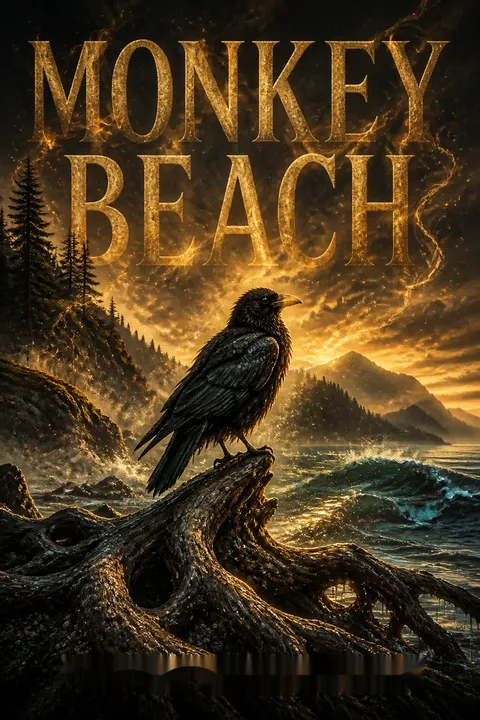
Crows and Premonitions
Lisamarie Hill wakes to crows speaking Haisla outside her window, their word "la'es" echoing in her mind. The crows' presence and her recent dreams about the ocean foreshadow trouble. Her brother Jimmy is missing at sea, and the family is tense, clinging to hope. Lisa's connection to the spirit world is hinted at, as she tries to interpret the crows' message and her own unsettling visions. The natural world is alive with signs, and Lisa's sensitivity to them sets the tone for a story where the boundaries between the living and the supernatural are thin. The chapter establishes the novel's atmosphere of foreboding, familial love, and the weight of ancestral knowledge.
The Disappearance
The Coast Guard calls with news that Jimmy's fishing boat is missing. Lisa's parents prepare to travel to the search area, leaving Lisa behind with Aunt Edith. The family's history with the land and water is recounted, grounding their grief in place and tradition. Rumors swirl about the boat's owner, Josh, and possible foul play. Lisa's guilt and helplessness grow, especially as she recalls a dream of Jimmy at Monkey Beach the night he vanished. The chapter weaves together the family's present agony with memories of childhood, hinting at secrets and unresolved tensions that will shape Lisa's journey.
Family Stories and Legends
Lisa recalls stories told by her father and grandmother, especially about B'gwus, the wild man of the woods (sasquatch). These tales, sometimes frightening, sometimes playful, are a source of both comfort and anxiety for Lisa and Jimmy. The family's outings—like the trip to Monkey Beach to search for sasquatch—are infused with humor, tradition, and the ever-present possibility of the supernatural. The stories reveal the family's dynamics, the blending of Haisla and Western influences, and the importance of oral history in shaping Lisa's worldview. The legends are not just entertainment; they are warnings, lessons, and a means of survival.
Ghosts and Gifts
From a young age, Lisa experiences encounters with spirits, including a mischievous red-haired little man who appears before disasters. Her mother dismisses these as dreams, but her grandmother recognizes them as a family gift—an ability to see beyond the ordinary. Lisa's visions are both a blessing and a burden, isolating her from others and filling her with dread. The chapter explores the tension between skepticism and belief, the legacy of trauma, and the ways in which spiritual gifts can be both protective and dangerous. Lisa's struggle to understand her abilities mirrors her struggle to find her place in her family and community.
Childhood Adventures
Lisa and Jimmy's childhood is marked by freedom, mischief, and the rhythms of Haisla village life. They swim, bike, and play with cousins, navigating the complexities of family, friendship, and rivalry. Their adventures are often tinged with danger—Lisa's bike accident, Jimmy's near-drowning, and encounters with bullies. The siblings' relationship is close but competitive, shaped by their parents' expectations and the pressures of growing up Indigenous in a changing world. These formative experiences lay the groundwork for the novel's later exploration of loss, resilience, and the enduring power of family ties.
The Return of Uncle Mick
Uncle Mick, long absent and rumored to be in jail, returns unexpectedly, stirring up old wounds and new conflicts. His radical activism, humor, and generosity make him both beloved and exasperating. Through Mick, Lisa learns about the American Indian Movement, residential school trauma, and the complexities of Indigenous identity. Mick's presence brings joy but also chaos, as he clashes with his mother, siblings, and the expectations of the village. His relationship with Lisa is especially important—he encourages her rebelliousness and curiosity, but his own demons foreshadow the dangers ahead.
Growing Up Haisla
Lisa's adolescence is shaped by the push and pull of tradition and modernity. She learns to fish, pick berries, and make oolichan grease, absorbing the skills and stories of her elders. At the same time, she navigates the challenges of school, peer pressure, and the lure of escape. The chapter explores the importance of land, language, and food in Haisla culture, as well as the impact of colonization and industry. Lisa's connection to her grandmother, Ma-ma-oo, is especially strong, providing her with a sense of belonging and continuity even as the world around her changes.
Loss and Grief
The family is rocked by a series of losses—Uncle Mick's death, Ma-ma-oo's passing, and the ongoing uncertainty about Jimmy. Lisa's grief is complicated by her visions and her sense of responsibility for the dead. She participates in traditional mourning rituals, cuts her hair, and seeks comfort in the stories and songs of her ancestors. The boundaries between the living and the dead blur, as Lisa dreams of her loved ones and receives messages from the spirit world. Grief becomes both a personal and communal experience, shaping Lisa's identity and her understanding of what it means to survive.
Teenage Rebellion
As a teenager, Lisa rebels against her parents and community, seeking escape in alcohol, drugs, and risky behavior. Her friendships with Tab, Frank, and others are intense but often destructive, marked by betrayal, violence, and sexual trauma. Lisa's downward spiral is fueled by unresolved grief, spiritual confusion, and the pressures of growing up between cultures. Her experiences in Vancouver, including a haunting encounter with Tab's ghost, force her to confront the consequences of her actions and the limits of her own resilience. The chapter is a raw exploration of pain, alienation, and the search for meaning.
Spirits and Warnings
Lisa's visions become more urgent and disturbing as Jimmy's fate remains uncertain. She is visited by spirits, receives cryptic warnings, and struggles to interpret the signs around her. The crows, the little man, and other supernatural messengers push her toward Monkey Beach, where she believes she may find answers. The chapter is suffused with a sense of impending crisis, as Lisa's spiritual gifts become both a source of guidance and a threat to her sanity. The line between reality and the spirit world grows ever thinner, demanding a sacrifice.
Love, Violence, and Betrayal
Lisa's relationships—with Frank, Pooch, Cheese, and others—are fraught with longing, jealousy, and betrayal. She experiences love and sex as both solace and danger, navigating the complexities of consent, desire, and violence. The legacy of residential school abuse, family secrets, and intergenerational trauma shapes the choices of Lisa and those around her. The chapter does not shy away from the realities of addiction, suicide, and sexual assault, but it also affirms the possibility of healing and connection. Lisa's journey is one of survival, but also of learning to forgive herself and others.
The Land of the Dead
In a climactic sequence, Lisa's search for Jimmy leads her to Monkey Beach, where she is drawn into the spirit world. She offers her blood to the spirits, seeking their help, and is confronted by visions of her dead relatives, including Ma-ma-oo and Mick. The boundaries between life and death dissolve as Lisa relives memories, receives warnings, and is ultimately saved by Jimmy's spirit. The chapter is a powerful meditation on loss, sacrifice, and the enduring bonds of family. Lisa's return to the living is both a rebirth and a reckoning.
Sibling Bonds
Throughout the novel, the relationship between Lisa and Jimmy is central. Their shared childhood, mutual teasing, and deep loyalty anchor the story, even as they are separated by distance, trauma, and fate. In the end, it is Jimmy's spirit that guides Lisa back to life, affirming the strength of their bond. The chapter is a testament to the power of sibling love, the pain of loss, and the hope of reunion. Lisa's survival is not just her own—it is a tribute to Jimmy and to all those she has loved and lost.
Monkey Beach Journey
Lisa's journey to Monkey Beach is both literal and symbolic—a search for her missing brother, but also for herself. The landscape is alive with memory, myth, and danger, reflecting Lisa's inner turmoil. As she navigates the treacherous waters, confronts her fears, and faces the spirits of her ancestors, she comes to understand the interconnectedness of all things. The journey is a rite of passage, a confrontation with mortality, and a return to the source of her strength.
The Spirit World Beckons
At Monkey Beach, Lisa is tempted by the spirits to give more of herself in exchange for answers. She offers her blood, risking her life, and is drawn deeper into the land of the dead. The spirits are both seductive and dangerous, offering power but demanding a price. Lisa's struggle is not just with external forces, but with her own desire to escape pain and responsibility. The chapter explores the dangers of seeking easy answers and the necessity of facing one's own darkness.
Sacrifice and Survival
Lisa's sacrifice nearly costs her life, but she is saved by the intervention of her ancestors and the memory of Jimmy. The spirits guide her back to the surface, where she is greeted by the crows and the familiar landscape of home. The experience leaves her changed—wounded but wiser, more attuned to the complexities of life and death. The chapter affirms the importance of community, tradition, and the willingness to endure suffering for the sake of those we love.
Farewell Songs
In the novel's final moments, Lisa is surrounded by the voices of her ancestors, singing farewell songs and urging her to take care of herself. The crows dance above her, the land and sea are alive with memory, and Lisa is left to face the future with a renewed sense of purpose. The story ends not with closure, but with the promise of continuity—the knowledge that the dead are never truly gone, and that love endures beyond loss.
Analysis
A modern Indigenous epic of loss, survival, and spiritual resilienceMonkey Beach is a profound meditation on the intersections of grief, identity, and the supernatural in contemporary Indigenous life. Through Lisamarie's journey, Eden Robinson explores the enduring impact of colonialism, residential schools, and intergenerational trauma, while also celebrating the strength and complexity of Haisla culture. The novel's blending of myth and realism challenges Western notions of reality, inviting readers to see the world through Lisa's eyes—where spirits, omens, and ancestral voices are as real as the pain of loss and the hope of love. The story's nonlinear structure and rich sensory detail immerse readers in a landscape alive with memory and meaning. Ultimately, Monkey Beach is a story of survival—not just of the individual, but of a people and a way of life. It affirms the necessity of remembering, the power of community, and the possibility of healing, even in the face of overwhelming sorrow. The lessons are clear: to honor the past, to listen to the land and the spirits, and to find strength in connection, even when the world seems broken beyond repair.
Review Summary
Monkey Beach by Eden Robinson follows nineteen-year-old Lisamarie Hill, a Haisla woman searching for her missing brother Jimmy along British Columbia's coast. Through flashbacks, readers experience Lisa's coming-of-age on the Kitamaat reservation, her relationships with family members like Uncle Mick and Ma-ma-oo, and her supernatural gift of seeing spirits. The novel blends magical realism with Indigenous culture, addressing residential schools, addiction, and sexual assault. Reviewers praise Robinson's atmospheric writing, complex characters, and authentic portrayal of Haisla life, though some find the nonlinear narrative challenging. The ambiguous ending divides readers, but most appreciate this powerful exploration of grief, identity, and cultural resilience.
People Also Read




Characters
Lisamarie Hill
Lisa is a young Haisla woman whose life is shaped by her ability to see spirits and her deep connection to family and land. She is both rebellious and sensitive, struggling with grief, guilt, and the burden of her supernatural gift. Lisa's relationships—with her brother Jimmy, her parents, her grandmother Ma-ma-oo, and her uncle Mick—define her journey. She is marked by trauma, including sexual assault and the loss of loved ones, but also by resilience and a longing for belonging. Lisa's development is a movement from confusion and self-destruction toward acceptance, healing, and a renewed sense of purpose.
Jimmy Hill
Jimmy is Lisa's younger brother, a talented swimmer whose disappearance at sea catalyzes the novel's events. He is earnest, driven, and sometimes naive, idolized by his family and community. Jimmy's relationship with Lisa is central—he is both her companion and her opposite, embodying hope and vulnerability. His struggles with identity, love, and expectation mirror Lisa's own, and his fate is intertwined with hers. Jimmy's presence lingers even after his disappearance, guiding Lisa through the spirit world and ultimately saving her life.
Ma-ma-oo (Agnes Hill)
Lisa's grandmother is a formidable presence—wise, practical, and deeply rooted in Haisla culture. She teaches Lisa about plants, food, language, and the spirit world, serving as a bridge between past and present. Ma-ma-oo's own history is marked by hardship, including domestic violence and the loss of children to residential school. Her death is a profound loss for Lisa, but her guidance endures through memory and vision. Ma-ma-oo embodies the strength and complexity of Indigenous womanhood.
Uncle Mick (Michael Hill)
Mick is Lisa's uncle, a former American Indian Movement activist whose return to the village stirs up old conflicts and new possibilities. He is charismatic, funny, and generous, but also haunted by trauma and addiction. Mick's relationship with Lisa is nurturing but fraught—he encourages her independence and curiosity, but his own self-destructive tendencies serve as a warning. His death is a turning point for Lisa, forcing her to confront the realities of loss and the limits of her own power.
Gladys Hill (Lisa's Mother)
Gladys is a strong-willed woman who balances tradition and modernity, raising her children with both affection and discipline. She is skeptical of Lisa's spiritual gifts, preferring rational explanations, but her own history is marked by loss and resilience. Gladys's relationship with Lisa is complicated by generational differences and unspoken pain, but ultimately grounded in love and mutual respect.
Albert Hill (Lisa's Father)
Albert is a stabilizing force in the family, devoted to his children and wife. He is practical, hardworking, and sometimes overwhelmed by the challenges facing his family. Albert's relationship with Mick is fraught with sibling rivalry and unresolved grief, but his love for Lisa and Jimmy is unwavering. He represents the possibility of healing through patience, humor, and commitment.
Aunt Edith
Edith is Lisa's aunt, a steady presence who helps hold the family together during crises. She is skilled in traditional crafts and food preparation, and her home is a refuge for Lisa. Edith's own struggles with health and loss mirror those of the larger community, but she remains a source of comfort and wisdom.
Tabitha (Tab)
Tab is Lisa's cousin and closest friend, a rebellious spirit who shares Lisa's sense of alienation and longing. Her life is marked by instability, addiction, and eventual tragedy—her death in Vancouver haunts Lisa and serves as a warning about the dangers of escape. Tab's presence in the novel is both grounding and unsettling, reflecting the complexities of friendship, loyalty, and loss.
Frank
Frank is a childhood friend and occasional romantic interest for Lisa. He is tough, loyal, and sometimes insensitive, shaped by his own experiences of violence and marginalization. Frank's relationship with Lisa is marked by mutual respect and misunderstanding, reflecting the difficulties of intimacy in a world marked by trauma.
Karaoke (Adelaine Jones)
Karaoke is Jimmy's girlfriend, a striking and enigmatic figure whose own history is marked by violence and resilience. She is both a source of comfort and pain for Jimmy, embodying the complexities of love, identity, and survival. Karaoke's actions—her departure, her return, her struggles—mirror the larger themes of the novel, including the search for belonging and the costs of trauma.
Plot Devices
Nonlinear Narrative and Interwoven Timelines
The novel's structure is nonlinear, moving fluidly between Lisa's present search for Jimmy and her memories of childhood, adolescence, and family history. This interweaving of timelines mirrors the Haisla understanding of time as cyclical and interconnected, rather than linear. The use of flashbacks, dreams, and stories within stories allows the past to inform the present, and vice versa. The narrative is also punctuated by mythic elements—legends, spirit encounters, and supernatural events—that blur the boundaries between reality and the otherworldly. Foreshadowing is achieved through dreams, omens, and the recurring presence of crows and spirits, building a sense of inevitability and fate. The novel's structure invites readers to piece together meaning from fragments, reflecting the process of healing and the search for truth.
Download PDF
Download EPUB
.epub digital book format is ideal for reading ebooks on phones, tablets, and e-readers.








































