
Plot Summary
The Naturalist's Farewell
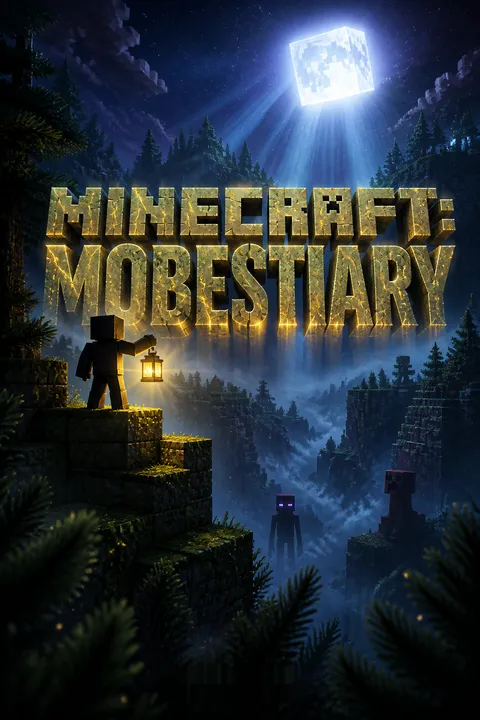
The Mobestiary opens with the Naturalist, a seasoned explorer, reflecting on a lifetime spent cataloging the creatures of Minecraft's three realms: Overworld, Nether, and End. He passes on his knowledge to future adventurers, emphasizing the importance of understanding the habits, habitats, and dangers of every mob. The Naturalist's tone is both warm and cautionary, urging readers to use this compendium as a shield against peril and a guide to the wonders and terrors that await. His retirement marks the end of an era, but his legacy is this illustrated bestiary—a tool for survival, curiosity, and mastery in a world teeming with life and threat.
Gentle Creatures of Grass
The Overworld teems with passive mobs: cows, sheep, pigs, chickens, rabbits, and more. These creatures are the backbone of survival, providing food, wool, leather, and companionship. Their behaviors are simple—grazing, wandering, and breeding—but their utility is immense. The Naturalist describes their habits with affection, noting the subtle differences between species and the ways they enrich the world. Even the humble bat, often misunderstood, is revealed as harmless and even helpful. These mobs are the first friends of any adventurer, making the wilds less lonely and more manageable.
Oddities of the Overworld
Beyond the common, the Overworld hides rarities: mooshrooms, found only on mushroom islands, offer endless stew and transform when sheared; squids, misunderstood and harmless, provide ink for dyes; and villagers, the enigmatic denizens of settlements, trade and build communities. Each oddity has unique traits—mooshrooms blur the line between plant and animal, squids are preyed upon by oceanic horrors, and villagers' lives are shaped by doors and threats. These creatures add depth and surprise, rewarding explorers who venture off the beaten path and pay attention to the world's quirks.
Herds, Flocks, and Farms
The art of animal husbandry is central to thriving. Cows, sheep, pigs, chickens, and rabbits can be bred for food, materials, and even luck (as with the rare rabbit's foot). The Naturalist details the mechanics of breeding, growth, and resource collection, emphasizing the importance of enclosures and protection from predators. He notes the peculiarities of each species—chickens' egg-laying, sheep's colorful wool, pigs' rideability, and the legendary killer bunny. Farming is both science and art, requiring patience, planning, and a gentle hand.
Taming and Companionship
Some mobs can be tamed, transforming from wild to loyal companions. Wolves become steadfast protectors, ocelots morph into cats that ward off creepers, horses and llamas offer transport and storage, and donkeys and mules serve as pack animals. Taming requires patience and the right offerings—bones for wolves, fish for ocelots, and golden treats for horses. Each companion brings unique benefits and quirks, from the wolf's pack loyalty to the cat's stubborn independence. The Naturalist celebrates these bonds, seeing them as a source of comfort and strength in a dangerous world.
Shadows in the Deep
The underground is home to unique threats: cave spiders, with their venomous bite; silverfish, lurking in disguised stone; and slimes, multiplying in darkness. These mobs are more than mere obstacles—they shape the experience of mining and exploration. The Naturalist warns of the dangers of spawners, webs, and swarms, offering strategies for survival: carry milk for poison, use light to deter spawns, and be wary of breaking strange stones. The deep is a place of both riches and risk, demanding vigilance and preparation.
Neutrality and Provocation
Not all creatures are immediately hostile. Endermen, polar bears, and zombie pigmen are neutral until provoked. Their behaviors are complex: endermen teleport and manipulate blocks, polar bears fiercely protect their young, and zombie pigmen swarm in vengeance. The Naturalist explores the psychology of these mobs, noting the fine line between peace and fury. Understanding their triggers is key—avoid eye contact with endermen, steer clear of bear cubs, and never strike a pigman unless prepared for a horde. These mobs embody the world's unpredictability and the consequences of one's actions.
Guardians of Villages
Villages are hubs of civilization, populated by villagers with distinct professions and trading systems. Their lives are threatened by zombies, who can turn them into the undead, and by lightning, which creates witches. Iron golems, whether naturally spawned or crafted, serve as stalwart defenders, crushing threats with immense strength. The Naturalist admires the golem's gentle side—offering poppies to children—and their unwavering loyalty. Villages are fragile ecosystems, reliant on both player intervention and the silent watch of their iron guardians.
Crafted Defenders
Adventurers can craft their own protectors: iron golems and snow golems. Iron golems are titans of defense, patrolling villages and smashing foes, while snow golems pelt enemies with snowballs and leave trails of snow. Each has unique construction rituals and limitations—iron golems require iron and pumpkins, snow golems melt in heat. The Naturalist encourages creative use of these allies, noting their strengths and vulnerabilities. Crafted mobs are extensions of the player's will, turning ingenuity into survival.
Nightmares of the Nether
The Nether is a realm of fire and fury, inhabited by blazes, magma cubes, ghasts, wither skeletons, and zombie pigmen. Each mob presents unique dangers: blazes hurl fire, magma cubes multiply, ghasts bombard with explosive cries, and wither skeletons inflict a deadly disease. The Naturalist details their habitats, attacks, and weaknesses—snowballs for blazes, arrows for ghasts, and milk for wither. The Nether is unforgiving, demanding courage, preparation, and respect for its infernal denizens.
Oceanic Terrors Awaken
Beneath the waves, ancient ocean monuments are patrolled by guardians and their monstrous elders. These creatures wield powerful laser beams, inflict mining fatigue, and attack with spikes. The Naturalist describes the challenge of underwater combat, the rewards of prismarine and sponges, and the mystery of the monuments' origins. Squid, once thought menacing, are revealed as prey for these aquatic horrors. The ocean is a place of beauty and terror, where only the prepared survive.
The End's Alien Inhabitants
The End is a realm of strangeness, home to endermen—enigmatic, block-moving giants—shulkers, who defend deserted cities with levitation-inducing missiles, and endermites, pests spawned by teleportation. The Naturalist ponders their origins and behaviors, noting the endermen's aversion to water and pumpkins, the shulker's cunning defenses, and the endermite's fleeting existence. The End is a place of unanswered questions, where the rules of the Overworld no longer apply.
Unnatural Unions
Some mobs defy nature: chicken jockeys (zombies riding chickens), spider jockeys (skeletons atop spiders), and skeleton horsemen (skeletons on undead steeds) are rare but deadly. These combinations amplify the strengths of each component, creating unpredictable threats. The Naturalist marvels at their oddity and danger, offering tactics for separating and defeating the pairs. These unions are reminders of the world's capacity for surprise and chaos.
Masters of Magic and Mischief
Deep in woodland mansions and swamps dwell the illagers—evokers and vindicators—alongside witches and their summoned vexes. Evokers wield dark magic, conjuring fangs and flying imps; vindicators attack with enchanted axes; witches hurl potions and adapt to threats. The Naturalist warns of their cunning and power, advising careful strategy and teamwork. These mobs represent the world's intelligence and malice, challenging even the most skilled adventurers.
The Undead and the Cursed
The night brings forth the undead: zombies, skeletons, strays, husks, and wither skeletons. Each has unique abilities—zombies swarm and infect, skeletons snipe from afar, strays slow with icy arrows, and wither skeletons inflict a deadly curse. The Naturalist explores their origins, behaviors, and weaknesses, emphasizing the importance of light, armor, and clever tactics. The undead are relentless, but knowledge is the key to survival.
Swarms and Swells
Some mobs attack in numbers: slimes and magma cubes divide into smaller versions, silverfish swarm from hidden blocks, and vexes appear in clouds. The Naturalist describes the dangers of being overwhelmed, the importance of crowd control, and the rewards for persistence. These mobs test an adventurer's ability to manage chaos and adapt to shifting threats.
The Ultimate Foes
At the pinnacle of danger stand the wither and ender dragon. The wither, summoned by players, devastates with explosions and disease, requiring careful preparation and strategy. The ender dragon, ruler of the End, soars above obsidian towers, healing from crystals and attacking with force. The Naturalist compiles the wisdom of many battles: destroy crystals, use enchanted gear, and never underestimate these titans. Victory brings rare rewards—Nether stars and dragon eggs—symbols of mastery and survival.
Lessons from the Mobestiary
The Mobestiary closes with a reflection on the value of understanding. Every mob, from the gentlest sheep to the fiercest dragon, has a place in the world's tapestry. The Naturalist urges readers to approach each encounter with curiosity, respect, and preparation. Mastery comes not from brute force, but from learning, adapting, and appreciating the strange beauty of Minecraft's living world.
Analysis
Minecraft: Mobestiary is more than a catalog of digital creatures—it is a meditation on curiosity, adaptation, and the value of knowledge. Through the Naturalist's eyes, every mob becomes a lesson: passive creatures teach stewardship and resourcefulness; hostile mobs demand vigilance and strategy; neutral and tameable mobs reveal the importance of understanding and empathy. The book's structure mirrors the player's journey, moving from innocence to experience, from fear to mastery. Its underlying message is that survival and success come not from brute force, but from observation, preparation, and respect for the world's complexity. In a modern context, the Mobestiary encourages readers to approach challenges—digital or real—with curiosity, humility, and a willingness to learn. It celebrates the beauty of diversity, the necessity of adaptation, and the enduring power of stories to guide and protect us.
People Also Read





Characters
The Naturalist
The Naturalist is the unseen narrator and author of the Mobestiary, a figure defined by insatiable curiosity, meticulous observation, and a deep respect for the world's creatures. He is both scientist and storyteller, blending empirical detail with personal anecdotes and emotional insight. His relationship to the mobs is one of fascination and empathy—he sees value in every creature, from the humble bat to the terrifying ender dragon. Psychologically, the Naturalist is driven by a desire to understand and to protect, both himself and future adventurers. His development is marked by humility and a willingness to retire, passing on his knowledge as a final act of stewardship. He is the connective tissue of the book, guiding readers through danger and wonder alike.
Villager
Villagers are the Overworld's most human-like inhabitants, forming communities, trading, and building. They are defined by their professions—farmer, librarian, cleric, and more—and their vulnerability to external threats. Villagers are psychologically complex: they exhibit fear, curiosity, and a drive to reproduce and expand their settlements. Their relationship with the player is transactional but can become protective, especially when iron golems are present. Villagers' development is shaped by the constant threat of zombies and the need for defense, making them both fragile and resilient.
Iron Golem
Iron golems are crafted or naturally spawned defenders of villages, embodying strength, loyalty, and a surprising gentleness. They are emotionally resonant figures—offering flowers to children, defending the weak, and never attacking unless provoked. Their psychological makeup is simple but profound: they exist to protect, and their sense of purpose is unwavering. The golem's relationship to villagers and players is one of service, and their development is static but essential—they are the bulwark against chaos.
Enderman
Endermen are tall, mysterious beings from the End, defined by their intelligence, teleportation, and block manipulation. They are psychologically inscrutable, oscillating between curiosity and sudden rage. Their relationship to the player is fraught—peaceful unless provoked, but deadly if challenged. Endermen's development is marked by their otherworldliness and the sense that they are both part of and apart from the world's order. They are symbols of the unknown, embodying the limits of understanding.
Zombie Pigman
Zombie pigmen are the Nether's most complex denizens, peaceful until attacked, then relentless in their pursuit of vengeance. They are psychologically defined by a lost civilization, hinted at through their appearance and behavior. Their relationship to the player is a test of restraint—violence begets violence. Zombie pigmen's development is cyclical, as they move between peace and fury, embodying the consequences of action and the persistence of memory.
Evoker
The evoker is an illager outcast, wielding dark magic to summon fangs and vexes. Psychologically, the evoker is driven by isolation, bitterness, and a desire for control. His relationship to other mobs is adversarial, even toward his own kind. The evoker's development is static but impactful—he is a fixed point of danger, a boss within the woodland mansion, and a source of rare and powerful items.
Wither Skeleton
Wither skeletons are the Nether's elite undead, taller and more dangerous than their kin. They are defined by their ability to inflict the wither effect, their leadership among skeletons, and their role in summoning the wither boss. Psychologically, they are relentless and fearless, embodying the Nether's hostility. Their relationship to the player is purely antagonistic, and their development is tied to the pursuit of rare wither skulls.
Ender Dragon
The ender dragon is the ultimate boss, ruling the End with power and grace. She is defined by her immense strength, regenerative abilities, and the reverence of endermen. Psychologically, the dragon is both beast and symbol—a test of mastery and the gatekeeper to the game's end. Her relationship to the player is adversarial but also awe-inspiring, and her defeat marks the culmination of the adventurer's journey.
Wolf
Wolves are wild pack animals that, when tamed, become devoted allies. They are defined by loyalty, courage, and a simple but deep bond with their master. Psychologically, wolves are driven by pack instincts and a desire to protect. Their relationship to the player is one of mutual benefit and affection, and their development is marked by the transition from wildness to companionship.
Creeper
Creepers are the most infamous hostile mob, defined by their silent approach and explosive demise. Psychologically, they are enigmatic—motivated by destruction, yet oddly vulnerable. Their relationship to the player is one of perpetual threat, shaping behavior and building strategies. Creepers' development is static but ever-present, a reminder of the world's dangers and the need for vigilance.
Plot Devices
Bestiary as Narrative Structure
The Mobestiary uses the structure of a bestiary—an encyclopedia of creatures—as its primary narrative device. This allows for a non-linear exploration of the world, with each mob serving as a chapter in the broader story of survival and mastery. The Naturalist's voice provides cohesion, turning what could be a dry catalog into a personal and emotional journey. The bestiary format also enables foreshadowing, as early entries hint at greater dangers to come, and later entries reflect on lessons learned from earlier encounters.
Classification and Contrast
The book organizes mobs into categories—passive, neutral, hostile, utility, tameable, and boss—creating a sense of progression from safety to danger. This classification serves as both a teaching tool and a narrative arc, moving the reader from the familiar to the unknown, from comfort to challenge. The contrasts between mobs (gentle vs. hostile, wild vs. tamed, natural vs. unnatural) highlight the world's complexity and the need for adaptability.
First-Person Perspective and Anecdote
The Naturalist's first-person perspective grounds the book in lived experience, blending factual observation with personal anecdote. This device builds trust and emotional resonance, as readers are invited to share in the Naturalist's triumphs, failures, and curiosities. The use of anecdote also allows for foreshadowing—stories of past encounters hint at strategies and dangers that will be relevant later.
Symbolism and Allegory
Many mobs serve as symbols: the creeper as unexpected disaster, the enderman as the unknowable, the iron golem as protection, and the ender dragon as the ultimate test. The book uses these symbols to explore themes of curiosity, fear, mastery, and the balance between aggression and restraint. The allegorical layer encourages readers to see their own journey reflected in the world's creatures.
Download PDF
Download EPUB
.epub digital book format is ideal for reading ebooks on phones, tablets, and e-readers.








































