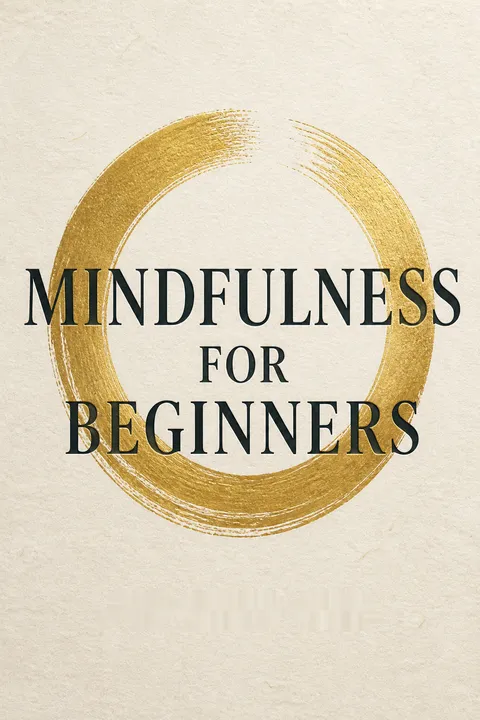

Key Takeaways
1. Mindfulness: Awareness in the Present Moment
Mindfulness is awareness, cultivated by paying attention in a sustained and particular way: on purpose, in the present moment, and non-judgmentally.
Defining mindfulness. At its core, mindfulness is a specific way of paying attention. It's about intentionally bringing your awareness to the current moment, observing your experiences—thoughts, feelings, sensations—without judgment. This deliberate focus helps you reclaim your life from autopilot and engage fully with what is happening right now.
Beyond a concept. While it might seem like a simple idea, mindfulness is not merely a philosophical concept or a "good idea." Its transformative potential lies in consistent, ongoing practice. It's a systematic cultivation of an innate human capacity, allowing you to experience life directly rather than through the filters of past conditioning or future worries.
A love affair. Ultimately, mindfulness can be seen as a profound love affair with life itself—with reality, imagination, and the beauty of your own being. It invites you to explore your heart, body, and mind, fostering a deeper connection with yourself, others, and the world around you. This journey begins with a simple, yet powerful, act of paying attention.
2. Shift from Doing to Being
If we are not careful, it is all too easy to fall into becoming more of a human doing than a human being, and forget who is doing all the doing, and why.
The doing trap. Modern life often pushes us into a relentless "doing mode," constantly striving, multitasking, and moving from one task to the next. This can lead to exhaustion and a feeling of being disconnected from our true selves, driven by external expectations and digital demands. We become human doings, losing touch with the essence of being.
Reclaiming being. Mindfulness offers a pathway to shift from this driven doing mode to a more grounded being mode. By applying attention and awareness, our actions can emerge from a place of deeper presence and integration. This allows us to inhabit our bodies and the present moment more fully, reducing the constant exhaustion and fostering a sense of authentic engagement.
Integrated action. When doing comes out of being, our actions become more integrated and effective. We cease to be merely reactive, instead responding with greater clarity and intention. This shift is not about abandoning ambition or productivity, but about infusing our efforts with a conscious presence that enriches both the process and the outcome.
3. The Breath: Your Ever-Present Anchor
Our breathing can serve as a convenient first object of attention to bring us back into the present moment, because we are only breathing now — the last breath is gone, the next one hasn’t come yet — it is always a matter of this one.
Universal anchor. The breath is a fundamental, continuous process that is always happening in the present moment. It serves as an ideal anchor for our often-wandering attention, grounding us in the "now." Unlike external objects, the breath is always with us, a constant reminder of life unfolding.
Beyond the physical. While simple, focusing on the breath is not just a beginner's exercise. It's a profound practice that can reveal the full range of our humanity, wisdom, and compassion. The act of "being breathed" highlights the mysterious, automatic nature of life, questioning the conceit of "I am breathing" and inviting a deeper sense of wonder.
Awareness is primary. Paying attention to the breath is ultimately not about the breath itself, but about cultivating stable awareness. The breath helps us stabilize our attention, allowing us to gradually feel the attending itself—the relationship between perceiver and perceived. This reveals the seamless unity of awareness, where the knowing is primary.
4. Befriend Your Thoughts, Don't Suppress Them
Meditation is about befriending your thinking, about holding it gently in awareness, no matter what is on your mind in a particular moment.
Not about stopping thoughts. A common misconception is that meditation aims to shut off thoughts. This is not only futile—like trying to stop ocean waves—but also counterproductive. Instead, mindfulness invites us to befriend our thinking, observing it without judgment or suppression.
The mind's nature. When you sit to meditate, you'll quickly notice the mind's incessant activity: planning, worrying, fantasizing, judging. This "thought-stream" is normal. Rather than fighting it, we learn to recognize thoughts as transient events in the field of awareness, much like bubbles rising in boiling water or writing on water.
Thoughts as impersonal events. By holding thoughts gently in awareness, we realize we don't have to take them personally or believe them as absolute truths. They are simply events arising and passing away. This recognition allows thoughts to "self-liberate," losing their power to dominate our responses and offering a moment of freedom.
5. You Are More Than Your Narrative (The "Selfing" Habit)
Nothing is to be clung to as ‘I,’ ‘me,’ or ‘mine.’”
The trap of selfing. We constantly engage in "selfing"—identifying with our thoughts, emotions, and circumstances using personal pronouns like "I," "me," and "mine." This habit places us at the center of the universe, creating a narrative bubble that often distorts reality and limits our potential.
Questioning the narrative. Mindfulness encourages us to question these internal narratives. Are we truly defined by our stories of inadequacy, success, or suffering? Or are these merely constructs we've grown comfortable with? This inquiry can be unsettling but ultimately liberates us from self-imposed limitations.
Beyond the story. Who you actually are is far bigger than any narrative you construct. Awareness allows us to see that while our stories may contain elements of truth, they are not the entire truth. By recognizing the empty, transient nature of all narratives, we can step into a boundless, timeless field of awareness, experiencing life directly before it's clothed in thought.
6. Mindfulness is Universal & Scientifically Grounded
Mindfulness is universal because it is all about attention and awareness, and attention and awareness are human capacities that are innate in all of us.
Innate human capacity. While deeply rooted in Buddhist traditions, mindfulness is not exclusive to any religion. It taps into universal human capacities for attention and awareness, making it accessible and relevant to everyone. The Buddha's insights, like scientific laws, are universal, applicable to any human mind.
Scientific validation. Over the past three decades, mindfulness, particularly through Mindfulness-Based Stress Reduction (MBSR), has garnered significant scientific interest. Research shows its effectiveness in reducing stress, anxiety, and chronic pain, and improving quality of life for various medical conditions.
Brain changes. Exciting scientific findings indicate that mindfulness training can actually change the brain's structure and function.
- Increased activity in networks for direct present-moment experience (Experiential Focus).
- Decreased activity in networks for narrative generation (Narrative Focus).
- Thickening of the hippocampus (learning/memory).
- Thinning of the amygdala (fear-based reactions).
These changes suggest mindfulness enhances emotional balance and a broader repertoire of self-experience.
7. Cultivate Core Attitudes: Non-Judging, Patience, Beginner's Mind, Trust, Non-Striving, Acceptance, Letting Go
Just taking this kind of stance toward our own experience, without trying to fix or change anything at all, is an act of generosity toward oneself, an act of intelligence, an act of kindness.
Foundational qualities. Mindfulness practice is built upon seven core attitudes that foster a compassionate and intelligent approach to experience. These are not mere ideals but qualities cultivated through consistent practice, allowing us to meet life with greater wisdom and openheartedness.
Key attitudes include:
- Non-Judging: Observing without immediate evaluation, fostering discernment.
- Patience: Allowing things to unfold in their own time, stepping out of "clock time."
- Beginner's Mind: Approaching each moment with freshness and openness, acknowledging "not knowing."
- Trust: Relying on our own intuition, awareness, and the body's wisdom.
- Non-Striving: Being present without needing to achieve a special state or outcome.
- Acceptance: Seeing things as they are, not as passive resignation but as a basis for wise action.
- Letting Go: Releasing attachment to desires and aversions, embracing reality as it is.
A radical act of love. Embracing these attitudes transforms our relationship with ourselves and our experiences. It's a gentle, healing discipline that counters our habitual self-criticism and striving. This stance is a radical act of love and sanity, allowing us to be at peace with things exactly as they are.
8. Life Itself Becomes the Meditation Practice
When we bring these dimensions of our being into awareness, life itself becomes the meditation practice.
Wholeness is inherent. Despite feeling fragmented by distinctions like inner/outer or like/dislike, we are already whole. Mindfulness helps us recognize this intrinsic wholeness, even when facing illness or problems. It's about pouring attention into what is already right with us, rather than solely focusing on what's wrong.
Every moment is curriculum. The "curriculum" for cultivating mindfulness is simply whatever is unfolding in the present moment. Every experience, pleasant or unpleasant, becomes an opportunity for practice. This means integrating awareness into daily activities, transforming ordinary moments into opportunities for deep learning and presence.
Beyond formal sitting. While formal meditation is crucial, the ultimate goal is for mindfulness to spill over into every aspect of waking life. This seamless integration means living with awareness or wakefulness, where every interaction, sensation, and thought becomes a chance to practice, making life itself the ultimate meditation teacher.
9. Liberation from Adventitious Suffering
It is this kind of suffering that we do not have to be imprisoned by, that we can do something about, that we can be entirely free of according to the Buddha, based on his meditative “laboratory investigations” of his own experience — and that of countless dharma practitioners since.
Understanding suffering. The Buddha distinguished between inevitable pain (part of the human condition) and "adventitious suffering"—the extra suffering we create for ourselves through our reactions and clinging. While pain is unavoidable, this adventitious suffering is optional.
Awareness as freedom. Mindfulness offers a way to investigate and befriend our suffering. By asking, "Is my awareness of suffering suffering?" we can discover that awareness itself is not in pain. This insight provides a crucial space, allowing us to hold difficult experiences differently and choose our response, even when external circumstances are beyond our control.
A new relationship to pain. This practice doesn't magically eliminate pain, but it transforms our relationship to it. It's about turning towards what we instinctively want to turn away from, embracing the actuality of our experience with kindness. This willingness to meet suffering in awareness is deeply restorative and liberative, offering a path to inner freedom.
10. Recognize and Dissolve the Three Poisons: Greed, Aversion, Delusion
Between greed, hatred, and delusion, there’s a lot to pay attention to.
Toxic mind states. Buddhist teachings identify three "poisons" or toxic mind states that cause immense suffering: greed, aversion (hatred), and delusion. Mindfulness provides a lens to observe how these impulses manifest in our daily lives and their consequences.
Manifestations of the poisons:
- Greed: The insatiable impulse to acquire, leading to a cascade of dissatisfactions when desires are unmet. It's clinging to what we want.
- Aversion: The desire for things to be different, manifesting as anger, hatred, irritation, or resentment. It's clinging to what we don't want.
- Delusion: Not seeing things as they actually are, living in inaccurate narrative bubbles, often leading to self-fulfilling prophecies.
Dissolving through awareness. Mindfulness, applied at the moment of contact with any experience, allows us to recognize these poisons as they arise. By simply noting the pleasant, unpleasant, or neutral quality of a moment, we can prevent falling into the grip of greed, aversion, or delusion. This awareness dissolves the clinging and self-identification, offering immediate liberation from unnecessary suffering.
11. Cultivate Consistent Formal Practice
The best way to work with these programs and to cultivate a robust mindfulness practice is to make time each day to practice formally at least one of the guided meditations.
The necessity of practice. Mindfulness is not a quick fix but a way of being that requires consistent cultivation. Making time each day for formal practice, such as guided meditations, is essential for it to take root and deepen. This commitment is an experiment in reclaiming your life, nurturing your innate capacities.
Setting the stage. To support formal practice, create a dedicated time and space free from interruptions.
- Posture: Adopt a posture that embodies wakefulness (sitting upright, relaxed).
- Eyes: Experiment with eyes open (soft, unfocused gaze) or closed.
- Sleepiness: Practice when alert, perhaps in the morning, or use invigorating methods like cold water.
- Protecting Time: Turn off devices, inform others not to interrupt.
Beyond techniques. While guided meditations offer "techniques," their true purpose is to serve as skillful means for waking up to what is already present. The goal is not to achieve a special state, but to give yourself over to the present moment, cultivating awareness and heartfulness. Over time, this discipline can become effortless, a natural part of your life.
Review Summary
Mindfulness for Beginners receives mixed reviews averaging 3.78 stars. Supporters praise Jon Kabat-Zinn's rational, accessible approach to meditation and mindfulness, particularly appreciating the audiobook's guided meditations and his soothing voice. Critics find the content repetitive, poorly structured, or overly simplistic, with some struggling with his speaking style. Many readers value the book's emphasis on awareness, non-judgment, and living in the present moment. Several reviewers note it works best as an introductory text, though experienced practitioners may find it too basic. The accompanying meditation exercises receive positive feedback.
People Also Read






About the Author


Download PDF
Download EPUB
.epub digital book format is ideal for reading ebooks on phones, tablets, and e-readers.








































