

Key Takeaways
1. Max Weber's Enduring Intellectual Legacy: A Fragmented Yet Coherent Vision
"This study of the intellectual history of the sociology of Max Weber is Volume II of the Routledge and Thoemmes Press Max Weber Classic Monographs series."
A profound portrait. Reinhard Bendix's "Max Weber: An Intellectual Portrait" stands as a seminal work, offering the most coherent and sensitive account of Weber's intellectual development. It is indispensable for understanding the origins of contemporary social science, providing a broad grasp of sociological thought in the late 19th and early 20th centuries. Bendix's approach avoids psychological reductionism, instead focusing on the chronological evolution of Weber's texts and research.
Life's double crisis. Weber's personal life and academic work were profoundly fragmented, mirroring the societal crises of late 19th-century Germany. This "double crisis" stemmed from the rationalization and secularization of European religious culture, deeply impacting his psychological state and academic pursuits. Despite his struggles, Weber's intellectual output was immense, driven by a "need to feel crushed under the load of work" and a lifelong tension between his craving for practical action and his academic calling.
A crucial reference. Bendix's study highlights the vast scope of Weber's intellectual enterprise, from early empirical studies of agrarian society and the German stock market to his monumental comparative sociology of civilizations. It underscores how these diverse investigations were unified by a guiding theme: understanding the unique characteristics of Western economic rationality and social organization. This intellectual portrait remains a vital resource for students and scholars seeking to grasp the complexities of Weber's thought.
2. The Protestant Ethic: A Catalyst for Western Capitalism, Not Its Sole Origin
"It is, of course, not my aim to substitute for a one-sided materialistic an equally one-sided spiritualistic causal interpretation of culture and of history."
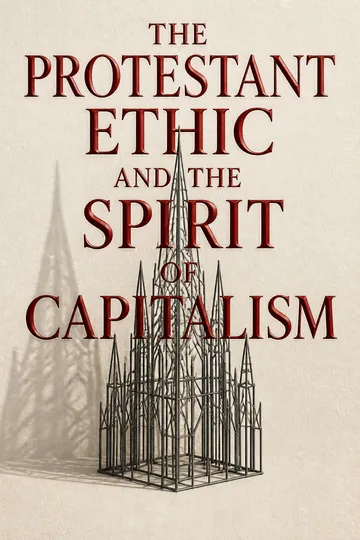
Challenging determinism. Weber's most famous work, "The Protestant Ethic and the Spirit of Capitalism," explored the profound influence of religious ideas on human conduct, particularly on the development of economic rationality. It served as a "positive critique of historical materialism," arguing against a purely economic determination of consciousness. Weber explicitly stated his goal was not to explain the origin or expansion of capitalism, but to identify "elective affinities" between specific religious beliefs and the ethics of everyday work.
The paradox of piety. The essay sought to explain a central paradox: how intense religiosity, typically associated with a rejection of mundane affairs, could foster intense economic activity. Unlike the lax moral codes often found in pre-capitalist societies, Protestantism, especially Calvinism, introduced a rigorous regulation of daily life. This "unexampled tyranny of Puritanism" was embraced by rising middle classes, who developed "heroic qualities of character" in their ascetic way of life, deviating from typical hedonism or indifference.
Asceticism's unintended consequences. Puritan theology, particularly the doctrine of predestination, inadvertently provided powerful incentives for rational economic gain. The terrifying uncertainty of salvation led believers to seek "unceasing work in a calling" as a sign of divine favor, fostering self-confidence and a methodical lifestyle. This "innerworldly asceticism" transformed worldly success into a duty, inadvertently creating a "specifically bourgeois economic ethos" that, over time, secularized and undermined the very religious fervor that spawned it.
3. Beyond Economic Determinism: Ideas and Interests Shape Society
"Not ideas, but material and ideal interests, directly govern men's conduct."
A dual perspective. Weber's intellectual framework consistently emphasized the intricate interplay between "material and ideal interests" in shaping human conduct. While acknowledging the undeniable force of economic and political interests, he argued that ideas are not mere reflections of these material conditions. Instead, ideas possess an independent causal power, acting as "switchmen" that direct action along particular "tracks" determined by interests.
The "elective affinity" concept. Weber introduced the concept of "elective affinity" to describe the reciprocal relationship between ideas and interests. This meant that certain ideas resonate more strongly with the "life fate" and "style of life" of particular social groups, while these groups, in turn, find congenial expression for their interests in those ideas. This dynamic avoids both a one-sided materialistic and a one-sided spiritualistic interpretation of history, advocating for a multifactorial approach.
Social foundations of ideas. Weber believed that ideas, to be effective, must be rooted in the social experience of groups. For instance, the individualism of German farm laborers or the patriarchal ideology of the Junkers were not purely economic phenomena but deeply embedded in their respective "styles of life." His work consistently explored how collective actions are shaped by both the objective conditions of existence and the subjective meanings, values, and ethical content that individuals and groups attach to their pursuits.
4. Comparative Civilizations: Unpacking the Uniqueness of the West
"World-historical interest in Jewry rests upon this fact... Thus, in considering the conditions of Jewry's evolution, we stand at a turning point of the whole cultural development of the West and the Middle East."
A global lens. Weber's "Economic Ethic of the World Religions" embarked on a monumental comparative study of civilizations, examining China, India, and Ancient Palestine. His primary objective was to identify and explain the unique characteristics of Western civilization, using Oriental societies as "contrast-conceptions." This method allowed him to highlight the specific historical "combinations of circumstances" that led to the emergence of Western ethical rationalism and legal domination.
Beyond simple causality. While exploring the causal links between religious ideas and economic behavior, Weber also investigated the reciprocal influence of social stratification on religious beliefs. He sought to understand how the worldviews of great religions, formulated by specific status groups like Confucian scholars or Hindu Brahmins, became the dominant orientations of entire civilizations. This involved analyzing the "material and ideal interests" of these groups and the social processes through which their charismatic inspirations became widespread convictions.
The "disenchantment" of the world. A central theme across these studies was the "disenchantment of the world"—the gradual emancipation from magic and the rise of rationalism. Weber traced how this process unfolded differently in the East and West. For instance, Chinese Taoism fostered a "magic garden" worldview hindering innovation, while Indian Hinduism, despite its intellectual elites, remained deeply intertwined with magical beliefs and the caste system. This contrasted sharply with the unique trajectory initiated by ancient Jewish prophecy, which laid the groundwork for Western ethical rationalism.
5. The Power of Status Groups: Shaping Culture and Social Order
"In contrast to the economically determined 'class situation' we wish to designate as 'status situation' every typical component of the life fate of men that is determined by a specific, positive or negative, social estimation of honor."
Beyond class. Weber introduced the concept of "status group" (Stand) to complement Marx's "class," arguing that social stratification is not solely determined by economic power. Status groups are defined by a shared "social estimation of honor," leading to distinctive "styles of life," restrictions on social intercourse (like intermarriage), and monopolization of ideal and material goods. This concept allowed Weber to analyze how non-economic factors, such as prestige, tradition, and cultural values, profoundly shape social order.
Carriers of culture. Status groups act as "carriers of culture" (Träger), setting the tone for social relations through their ideas and lifestyles. For example, the domineering manner of the German Junkers or the ethical rationalism of Puritan sects influenced broader societal norms. Weber meticulously traced how these "styles of life" originated within particular groups and then spread, demonstrating that a nation's culture is an outgrowth of historical group power and conflict.
Conflict and cohesion. Society, in Weber's view, is an arena of competing status groups, each striving to preserve or enhance its position. The Confucian literati, the Brahmin priests, and the Jewish prophets all represented distinct status groups with unique worldviews and interests, often clashing with other groups. The stability of a society, therefore, depends on the resolution of these conflicts and the eventual dominance of certain conventional beliefs, which then become taken for granted by the wider populace.
6. Three Pillars of Domination: Charisma, Tradition, and Legality
"All human action arises from a common source, in political as well as in religious life. Everywhere the first impulse to social action is given as a rule by real interests, i.e., by political and economic interests. But ideal interests lend wings to these real interests, give them a spiritual meaning, and serve to justify them."
Understanding power. Weber's political sociology is fundamentally concerned with "domination" (Herrschaft), defined as the "authoritarian power of command." He distinguished three "pure types" of legitimate domination, each resting on a distinct belief in its legitimacy: charismatic, traditional, and legal. These types serve as analytical tools to understand the complex, mixed forms of authority found in historical reality, providing a framework for analyzing how power is acquired, exercised, and maintained.
Beyond coercion. Domination is not merely about imposing one's will through force; it crucially involves the subjective acceptance of legitimacy by the ruled. Rulers invariably seek to justify their position as "legitimate" and "deserved," fostering a "myth of their natural superiority." This belief in legitimacy, whether based on extraordinary personal gifts, the sanctity of age-old customs, or adherence to rational-legal rules, is vital for the stability and endurance of any system of authority.
Organization and belief. Each type of domination is sustained by a corresponding administrative "apparatus" and a set of beliefs. Charismatic rule relies on disciples, traditional rule on personal retainers or loyal vassals, and legal rule on a bureaucracy. The interplay between these organizational structures and the underlying beliefs in legitimacy forms the core of Weber's analysis, revealing how systems of domination evolve, transform, and sometimes decay when their claims to legitimacy are challenged or undermined.
7. Charismatic Leadership: A Revolutionary Force Prone to Routinization
"Charisma is a uniquely personal response to a crisis in human experience; those who succeed the charismatic leader therefore face the problem of preserving a personal charisma after the leader and the crisis have passed away and everyday demands have again come to the fore."
The extraordinary leader. Charismatic leadership is defined by the belief in an individual's "extraordinary quality"—magical powers, revelations, heroism, or other exceptional gifts. Such leaders, whether prophets, heroes, or demagogues, emerge in times of crisis, challenging established norms and inspiring collective excitement. Their authority is personal and revolutionary, demanding absolute commitment from disciples who are bound by faith in the leader's mission, not by rules or tradition.
Anti-worldly ethos. In its pure form, charismatic leadership rejects the mundane and the routine. Leaders and their disciples often renounce regular occupations, familial duties, and worldly possessions, living off donations or booty. This anti-worldly ethos, exemplified by monastic orders or military camps, creates a highly committed but inherently unstable community, as it stands in stark opposition to the everyday demands of settled life.
The inevitable transformation. The inherent instability of charismatic leadership leads to its "transformation" or "routinization." Disciples and followers, seeking to preserve the benefits of charisma, inevitably introduce regularization. This involves establishing rules of succession (e.g., designation, acclamation, hereditary charisma) and recruitment, and monopolizing economic opportunities. In this process, charisma shifts from a unique personal gift to a "depersonalized" quality, becoming an attribute of a family (familial charisma) or an office/institution (institutional charisma), thus paving the way for traditional or legal forms of domination.
8. Traditional Domination: From Patriarchal Households to Feudal Estates
"Where authority is primarily oriented to tradition but in its exercise makes the claim of full personal powers, it will be called 'patrimonial' authority. Where patrimonial authority lays primary stress on the sphere of arbitrary will free of traditional limitations, it will be called 'Sultanism.'"
Sanctity of the past. Traditional domination is rooted in the belief in the legitimacy of "what has always existed." Its purest form is patriarchalism, the authority of a master over his household, based on filial respect and the inviolable sanctity of immemorial tradition. This authority is a blend of customary limits and the master's arbitrary will, exercised on behalf of the group.
Patrimonial expansion. When patriarchal authority extends over large political communities, it becomes patrimonialism. Here, governmental offices originate in the ruler's household, and administrators are personal servants, recruited for their loyalty. The ruler treats all administration as his personal affair, often exploiting trade and imposing taxes as personal prerogatives. This system is characterized by:
- Personal dependence: Officials are personally loyal and dependent on the ruler's bounty.
- Arbitrary rule: Commands are often discretionary, limited only by tradition or the ruler's interest in maintaining subjects' productivity.
- Decentralization: In large territories, authority is delegated, leading to a struggle between the ruler's centralizing efforts and officials' desire for independence.
Feudalism's distinct contract. Feudalism, a variant of traditional domination, replaces patriarchal dependence with a contractual fealty between free men, typically warriors. Unlike patrimonial officials, feudal vassals retain their honor and status, holding fiefs in return for military service. Key features include:
- Contractual fealty: A personal oath of loyalty combined with fixed rights and duties.
- Status honor: A code of chivalry, emphasizing military skills, games, and an anti-utilitarian lifestyle.
- Decentralized power: Vassals exercise local authority, often leading to a fragmentation of central power, as seen in medieval Europe.
9. Legal Rationality: The Distinctive Foundation of the Modern Western State
"The basic conception is; that any legal norm can be created or changed by a procedurally correct enactment."
The rule of law. Legal domination, the hallmark of the modern Western state, rests on the belief in the legitimacy of a legal order derived from enacted statutes. It is a system where authority is exercised through abstract rules, applied impersonally, and subject to change by legislation. This contrasts sharply with charismatic (extraordinary personal power) and traditional (sanctity of custom) forms of authority.
Evolution of rationality. Weber traced the emergence of legal rationality through distinct stages:
- Charismatic legal revelation: Early lawfinding through oracles and ordeals by "law prophets."
- Empirical creation: Law developed by legal notables based on precedents and custom.
- Imposition of law: Secular or theocratic powers enacting laws, often driven by war or administrative needs.
- Systematic elaboration: Professionalized administration of justice by university-trained jurists, leading to abstract, logically consistent legal systems.
Formal vs. substantive justice. A crucial distinction in legal rationality is between "formal" and "substantive" justice. Formal rationality emphasizes unambiguous, general rules and predictable procedures, ensuring legal certainty and calculability. Substantive rationality, conversely, priorit prioritizes ethical, religious, or political expediency, often disregarding formal procedures for the sake of perceived justice in individual cases. While secular and theocratic powers often favored substantive justice, the unique development of Western law, particularly through Roman law's revival and the rise of a professional legal class, propelled formal rationality.
10. Bureaucracy's Iron Cage: Efficiency, Impersonality, and Inevitable Power
"In precision, speed, lack of equivocation, knowledge of the documentary record, continuity, sense of discretion, uniformity of operation, system of subordination, and reduction of frictions, bureaucracy surpasses honorific and avocational forms of administration."
The technically superior machine. Bureaucracy, for Weber, is the most efficient form of administration, characterized by its adherence to impersonal rules, continuous operation, and specialized expertise. It operates on principles such as:
- Continuity: Official business is conducted on a permanent basis.
- Rule-bound authority: Duties and authority are delimited by impersonal criteria.
- Hierarchy: A clear chain of command with rights of supervision and appeal.
- Separation of office and incumbent: Officials do not own their positions or resources.
- Documentation: Business is conducted through written records.
Depersonalization and calculability. The efficiency of bureaucracy stems from its "depersonalization" of official tasks, excluding personal feelings like love or hatred. This fosters calculability in decision-making, making it highly suitable for capitalism. While critics might see this as cold, Weber argued that behind every bureaucratic act lies a system of "rationally discussable 'grounds'," whether subsumption under norms or calculation of means and ends.
Concentration and leveling. Bureaucracy leads to a "concentration of the means of administration," centralizing resources previously held by individuals or groups. It also has a "leveling effect" on social differences, replacing administration by privileged notables with paid, full-time professionals recruited based on technical qualifications and diplomas. This creates a new "privileged stratum" based on education and office, but also makes the bureaucratic apparatus practically indestructible and indispensable for modern society.
11. The Peril of Bureaucratic Absolutism: A Call for Political Leadership
"Germany lacked political leadership because Bismarck had deliberately prevented a genuine parliamentary regime; one man's creative leadership had left a destructive legacy for a whole nation."
The bureaucratic threat. Under legal domination, the day-to-day exercise of authority rests with the bureaucracy. Weber warned that bureaucracy, despite its efficiency, harbors a "fundamental tendency... to turn all problems of politics into problems of administration." This bureaucratic absolutism arises when officials, leveraging their technical and organizational knowledge, usurp political decision-making, operating behind a veil of secrecy and resisting external inspection.
Politician vs. bureaucrat. Weber sharply distinguished the political leader from the bureaucrat. The bureaucrat's duty is impartial execution of assigned tasks, placing personal judgment at the service of higher authority. The politician, conversely, is engaged in a struggle for power, demonstrating independent action, taking personal responsibility for policy, and embracing partisanship. Germany's political ineptitude, in Weber's view, stemmed from Bismarck's legacy of stifling genuine parliamentary leadership, creating a parliament of "impotent grumblers" and a bureaucracy unaccountable to political will.
Democracy's double edge. While mass democracy, with universal suffrage, necessitates charismatic leaders who can appeal to the populace, it also risks demagogic mass appeals and dictatorial tendencies. A functioning parliament is crucial to counteract these dangers, providing legislative control over bureaucracy through inquiry and cross-examination. This ensures accountability, fosters political education, and serves as a proving ground for genuine political leaders who can translate electoral victories into effective governance, balancing plebiscitary charisma with parliamentary oversight.
12. Weber's Tragic Consciousness: Freedom's Struggle in a Disenchanted World
"That the world should know no men but these: it is in such an evolution that we are already caught up, and the great question is therefore not how we can promote and hasten it, but what can we oppose to this machinery in order to keep a portion of mankind free from this parcelling-out of the soul, from this supreme mastery of the bureaucratic way of life."
The inescapable cage. Weber viewed universal bureaucratization as an inescapable cultural transformation, leading to a new despotism potentially more rigid than ancient regimes due to its technical efficiency. He foresaw a future where the quest for order and secure rent would replace risk-taking and profit, resulting in a state economy dominated by a vast army of pensioners and monopolistic privileges. This "iron cage" of rationality threatened to "parcel out the soul," reducing individuals to "little cogs" in an ever-expanding administrative machine.
A pessimistic forecast. His speculations, influenced by historical parallels and the realities of World War I, anticipated a decline of the "capitalist mentality" and a reversion towards economically stagnant patrimonial regimes. He saw the growth of welfare institutions and educational credentialism as contributing to a new form of social differentiation based on office and diplomas, akin to the Chinese model but with a technical rather than humanistic education. This vision painted a bleak picture of modern society, where bureaucracy would become an enemy of capitalism, stifling individual freedom and initiative.
A call for resistance. Despite his pessimistic forecasts, Weber's work was not an endorsement of fatalism. His "tragic consciousness" was a call to action, urging humanity to confront the "supreme mastery of the bureaucratic way of life." He sought to identify what forces could oppose this machinery and preserve human freedom and individual autonomy. While he did not foresee totalitarianism, his analytical framework, particularly the interplay of legal rationality, bureaucracy, and political leadership, provides powerful tools for understanding the challenges to freedom in the modern, disenchanted world.
People Also Read



Download PDF
Download EPUB
.epub digital book format is ideal for reading ebooks on phones, tablets, and e-readers.








































