
Key Takeaways
1. Nation-States Forge Identity: Race as a Political Construct
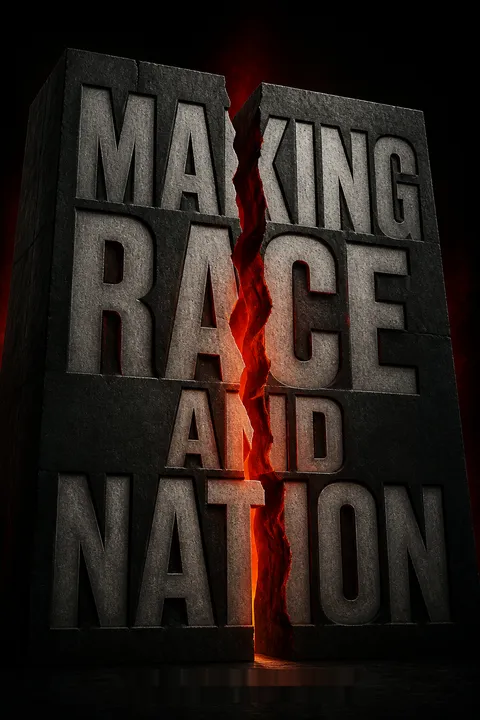
States made race: amid pervasive discrimination, official actions enforced racial distinctions or did not, with profound consequences.
Race is constructed. The book argues that race is not a biological given but a social construct, fundamentally shaped by state actions. While discrimination based on perceived physical differences existed, it was the deliberate policies of states that codified these distinctions, turning them into central aspects of political life. This state-centric view highlights how governments actively define who belongs to the nation and who is excluded.
Defining citizenship. Citizenship served as a key institutional mechanism for establishing these boundaries of inclusion or exclusion. By selectively allocating civil, political, and economic rights based on race, states reinforced a sense of commonality among the included while defining others as objects of domination. This process was not merely a reflection of existing prejudice but a purposeful act of institutionalizing identities.
Consequences of state action. The decision by a state to enforce racial distinctions, or not, had profound and lasting consequences. Where official racial domination was imposed, it legitimized racial categories as social identities, building upon and reshaping historical solidarities. Conversely, the absence of such official exclusion, as in Brazil, led to different patterns of identity formation and social conflict.
2. White Unity Forged Through Black Exclusion
To diminish these conflicts, elites acted strongly to strike bargains, selling out blacks and reinforcing prior racial distinctions and ideology in order to unify whites.
Conflict resolution. In South Africa and the United States, nation-state building was fraught with significant internal conflicts among whites. In South Africa, it was the ethnic tension between Afrikaners and English-speakers; in the United States, the regional divide between North and South. These conflicts threatened the stability and coherence of the nascent or reunified states.
Strategic sacrifice. To resolve these deep-seated intra-white conflicts, ruling elites made strategic bargains. They unified disparate white factions by reinforcing existing racial prejudices and excluding blacks from full citizenship and rights. This "white nationalism" served as a powerful unifying force, integrating populations that were otherwise at war or engaged in ongoing competition.
Reinforcing racial ideology. The decision to sacrifice black rights for white unity was not purely pragmatic; it coincided with and reinforced prevalent ideologies of white racial superiority. This allowed elites to justify their policies as natural or necessary, further entrenching racial domination as a cornerstone of the new national order.
3. Brazil's "Racial Democracy": A Myth of Harmony
Brazil’s longer-established national unity required no such legal racist crutch.
Absence of major conflict. Unlike South Africa and the United States, Brazil did not experience a major, violent internal conflict among its white population during its nation-building process. Its transition from colony to empire and republic was relatively peaceful, preserving a more unified state structure and elite consensus. This lack of intense intra-white strife meant there was no compelling need to unify whites through explicit racial exclusion.
Ideological camouflage. Instead, Brazil embraced the ideology of "racial democracy," projecting an image of harmonious race relations and inclusive nationalism. This myth, popularized by figures like Gilberto Freyre, served to camouflage pervasive informal discrimination and inequality against Afro-Brazilians. It presented a narrative where racial mixing and fluidity prevented rigid racial divisions.
Social control through inclusion. The "racial democracy" ideology functioned as a powerful tool for social control. By denying the existence of official racism and promoting the idea of upward mobility through "whitening" (both biological and social), the state discouraged the formation of a unified black racial identity and collective protest. This strategy maintained the existing social hierarchy without resorting to explicit legal segregation.
4. Slavery's Complex Legacy: Beyond Brutality
Slavery established heinous patterns of discrimination in both Brazil and the United States, and so differences in their common systems of extensive slavery cannot directly explain their later divergence of racial orders.
Universal brutality. Despite claims of "humanitarian" slavery in Brazil, the institution was brutally exploitative and deadly in all three contexts. Brazil, in particular, relied on massive, continuous imports of enslaved Africans due to high mortality rates, indicating extreme harshness. The commonality of severe discrimination under slavery across these nations means that the degree of brutality alone cannot explain later differences in legal racial orders.
Forms of reproduction. Differences in how slave labor was reproduced proved more consequential. In Brazil, constant imports due to high mortality meant less emphasis on slave family units and reproduction, while in the U.S., higher survival rates led to a self-reproducing slave population and stricter controls on manumission. These variations shaped the demographic and social landscape post-abolition.
Regional concentration. The regional concentration of slavery in the American South, versus its national spread in Brazil, profoundly influenced the path to abolition. In the U.S., slavery became intertwined with a sectional conflict over states' rights, leading to civil war. In Brazil, its national presence and gradual abolition avoided such a divisive conflict, allowing for a smoother, albeit discriminatory, transition.
5. Miscegenation's Malleable Role in Racial Categorization
The higher proportion of mulattoes in Brazil would have made comparable segregation more difficult, but not impossible.
Not a barrier to discrimination. The extent of miscegenation, while significant in all three societies, did not inherently prevent the formation of racial categories or discrimination. In Brazil, high levels of mixing led to a perceived "continuum" of color and an intermediate mulatto category, but this did not negate discrimination; it merely made it informal and more nuanced.
Categorization as a political act. In the United States, despite a substantial mixed-race population, the "one-drop rule" emerged to define anyone with African ancestry as black, reinforcing a strict biracial divide. Similarly, in South Africa, "coloured" identity was recognized but often grouped with blacks under apartheid. These categorizations were deliberate political acts, not simply reflections of biological reality.
Ideological utility. The interpretation of miscegenation served different ideological purposes. Brazil promoted "whitening" through mixing as a national ideal, aiming to dilute the black population and foster a sense of inclusive national identity. In contrast, the U.S. and South Africa used strict racial boundaries to maintain white purity and supremacy, even if it meant ignoring the biological reality of mixed ancestry.
6. Jim Crow and Apartheid: Tools of White Reconciliation
To bind up the nation’s wounds” among whites, blacks were bound down, and the wound of race was left to fester.
Post-conflict imperative. Following devastating internal conflicts—the American Civil War and the South African Boer War—the victorious powers faced the urgent task of reconciling with their defeated white adversaries. In both cases, the primary goal was to restore national unity and stability, which was deemed essential for economic development and state consolidation.
Racial sacrifice for unity. The solution involved a strategic compromise: abandoning commitments to black rights in favor of appeasing the defeated white factions. In the U.S., the Compromise of 1877 ended Reconstruction, allowing the South to impose Jim Crow. In South Africa, the Treaty of Vereeniging (1902) explicitly set aside the "native franchise" to secure Afrikaner loyalty. This effectively displaced intra-white conflict onto blacks.
Reinforcing state power. These policies of legal racial domination served to unify whites across class and regional/ethnic lines, reinforcing a shared sense of white supremacy. This, in turn, strengthened the central state by reducing internal threats to its authority and legitimacy, allowing it to pursue economic growth and further consolidate its power.
7. Black Protest: The Unintended Consequence of Domination
Official exclusion, as by race, legitimates these categories as a form of social identity, building upon and reshaping historical and cultural solidarities.
Identity forged in opposition. State-imposed racial domination, while intended to control and divide, inadvertently solidified black racial identity. By explicitly defining and excluding blacks as a group, apartheid and Jim Crow created a shared experience of oppression that transcended internal divisions (ethnic, class, regional), fostering a collective "us" against "them."
Catalyst for mobilization. This consolidated racial identity became the essential prerequisite for mass mobilization. Deprivation, resources, and political opportunities, while important, only became effective drivers of social movements once a self-conscious group was ready to act. Legal racial orders provided a clear, tangible target for protest, legitimizing collective action.
Shifting strategies. The nature of black protest evolved in response to state policies. When racial domination was rigid, early protests were often polite and elitist. As repression intensified, movements became more assertive and mass-based (e.g., ANC's Defiance Campaign, U.S. Civil Rights Movement). Reforms, while offering some relief, often raised expectations and fueled further demands, leading to cycles of protest and counter-protest.
8. Federal Power and the Dismantling of Jim Crow
Federal moves to force the end of Jim Crow in the 1960s were a response to rising black protest, but also indicated the greater power of the center made possible by the earlier appeasement.
A century of appeasement. After the Civil War, the U.S. federal government, weakened by sectional conflict, largely appeased the South by allowing local imposition of Jim Crow. This preserved the Union but at the cost of black rights. Over decades, this policy allowed for the gradual reintegration of the South and the strengthening of federal authority through non-interference in racial matters.
Rising federal capacity. By the mid-20th century, the federal government had significantly expanded its power through events like the New Deal and two World Wars. This increased capacity meant it was no longer as constrained by states' rights arguments, particularly as the South's economic and political integration into the nation reduced its ability to credibly threaten secession.
Protest as a catalyst. The growing strength of the civil rights movement, fueled by black migration to the North and increased political participation, provided the crucial impetus for federal intervention. Landmark decisions like Brown v. Board of Education (1954) and subsequent Civil Rights and Voting Rights Acts (1964, 1965) marked the federal government's decisive shift to dismantle legal Jim Crow, consolidating national authority over local racial policies.
9. Brazil's "Pact of Silence" Constrains Black Mobilization
The lack of any official rules for such discrimination deprived them of a target for mobilization that might have forced redress of inequality.
Absence of explicit target. Brazil's "racial democracy" ideology, by denying official racial domination, created a "pact of silence" that profoundly constrained black identity formation and mass mobilization. Without explicit legal segregation or a clear, state-sanctioned target for protest, Afro-Brazilians struggled to coalesce around a unified racial identity.
Internal fragmentation. The myth of fluidity and the existence of intermediate "mulatto" categories encouraged individual assimilation rather than collective action. Class divisions within the Afro-Brazilian community, often overlapping with color distinctions, further fragmented potential solidarity. Many attributed their deprivation to class rather than race, making it harder to frame grievances in racial terms.
Muted activism. While Afro-Brazilian activism did emerge, particularly during periods of political transition, it remained smaller in scale and often focused on cultural assertion or intellectual discourse rather than mass protest. The state's strategy of co-optation and repression of overt racial discourse further limited the movement's ability to challenge the informal racial order effectively.
10. Beyond Legal Ends: Persistent Prejudice and Inequality
Unmaking racial domination does not unmake the prejudice upon which domination was built and then reinforced, nor dissolve a now-consolidated racial identity.
Enduring legacies. The dismantling of legal apartheid and Jim Crow did not erase the deep-seated prejudice, discrimination, and inequality that had been reinforced by generations of official policy. These historical legacies continue to manifest in socioeconomic disparities, residential segregation, and informal biases, even in the absence of explicit laws.
Persistent identity. Racial identities, forged through the painful experience of domination and embedded in social life, do not simply fade away with institutional change. In the U.S. and South Africa, black racial solidarity remains a vital resource for combating ongoing discrimination and advocating for redress, even as new challenges like class divisions emerge within the black community.
"Brazilianization" of race relations. The post-legal-segregation era in South Africa and the U.S. has, in some ways, led to a "Brazilianization" of race relations. With the absence of formal racial categories for legal segregation, racial identity becomes more diluted but endures. Discrimination, no longer explicitly state-sanctioned, continues informally, making it harder to identify and challenge, much like the long-standing situation in Brazil.
11. Nation-Building Through Selective Internal Exclusion
Official and informal imaginings of a unified nation often have rested upon vicious demarcations that solidified those included by distinguishing those excluded.
A pervasive pattern. The cases of South Africa, the United States, and Brazil reveal a broader pattern: nation-state building is often achieved not through benign, inclusive nationalism, but through the purposeful exclusion of specified internal groups. This selective exclusion, whether based on race, ethnicity, religion, or class, serves to unify a core constituency and maintain social order.
Strategic utility of cleavages. Elites strategically leverage existing prejudices and social cleavages to forge national loyalty. By defining an "other" within the polity, they reinforce unity among the "self." This approach, while effective in consolidating state power and managing internal conflicts, comes at the cost of institutionalizing deep social divisions and perpetuating inequality.
Beyond race. This framework extends beyond race to other forms of exclusion. For instance, the argument suggests how anti-Semitism in Nazi Germany or class exclusion in the Soviet Union might have been used to unify a populace amidst internal strife. The specific form of exclusion depends on historical context and the most salient cleavages available to elites seeking to stabilize and strengthen the state.
Download PDF
Download EPUB
.epub digital book format is ideal for reading ebooks on phones, tablets, and e-readers.








































